What are the Essentials of Pour-Over Don Juliana Pacamara Coffee & What Causes the Acidity in Pacamara Pour-Over
Don Juan Estate Pacamara Coffee
Country: Panama
Product Name: Don Juan Estate Pacamara
Region: Boquete
Grade: SHB
Processing Method: Washed
Altitude: 1,650 meters
Variety: Pacamara
Don Juan Estate Story and Information
Panama Don Juan Estate
Many years ago, most buyers in the specialty coffee industry avoided large-bean varieties such as Maragogype and Pacamara. Large beans grown at medium to low altitudes typically showed undesirable vegetable or woody notes, and at the time most coffee farmers had not yet attempted to cultivate them at high altitude. It wasn't until Hacienda La Esmeralda won cupping championships multiple times with Pacamara that specialty coffee lovers gradually realized high-altitude Pacamara could be remarkably rich and complex.
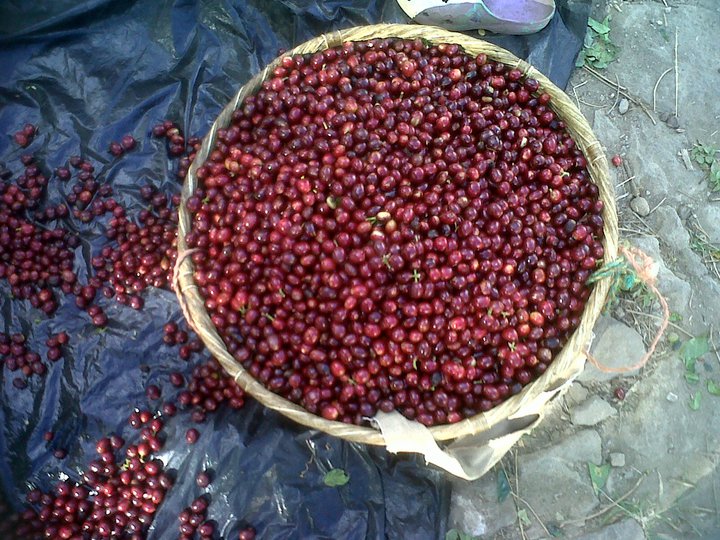
Several years ago, during a visit to Panama, we happened to taste freshly harvested Pacamara from Don Juan Estate and were deeply impressed. We also exchanged a great deal about the variety with the estate's owner, Mrs. Burneskis. There is now consensus on several keys to producing high-quality Pacamara: 1. the estate's altitude; 2. strict fertilization control is especially important for Pacamara; 3. during harvest, only the most mature Pacamara cherries may be picked - any with unripe coloring cannot be harvested.
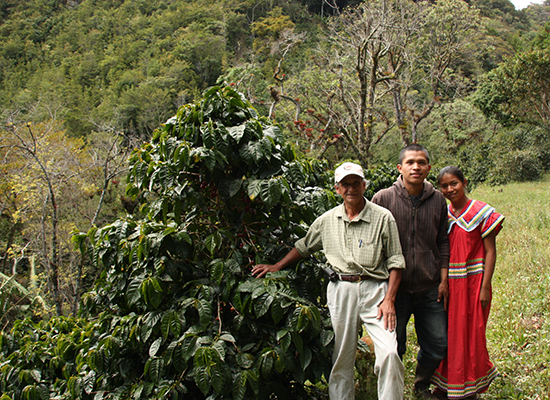
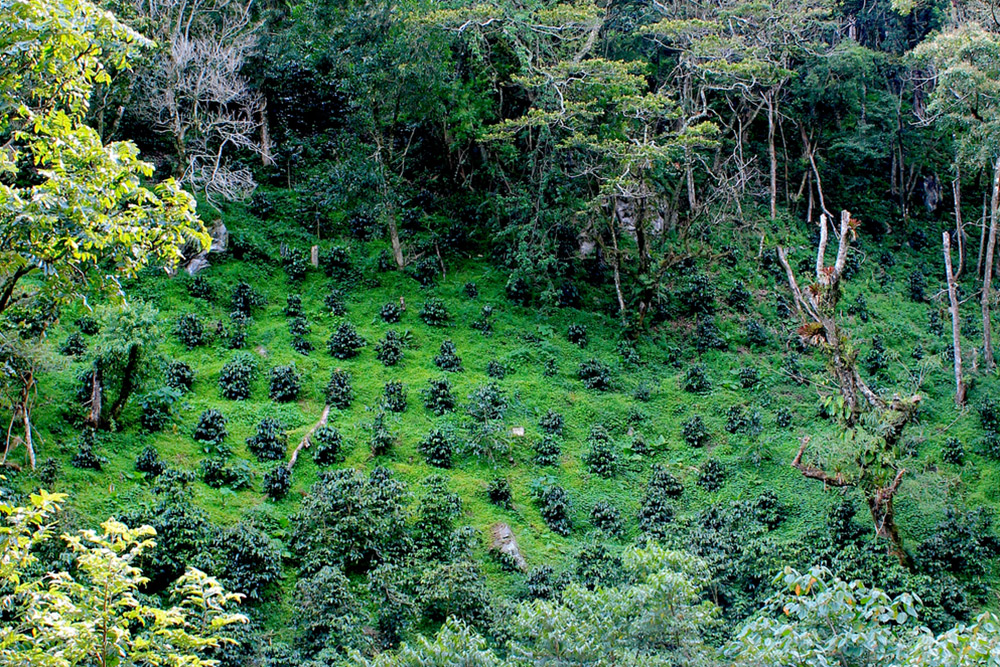
Time rolls back to around March 2013, during the Boquete harvest season. We toured the estate with the owner to understand the whole operation. On arrival, you could immediately sense her dedication to the estate's ecosystem: it preserves a large number of original shade trees and many other native species. The owner explained that while preserving native trees limits annual production, it improves quality and flavor. Coffee trees must coexist symbiotically with their surroundings - felling those trees would raise output but significantly harm coffee quality. Many protected species of flora and fauna can still be found on the estate. We also spoke with the owner about caring for local farm workers: that year she officially began building dormitories exclusively for them, providing better living conditions and pursuing sustainable management by improving their quality of life.
Pacamara Coffee Bean Variety Introduction
Pacamara is a hybrid born in El Salvador in 1958, a cross between the Bourbon-derived Pacas and the Typica-derived Maragogype, combining the strengths of both and surpassing them! Clean and smooth, rich and mellow, with lively acidity, full-bodied flavor, and an astonishingly long aftertaste.
At the 2005 El Salvador Cup of Excellence, Pacamara stunned everyone: among the top ten winners, Pacamara lots notably claimed 2nd, 5th, 6th, and 7th places!
In 2007, Pacamara went on to win championships in both Guatemala's and El Salvador's Cup of Excellence competitions. Since then it has been unstoppable on the awards circuit, consistently topping major competitions and internationally recognized as a rising star comparable to Geisha.
In the Guatemala Cup of Excellence alone, Pacamara sat atop the championship throne 7 out of 10 years from 2008 to 2017.
Because of Pacamara's extraordinary competition record, in 2017 the Best of Panama (BOP) international competition committee decided to create a separate category specifically for the variety.
Yet even a bean this successful has drawbacks: Pacamara demands more of soil, climate, environment, and altitude, with low yields and poor resistance to leaf rust - so its cultivation is not widespread.
Today, although Pacamara is no longer particularly rare, it remains uncommon in the market. Pacamara from Guatemala and El Salvador is considered the finest and is pursued by enthusiasts worldwide, making it even harder to source domestically.
Processing Method Introduction
Natural Process
The natural process is the oldest and most original way to prepare coffee. Harvested cherries are poured into large water tanks, where mature, full fruits sink to the bottom while underdeveloped or overripe ones float to the surface. After removing the floaters, the healthy cherries are laid out on patios to dry directly in the sun, reducing moisture from 60% to 12%-15%. Finally, a hulling machine removes the dry, hard outer skin and pulp, completing the green bean processing.
(↑ Selecting coffee fruits) (↑ Outdoor sun drying)
Natural processing can enhance berry and tropical fruit flavors with mild fruit acidity, though traditional naturals sometimes produce negative flavors such as earthy notes or over-fermentation.
Today the natural method is enjoying a revival, even becoming an important process for competition-grade coffee. The change comes from improved African raised beds, which avoid ground moisture, animal droppings, and earthy flavors while giving the fruit good air convection and more uniform drying. Farmers turn the beans regularly, letting them gently absorb the sweetness of the pulp so the flavor grows ever richer.
Roasting Suggestions / Analysis
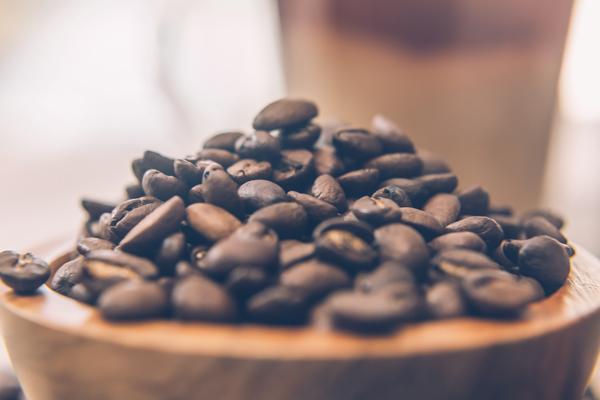
Pacamara is a large bean with big particles and high density, and new-crop beans carry higher moisture. During roasting, heat absorption is slower and the Maillard reaction runs faster, with the yellowing point arriving around 5 minutes. For a first roast, try a slightly higher drop temperature - for example 200°C - with relatively strong heat, then reduce it gradually as needed: cut heat after the yellowing point to extend drying so the big beans dehydrate thoroughly; from the end of drying until just before first crack, hold medium heat or nudge it up to speed the Maillard stage and build pressure before first crack; then ease off before first crack signs appear to avoid scorching the bean surface. With this approach, the drying phase is relatively extended, the temperature rises 6-8°C every thirty seconds, and the roast still enters first crack normally between 8.5 and 9.5 minutes - preserving more floral and fruity aromas and clean, bright acidity. It is generally best to drop the beans between the dense stage of first crack and its end, around a medium roast level.
Cupping Flavor Description
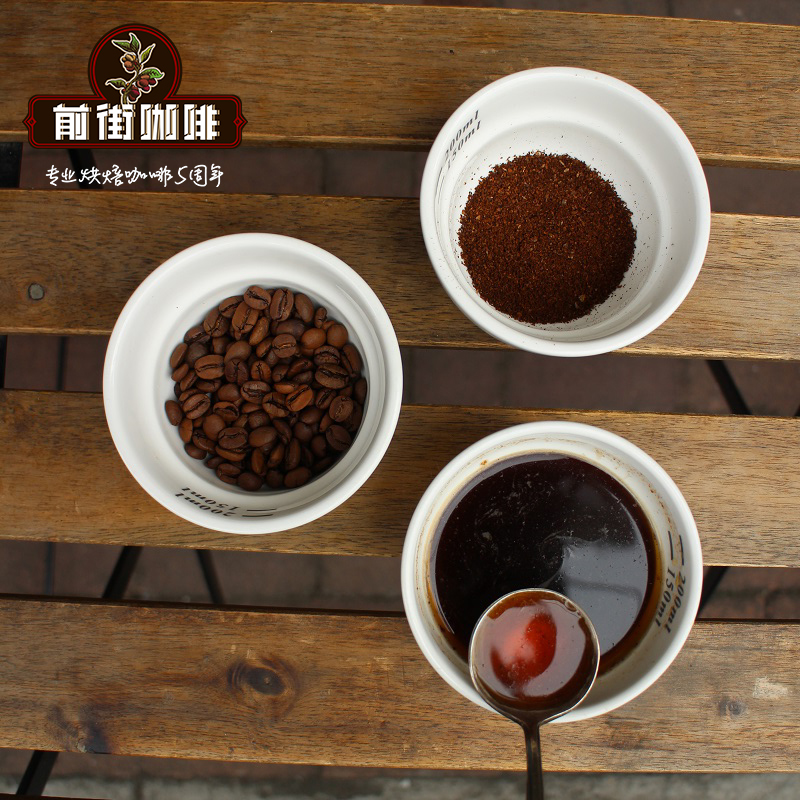
Flavor Profile: Passion fruit, dried mango, strawberry, fermented rice wine, fruit vinegar, rich florals, sugarcane, cherry, with a long-lasting aftertaste
Brewing Analysis
Today, FrontStreet Coffee introduces the commonly used method for hand-brewing Pacamara: the V60 Three-Pour Method.
Segmented extraction, dividing all the brewing water into three pours.
Suitable for light, medium-light, and medium roast beans.
Uses a V60 dripper.
Extending the bloom or adding more pour breaks can enhance the richness of the coffee's taste.
The segmented extraction of three-pour brewing:
Advantages: more layered than a single pour, clearly distinguishing the coffee's front, middle, and back-end flavors. The approach increases water volume after each break, typically pouring when the coffee level is about to touch the bed surface, using small, medium, and large flows across the three pours.
Disadvantages: higher demands on flow control and volume.
FrontStreet Coffee's Pacamara Hand Brew Parameter Recommendations
A V60 dripper enhances the layered flavors of a hand brew, making it richer and cleaner - perfectly expressing the uplifting, bright aromas of the Pacamara variety.
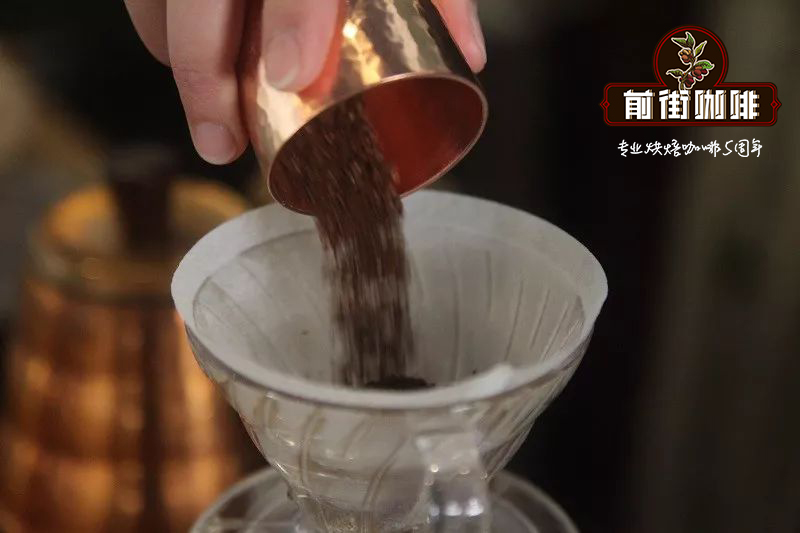
15g of coffee, water temperature 89-90°C, grind at BG 5R (64% pass rate on the China standard #20 sieve), water-to-coffee ratio close to 1:15-16.
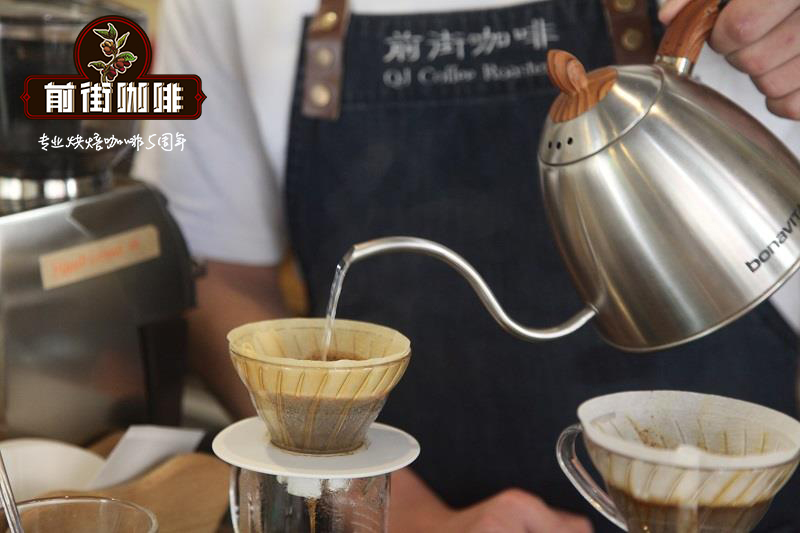
Method: 27g of water to bloom for 30 seconds. Pour hot water from the gooseneck kettle in clockwise circles around the center of the filter. Start timing when brewing begins; pour to 27g, stop, and wait 30 seconds before the first main pour.
For the first pour, circle as before but slightly slower, speeding up at the outer edge, stopping at around 1:15. When the liquid level drops by 1/3, pour again. The second pour focuses on the center, keeping water away from the seam where the coffee bed meets the filter paper to prevent channeling. End extraction around 2:05 - the tail section can be cut off (the longer it runs, the more astringency and rough texture build up).
Segments: 30-125-230g
FrontStreet Coffee Recommendation
Don Juan's Pacamara shows what Panama can do beyond Geisha - but if you want to go straight to the country's most famous name, FrontStreet Coffee carries a full Panama Geisha range. Boquete's mountains are frequently veiled in cloud, with humid days, cool nights, and the rich soil of the Baru volcano - ideal conditions for growing superb coffee, and the higher coffee is planted, the longer the fruit ripens and the richer and more distinctive the flavor becomes. If you're tasting Panamanian specialty coffee for the first time, FrontStreet Coffee recommends the Boquete Geisha: an entry-level, estate-grade Geisha grown at 1,600 meters, where fertile volcanic soil nourishes the beans into an intense aroma - jasmine florals, green tea, honey, citrus, and orange in the cup.
For a taste of half-Geisha lineage at a friendlier price, FrontStreet Coffee's Panama washed Butterfly (Huadie) combines Geisha, Caturra, and Catuai, grown on the Baru volcano in Boquete. The local microclimate brings abundant rain and a wide day-night temperature swing, and with volcanic rock soil plus meticulous harvesting and processing, the coffee excels in body, citrus acidity, and Geisha-style jasmine aroma - equally good hand-brewed or cold-brewed. At the top end, FrontStreet Coffee's Esmeralda Estate Red Label is the definitive choice: Esmeralda was both the discoverer of Geisha's flavor and the great promoter of Panama Geisha, and after cupping beans from different plots by altitude it established the Red, Green, and Blue label tiers. The Red Label is harvested from a single plot above 1,700 meters, must cup at 91 points or higher, and offers a refined orange-blossom honey character.
If you'd like to explore the estate beyond its Geisha, FrontStreet Coffee's Diamond Mountain comes from Esmeralda's star non-Geisha brand, built mainly on Caturra and Catuai, with beans drawn from two of the estate's four independent farms - Jaramillo and Canas Verdes - whose volcanic soil and old-forest shade make superb growing conditions. The result is a coffee rich in fruit aroma and sweetness, every bit as popular as the estate's Geisha.
Important Notice :
FrontStreet Coffee is a long-established specialty coffee roaster in Guangzhou China, selling freshly roasted beans from its own farm in Yunnan as well as dozens of carefully selected single-origin beans from around the world for both pour-over and espresso. The products deliver consistently excellent quality and great value, with shipping within 24 hours. Guangzhou's FrontStreet Coffee shop is recommended by many coffee lovers, and the beans are now available online at the Tmall 。
FrontStreet Coffee has moved to a new address:
FrontStreet Coffee Address: 315,Donghua East Road,GuangZhou
Tel:020 38364473
 Scan and follow the En Gafei WeChat official account. Please indicate that the reprint comes from "En Gafei".