Panama Morgan Estate Carbon Dioxide Washed Geisha Pour-over Demonstration_Ideal Temperature for Geisha Pour-over

Panama Morgan Estate Carbon Dioxide Washed Geisha
Origin: Panama
Estate: Morgan Estate
Region: Volcan, Chiriqui
Altitude: 1700-1850m
Processing method: carbon dioxide maceration
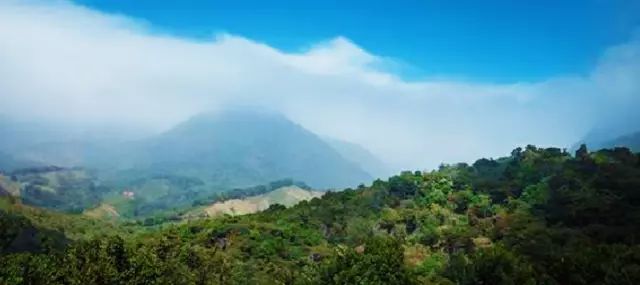
The Story of Morgan Estate
Panama is home to a remarkable number of estates growing top-tier Geisha, and today we want to introduce one of them — Morgan Estate.
Morgan Estate sits high in the mountains of Volcan, in Panama's Chiriqui Province. The property covers 12 hectares, all planted with Arabica Geisha trees.
Morgan Estate has been growing coffee for 8 years, giving its trees a carefully managed environment and meticulous day-to-day attention. It has become an award-winning producer of high-altitude Geisha.
The owner, Jamison Savage, treats processing as the single most important lever on cup quality. Every batch is handled to strict standards so that it can compete at the highest level.
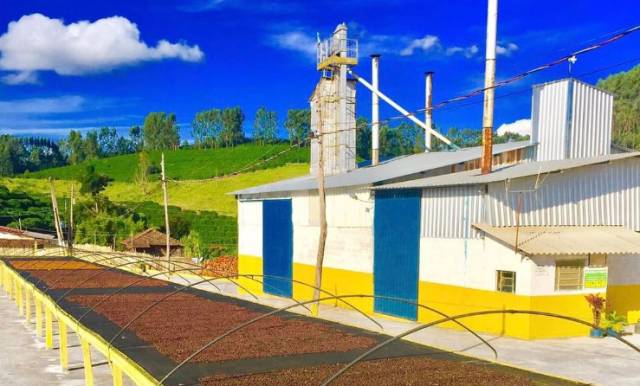
How Morgan Estate Processes Its Geisha
Morgan Estate relies on three methods for its Geisha: natural (dry), washed, and carbon dioxide washed, the last developed together with Sasa Sestic.
The washed Geisha is mechanically depulped, then moved onto a three-tier drying bed designed by Jamison. The beans start on the top tier, where both surface and internal moisture begin to leave; they are then moved to the middle tier for the longest stretch of shade drying; finally they finish on the bottom tier, the coolest position, continuing to dry out of direct sun. Throughout, the beds are run in an orderly sequence and moisture is monitored closely. Once moisture falls to 10.5%-11%, the beans go into grain bags and are stored in a dry, cool, dark warehouse. After 90 days they are hulled, sorted by density and shape, and stripped of defective beans.
Morgan Estate lies at 1700-1850 meters in an isolated, lush valley. A river runs through it, century-old trees line both banks, waterfalls spill down steep stone cliffs, and rainbows form where sunlight meets the mist. Animals move nimbly through the valley, and through the fog you can make out Geisha trees climbing the steep slopes.
The Morgan family has lived in Volcan, Chiriqui for generations. They have managed this estate for 25 years and planted their first Geisha trees 6 years ago. They have shaped the property with care, dotting it with flowers and building exquisite Alpine-style cabins.
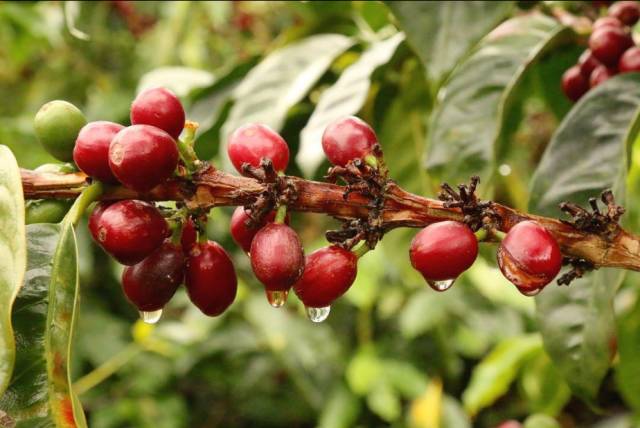
About Geisha Coffee Beans
Geisha, Gesha and Geisha bean all refer to the same coffee. The name comes from Geisha Mountain in Ethiopia and happens to sound just like the Japanese word for a geisha, which is how the coffee came to be known by that spelling.
Geisha has a legendary backstory. The variety actually originates in southwestern Ethiopia. In 1963, Don Pachi Serracin brought Geisha trees from Costa Rica into Panama. Yields were low, and since that directly cut into harvest volume, farmers had little interest in planting them. Everything changed when Daniel Peterson, owner of Panama's La Esmeralda estate, noticed that the trees he had originally planted as a windbreak at the highest point of his farm were producing beans with the distinctive citrus and floral notes of African coffee. He separated the lot and entered it in the 2004 Panama Cupping Competition, and it became an overnight sensation. Geisha has been unstoppable ever since, winning the Panama competition year after year. Among specialty drinkers worldwide today, Geisha is beyond question the crown jewel.
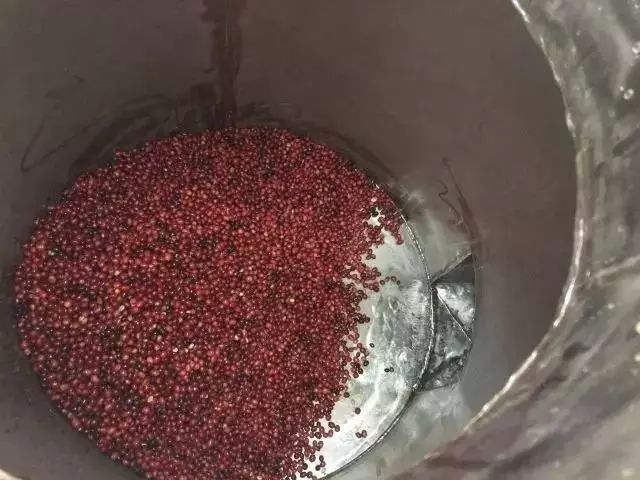
The Carbon Dioxide Washed Process
1. Cherry skin and pulp are removed inside stainless steel fermentation tanks. The double-layer insulated steel helps build a clean taste, and the tanks can be moved between fermentation rooms held at different temperatures.
2. The tanks are moved indoors, where temperature is easier to control and more variables can be tracked through data collection. If a more complex acidity is the goal, fermentation should run cold, between 4-8°C. To build sweetness instead, hold the temperature at 18-20°C.
3. The tank is covered and sealed. This lets more aromatic compounds develop, which shows up as extra floral lift in the cup.
4. Carbon dioxide is injected — the decisive step. The CO2 creates an anaerobic environment inside the tank and significantly slows the breakdown of the mucilage. The pH drops more slowly, which means relatively fewer alcohols and acids are produced.
5. The CO2 stretches fermentation out to 3 days at a fermentation temperature of 22°C. Even with the longer time and the lower temperature, no astringency develops.
Last year, Sasa tasted some excellent coffee at Morgan Estate. Wanting more sweetness and aroma, he decided to try carbon dioxide maceration, holding fermentation at 20°C for 65 hours. The result was greater sweetness and a more complex, more distinctive flavor profile.
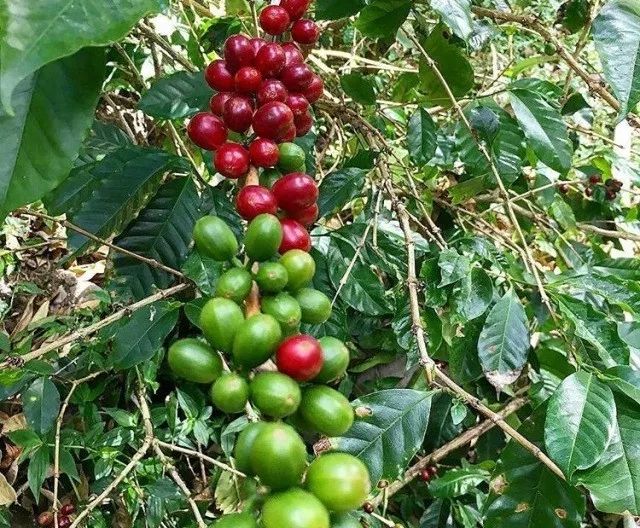
FrontStreet Coffee Roasting Notes
Geisha is the standout among coffee varieties, and drinkers adore it. Of all the versions, washed Geisha shows the variety's own character most clearly: remarkably distinct floral and citrus notes, very high clarity, a soft and elegant acidity, a long cotton-candy sweetness, and the mouthfeel of a fine black tea.
Bringing those qualities out takes real work at the roaster. Geisha is normally grown above 1500 meters, which leaves the beans hard and dense. The shape is full, medium-sized, thick and elongated, tapering at both ends.
So how do you roast to express that character?
The approach: because the beans are so hard and dense, apply high heat early to drive off moisture and quickly build a temperature gap between surface and core. To maximize florals, keep the Maillard phase relatively short, so once the beans yellow, move to medium-high heat and push them toward first crack. Shortening the stretch from yellowing to the start of first crack also boosts clarity. If the temperature climbs too fast after first crack, caramelization intensifies and buries the floral and fruit aromas, so heat is cut back sharply just before first crack to slow the rise, with the damper fully open as first crack begins. Drop the beans while first crack is still dense, letting the core develop fully while retaining maximum aroma and sugars.
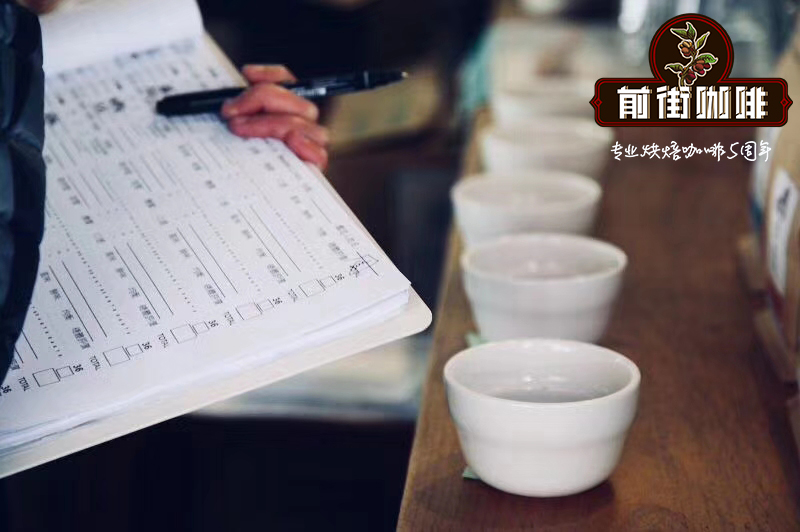
Cupping Notes
Cupping notes: the carbon dioxide process lifts the overall flavor and refines the coffee's native fruit acidity, with sweet fruit aromas and prominent tropical notes such as watermelon, strawberry, blueberry, cantaloupe, passion fruit and papaya, a light acidity, and a long, lingering aftertaste.
Brewing Analysis
Today we share FrontStreet Coffee's everyday method for pour-over Geisha: the three-stage pour.
The Three-Stage Pour
Segmented extraction, splitting a single brew into three pours.
Best suited to light, medium-light and medium roasts.
Brew it in a Kalita wave dripper.
Lengthen the bloom or add pour interruptions to build a richer texture.
How Three-Stage Extraction Works
Advantages: more layered than a single pour, and it lets you clearly separate the front, middle and back of the cup. The method adds water after each bloom, typically pouring again just as the liquid is about to sink to the surface of the coffee bed, using small, medium and large flows across three stages.
Disadvantages: it demands more control over flow rate and volume.

FrontStreet Coffee Geisha Pour-Over Parameters
A wave dripper works by immersion, increasing the contact area between grounds and water. Compared with a V60, it builds more texture and a thicker mouthfeel.
Use 15g of coffee, water at 91-92°C, grind size BG 5R (64% pass-through on a Chinese-standard 20 mesh sieve), and a coffee-to-water ratio close to 1:15-16.
Method: bloom with 27g of water for 30 seconds. Pour from the kettle in clockwise circles centered on the middle of the dripper. Start the clock when brewing begins, pour to 27g, then stop and wait 30 seconds before the first pour.
For the first pour, keep circling the same way but a touch slower, speeding up slightly as you reach the outer ring. Stop at around 1:15, wait for the water level to drop by a third, then pour again. The second pour stays toward the center, avoiding the seam where the coffee bed meets the filter paper to prevent channeling. Finish extraction at around 2:05. The tail end can be discarded — the longer it runs, the more astringency and roughness creep in.
Pour segments: 30-125-230g.
FrontStreet Coffee Recommendation
Geisha is the most sought-after variety in Arabica, loved for its unmistakable floral lift and refined sweet-tart balance — and washed lots like this one show it best. FrontStreet Coffee stocks several Geisha options at very different price points. If you want the benchmark, our Esmeralda Red Label ("Esmeralda Special") grows at 1600-1800 meters, must cup above 90 points, and comes in numbered batches drawn from a single plot such as the Halimiyo lot, so you can chase the exact flavor profile you prefer. The Green Label ("Private Collection") blends several plots instead and leans on Esmeralda's signature high-altitude Geisha character, which makes it a far more affordable way in.
New to Geisha? Start with our Boquete Geisha, an entry-level Panamanian lot that delivers the classic orange-blossom-honey sweetness, oolong-tea sensation and delicate layered fruit. If you would rather explore Geisha's homeland, our Ethiopia lineup covers it: the Grana Estate Gesha, a rare single-variety farm at the Kochere and Grana Abaya border, is sun-dried on raised beds for 14-20 days and roasted medium-light for bright citrus, elegant ginger-flower aromatics and ripe-fruit sweetness. Stepping up, Geisha Village's Gold Label is the Gesha 1931 variety (about 10% of the village's output) and Red Label is the Gori Gesha variety (about 15%), scoring 88 points or higher on the 100-point SCA scale with full plot-level traceability.
For brewing, Geisha is a medium-light, floral-and-fruit style with dense beans that can sink and clog the drain hole, so we recommend a grind around 78% pass-through on a Chinese-standard 20 mesh sieve (roughly caster sugar) and 91°C water. Our house pour-over uses 15g in a small Hario V60 at 1:16, three stages: start the clock and pour to 30g for a 30-second bloom, then a low-flow spiral to 125g, wait for the bed to drop halfway, then spiral again to 225g, finishing in about 2:10-2:20. Geisha also shines as an SOE — our Grana Estate Gesha SOE is medium roasted, and pulled espresso shows dried apricot, caramel and nuts.
Important Notice :
FrontStreet Coffee is a long-established specialty coffee roaster in Guangzhou China, selling freshly roasted beans from its own farm in Yunnan as well as dozens of carefully selected single-origin beans from around the world for both pour-over and espresso. The products deliver consistently excellent quality and great value, with shipping within 24 hours. Guangzhou's FrontStreet Coffee shop is recommended by many coffee lovers, and the beans are now available online at the Tmall 。
FrontStreet Coffee has moved to a new address:
FrontStreet Coffee Address: 315,Donghua East Road,GuangZhou
Tel:020 38364473
 Scan and follow the En Gafei WeChat official account. Please indicate that the reprint comes from "En Gafei".