Panama La Valentina Estate Geisha Coffee Bean Varieties Pour-Over Coffee Brewing Parameters

Panama Boquete Finca La Valentina Geisha, Washed
Named for the small Boquete estate that produced it, this washed Geisha is one of Panama's most decorated lots. Here is the background on the farm, the variety and the brewing parameters FrontStreet Coffee recommends.
Introducing Finca La Valentina
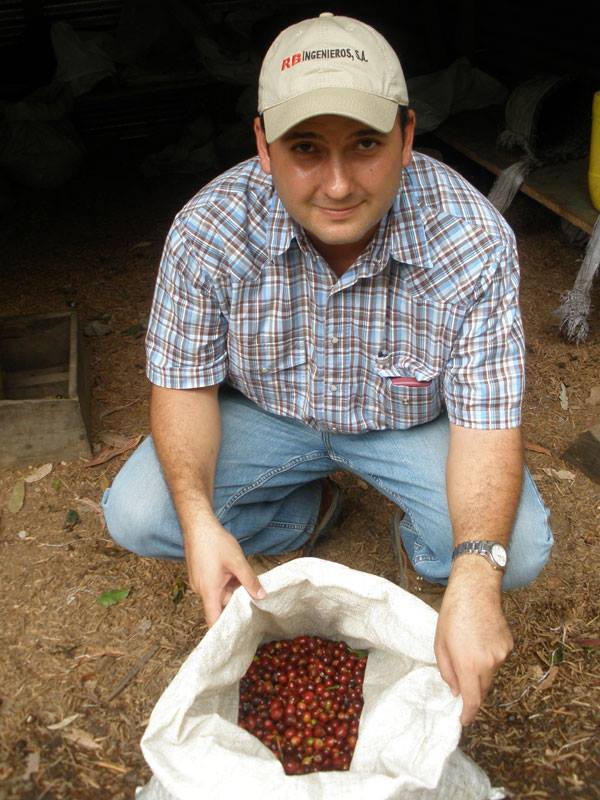
Finca La Valentina covers about 12.5 hectares, which makes it a micro-estate by Panamanian standards. According to the owner, 8.5 hectares are planted with a mix of varieties including Typica, Red Catuai and Pacamara. Since 2008, small sections of the farm have been planted with Geisha, which now accounts for nearly half of total production. The estate sits between 1,500 and 1,675 meters above sea level. Beyond coffee, it keeps 3.5 hectares of native forest and various fruit trees, including high-altitude cypress, pine and eucalyptus, making it a textbook self-sufficient farm.
Finca La Valentina is best known for winning the 2011 Best of Panama competition with an outstanding cupping score of 92.3 points. It not only defeated the then most iconic and repeatedly victorious La Esmeralda but set a new record when the auction price reached $70.25 per pound. In the years that followed, the estate posted strong results again and again, consistently reaching the final rounds of Best of Panama, including 5th place in the Washed Geisha category in 2012, 10th in 2013, 12th in 2014 and 14th in 2015.
Finca La Valentina is devoted to specialty coffee. Beyond individual care in the field, the area's unusual microclimate contributes to the exceptional quality of its Arabica beans (SHB). In 2011 the estate's Geisha ARISTAR took first place in the Panama competition. In 2012 its Geisha ARISTAR and Valentina lots also scored highly, at 87.07 and 84.66 respectively.
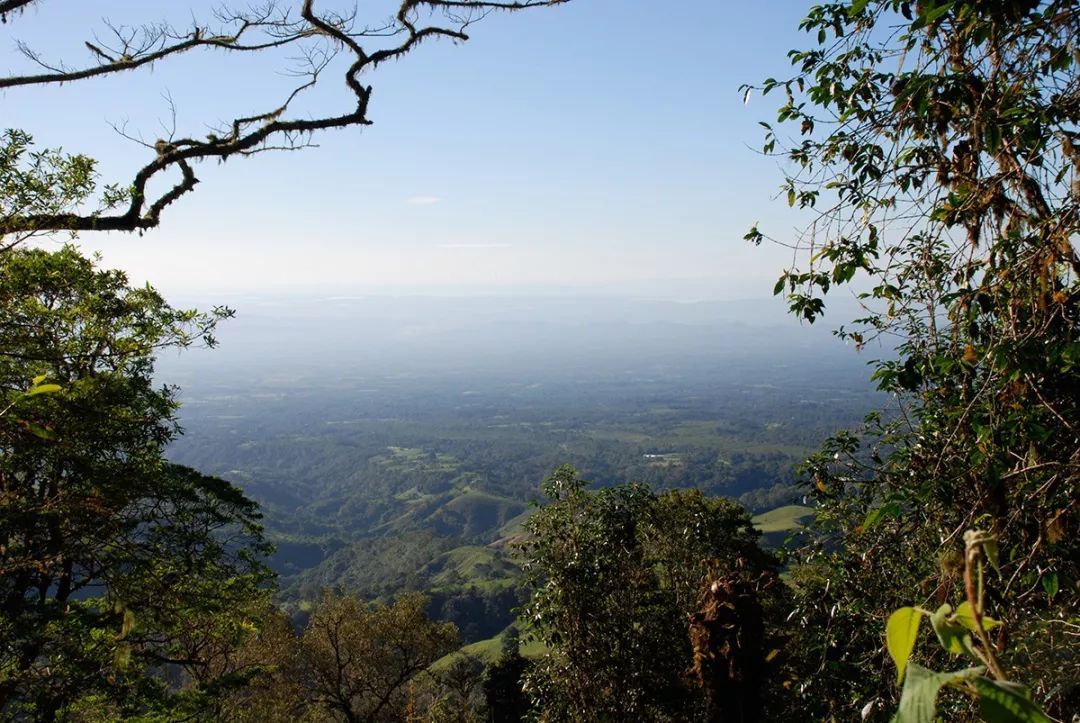
About the Variety
Geisha coffee beans, also written as "Gui Xian" coffee or just "Geisha" beans, all refer to the same variety. The name comes from Geisha Mountain in Ethiopia, and because it sounds like the Japanese word for geisha, that spelling stuck.
Geisha has an extraordinary story. The variety actually originates in southwestern Ethiopia. In 1963 Don Pachi Serracin introduced Geisha trees from Costa Rica to Panama. Because its yield is low, which directly cuts into harvest volumes, coffee farmers had little interest in growing it. It was not until Daniel Peterson, owner of Panama's La Esmeralda, happened to notice that the beans from these Geisha trees, originally planted as a windbreak at the highest point of his estate, carried the citrus and floral aromatics characteristic of African beans. He separated the lot and entered the 2004 Panama coffee cupping competition, and it became an overnight sensation. Since then Geisha has been unstoppable, taking consecutive championships at Panama's cupping competition for years. To specialty coffee drinkers worldwide, Geisha is unquestionably the supreme treasure.
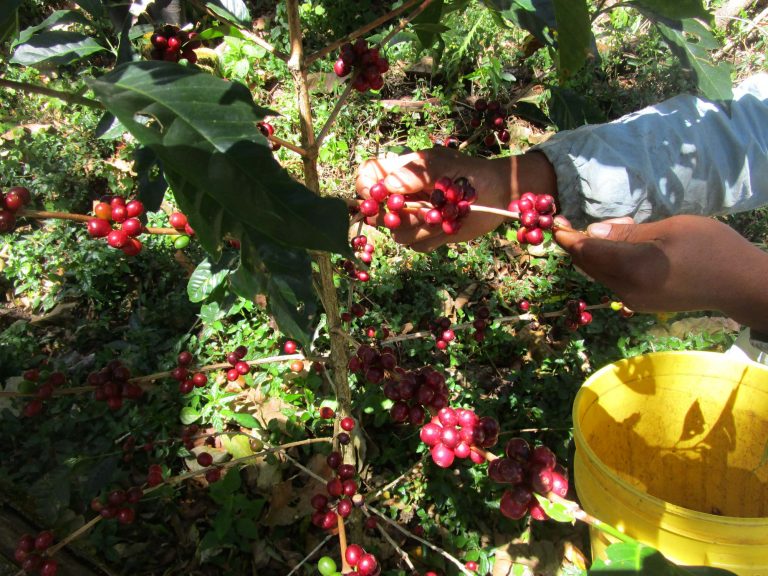
About the Processing Method
Washed Process
The washed method was developed to address the shortcomings of the traditional natural process. Harvested cherries first pass through a depulping machine to separate most of the fruit from the beans. They are then guided into a clean water tank and soaked to ferment, which removes the remaining mucilage layer. Once fermentation is complete, they are dried, either in the sun or by machine, until moisture content falls to 12 percent. Because the washed method already removes the pulp, there is no need during drying to worry about the mold or insect problems that can affect the natural process.
(Depulping machine removing pulp) (Soaking in water to ferment) (Spreading out to dry)
Natural process beans have rich, full flavors with very distinct and varied layers, while washed beans offer a very clean, refreshing taste with distinct fruit acidity. Different processing methods give beans their own aromatic character.
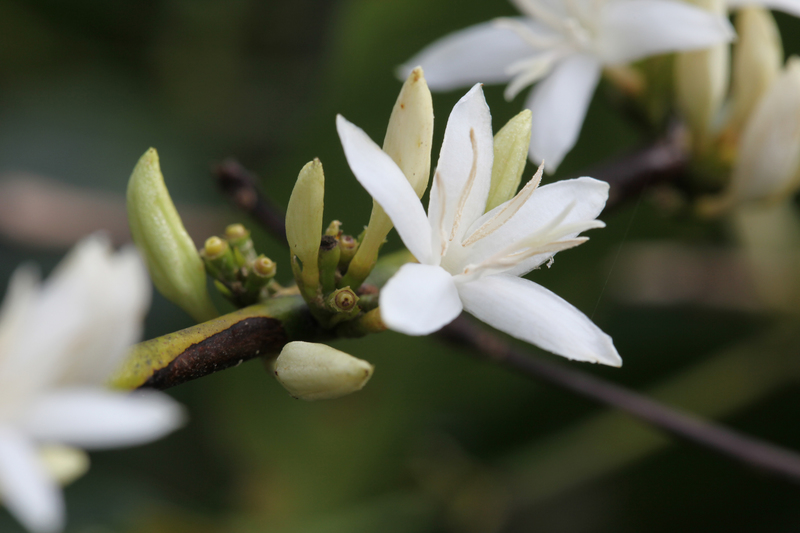
FrontStreet Coffee's Roasting Suggestions and Analysis
Geisha is among the most outstanding of all coffee cultivars, and coffee lovers adore it. Washed Geisha in particular shows off the variety's inherent character best. What makes Geisha special is its very distinct, clear floral and citrus flavors, its extremely high clarity, a soft and elegant acidity, a lasting cotton-like sweetness, and a premium tea-like mouthfeel.
To reveal those qualities fully, the roast needs particular attention. Geisha is generally grown above 1,500 meters, which produces hard, dense beans. Its shape is plump, medium-sized, thick and long-bodied, with pointed ends.
So how do you express Geisha's unique flavors through roasting?
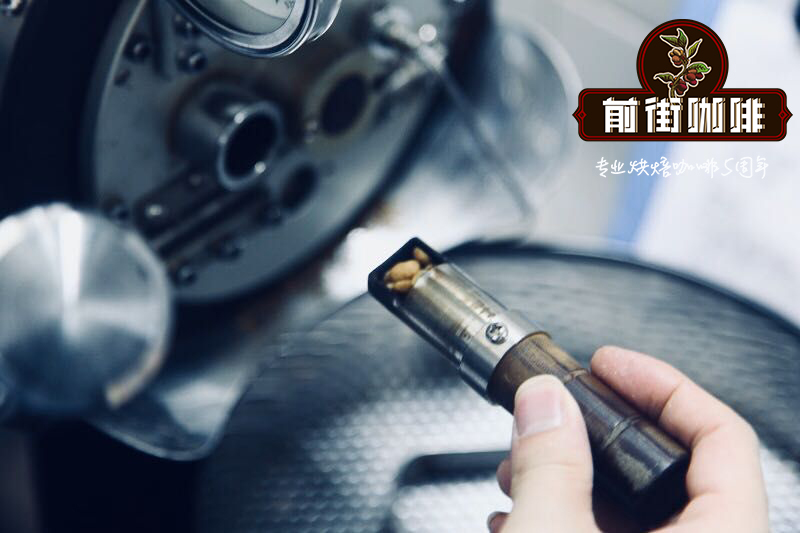
The approach takes into account the bean's hardness and density: high heat early on drives off moisture and quickly builds a temperature difference between the bean surface and core. To preserve more floral aroma, the Maillard reaction time needs to be relatively short, so once the beans yellow the heat is adjusted to medium-high to move them quickly into first crack. Shortening the interval from yellowing to the start of first crack also increases clarity. If the temperature rises too quickly after first crack, caramelization intensifies and masks the floral and fruit aromas. So as first crack approaches, the heat is reduced significantly to slow the rise, and the airflow damper is fully opened at the start of first crack. The beans are dropped when first crack becomes dense, letting the core develop while preserving as much aroma and sugar as possible.
Cupping Notes
Flavor description: delicate citrus acidity, rich floral aroma.
Brewing Analysis
FrontStreet Coffee's go-to method for Geisha is pour-over, using the three-stage technique.
Three-Stage Pouring Method
Segmented extraction splits one portion of water into three pours.
Suitable for light, medium-light and medium roast beans.
Uses a Kalita Wave dripper.
Increase the bloom time or the number of pauses to build richness in the cup.
The three-stage method for segmented extraction:
Advantages: more layered than a single pour, clearly separating front, middle and back-end flavors. The method increases the amount of water poured each time after blooming, typically pouring again as the liquid approaches the level of the coffee bed, using small, medium and large streams across three stages.
Disadvantages: it demands greater control over flow rate and volume.
FrontStreet Coffee's Geisha Pour-Over Parameters
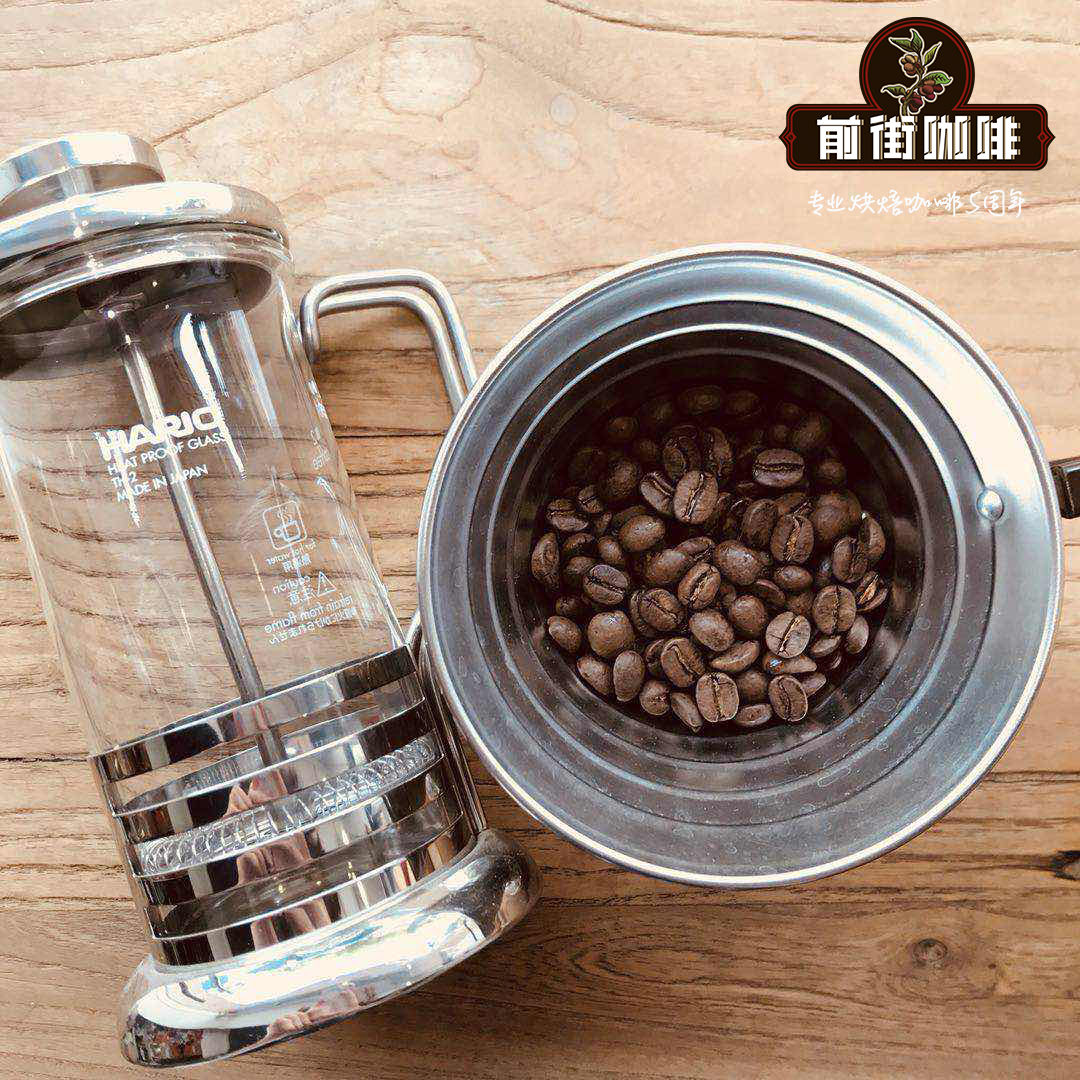
A Wave dripper uses immersion-style extraction, increasing the contact area between grounds and water, which can improve texture compared with a V60 and produce a thicker mouthfeel.
For pour-over: 15 g of coffee, water at 91-92°C, grind BG 5R (64 percent pass rate on the Chinese standard No. 20 sieve), water-to-coffee ratio close to 1:15-16.
Method: 27 g of water for the bloom, with a bloom time of 30 seconds. Pour the hot water from the gooseneck kettle in clockwise circles centered on the middle of the filter. Start timing when brewing begins, pour to 27 g, then stop and wait 30 seconds before the first main pour.
For the first pour, circle the same way but slightly more slowly, speeding up a little as you reach the outer ring. Stop pouring at around 1:15, wait for the liquid level to drop by one-third, then pour again. The second pour should concentrate on the center, with the stream avoiding where the grounds meet the filter paper to prevent channeling. End extraction at around 2:05; the tail end can be omitted (the longer it runs, the more astringency and roughness appear).
Segments: 30-125-230 g.
END
FrontStreet Coffee Recommendation
If the story above makes you want to taste Panama Geisha, FrontStreet Coffee's Boquete Geisha is the sensible first step. It is an estate-level entry Geisha grown at around 1,600 meters on the volcanic soils of Boquete, and the cup shows the variety's classic jasmine, green tea, honey, citrus and orange notes. It is also one of the beans FrontStreet most often suggests for brewing in a V60, where bright flowers, lively fruit acidity and a tea-like finish come through clearly.
For a more concentrated expression of the same region, FrontStreet Coffee also offers the Esmeralda Red Label Geisha, harvested from a single plot above 1,700 meters with cupping scores in the 90s, and a Panama Butterfly lot built from Geisha, Caturra and Catuai grown around Baru Volcano. The Butterfly is notable for its balance of body, citrus acidity and jasmine aroma, and it works well for both pour-over and cold brew.
Geisha is a delicate, floral-and-fruit variety with a dense bean structure, so FrontStreet recommends grinding to roughly 78 percent passing a No. 20 sieve and brewing at about 91°C. Use 15 g of coffee with a small Hario V60 at a 1:16 ratio, bloom with 30 g of water for 30 seconds, then pour in stages to 125 g and finally to 225 g. Drawdown should finish in about 2 minutes 10 seconds to 2 minutes 20 seconds.
Important Notice :
FrontStreet Coffee is a long-established specialty coffee roaster in Guangzhou China, selling freshly roasted beans from its own farm in Yunnan as well as dozens of carefully selected single-origin beans from around the world for both pour-over and espresso. The products deliver consistently excellent quality and great value, with shipping within 24 hours. Guangzhou's FrontStreet Coffee shop is recommended by many coffee lovers, and the beans are now available online at the Tmall 。
FrontStreet Coffee has moved to a new address:
FrontStreet Coffee Address: 315,Donghua East Road,GuangZhou
Tel:020 38364473
 Scan and follow the En Gafei WeChat official account. Please indicate that the reprint comes from "En Gafei".