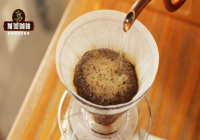
Recommendations for Pour-Over Temperature and Grinding for Ethiopian Kersa Geisha from Gelana Station, Plus Flavor Profile

Ethiopia's Geisha: Blueberry Perfume Flavor
Origin: Kersa Village, Tore, Oromia
Variety: Geisha
Processing Station: Gelana Station
Altitude: 1350-1600 meters
Processing Method: Natural
Harvest and Processing Time: 2017/2018
Roast Level: Light
Today, Geisha is renowned as a top-tier, rare coffee variety, famous the world over for its elegant aroma and complex, ever-changing, juice-like flavors. It is grown in every corner of the coffee-producing world - from the large and small estates of Panama where it made its name, to China's Yunnan growing region. And Ethiopia, as the birthplace of the variety, has begun producing many outstanding Geisha coffees of its own.

Geisha actually takes its name from a remote western Ethiopian town near where it originated. Geisha seeds traveled to Kenya, Uganda, and Tanzania, and around 1950-1960 crossed the ocean to the Tropical Agricultural Research and Higher Education Center in Costa Rica, eventually reaching Panama. At first, because of its low yield and mediocre cup quality, farmers didn't want it and it was gradually abandoned. Its later brilliance came from a combination of altitude, rainfall, soil, nutrients, and countless other environmental and horticultural factors - all of today's flavor descriptors for Geisha would have sounded like a joke back then. With its popularization, the whole world has seen a surge in Geisha planting, though in my view Panama's remains the most representative. The success of a coffee is never just about soil, weather, or processing; the playful hand of serendipity is very real.

This batch of Geisha comes from the Gelana processing station in the legally recognized Yirgacheffe region of Ethiopia. The station was established in 2014 and is managed by Mr. Israel Degefa. The coffee-growing area around the station covers up to 700 hectares, most of it uncultivated land with fertile soil and widespread shade trees. This Geisha was picked by hand as fully ripe red cherries and dried on raised beds for 14-20 days depending on the weather.
In the cup it offers ripe blueberry and white peach, with prominent, long-lasting sweetness - like a glass of ripe tropical fruit juice.

FrontStreet Coffee's Hand-Drip Geisha Method: Three-Stage Pour
Three-Stage Water Injection Method
Segmented extraction: divide the total water into three pours.
Suitable for light-roasted, light-to-medium, and medium-roasted coffee beans.
Dripper: Kalita cake cup.
Increasing the bloom time or the number of pours (water interruptions) enhances the coffee's richness and body.
Three-Stage Water Injection Extraction
Advantages: more layered than a single pour, and it lets you clearly distinguish the flavors of the coffee's front, middle, and back sections. The approach is to increase the water amount with each pour after the bloom, usually pouring just as the coffee liquid is about to drop to the surface of the coffee bed, using small, medium, and large flows for the three stages.
Disadvantages: it places relatively high demands on your control of flow rate and pour volume.

FrontStreet Coffee's Geisha Hand-Drip Parameter Recommendations
The cake cup is an immersion-style dripper: it increases the contact area between grounds and water, improving texture over a V60 and giving a thicker mouthfeel.
Use 15g of coffee, water temperature 91-92°C, grind at BG 5R (China standard 20# sieve pass rate 64%), water-to-coffee ratio close to 1:15-16.
Method: 27g of water for the bloom, blooming for 30 seconds. Pour in clockwise circles centered on the middle of the filter cup. Start timing when you begin brewing, pour to 27g, stop, and wait 30 seconds before the first main pour.
For the first pour, circle as before but slightly more slowly, speeding up a little as you reach the outer circle. Stop pouring at around 1:15. When the liquid level has dropped by 1/3, pour again. The second pour should be concentrated in the center, and the stream must not hit the seam where the coffee grounds meet the filter paper, to avoid channeling. Finish extraction at around 2:05. The tail section can be skipped - the longer the extraction runs, the more astringency and rough texture build up.
Segmented pours: 30-125-230g.
FrontStreet Coffee Recommendation
Geisha comes in far more forms than one. Panama's Hacienda La Esmeralda - the estate that made the variety famous - splits its line into the Red Label (Esmeralda Special), grown at 1600-1800 meters and cupping above 90 points per batch, and the more affordable Green Label (Private Collection), a blend of multiple high-altitude lots. For a first taste of classic Panama Geisha, FrontStreet recommends the entry-level Boquete Geisha, with its orange-blossom honeyed sweetness, oolong-tea texture, and delicate fruit acidity.
Ethiopia offers its own treasures. The Gelana (Granana) Estate Geisha - medium-light roasted - shows bright citrus acidity, elegant ginger-flower aroma, and full ripe-fruit sweetness with a refined Geisha finish. For something more advanced, FrontStreet's Geisha Village Gold Label (Geisha 1931, natural-processed, just 10% of the estate's output) and Red Label (Gori Gesha, single-terroir, 88+ points on the SCA 100-point scale) are must-try pour-over lots for serious enthusiasts.
For brewing at home, treat Geisha as a floral-fruity, medium-light roast with a hard, dense bean that tends to sink and clog the dripper. Grind coarse - about a 78% pass rate on the China standard #20 sieve (fine-granulated-sugar texture) - and use water at 91°C. FrontStreet's recipe: 15g of coffee in a small Hario V60 at a 1:16 ratio, three-stage pour - 30g bloom for 30 seconds, then to 125g, then to 225g once the bed drains halfway - for a total extraction of about 2 minutes 10 seconds to 2 minutes 20 seconds.
Important Notice :
FrontStreet Coffee is a long-established specialty coffee roaster in Guangzhou China, selling freshly roasted beans from its own farm in Yunnan as well as dozens of carefully selected single-origin beans from around the world for both pour-over and espresso. The products deliver consistently excellent quality and great value, with shipping within 24 hours. Guangzhou's FrontStreet Coffee shop is recommended by many coffee lovers, and the beans are now available online at the Tmall 。
FrontStreet Coffee has moved to a new address:
FrontStreet Coffee Address: 315,Donghua East Road,GuangZhou
Tel:020 38364473
 Scan and follow the En Gafei WeChat official account. Please indicate that the reprint comes from "En Gafei".