2018 Geisha Pour-Over Tutorial: Colombian Huila La Divina Washed Geisha Brewing Guide
About Divina Mountain Estate
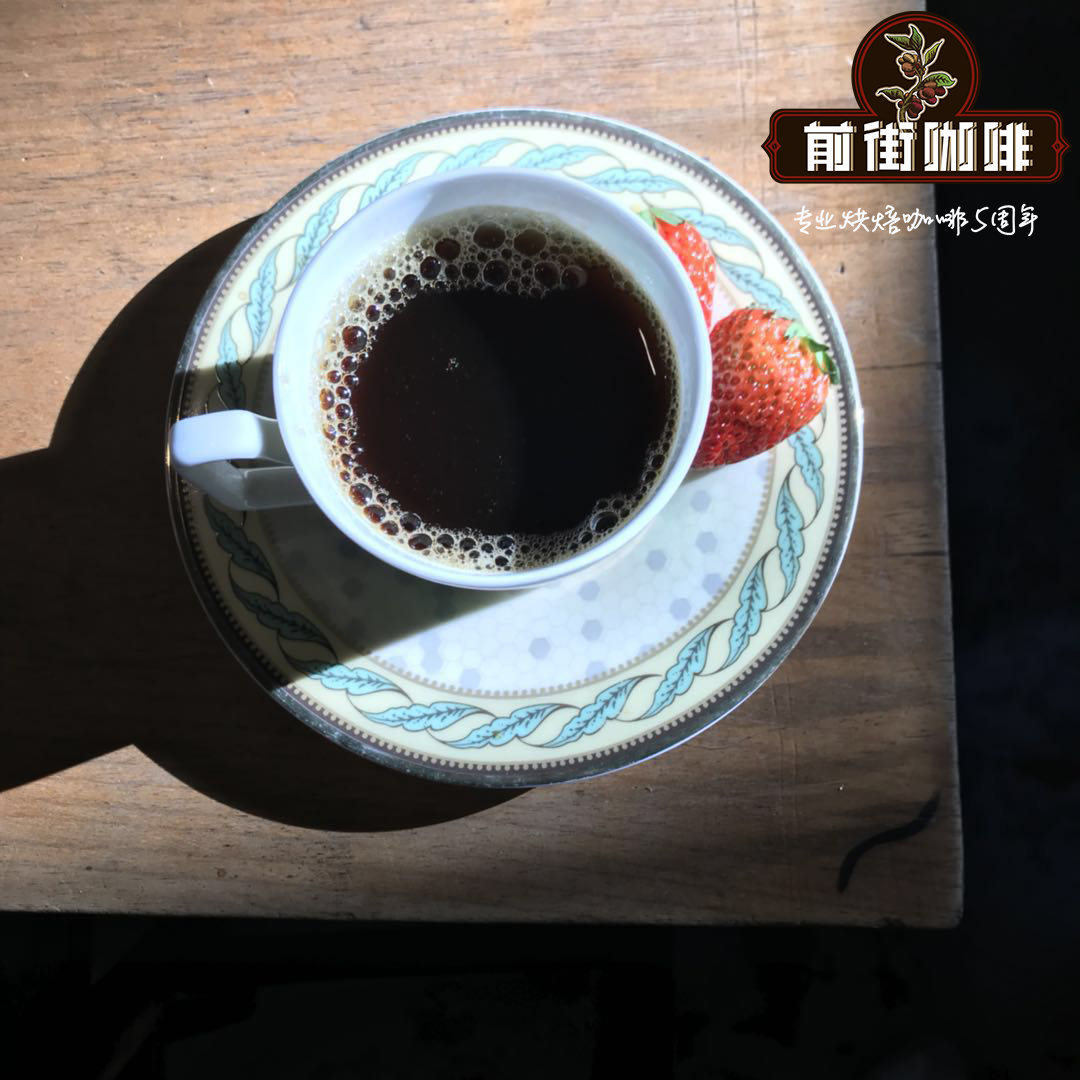
Divina Mountain Estate is run by Rodrigo Sanchez, who was born in the Huila region and grew up around the estate. It is the property his parents and grandparents left to him, and they had a strong influence on him, instilling a deep passion for coffee.
In 2002, Rodrigo and his wife were selected for a special teleconference where they learned about the physical and sensory analysis of coffee from the Palestina-Huila region, which they used to improve cultivation and processing. In 2013, Divina Mountain Estate was established. Today its coffee is known worldwide, producing Geisha with exceptional flavor. The washed processing method gives this Geisha a distinct floral note and a refreshingly sweet-sour taste.
FrontStreet Coffee's three-stage pour-over
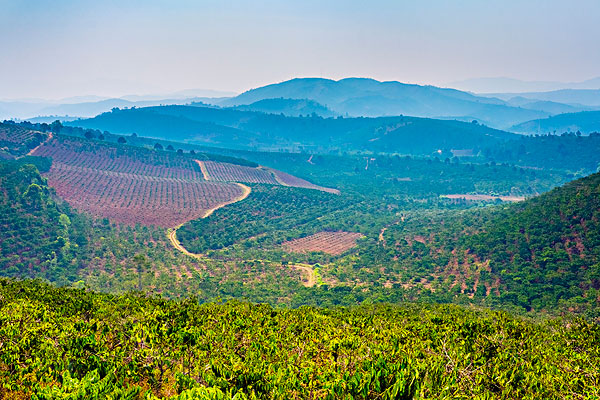
Today FrontStreet Coffee introduces the method it commonly uses for pour-over Geisha: the three-stage pour.
The three-stage pour-over method
Staged extraction divides one portion of water into three separate pours. It suits light, medium-light, and medium roasts, and uses a Kalita Wave dripper (the "cake cup"). Increasing the bloom time or the number of pour interruptions enhances the richness of the coffee's flavor.
The three-stage extraction method
Advantages: more complex layers than a single continuous pour, clearly separating the front, middle, and back end of the cup. The method means increasing the water volume after the bloom, typically pouring when the coffee liquid is about to drop to the surface of the grounds, and using small, medium, and large flows across the three stages.
Disadvantages: it demands a higher standard of control over flow rate and volume.
FrontStreet Coffee's Geisha pour-over parameters
The Wave dripper uses immersion extraction, increasing the contact area between grounds and water. Compared with a V60, it boosts texture and builds a thicker mouthfeel.
15g of coffee grounds, water at 91-92°C, grind setting BG 5R (64% pass-through on the Chinese standard #20 sieve), coffee-to-water ratio close to 1:15-16.
Method: bloom with 27g of water for 30 seconds. Starting from the center of the filter, pour the hot water in clockwise circles. Begin timing when brewing starts, pour to 27g, then stop and wait 30 seconds before the first pour.
For the first pour, circle as before but slightly more slowly, speeding up a little on the outer circle. Stop pouring at around 1:15. When the liquid level has dropped by one third, pour again. For the second pour, concentrate on the center and keep the stream off the point where the grounds meet the filter paper, to avoid channeling. Complete extraction at around 2:05; the tail end can be discarded, since the longer the extraction runs, the more astringency and roughness appear.
Stage distribution: 30g-125g-230g.
FrontStreet Coffee Recommendation
Geisha is wide enough a family that the pour-over you choose matters almost as much as the bean, and FrontStreet Coffee's lineup runs from accessible everyday cups to genuine collector lots.
At the top sits FrontStreet Coffee Esmeralda Red Label Geisha, sold by Hacienda La Esmeralda under the Esmeralda Special name. Each lot must cup above 90 points, carries its own lot number, and comes entirely from a single small plot — FrontStreet's Red Label, for instance, is from the Haramillo plot — so buyers can chase the subtle differences between plots. FrontStreet Coffee Esmeralda Green Label Geisha, originally Private Collection, de-emphasizes individual plots and instead blends lots from several parcels to express the estate's signature high-altitude Geisha character at a fairer price. For anyone wanting a first taste of "Geisha flavor," FrontStreet Coffee Boquete Geisha is the entry point: a Panamanian washed Geisha with the classic orange-blossom honey, oolong-tea body, and fine fruit acidity, layered and clear.
Ethiopia, where the variety began, offers a brighter counterpoint. FrontStreet Coffee Genlana Gesha grows at a washing station founded in 2014 near the Yirgacheffe and Genlana Abaya border, run by Israel Degefa across roughly 700 hectares of largely uncultivated, fertile, shade-dense land; cherries are hand-picked fully ripe and dried on raised beds for 14-20 days, and a medium-light roast brings out bright citrus acidity, elegant ginger-flower aroma, ripe-fruit sweetness, and a delicate, silky finish. For the collector, FrontStreet Coffee Gesha Village Gold Label is the Gesha 1931 variety, 10% of the village's output and among its finest non-auction coffees, while Gesha Village Red Label is Gori Gesha, 15% of production and scoring 88 or above on the SCA 100-point scale, fully traceable lot by lot. FrontStreet Coffee Strawberry Candy rounds out the range as an everyday Geisha-style blend of Costa Rica honey-processed coffee and Panama Geisha, with delicate florals and sweet fruit.
Geisha is a medium-light, floral-and-fruit bean and a dense one, so it tends to sink and clog the dripper's hole; FrontStreet Coffee suggests a grind of about 78% pass-through on a Chinese standard #20 sieve, roughly fine caster sugar, with water at 91°C. Its standard recipe is 15g in a small Hario V60 at a 1:16 ratio, poured in three stages: a 30g bloom for 30 seconds, a slow small-stream circle to 125g, a pause until the bed drains to half, then a final slow circle to 225g, for a total extraction of about 2 minutes 10 seconds to 2 minutes 20 seconds. Geisha also makes an excellent SOE: with a medium roast, pull 20g of coffee at a 1:2 coffee-to-liquid ratio in 25 seconds for 40g of espresso; add 200g of hot water for an Americano with orange, nut, and blueberry notes, or 200g of milk for a latte with a creamy shortbread texture.
Important Notice :
FrontStreet Coffee is a long-established specialty coffee roaster in Guangzhou China, selling freshly roasted beans from its own farm in Yunnan as well as dozens of carefully selected single-origin beans from around the world for both pour-over and espresso. The products deliver consistently excellent quality and great value, with shipping within 24 hours. Guangzhou's FrontStreet Coffee shop is recommended by many coffee lovers, and the beans are now available online at the Tmall 。
FrontStreet Coffee has moved to a new address:
FrontStreet Coffee Address: 315,Donghua East Road,GuangZhou
Tel:020 38364473
 Scan and follow the En Gafei WeChat official account. Please indicate that the reprint comes from "En Gafei".