Rainforest Alliance Certified Guatemala Cobán Region | Washed Fermented Jacob Peaberry (Bourbon, Caturra, Catuai, Pache)
Rainforest Alliance Certified Guatemala Coban Region: The Flavor of Washed Fermented Trogon (Bourbon, Caturra, Catuai, Pache)
The Coban coffee region lies in the Alta Verapaz province of Guatemala, a non-volcanic area covered with limestone and clay and characterized by cool, humid conditions. It is often shrouded by the famous "Chipi Chipi," a persistent fine drizzle, with mist and moisture soaking every inch of Coban. This fine mist comes from thick fog that forms when hot, humid tropical rainforest air rises to the high-altitude areas of Coban and then drifts down. This is the heart of Mayan culture and the source of Guatemala's largest tropical rainforest in Central America, with mountain ranges averaging over 1,600 meters. The contrast between these high ranges and the humid rainforest keeps the area shrouded in fine mist descending from dense cloud layers. The name "Coban" comes from the Q'eqchi language "Cob'An," meaning "the place of fog."
Coban is also one of the few breeding grounds for the quetzal (genus Pharomachrus and Euptilotis), Guatemala's national bird and the namesake of Guatemala's currency. If you visit Guatemala, you can see this long-tailed bird with its gorgeous, bright tail at "Biotopo del Quetzal."
"Coban" also refers to the Coban rainforest in central Guatemala, surrounded by majestic mountains and lush vegetation. Guatemala sits in Central America, with many high mountains and plateaus formed by volcanoes, producing high-quality, very hard Central American high-altitude beans and ranking as the ninth largest coffee-producing country in the world. Its main coffee regions include seven major areas: Antigua, Huehuetenango, Atitlan, Coban, Fraijanes, San Marcos, and Acatenango. The Coban coffee selected by FrontStreet Coffee is of the Caturra and Catuai varieties, mainly hand-picked by local women and then pulped to remove the fruit skin and pulp, a method that also uses less water than traditional washing. That water is recycled and reused, making the process more environmentally friendly.
Guatemala began growing coffee around 1850. Before World War I, Germans controlled up to 80% of national production, and most of it was exported to Germany. The official coffee growers association, ANACAFE, divided the country into 8 regions by geography and flavor in the 1990s and promoted the origins as registered trademarks. These include Antigua, Acatenango, Huehuetenango, and Atitlan, where many award-winning farms are found. Common varieties in Guatemala now include Typica, Bourbon, Caturra, Catuai, Pacas, Maragogype, Pacamara (a hybrid of the previous two), Pache Comum (a local variant of Typica), and Gesha.
Processing Method: Washed Fermentation and Low-Temperature Sun-Drying
Region: Coban
- Processing: Washed fermentation / sun-dried at low temperature
- Soil: Limestone clay
- Temperature: 15-20°C
- Altitude: 1300-1500 meters
- Varieties: Bourbon, Caturra, Catuai, Pache
- Certification: Rainforest Alliance Certified
Cupping Records
The cupping focus is its sweetness, followed by orange notes and a comfortable acidity. This is a coffee with excellent balance, a superior body, and some acidity. Very sweet caramel, with floral, pear, raisin, and berry notes. The aftertaste carries blackberry aroma, with notes of orange and chocolate. Clear fresh floral, fruit, and chocolate notes, with caramel sweetness, excellent body balance, and a pleasant aroma.
FrontStreet Coffee Recommended Brewing
- Dripper: Hario V60
- Water Temperature: 90°C
- Grind Size: Fuji Royal Grind 3.5
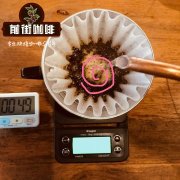
Brewing Method: Brew ratio 1:15, 15g of coffee grounds. First pour 25g of water for a 25s pre-infusion. Second pour to 120g, then pause. Wait until the water level in the coffee bed drops halfway, then continue pouring slowly until reaching 225g total. Drawdown around 2:00.
Analysis: A three-stage brew clearly defines the front, middle, and back-end flavors of the coffee. Because the V60 has many ribs and drains quickly, pausing the pour extends the extraction time.
FrontStreet Coffee Recommendation
Coban's cool, misty climate and washed processing produce a cup defined by sweetness and balance, and the same qualities are what FrontStreet looks for in its washed lineup. FrontStreet's Yirgacheffe Gotingding Cooperative is a strong starting point: Gotingding is a processing team from Gotingding village with deep experience, and its coffee became known for a particularly refined and clean flavor. Because it is washed, it shows jasmine florals and bright citrus acidity to the fullest, and a medium-light roast brings out green tea and honey notes as well. It suits pour-over, cold brew, or espresso.
FrontStreet's Kenya Little Tomato is the other benchmark for washed coffee. Kenya is especially skilled at double washing, running the beans through a second wash cycle, and the repeated rinsing and soaking draws out a juice-like quality to the extreme. In the cup you find cherry tomato, smoked plum, snow pear, black plum, and brown sugar, sweet-and-sour and juicy. FrontStreet's Jamaica Blue Mountain No. 1 shows a different side of washing. Jamaica suffers from limited sunshine, so washing was adopted to reduce the moisture around the bean before drying, shortening drying time and producing bright, low-defect green beans; the result is a dense aroma with hazelnut, cream, chocolate, and caramel, and a balance in which no single note dominates.
A washed coffee like the Coban is best brewed to protect that clarity. Keep the water around 90°C, grind to a medium setting such as Fuji Royal 3.5, and use a 1:15 ratio with 15g. Bloom with 25g for 25 seconds, pour to 120g and pause, then finish slowly to 225g once the bed has dropped halfway, aiming for a drawdown near 2:00.
Important Notice :
FrontStreet Coffee is a long-established specialty coffee roaster in Guangzhou China, selling freshly roasted beans from its own farm in Yunnan as well as dozens of carefully selected single-origin beans from around the world for both pour-over and espresso. The products deliver consistently excellent quality and great value, with shipping within 24 hours. Guangzhou's FrontStreet Coffee shop is recommended by many coffee lovers, and the beans are now available online at the Tmall 。
FrontStreet Coffee has moved to a new address:
FrontStreet Coffee Address: 315,Donghua East Road,GuangZhou
Tel:020 38364473
 Scan and follow the En Gafei WeChat official account. Please indicate that the reprint comes from "En Gafei".