How to Use the SCAA Flavor Wheel? Slurping Techniques for Hacienda La Esmeralda Geisha? How to Evaluate Consistency, Cleanliness, and Mouthfeel?
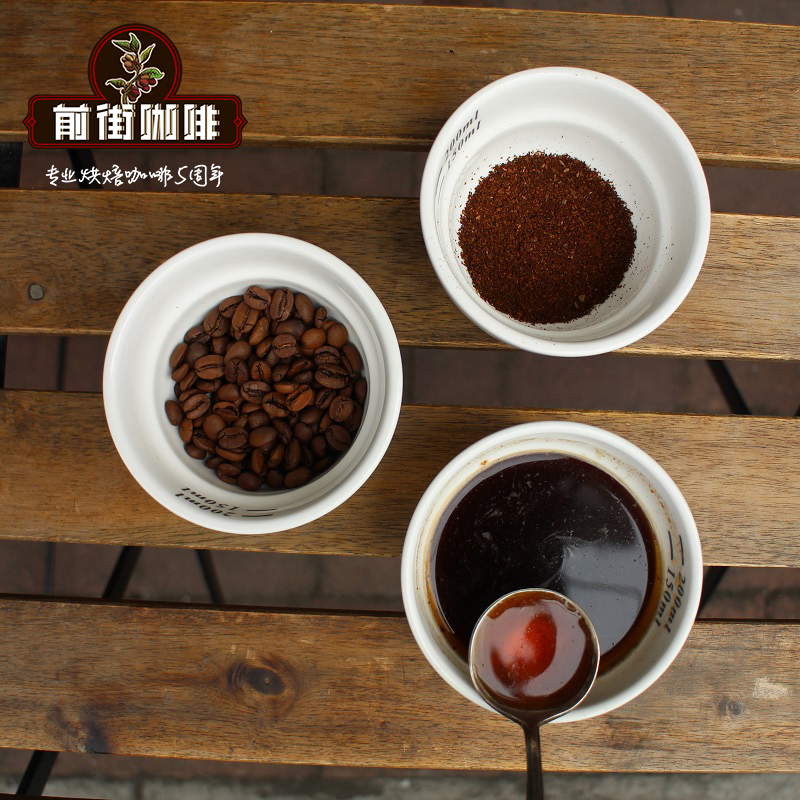
How to Use the SCAA Flavor Wheel and Cupping Techniques
How do you use the SCAA flavor wheel? What are the cupping techniques for Hacienda La Esmeralda's Green Label? And how should you evaluate consistency, cleanliness, and mouthfeel?
Before green coffee is shipped worldwide, it is first cupped by local farmer associations or processing plants to confirm the beans' aroma and flavor, then reclassified; only after cupping is it shipped. True cupping has standardized regulations for both roasting and evaluation - in other words, the core purpose of cupping is to experience a coffee bean's most original flavor under identical conditions. The importance of the flavor wheel lies in unifying the language different people use to describe coffee flavors. This consistency, together with research on taste sensations, helps industry professionals communicate when studying coffee flavors, and also informs decisions about how and where to plant coffee. Professional organizations like the Specialty Coffee Association of America (SCAA) use even more detailed cupping forms, evaluating "uniformity," "clean cup," "mouthfeel," "overall," "taint," and "fault" in addition to the basics. Using cupping to judge coffee flavor, mouthfeel, and quality level is an extremely scientific method. Typically, a water-to-coffee ratio of 1:18 and water temperature of 94°C are used; after pouring, wait 4 minutes before breaking the crust to taste the coffee.
The flavor wheel can be used by general coffee enthusiasts and professional cuppers alike, and the key point is careful tasting. Tasting coffee reveals different aromas and mouthfeels at different stages:
- The aroma of freshly ground coffee
- The aroma when coffee is being brewed
- The flavor when the coffee enters the mouth
STEP.2 Using the Flavor Wheel from the Center
Start from the center and work outward. The most basic tastes sit at the center, extending outward to more detailed flavors and mouthfeels. When tasting, you can pause at one position and slowly extend outward for more precise descriptions. For example, if you perceive floral aromas in your mouth, extend toward the floral section to find more descriptive directions. You're not limited to one section, since a coffee may carry diverse flavors like fruit and flowers. Repeat the steps as many times as needed until you can fully describe the coffee - that is mastery of the flavor wheel's basic usage.
STEP.3 Descriptive Vocabulary on the Flavor Wheel
The flavor wheel uses terminology from the World Coffee Research Sensory Lexicon. Most users won't be trained in this standard attribute set designed for coffee research, but the vocabulary still lets you identify standard attributes on the wheel, and cuppers can seek out clear, precise descriptive terms.
STEP.4 Recording Perceived Aromatic Memories and Mouthfeel
You can use the WCR vocabulary as a reference, record the aromas and mouthfeels you perceive during tasting, and find corresponding words on the chart to anchor and position the mouthfeel.
STEP.5 Correlation of Descriptive Terms
Understanding the attributes of the vocabulary and returning to the center of the chart, you can use a specific attribute to describe the coffee you just tasted while also checking the surrounding attributes. There are spaces between attributes, with differing spatial distances: if two attribute units are connected, the attributes are related; small gaps indicate a looser correlation. The larger the separation, the less similar the attributes.
STEP.5 Meaning of the Colors on the Flavor Wheel
Vision is influenced by food colors, which in turn create sensory connections with impressions and mouthfeel - which is why visual terminology can describe taste. Coffee might taste "bright," for instance, and with that awareness you can look at the wheel's colors and connect descriptions to colors to express the attribute. This helps anyone uncertain about direction find descriptive terms: when perceiving nutty flavors, follow the wheel's guidance to the brown section to find similar tastes like hazelnut or almond.
The SCAA Coffee Flavor Wheel is only a reference scale. The mouthfeel and aroma each drinker perceives are never entirely the same, because everyone's experience and cognition differ, and so will their descriptions. Regardless of correctness, every opinion has reference value - when drinking coffee, feel free to express your own.
Freshly roasted beans are not cupped immediately; they rest for a period, giving the beans time to awaken and develop more complete flavors. Typically, standard cupping times in competitions are between 8 to 24 hours after roasting, and each bean is cupped three or more times so judges can evaluate the consistency of its flavors.
Purpose of Cupping:
- To identify coffee quality through scientific methods.
- For beans from the same origin roasted differently, determine which roasting method and level is best.
- For beans from different origins roasted the same way and level, determine which origin is best.
What is Needed for Cupping?
- 4-5 types of green beans and roasted beans
- Grinder
- Plates
- Glasses
- Spoons
- Empty bowls
- Scale
- Electric kettle
- Water
- Cupping forms
Coffee Cupping Brewing Standards:
Dry-clean the grinder before grinding. Water quality TDS specification: 125-175ppm (Total Dissolved Solids). Water-to-coffee ratio: 1:19 - 1:20 (W/W).
Cupping Techniques:
- Smell dry fragrance (within 10 min after grinding)
- Pour hot water (93°C, within 10 min after grinding)
- Smell wet aroma (within 15 min after grinding)
- Crust-breaking technique (surface disturbance)
- Slurping (high, medium, low temperatures)
- Small sip of 5-10 cc
- Residence time 5-10 seconds
- Interval time 15-10 seconds
Cupping Steps:
- First place plates containing 4 types of green beans and roasted beans on the table, selecting 4 types each of green and roasted beans. Each plate of green beans and roasted beans is accompanied by a glass, a spoon, and an empty bowl.
- Pick up the plates of green beans and roasted beans, smell the flavors, judge their characteristics, confirm whether the green beans are moldy and assess the roasted beans' aroma, and record each bean's flavor on the cupping form.
- After grinding the different coffees, place 8-10 grams of grounds in each glass, then pour 120-150 ml of hot water at around 92°C into each cup. Wait a moment for the grounds to settle and observe their solubility.
- Gently stir the thick coffee surface with a spoon, bring your nose close to smell the aroma, then record the flavor on the form.
- Use the spoon to scoop the floating grounds off the surface, then take a spoonful of coffee into your mouth. Pay special attention to making a "slurping" sound as you draw the coffee in - but do not swallow. Use your tongue to push the coffee against your front teeth to judge its taste, let it circulate in your mouth and chew its flavor; finally, spit it into the empty bowl beside you.
- Record the coffee's performance and flavor at each stage on the cupping form to complete the cupping.
Main Content Reflected in Cupping Forms: Coffee Flavor and Mouthfeel
- Fragrance: the aroma of the coffee beans.
- Aroma: the smell of the coffee after brewing.
- Body: the texture of the coffee liquid in the mouth.
- Flavor: the taste when the coffee enters the mouth.
- Acidity: whether the coffee's acidity is bright, lively, sharp, or dull.
- Sweetness: the intensity of sweetness left as the coffee circulates in the mouth.
- Aftertaste: the flavor and aroma remaining after you taste and spit out the coffee.
Cupping to SCAA standards requires careful control of even indoor temperature and humidity. On the scoring scale, 95 to 100 points is Outstanding, 85 to 89.99 is Excellent, 80 to 84.99 is Very Good - and generally speaking, anything over 80 points is specialty coffee.
FrontStreet Coffee Cupping [Hacienda La Esmeralda Green Label] Results:
The acidity upon entry is delicate and gentle. Panama Hacienda La Esmeralda's Green Label Geisha has rich flavor layers: the moment it enters the mouth, floral and fruit aromas explode! With changing temperatures, the cup moves from jasmine and citrus to berries and honeysuckle, then transforms into fruit candy and oolong tea aroma, finally leaving a cantaloupe aftertaste.
Peach sweetness and honey aroma are refreshing and comfortable, bright yet balanced, with extremely strong aromatic layering. The fruit sweetness and aftertaste are intense, and on entry there is strawberry fruit aroma with strong yet gentle citrus-lemon acidity. Drinking it simply doesn't feel like the coffee you thought you knew.
FrontStreet Coffee Recommendation
Geisha exists in many forms, and knowing the tiers helps you choose. Panama's Hacienda La Esmeralda divides its line into the Red Label (Esmeralda Special), grown at 1600-1800 meters and cupping above 90 points per batch with single-lot traceability, and the Green Label (Private Collection), blended from multiple high-altitude lots and offering the estate's signature Geisha character at a friendlier price. For beginners wanting a first taste of Geisha, FrontStreet recommends the entry-level Boquete Geisha from Panama - affordable, with classic orange-blossom honeyed sweetness, oolong-tea texture, and distinct layers.
Ethiopia, Geisha's birthplace, has its own stars. FrontStreet's Gelana (Granana) Estate Geisha, medium-light roasted, shows bright citrus acidity, elegant ginger-flower aroma, and full ripe-fruit sweetness. For advanced drinkers, Geisha Village Gold Label (Geisha 1931, natural-processed, 10% of the estate's output) and Red Label (Gori Gesha, single-terroir, 88+ points on the SCA scale) offer competition-grade cups.
For brewing Geisha at home: treat it as a floral-fruity, medium-light roast with a hard bean, grind coarse (about a 78% pass on the #20 sieve - fine granulated sugar), and use 91°C water. FrontStreet's recipe: 15g of coffee in a small Hario V60 at 1:16, three-stage pour - 30g bloom for 30 seconds, to 125g, then to 225g when the bed drains halfway - finishing in about 2 minutes 10 seconds to 2 minutes 20 seconds.
Important Notice :
FrontStreet Coffee is a long-established specialty coffee roaster in Guangzhou China, selling freshly roasted beans from its own farm in Yunnan as well as dozens of carefully selected single-origin beans from around the world for both pour-over and espresso. The products deliver consistently excellent quality and great value, with shipping within 24 hours. Guangzhou's FrontStreet Coffee shop is recommended by many coffee lovers, and the beans are now available online at the Tmall 。
FrontStreet Coffee has moved to a new address:
FrontStreet Coffee Address: 315,Donghua East Road,GuangZhou
Tel:020 38364473
 Scan and follow the En Gafei WeChat official account. Please indicate that the reprint comes from "En Gafei".