The Purpose of Coffee Bloom, The Role of Coffee Bloom, How to Adjust If Coffee Has Astringency?
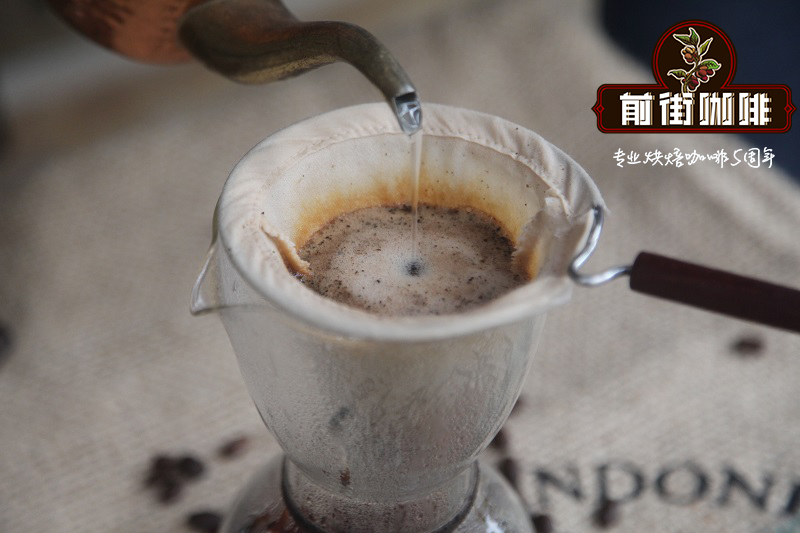
The Importance of Blooming in Coffee Brewing
In the brewing process, there is one crucial yet often overlooked step: the bloom.
Understanding Astringency in Coffee
Generally, astringency comes mostly from the later stages of brewing, when extraction time runs too long. But the bloom itself can also be a source of astringency, and this kind can be felt from the first sip all the way through to swallowing, making flavor defects overwhelmingly obvious. It is hard to mask with extra water or by shortening overall extraction time, which can be frustrating.
The Purpose of Blooming
1. To ensure most of the coffee grounds absorb water and expel large amounts of air, creating a saturated state among the grounds and improving extraction efficiency.
2. If the water added exceeds the absorption limit of the grounds, the following pour will push out the water that was initially absorbed into them.
What Is the Water Absorption Limit of Coffee Grounds?
Different roast levels and grind sizes all make a difference. In addition, during the bloom the outermost layer of grounds typically doesn't receive much water, and factors such as pouring method, water softness, and how the filter cup shape affects ground distribution all have an impact. A bloom water ratio of 1:2 therefore works well in most situations.
The second point above describes water exceeding the absorption capacity of the grounds, causing the initially absorbed water to be pushed out. However, if dripping occurs because of the force from your gooseneck kettle, a coarser grind size, or excessive gaps between dry grounds, then even if water passes through the bed and drips out, the grounds have still absorbed enough water and the bloom has still done its job. It can even be considered necessary. In that case, dripping won't cause the bloom to fail.
Optimal Blooming Technique
1. When the bloom water is within the 1:2 absorption limit, you can freely experiment with various pouring methods.
For example: inside to outside, outside to inside, lingering longer in the center, fast circular motions, slow circular motions, small amounts without circling. Combine these with observation of the bloom to find the method that achieves better degassing. Don't worry about adding too much water; the bed has enough capacity to absorb it.
2. If dripping occurs during the pour, it must be paired with observation.
If dripping is caused by the bed not yet absorbing water and having larger pores, it may be due to pouring too quickly or too much water at a single point. Simply adjusting the force or position of the pour can improve this. Even if the drip amount isn't significant, you don't need to fix it; treat it as a necessary part of achieving the bloom. However, if dripping is caused by the bed already exceeding its absorption limit, it means that within the 1:2 pour (which should be a reasonable amount) the water absorption is uneven, with some grounds taking in too much water and others too little. This causes uneven degassing and affects the flow rate of subsequent pours.
A typical observation point: when you pour after the bloom ends, the flow rate suddenly becomes fast and slow, or abnormally large bubbles rise around the bed. Both indicate uneven water absorption, and you should go back and rethink the bloom.
Blooming Time for Different Roast Levels
Blooming time also varies with the bean. Dark-roasted beans degas more vigorously, so blooming for about 25 seconds is generally enough. Light-roasted beans can bloom for 30 seconds without worry. Taking FrontStreet Coffee's Golden Mandheling as an example, after blooming for about 25 seconds you can watch the bloom surface change from moist to matte, which signals that the bloom has ended.
FrontStreet Coffee is a roastery in Guangzhou with a small storefront but a diverse bean selection, where you can find various famous and lesser-known beans, along with online shop services.
FrontStreet Coffee Recommendation
A good bloom matters most with the delicate, aromatic beans you brew on a V60, and FrontStreet's Yirgacheffe Gedingding is a perfect place to start. It is a washed Ethiopian coffee from Gedingding village, with vivid citrus, berry, and floral aromas followed by a green-tea-like sweetness. Unlike the "sour coffee" many people imagine, a good Yirgacheffe's acidity is soft and bright, more like the natural tang of fruit, which makes it very easy to enjoy.
Roasted medium-light and brewed as a pour-over, it keeps its jasmine florals and lively citrus acidity while adding green tea and honey notes, and it also works well for cold brew and espresso.
Important Notice :
FrontStreet Coffee is a long-established specialty coffee roaster in Guangzhou China, selling freshly roasted beans from its own farm in Yunnan as well as dozens of carefully selected single-origin beans from around the world for both pour-over and espresso. The products deliver consistently excellent quality and great value, with shipping within 24 hours. Guangzhou's FrontStreet Coffee shop is recommended by many coffee lovers, and the beans are now available online at the Tmall 。
FrontStreet Coffee has moved to a new address:
FrontStreet Coffee Address: 315,Donghua East Road,GuangZhou
Tel:020 38364473
 Scan and follow the En Gafei WeChat official account. Please indicate that the reprint comes from "En Gafei".