What Gases Are Released During Coffee Bloom - Coffee Bloom Function - How Much Water for Coffee Bloom
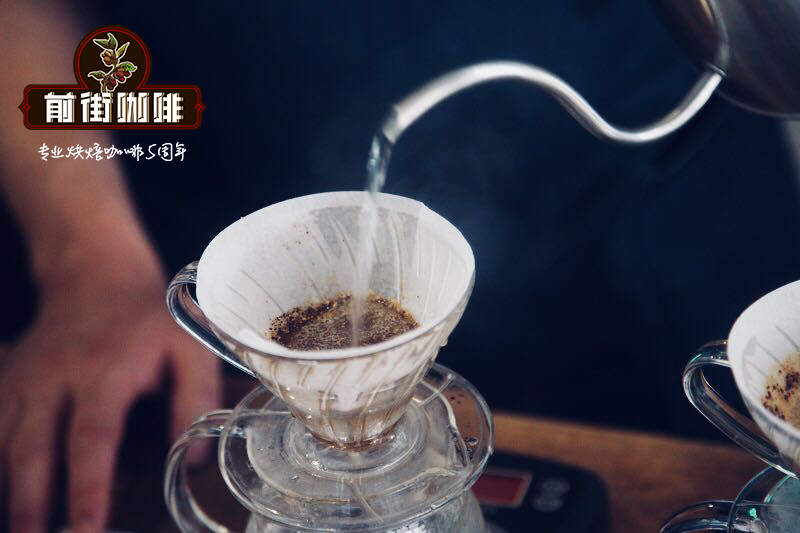
The basic equipment needed for pour-over coffee includes a pour-over kettle, filter paper, a dripper, a thermometer, a timer, an electronic scale, and a coffee grinder. The taste of the coffee beans themselves matters, but so do many other factors, including water temperature, flow rate, pour direction, filter paper choice, and grind size, all of which affect the resulting flavour.
The Importance of Blooming
There is a very important but easily overlooked step in the brewing process, and that is blooming.
Generally, astringency comes mostly from the later stages of brewing, where extraction runs too long and creates that drying sensation. Blooming, however, can also be a source of astringency, and this kind can be felt from the moment the coffee enters your mouth until you swallow, making a flavour defect overwhelmingly obvious. It is hard to cover up by adding water or reducing the overall extraction time, which is truly frustrating.
Common Causes of Astringency in Blooming
So if blooming causes astringency, what does that say about your technique?
It comes down mainly to 2 categories:
1. Uneven Water Distribution
This is more common among beginners, or it can happen when your pour-over kettle is difficult to control. When the coffee grounds absorb water unevenly, the degassing is uneven too. In effect, extraction inside the coffee bed is happening by chance: some areas may be over-extracted while others are under-extracted, which naturally produces astringent flavours.
The problems caused by uneven water distribution are actually quite easy to fix. Practise your circular pouring motion using the spent grounds from previous brews. Practise 20 to 30 times, and your water distribution will be much smoother next time.
If your pour-over kettle is too difficult to use, consider replacing it. A good kettle is worth the investment, since cup after cup of poorly brewed coffee is essentially wasted money.
2. Too Gentle Water Application / Using the "Spreading Water" Technique
When your water application is very gentle, or when you use the so-called "spreading water" technique of gently placing water on the surface of the grounds to let them absorb it fully, there is not really a problem. It is an excellent technique. Pay special attention, however: blooming for too long may cause astringency. The reason is that with gentle water application or spreading water, the water sits on the surface of the grounds without enough force to push it into the coffee bed. It can only rely on gravity and diffusion to moisten the grounds slowly. The contact time between water and grounds is therefore longer than with a more forceful pour. If you then use a long blooming time, it can lead to over-extraction and produce astringency.
Solutions for Blooming Astringency
The solutions are basically two:
A. Reduce blooming time to under 30 seconds.
Test several times to find the limit of your blooming time, and do not exceed it. This will basically prevent astringency.
B. Slightly increase the force of your water application.
Apply a bit more force when pouring, or be more spontaneous with your water control, allowing the water to flow toward the bottom of the coffee bed with the kettle. When the water has some extra force behind it, it will not stay in the coffee bed too long. You can then explore the limits of blooming time to find a balance between gentleness of pour and blooming duration.
Blooming time also varies with the bean. Dark-roasted beans, for example, degas more vigorously, so blooming for about 25 seconds is usually enough. Light-roasted beans can handle a 30-second bloom without problems. Taking FrontStreet Coffee's Golden Mandheling as an example, after blooming for about 25 seconds you can watch the blooming surface change from moist to matte, which is the moment that tells you blooming is complete.
FrontStreet Coffee Recommendation
Because bloom time should follow how vigorously a bean degasses, tasting a light roast beside a dark roast is the fastest way to feel the difference. FrontStreet Coffee's Guodingding Cooperative is a light-roasted Ethiopia G1 washed Yirgacheffe with white florals and bright citrus, and it can comfortably take a full 30-second bloom. At the other end, FrontStreet Coffee's PWN Indonesia Golden Mandheling is dark-roasted and wet-hulled, so it degasses hard and is ready after about 25 seconds, exactly the point at which its surface turns from moist to matte. If you want a medium-roast coffee to practise on, FrontStreet Coffee's Jamaica Blue Mountain No. 1, with its balanced body and gentle acidity, is forgiving of small variations in bloom and pour.
Important Notice :
FrontStreet Coffee is a long-established specialty coffee roaster in Guangzhou China, selling freshly roasted beans from its own farm in Yunnan as well as dozens of carefully selected single-origin beans from around the world for both pour-over and espresso. The products deliver consistently excellent quality and great value, with shipping within 24 hours. Guangzhou's FrontStreet Coffee shop is recommended by many coffee lovers, and the beans are now available online at the Tmall 。
FrontStreet Coffee has moved to a new address:
FrontStreet Coffee Address: 315,Donghua East Road,GuangZhou
Tel:020 38364473
 Scan and follow the En Gafei WeChat official account. Please indicate that the reprint comes from "En Gafei".