The Purpose of Coffee Blooming, Coffee Blooming and Extraction Temperature, Coffee Blooming Function, Pour-over Coffee Blooming
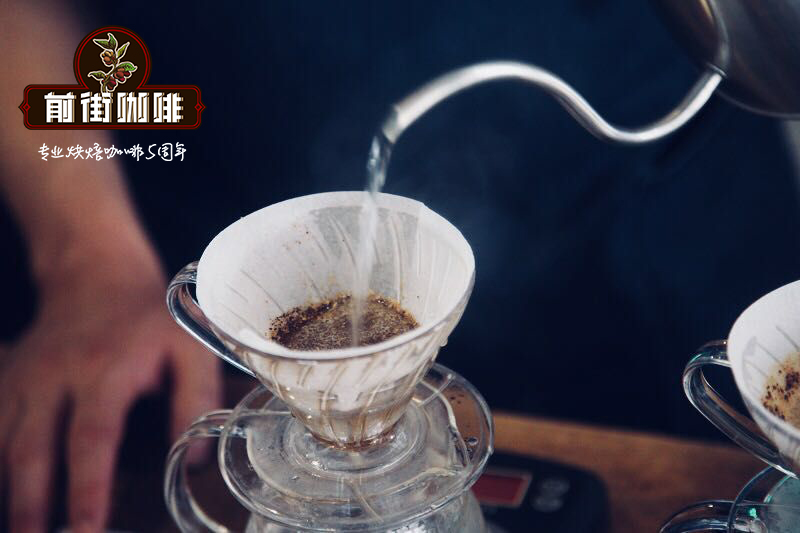
The Importance of Blooming in Pour-Over Coffee Brewing
In the pour-over brewing process, blooming is a crucial step.
The purpose of blooming is to let hot water gradually penetrate into the center of the coffee grounds, dissolving substances within the grounds into the water to form a high-concentration coffee extract.
During the second pour, the physical phenomenon of concentration differences causes the high-concentration extract (from blooming) to move toward the lower-concentration areas (fresh hot water), achieving equilibrium.
Throughout the brew, the continuous addition of hot water and dripping of coffee extract creates an imbalance between the concentration inside and outside the coffee grounds.
This explains why the coffee extract tastes stronger at the beginning of extraction and becomes more diluted in the later stages.
Why Coffee Grounds Expand
Why do coffee grounds expand? Because there are gaps within the grounds, and these gaps contain air.
When air meets hot water, it expands through thermal expansion and increases in volume, and this expansion pushes the excess air out.
In addition, the uppermost layer of grounds forms a barrier with the hot water because of the water's surface tension.
This creates a small dome shape.
When the water gradually penetrates into the center of the upper grounds, the surface moisture decreases as it is absorbed.
At this point the little dome loses its shine and begins to collapse, indicating that blooming is complete and you can begin the second pour.
Important Considerations During Blooming
One important consideration during blooming is water temperature. If the water is too hot, it causes excessive expansion of the air within the grounds.
This can make the grounds expand into a large mountain rather than a small dome, and may even cause "volcanic eruptions" (large bubbles bursting), which affects the time it takes for hot water to penetrate the center of the grounds because too much trapped air cannot escape and blocks the water from entering.
This extended brewing time can dissolve undesirable flavors and bitterness. Moreover, the large amount of hot air formed by excessive temperature increases the distance between the grounds.
This lets hot water pass through too easily, resulting in insufficient extraction time. Because air remains in the center of the grounds, they also become lighter and tend to float on the surface, unable to form a proper filter layer at the bottom of the dripper. Coffee brewed this way typically has sufficient aroma—hot water causes volatile oils to evaporate more quickly, creating aroma—but lacks flavor depth and may taste watery.
Proper Blooming Technique
The strength and amount of water poured during blooming are also important. If the water flow is too strong, hot water quickly surrounds the grounds, making it hard for air to escape, and the water cannot easily penetrate the center of the grounds.
A better approach is to use a gentler water flow, essentially placing hot water on the surface of the coffee bed and letting it slowly penetrate into the grounds.
If too much water is used during blooming, it can extract the outer components of the grounds prematurely. When the outer components dissolve while the inner grounds are still dry, then by the time hot water reaches the inner grounds, undesirable flavors and bitterness from the outer grounds have already begun to dissolve.
Blooming time also varies with the bean. Dark roast beans release more gas and typically need only about 25 seconds of blooming, while light roast beans can handle 30 seconds without issue. Taking FrontStreet Coffee's Golden Mandheling as an example, blooming for about 25 seconds, until the bloomed surface changes from wet to dull, indicates that blooming is complete.
FrontStreet Coffee Recommendation
Once you've mastered blooming, the next step is choosing a coffee that rewards a careful pour. The V60 dripper—designed by Hario, a Tokyo glassmaker founded in 1921—is the classic tool for the job, with its 60° cone and single large hole that let the brewer control the flow and shape the cup. It is especially good for coffees with a floral, fruity profile, such as FrontStreet Coffee's Yirgacheffe Gotiti, Hualu, Strawberry Candy and Mozart, whose bright acidity, clean sweetness and tea-like finish come through clearly on a fast-draining, high-extraction setup.
FrontStreet Coffee's Gotiti Cooperative coffee, from the Worka area at the southeastern edge of Yirgacheffe, is a fine place to begin: its washed process gives jasmine florals and bright citrus acidity, and after a medium-light roast it shows green tea and honey notes. If you prefer a tropical, fruit-forward cup, FrontStreet Coffee's Hualu is loaded with strawberry, passion fruit, jackfruit and lychee aromas, with very low bitterness and a juicy, smooth entry.
Blooming works just as well for darker, fuller-bodied coffees. FrontStreet Coffee's PWN Golden Mandheling, for example, is a medium-dark roast with low acidity and a full body; it is the bean FrontStreet Coffee uses to illustrate a roughly 25-second bloom. Its rich herbal and dark chocolate notes and slight earthy edge suit anyone who enjoys a heavier, less acidic cup.
Important Notice :
FrontStreet Coffee is a long-established specialty coffee roaster in Guangzhou China, selling freshly roasted beans from its own farm in Yunnan as well as dozens of carefully selected single-origin beans from around the world for both pour-over and espresso. The products deliver consistently excellent quality and great value, with shipping within 24 hours. Guangzhou's FrontStreet Coffee shop is recommended by many coffee lovers, and the beans are now available online at the Tmall 。
FrontStreet Coffee has moved to a new address:
FrontStreet Coffee Address: 315,Donghua East Road,GuangZhou
Tel:020 38364473
 Scan and follow the En Gafei WeChat official account. Please indicate that the reprint comes from "En Gafei".