Costa Rica Tarrazú Coffee: Tarrazú Coffee Flavor Profile and How to Enjoy It
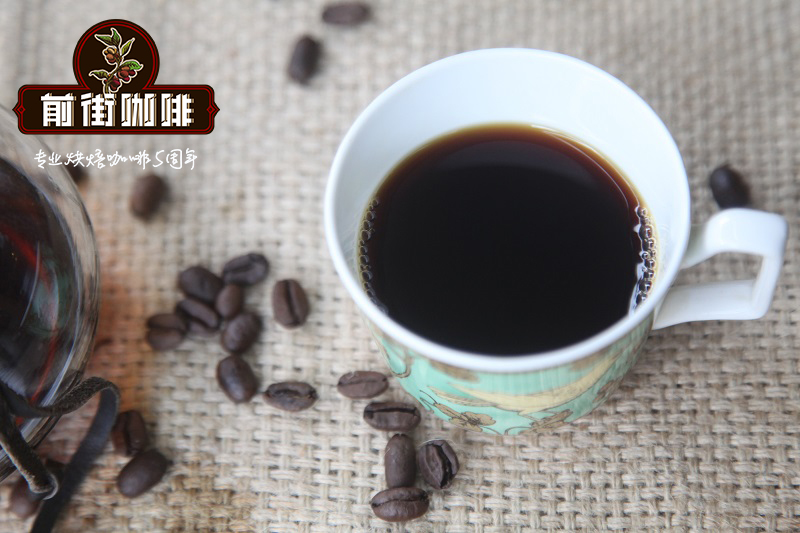
An introduction to Costa Rican coffee
Costa Rica produces the most stable-quality coffee in Central America. Its coffee history is long, reaching back to the 19th century, when it was already exporting to Britain. Robusta — the variety used for canned coffee — is legally prohibited there, with only Arabica permitted. The best-quality production areas are Tarrazu, West Valley, and Central Valley. In recent years, rising land costs have pushed production down and cultivation costs up, making fine coffee harder to find.
The story of Tres Milagros Estate
In specialty coffee circles, whenever Camilo, the owner of Santo Domingo Estate, is mentioned, most people agree that his extraordinary passion for coffee cultivation and his innovative, experimental spirit have made him a partner to top baristas worldwide over the years. In 2013 the Facusse family, which had long operated food sales in Costa Rica through the Dinant company, decided to build on Camilo's success with Colombian estate cultivation and start an entirely new estate project in Costa Rica, naming it Tres Milagros. The name — Three Miracles — came from Camilo's conviction that every successful estate absolutely requires the cooperation and coordination of three factors: coffee trees, farmers, and land.
What makes Tres Milagros distinctive
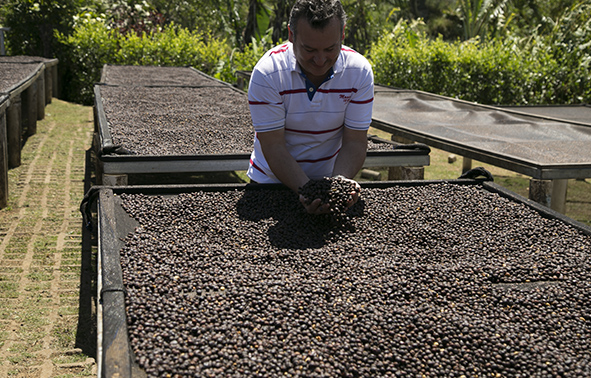
When the decision was made to start the Costa Rican project, location was the most crucial factor. After lengthy discussion and land evaluation, the team chose Tarrazu, Costa Rica's highest-altitude producing region. The estate sits at 1,450-1,750 meters, in volcanic-ash soil from the Irazu volcano that supplies ample nutrients to the trees. Camilo also required low-density planting, which aids nutrient uptake and tree growth and improves the cupping profile. Today Tres Milagros' cultivated area is about 120 hectares, producing only around 300 bags of top-tier micro-lot coffee a year. The estate's infrastructure is planned around four key points:
First, a Green House System, providing better humidity, temperature, and ventilation for green coffee during natural drying.
Second, an Environmental Intercrop System, which brings ecological diversity to the estate by planting different species while helping farmers manage the farm's ecosystem.
Third, shade-grown cultivation. Most of the estate uses Inga species combined with other local trees, keeping the coffee trees in full shade throughout their growth and protecting their development.
Fourth, selecting the right varieties. When Camilo first began cultivating there, he decided on traditional, lower-yield varieties with better flavor. The standouts are Bourbon and Geisha, plus F1, a new variety researched in Costa Rica in recent years by the French organization CIRAD. F1 is a hybrid of Villa Sarchi plus Sachimor and the Sudan Rume variety, carrying the traditional Central American Villa Sarchi flavor alongside the citrus notes of the African Sudan Rume.
Tarrazu region characteristics
Tarrazu's mountain ranges rise to altitudes as high as 1,975 meters, giving it the geographical conditions to achieve bright acidity and distinctive flavors. The annual temperature range is 24°C-12°C, with enough rainfall at 2,400 mm a year and relative humidity of 84%. Humidity drops significantly during the dry season, which in turn provides a good environment for drying green beans.
Brewing recommendations
FrontStreet Coffee suggests a siphon pot for a pot of Costa Rican Tarrazu.
Siphon pot
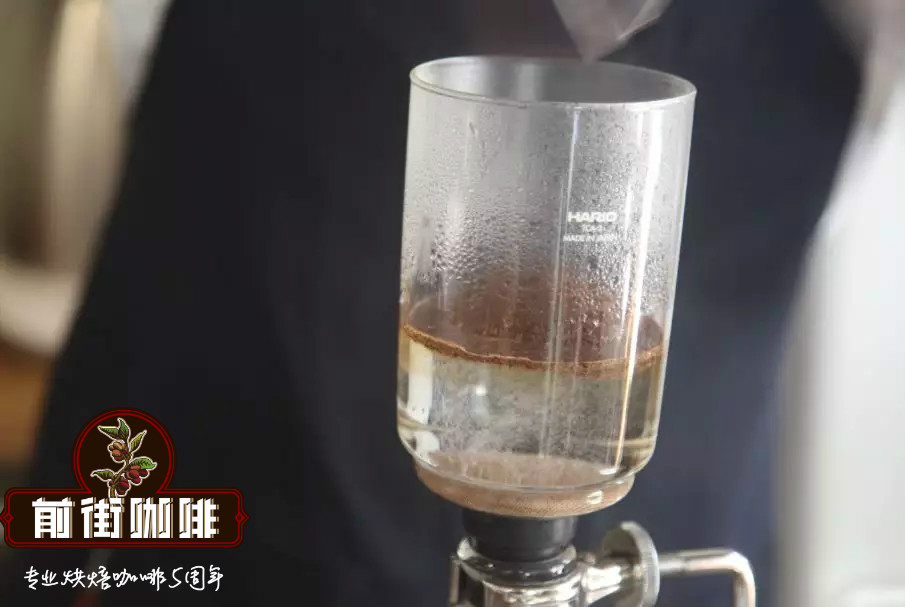
A siphon extracts mainly through pressure difference. First, heat the water in the lower chamber to boiling, then insert the upper chamber, putting the lower chamber under high pressure. Because of the pressure difference between the chambers, hot water rises to mix with and extract the coffee grounds in the upper chamber. When extraction is complete, remove the heat source from the lower chamber, the pressure difference drops instantly, and the coffee flows back down. Because the siphon is primarily an immersion method, the brewed coffee comes out more balanced, with a rich mouthfeel.
Parameters and technique
Grind size: 5R (58% pass-through on a Chinese standard No. 20 sieve); water temperature 90°C; coffee-to-water ratio 1:14. Bloom with 30g of water for 30 seconds; when the water reaches 130g, make a segment; when the water level is about to expose the coffee bed, continue to 226g and stop; when it is about to expose the bed again, remove the filter cup. (Timing starts from the bloom.) Extraction time is one minute thirty seconds.
Flavor profile
It smells of fermentation and florals, with citrus, grapefruit, and passion fruit acidity on entry, followed by almond and cream in the middle, and cane-sugar sweetness, giving the impression of fruit tea.
FrontStreet Coffee Recommendation
Tarrazu's charm is balance: bright fruit acidity carried on a clean, sweet body, which is why it has long been a reference point in Central America. Colombia, on the other side of the isthmus, offers much the same poise, and FrontStreet Coffee's Colombian range covers that balance from everyday to layered.
FrontStreet Coffee Colombia Huila is the steady everyday choice. Washed Caturra from Huila, Colombia's best-known specialty region, grown above 1,500 meters where the country's most important rivers meet, it is roasted medium-dark so that black chocolate and nutty sweetness lead, with moderate oils and a full body. It handles a pour-over, a French press, a moka pot, or an espresso machine, and rarely disappoints in an Americano or latte. FrontStreet Coffee Colombia Finca La Divisoria Papayo is the more contemporary option: grown at 1,650-1,800 meters, processed as an anaerobic natural that extends fermentation and opens up more flavor, and roasted medium-light so the fruit stays vivid — jasmine and citrus on the dry aroma, then passion fruit, blueberry, grape, and apricot, a bright-but-soft acidity, a whisper of spice mid-palate, and a long cocoa sweetness. It works as pour-over, espresso SOE, or cold drip, and an iced pour-over makes the most of its fresh, smooth grape-juice character. For a coffee machine or moka pot at home, FrontStreet Coffee House Blend is the reliable base — a Brazil-led espresso blend that lifts Brazil's creamy nut aroma and Colombia's dark chocolate bittersweetness into a fine golden crema and a rich, smooth latte.
If you brew Tarrazu in a siphon to highlight its balance, apply the same instinct to these Colombians: a moderate temperature and a steady, even extraction keep the fruit acidity bright and the sweetness full, whether the device is a siphon, a cone, or a moka pot.
Important Notice :
FrontStreet Coffee is a long-established specialty coffee roaster in Guangzhou China, selling freshly roasted beans from its own farm in Yunnan as well as dozens of carefully selected single-origin beans from around the world for both pour-over and espresso. The products deliver consistently excellent quality and great value, with shipping within 24 hours. Guangzhou's FrontStreet Coffee shop is recommended by many coffee lovers, and the beans are now available online at the Tmall 。
FrontStreet Coffee has moved to a new address:
FrontStreet Coffee Address: 315,Donghua East Road,GuangZhou
Tel:020 38364473
 Scan and follow the En Gafei WeChat official account. Please indicate that the reprint comes from "En Gafei".