What Coffee Beans Are Best for Espresso_What Kind of Espresso Blend Does a Coffee Shop Really Need?
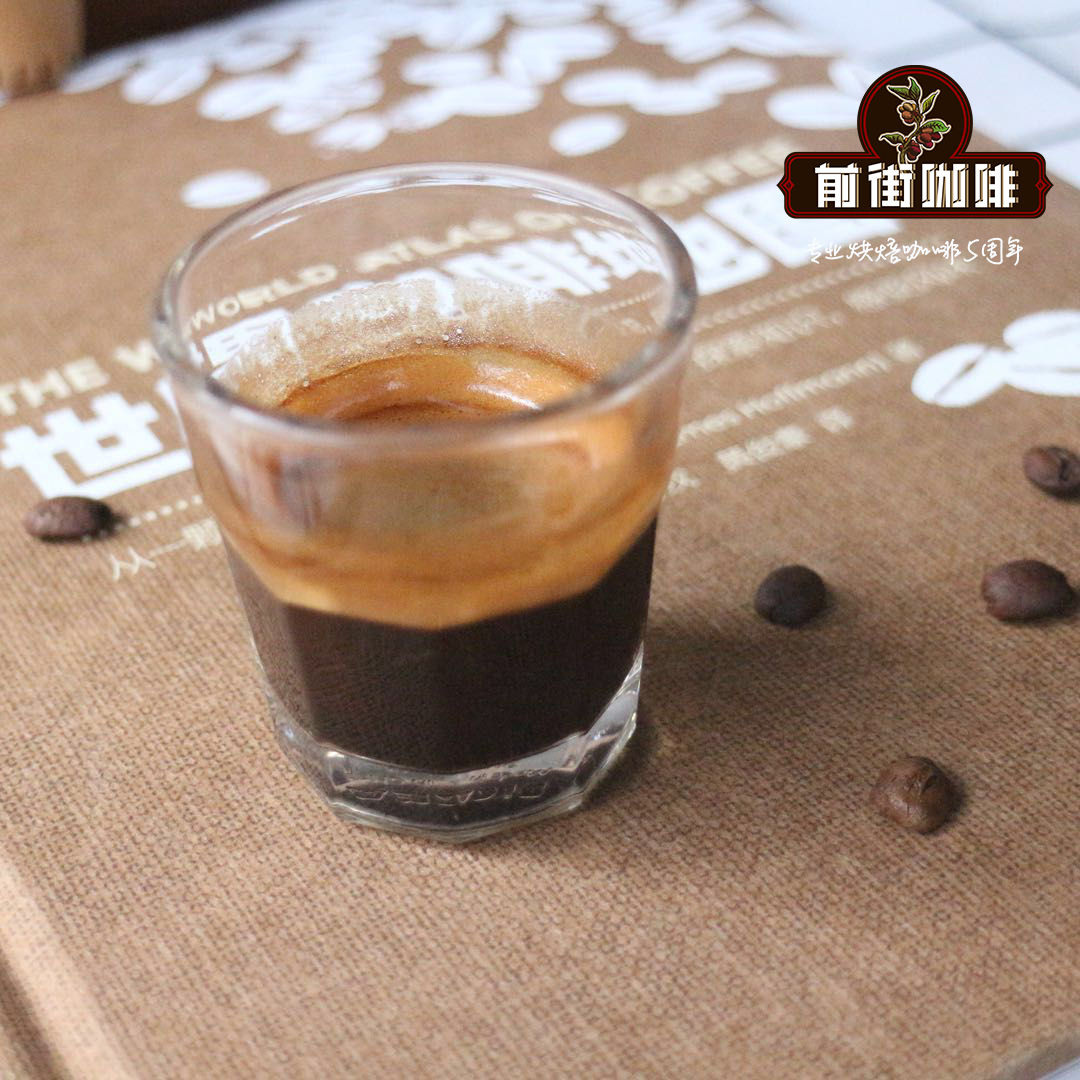
What Kind of Espresso Beans Do We Really Need?
Coffee roasting is a bit like fine cooking. Replication is already hard, and it is even harder to avoid the trap where one person's delicacy is another person's poison. A good blend has to be universally appealing.
This is where single-origin coffee falls short. Some people love the berry acidity of a Kenyan coffee, and an ordinary Kenyan satisfies them completely, while the friend sitting across the table, no matter how much you explain the estate, mention its price, or offer guidance, will find it as unpleasant as cold tomato soup.
1. Do Not Chase Acidity
Coffee roasting is broadly divided into three levels: light roast (chasing floral and herbal aromas), medium roast (seeking nutty and caramel notes), and dark roast (finding spice-like, chocolate, and resinous aromas).
This year, when developing a custom blend formula for a client in Guangxi, the client hoped to use Kenyan and Costa Rican beans in a medium roast to build a blend with extremely high acidity. Since it was a specialty cafe with regulars who are heavy coffee drinkers accustomed to acidity, that could work in one shop, but if such a formula were used in many shops, it would likely draw a flood of complaints.
In our customer surveys, more than 70% of customers dislike distinct acidic aromas in coffee. One quick way to sense this is the high sales volume of medium-dark roasted Mandheling coffee on Taobao across the entire market.
That is why most of our blend beans are roasted into the early, dense stage of second crack. For espresso blends, this roast level remains the market mainstream.
2. The Most Universally Appealing Taste Is Sweetness
At exhibitions, I have offered sample cups to passing enthusiasts, and regardless of geographical origin, region, or price, the coffee everyone favored always had distinct sweet characteristics.
Many baristas know that acidic beans can enhance sweetness when coffee blends with milk, so making a "sweet latte" that everyone likes is not difficult: you simply need good milk and a more acidic blend.
Unfortunately, many shops cannot justify two or three espresso grinders for production, so a blend should ideally serve espresso, black coffee, milk coffee, and iced coffee all at once.
Through years of sourcing and roasting, I have found several beans that show prominent sweetness in a blend: Nicaragua, Brazilian Yellow Bourbon, and El Salvador. These are not the only beans that can increase sweetness, but gratifyingly, all three also contribute body, so I personally recommend trying them. Because sourcing channels vary, the exact ratios and cupping results need practical testing.
3. Ignore "Personal Style": A Blend Is a Team Where Every Component Plays a Role
I have a friend new to roasting who excitedly shared his blend with me, saying the formula contained all good beans: natural Yirgacheffe, Kenyan, Guatemala yellow honey, COE beans, and 10% Panama Geisha.
Those are all beans that could steal the show. I asked him what roasting style he wanted to express, and he said "the smell of money." We laughed awkwardly for a while.
So before we start roasting, perhaps we should ask ourselves again: "When I scoop 1KG of Indonesian beans in, what exactly am I aiming for?"
Roasters need a detailed understanding of most beans on the market. It is like knowing the processing methods and flavor profiles of each ingredient before cooking. With these sour, sweet, bitter, spicy, and rich ingredients in front of us, the question becomes: "What style do I want to express with the formula I am making today?"
Experimenting with formulas is a real-life version of "Breaking Bad," aiming to create an exclusive "private cuisine" that belongs to you and is loved by everyone through the flavor fusion between beans. What happens when you blend Colombia's caramel flavors with Costa Rica's vanilla notes? Or can you perfectly integrate a berry-bomb natural Yirgacheffe roasted to medium-dark with your existing base? These answers require exploration through practice.
Because espresso exists as a concentrated essence, every flavor and defect in the beans is amplified several times, so creating a satisfying espresso blend is by no means easy.
Many people ask me: "What kind of espresso beans do we really need?"
My answer is: a blend that meets your customers' needs. Balanced, smooth, with sweetness, capable of handling the various types of production a shop requires.
Oh, and of course, it would be better if it were cheaper.
FrontStreet Coffee's Recommended Espresso Blend Beans
FrontStreet Coffee, a coffee roasting brand located at Dongshankou in the Yuexiu District of Guangzhou, offers freshly roasted espresso blends with full guarantees in both brand and quality. More importantly, they offer extremely high cost-effectiveness. Take the commercially popular FrontStreet Commercial Espresso Blend as an example: a 454-gram (one-pound) package costs only about 60 yuan. At 10 grams of coffee powder per espresso shot, one package makes 45 cups, costing less than 1.5 yuan per cup. Even if you use a double shot at 20 grams per serving, one double espresso does not exceed 3 yuan. Compared with certain well-known brands that sell packages for hundreds of yuan, this is a conscientious recommendation that meets the daily operational needs of a shop.
FrontStreet Coffee Recommendation
Deep, low-acid espresso lovers tend to gravitate toward Mandheling, and the FrontStreet PWN Indonesian Golden Mandheling is the highest grade of them all. FrontStreet sources top-quality Mandheling green beans and, after mechanical and multiple hand-sorting steps, selects only plump, flawless seeds. Given a medium-dark roast, it carries rich roasted aromas with a clean cup and full body, and is an excellent choice for anyone who dislikes acidity.
If you want to enjoy Mandheling on a coffee machine, try the FrontStreet Classic Blend, a popular repeat purchase. It builds on the creamy, nutty character of Brazilian coffee by adding medium-dark Mandheling, so butter, roasted chestnut, and caramel flavors stand out, while a small amount of Robusta boosts the richness of the crema. Latte art and layered Dirty drinks both become easy.
Important Notice :
FrontStreet Coffee is a long-established specialty coffee roaster in Guangzhou China, selling freshly roasted beans from its own farm in Yunnan as well as dozens of carefully selected single-origin beans from around the world for both pour-over and espresso. The products deliver consistently excellent quality and great value, with shipping within 24 hours. Guangzhou's FrontStreet Coffee shop is recommended by many coffee lovers, and the beans are now available online at the Tmall 。
FrontStreet Coffee has moved to a new address:
FrontStreet Coffee Address: 315,Donghua East Road,GuangZhou
Tel:020 38364473
 Scan and follow the En Gafei WeChat official account. Please indicate that the reprint comes from "En Gafei".