Which Espresso Beans are Best for Making Latte Coffee - How Does Latte Milk Coffee Taste?

When selecting espresso coffee beans, FrontStreet Coffee focuses on aspects such as flavor, body, and acid-bitter balance. Currently, the most popular type of espresso coffee is milk coffee. When coffee and milk are combined, FrontStreet Coffee considers various factors including the selection of espresso bean varieties and the coffee-to-milk ratio to ensure that the coffee flavor is not overwhelmed by milk while creating a harmonious blend.
What Are Espresso Coffee Beans?
Espresso coffee beans are typically blend coffee beans. What is a blend? It involves mixing various single-origin coffee beans together, usually with two or three different coffee beans being common.

The purpose of blending is quite evident - to gather the flavors of different coffee beans together, presenting a completely new flavor to achieve a more balanced effect. For example, if one coffee bean is smooth but lacks aroma, another bean rich in aroma can be added to complement each other's strengths and weaknesses. Just like in relationships, people hope to find someone who can complement them, as such relationships tend to be more reliable. The complementary nature of espresso coffee beans makes them more widely accepted.
FrontStreet Coffee's Espresso Coffee Bean Blending Secrets
First, plan a recipe formulation process, at which point you need to consider some basic questions, such as: Who is your recipe designed for? Home consumers, cafes, or a multi-purpose recipe? These questions determine what kind of flavors the recipe should have and how dark it should be roasted - the roaster must know what kind of taste they want to achieve. All of this must be decided in advance.

Second, each coffee bean used in the recipe must have its own distinctive character and perform well when made as a single-origin coffee. Some coffee roasters use inferior beans in their recipes and try to conceal their poor flavors through roasting. FrontStreet Coffee believes this is twice the effort for half the result, and customers won't be satisfied either.
Third, determine the roasting degree for each type of bean to allow the coffee beans to express their individual characteristics, using their different qualities to compose your recipe. FrontStreet Coffee suggests roasting first and then blending beans. You must try various roasting degrees for each coffee - this process is extremely critical, so be sure to experiment more! FrontStreet Coffee often sees many roasters skip this step and decide on the roasting degree for each coffee too early. Please remember, the optimal roasting degree for each coffee bean is different, and each coffee often has more than one optimal roasting degree. This means that with countless types of coffee and so many roasting degrees, the work of formulating recipes can become an endless nightmare.

Fourth, FrontStreet Coffee recommends keeping detailed records of the green beans used, roasting techniques, and recipe proportions. If you develop a good recipe, you can refer to these records to continue improving it.
Each season's coffee harvest will have some variations, and FrontStreet Coffee recommends re-evaluating your recipe every season. The key to recipe formulation lies in ensuring that every bean in the recipe is roasted to perfection. Creating the perfect recipe also needs to withstand customer reviews.

How Does FrontStreet Coffee Choose?
FrontStreet Coffee currently offers four different flavored FrontStreet espresso blend coffee beans that can satisfy the tastes of most customers.
1. FrontStreet Premium Espresso Blend: Selected with a 3:7 ratio of Colombia to Brazil, featuring comfortable sweet-bitter taste, extremely smooth entry; with a faint grassy aroma, fresh and slightly bitter; smooth and sweet, with a pleasant aftertaste that satisfies the daily production needs of coffee shops.
2. FrontStreet Sunflower Warm Sunshine Espresso Blend: Selected with a 7:3 ratio of FrontStreet Honduras Sherry to FrontStreet Yirgacheffe Red Cherry, featuring noticeable fruit acidity, with faint berry aroma lingering, rich wine and chocolate flavors, and comfortable sweet aftertaste.

3. FrontStreet Commercial Espresso Blend: Selected with Colombia, Brazil, and Robusta in a 3:6:1 ratio, with richer crema, classic taste, caramel sweetness, nut and cocoa-like, dark chocolate flavors, balanced sweet and sour, slightly sweet-bitter, with persistent aftertaste, suitable for daily shop operations.
4. FrontStreet Basic Espresso Blend: Selected with a 3:7 ratio of Yunnan to Brazil, featuring soft fruit acidity, caramel sweetness, nut and dark chocolate flavors, smooth and thick but relatively light taste, suitable for shop and home users who prioritize cost and have general flavor requirements.
FrontStreet Coffee suggests that espresso bean blending should have primary and secondary distinctions to create more wonderful flavors than single-origin coffees. Currently, FrontStreet Coffee's most popular choices for making milk coffee are FrontStreet Sunflower Warm Sunshine and FrontStreet Commercial Blend - one creates new flavor experiences through the fusion and collision of wine-chocolate flavors with milk, while the other allows enjoyment of rich chocolate-nut flavors.

The Impact of Espresso Coffee Bean Roasting on Milk Coffee
In reality, milk coffee is our most frequently produced product, so the impact of espresso beans on crema persistence becomes very important. We can't have milk coffee become blurry and unclear by the time it reaches the customer.

The impact of coffee on crema persistence mainly manifests as: the acidic substances in coffee damaging the protein structure in milk. And protein is one of the most important substances for crema formation. The acidity of coffee beans has a positive correlation with crema persistence. The more acidity, the shorter the crema duration; the less acidity, the longer the crema duration.
Of course, coffee roasting, grinding, powder amount, water temperature, extraction speed, extraction volume, etc., all affect the final acid-bitter presentation of espresso. FrontStreet Coffee believes that as a qualified barista, grinding and extraction should be the most basic skills. The most difficult thing to control is the roasting of coffee beans, because not every coffee shop roasts their own coffee beans. FrontStreet Coffee started from coffee cultivation and coffee roasting in 2013, then moved to coffee production. Choosing to start with roasting to understand coffee, as mentioned earlier, was to control the final coffee product. FrontStreet Coffee has not had an easy journey on this path, but remains true to its original intention to present everyone with the best coffee and the stories behind this cup of coffee.

Furthermore, the impact of coffee roasting on a cup of coffee is far greater than the impact of grinding and extraction.
Coffee roasting places very high demands on roasters, who not only need basic roasting skills but also be familiar with roasting equipment, and know how to enhance, highlight, diminish, or remove certain flavor expressions without changing the roast degree. And to optimize and make fine adjustments to the texture, flavor, details, and other characteristics of each coffee or each batch of beans at will.

Coffee roasting actually refers to how dark the final color of the coffee beans is roasted (light or dark roast) and how much time it takes (fast or slow roast). In principle, the advantages of medium to small heat extending roasting time are better bean appearance and lower acidity, with higher body and sweet-bitter taste; the disadvantage is that improper handling can easily lead to smoke damage and burnt bitterness. Conversely, fast roasting with medium to high heat has the advantages of higher acidity and sweet-sourness, with bright dynamism; the disadvantage is heavier acidity, uneven bean color, often with black spots, increasing miscellaneous bitterness.
Of course, there's also a third method: fast-slow, slow-fast mixed roasting. The goal is to achieve a relatively flat, balanced, and rounded coffee taste. This roasting method can produce a flat, rounded coffee with balanced sweetness, appropriate body, no bright acidity, and strong flavors.

How Does FrontStreet Coffee Make Iced Latte?
The "latte" in latte coffee is transliterated from the Italian "latte," meaning "milk." Latte coffee can be literally understood as "milk coffee."
Every coffee shop has slight differences in milk-to-coffee ratio, bean selection, extraction parameters, etc. for latte coffee. But generally, latte coffee is a coffee beverage with a large amount of milk mixed into espresso.
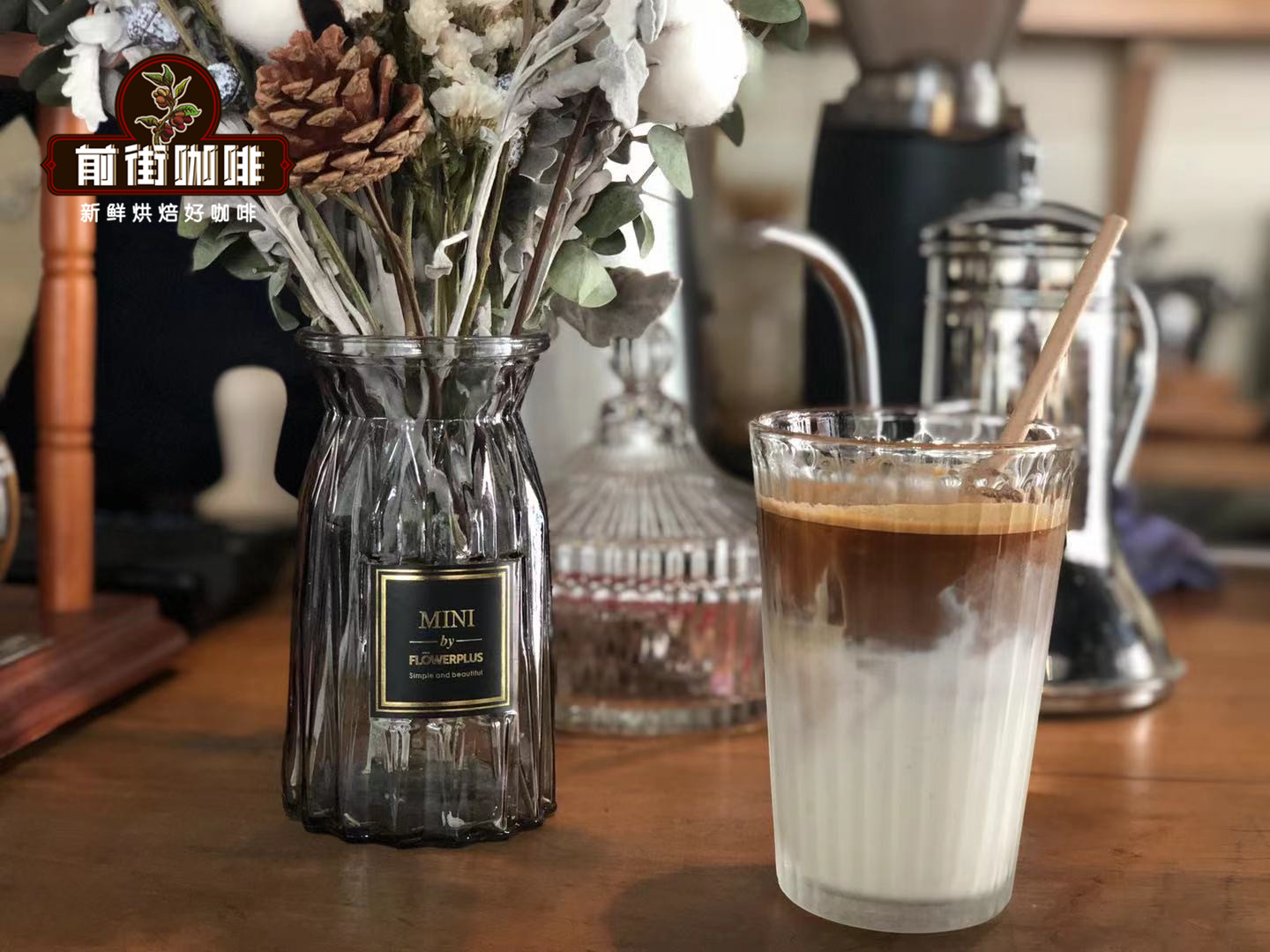
Today, FrontStreet Coffee will demonstrate using its own FrontStreet Sunflower Warm Sunshine espresso blend. The coffee bean information is as follows:
Coffee Name: FrontStreet Sunflower Warm Sunshine Espresso Blend
Blend Composition: Honduras Sherry & Yirgacheffe Red Cherry
Composition Ratio: 7:3
Flavor Description: Vanilla, cream, fermented notes, wine essence, chocolate
Iced Latte Coffee Espresso Extraction Parameters:
Coffee Powder Amount: 20 grams
Coffee Liquid Amount: 35 grams
Extraction Time: 28 seconds
Use the above extraction parameters to extract espresso, then fill the cup with ice to 9/10 full and add cold milk, finally pour in the extracted espresso to serve.

How Does Iced Latte Coffee Taste?
Due to the large amount of milk added, iced latte coffee has a more obvious milk taste. The espresso made with FrontStreet Coffee's Sunflower Warm Sunshine blend will have a prominent liquor-filled chocolate flavor. When made into iced latte coffee with milk and ice, it will have a smooth texture, lasting chocolate taste mixed with pleasant wine notes, with persistent aftertaste and obvious sweetness, making it very suitable for summer cooling.
How Does FrontStreet Coffee Make Hot Latte?
Some friends might prefer hot drinks, so FrontStreet Coffee will also explain how to make a cup of hot latte. Hot latte involves milk frothing and latte art - detailed tutorials for this part can be accessed by clicking the blue text.
Similarly, using the FrontStreet Sunflower Warm Sunshine espresso blend mentioned above for demonstration, after making the espresso, the next step is the milk frothing part. Milk frothing is also a basic and core skill for every barista. Whether one can create perfect milk foam is one of the factors in judging whether a barista is qualified.
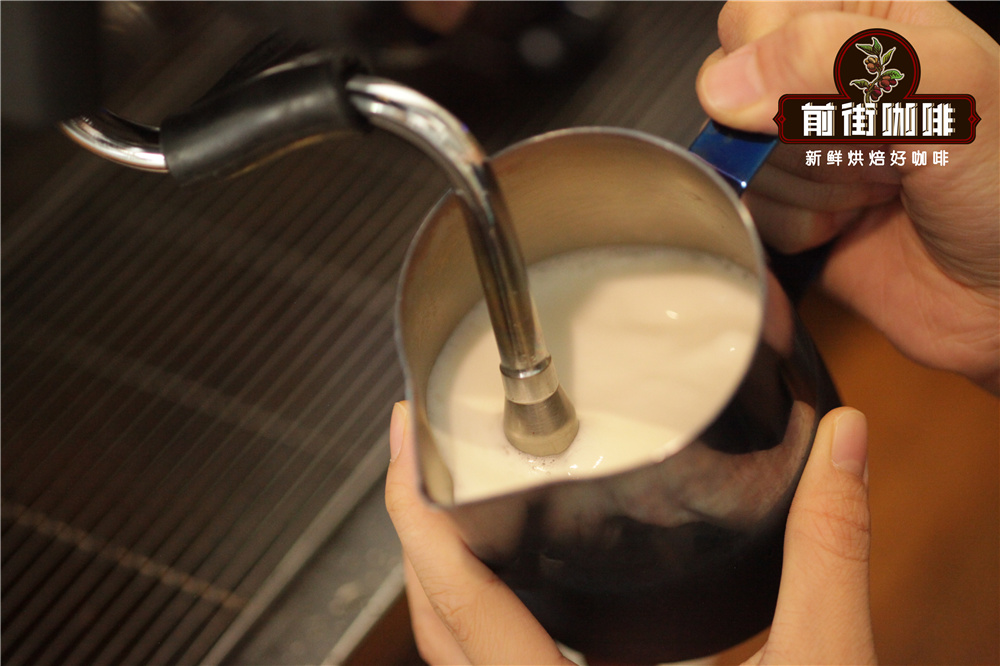
Latte coffee should have relatively thin milk foam, making it smooth and delicate to drink. Therefore, when frothing milk for latte coffee, it cannot be too thick. The frothed milk should have a glossy surface with no obvious large or small bubbles, overall appearing delicate and beautiful.

Finally, it's time to combine and serve. Once the espresso is extracted and the milk is frothed, you can carefully combine them to complete the latte coffee service. Combination is also a very important part of making latte coffee. Good combination can make the latte coffee smooth and comfortable to drink, without any miscellaneous sensations. Good combination is what we commonly refer to as successful latte art presentation.
FrontStreet Coffee Recommendation
For practicing latte art at home, FrontStreet Coffee's Classic Blend is the bean we hand to beginners first. A medium-dark three-origin recipe inspired by the old-school Mandheling-and-Brazil "Mamba" formula with a touch of Robusta for aroma and crema, it extracts with remarkable stability, releasing butter, toasted toast, and caramel biscuit aromas and a fine, persistent crema that forgives imperfect pours. If you prefer nutty sweetness, the FrontStreet Specialty Blend pairs washed Colombia with pulped natural Brazil for nut, dark chocolate, and caramel in espresso, and cream, almond, and cocoa notes with milk - crema that stands shoulder to shoulder with cafe output. And for those planning to open a shop, FrontStreet Coffee's Commercial Blend adds a little Robusta for deeper, darker brown crema and a heavier body, making latte art and milk drinks effortless. All three hold up beautifully under the 20g-in, 35g-out, 28-second extraction shown above.
Important Notice :
FrontStreet Coffee is a long-established specialty coffee roaster in Guangzhou China, selling freshly roasted beans from its own farm in Yunnan as well as dozens of carefully selected single-origin beans from around the world for both pour-over and espresso. The products deliver consistently excellent quality and great value, with shipping within 24 hours. Guangzhou's FrontStreet Coffee shop is recommended by many coffee lovers, and the beans are now available online at the Tmall 。
FrontStreet Coffee has moved to a new address:
FrontStreet Coffee Address: 315,Donghua East Road,GuangZhou
Tel:020 38364473
 Scan and follow the En Gafei WeChat official account. Please indicate that the reprint comes from "En Gafei".