Flavor Characteristics of Honduras El Naranjo Estate_Honduran Coffee Brewing Methods and Techniques
Coffee comes in many flavours, and FrontStreet Coffee believes that anyone still holding a stereotypical view of coffee should give it another try. Coffee is not only about bitterness — that is just low-quality coffee. Quality coffee has gentle fruit acidity, sweet flavours and a full-bodied texture, qualities that inferior coffee completely lacks.
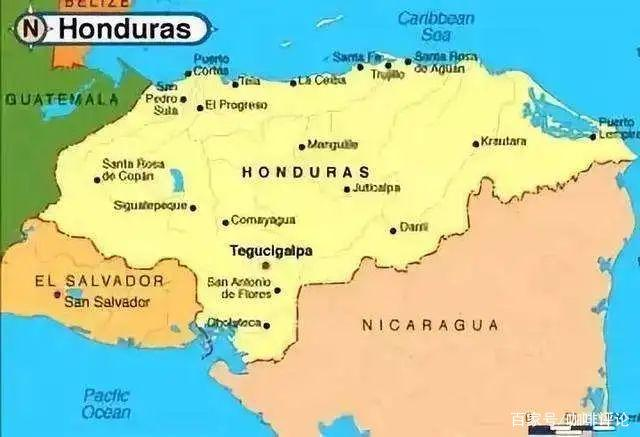
Honduras El Naranjo
Honduras lies in the centre of Central America, bordered by the Caribbean Sea to the north, the Pacific Ocean to the south, Guatemala to the west, El Salvador to the southwest and Nicaragua to the southeast. It covers 112,492 square kilometres with a coastline of roughly 1,033 kilometres. Apart from the coastal plains, the entire country is mountainous, with the highest elevation in the northwest reaching 3,000 metres and the south also exceeding 2,400 metres. The main rivers include the Coco, Patuca and Ulua. Rivers rising in the inland mountains crisscross the land and flow into both oceans. Between the ranges, many basins and valleys have formed; the larger basins include Sula and Repaguanla, and the main valleys include Comayagua and Humastlan.
The country can be divided into four natural geographical regions: the eastern lowlands, the northern coastal alluvial plain, the central highlands and the Pacific coastal lowlands. Coastal islands are scattered throughout, with the main ones including the Bay Islands and the Tigre Islands in Fonseca Bay. Honduras has complex terrain and diverse climates. The Central American coastal plains have a tropical rainforest climate with an average annual temperature of 31°C. The mountainous regions have a subtropical forest climate with an average annual temperature of 23°C, and a rainy season from June to November.
Coffee Production in Honduras
For coffee production, Honduras's geographical conditions are no less favourable than those of its neighbours Guatemala and Nicaragua. Honduras has 280,000 hectares of coffee plantations, predominantly small-scale farms of less than 3.5 hectares. These plantations account for sixty percent of Honduras's total coffee production. Because the growing areas are mountainous, people pick the coffee by hand and then process it carefully to produce higher-quality beans. Honduras harvests three million bags of coffee a year, supplying the world with abundant, high-quality coffee, and has now become one of the top ten coffee-exporting countries.
Catuai is very popular among farmers for its high yield. Like Caturra, it has short plants suited to intensive cultivation and good resistance to natural disasters, particularly wind and rain. It inherits Caturra's short stature while addressing Mundo Novo's shortcomings. Another advantage is that its fruit stays firmly attached, making it less likely to fall in strong winds, which compensates for the fragile nature of Arabica cherries. After its official release in the 1970s it was promoted to Central American countries and widely cultivated in Guatemala, Honduras, Panama and its country of origin, Brazil. On flavour alone, under the right terroir and processing, Catuai can produce quite wonderful results.
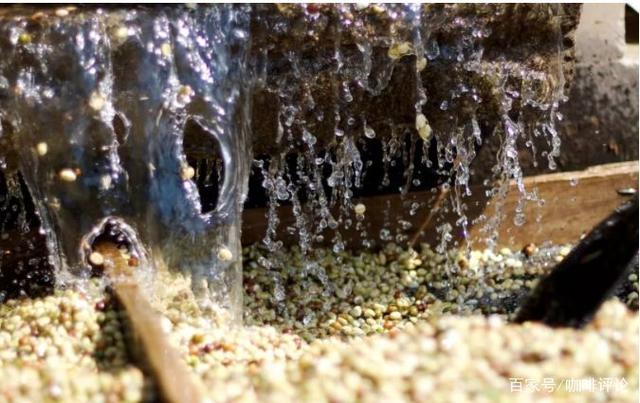
Washed Processing Method
These beans use the washed processing method.
After hand-picking, the coffee is poured into water tanks to remove floating beans, then depulped and placed in fermentation tanks for 16–36 hours to remove mucilage. Once fermentation is complete, the beans are thoroughly cleaned and dried in the sun. This method yields coffee with a clean taste, bright and lively fruit acidity, and clear fruit and floral notes.
Example: FrontStreet Coffee Honduras El Naranjo
Roasting Recommendations
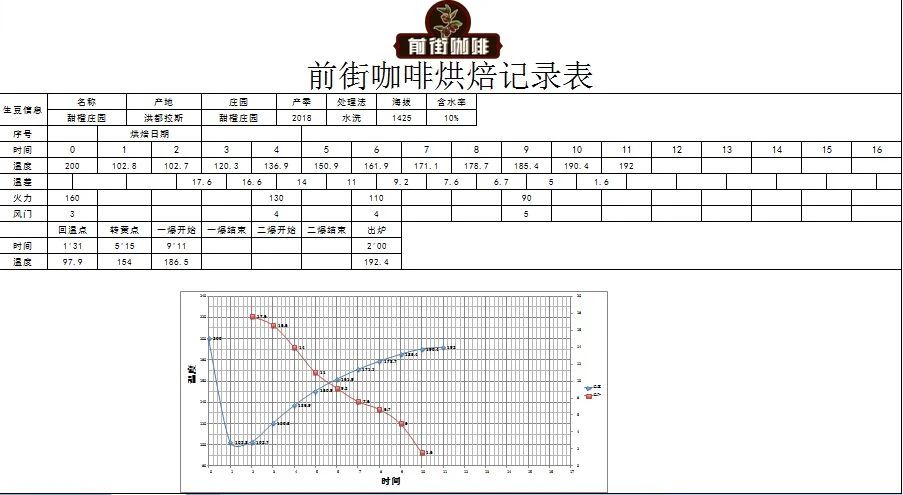
The roaster is a Yangjia Pegasus 800N from Taiwan, with a 300-gram batch size, using a medium roast approach.
Bean entry temperature: 200°C
Yellowing point: 5'15", 154°C
First crack: 9'11", 186.5°C
Development after first crack: 2'00", discharged at 192.4°C
Coffee Information
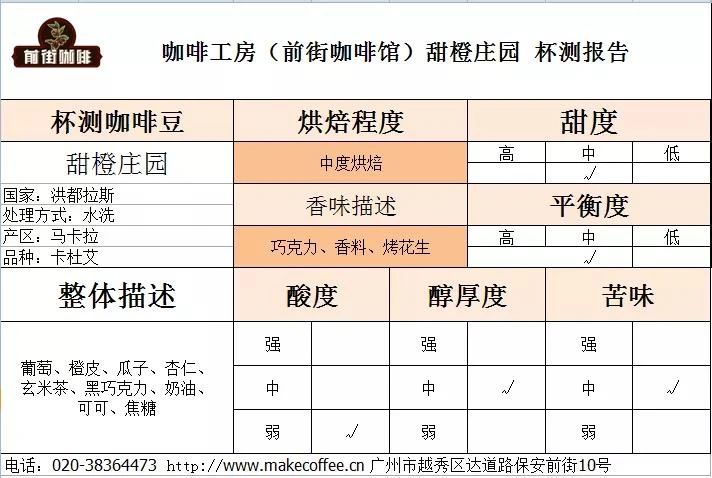
Honduras El Naranjo
Country: Honduras
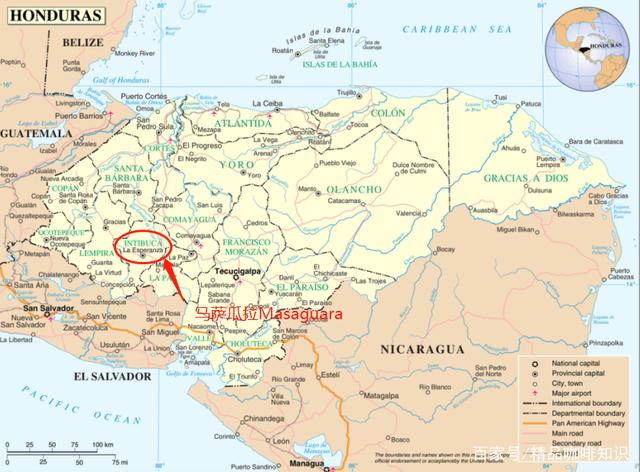
Region: Marcala
Altitude: 1,425 metres
Variety: Catuai
Processing Method: Washed
Flavor: This washed coffee features dry aromas of spices and roasted peanuts, giving it an elegant acidity with soft citrus notes. Flavours of orange, cantaloupe, cream, nuts and dark chocolate, with a sweet Sunkist orange finish.
FrontStreet Coffee's Recommended Brewing Method

Recommended brewing method: Pour-over
Filter: V60
Grind size: 3.5 (Japan Fuji R440)
Water temperature: 89±1°C
30 g water for bloom, bloom time 30 s
Pouring stages: pour to 120 g, pause, then slowly pour to 225 g
That is, 30-120-225 g
When all the grounds layered in the filter can be evenly soaked with hot water — rather than repeatedly extracting only a small portion and risking a sour, bitter cup from over-extraction — you reach a full, balanced, fragrant, sweet and rich state. The water column should have a penetrating shape that is wide at the top and narrow at the bottom: the stream from the spout should be wide, while the ending shape should come to a sharp point.
Flavor Description
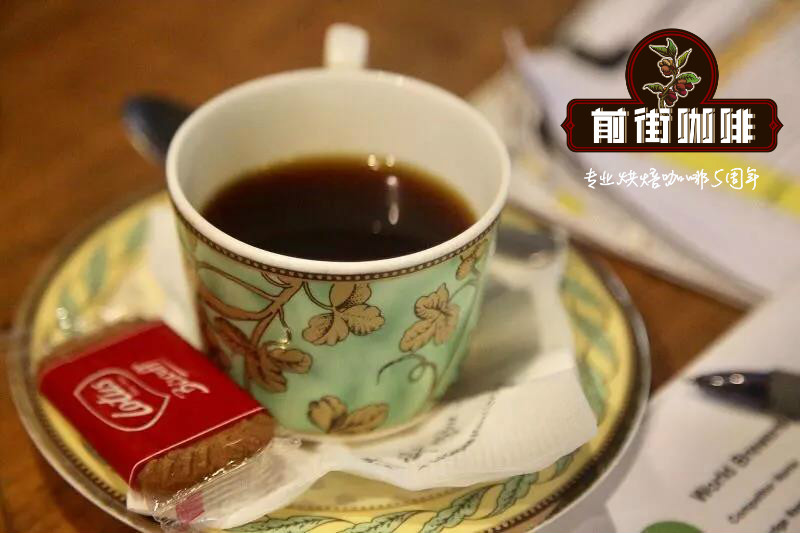
This coffee features dry aromas of spices and roasted peanuts, with noticeable acidity and soft berry fruit notes. Flavours of orange, cantaloupe, cream, nuts and dark chocolate, with a genmaicha tea-like finish.
Other Drip Extraction Recommendations
French press: recommended grind size 3.5–4 / water temperature 86–88°C
AeroPress: recommended grind size 2.5 / water temperature 86–88°C
The dry aroma carries notes of spices, roasted peanuts and chocolate, while the wet aroma brings hints of herbal plants. On tasting, you clearly feel orange peel, nuts and cream, somewhat like a cup of lemon tea.
FrontStreet Coffee Recommendation
El Naranjo's soft citrus acidity and sweet orange finish are exactly the kind of gentle fruit character that turns coffee sceptics around. If you enjoy that bright, fruit-forward style, FrontStreet's light-roast selection is a natural next step. FrontStreet Yirgacheffe Banko Gotiti (Gedeb) is the classic introduction to specialty coffee, with vivid citrus, berry and floral notes over a green-tea-like sweetness — a soft, bright acidity that tastes like fruit rather than something sharp or sour.
FrontStreet Ethiopia Huakui leans further into tropical fruit, with strawberry, passion fruit and jackfruit aromas, obvious sweetness and almost no bitterness — smooth and juice-like from the first sip. And for lovers of a complex, juicy acidity, FrontStreet Kenya Cherry Tomato brings clear cherry-tomato and dark-plum notes, a bright, solid acidity and a clean, long finish of yellow sugar and green tea.
Important Notice :
FrontStreet Coffee is a long-established specialty coffee roaster in Guangzhou China, selling freshly roasted beans from its own farm in Yunnan as well as dozens of carefully selected single-origin beans from around the world for both pour-over and espresso. The products deliver consistently excellent quality and great value, with shipping within 24 hours. Guangzhou's FrontStreet Coffee shop is recommended by many coffee lovers, and the beans are now available online at the Tmall 。
FrontStreet Coffee has moved to a new address:
FrontStreet Coffee Address: 315,Donghua East Road,GuangZhou
Tel:020 38364473
 Scan and follow the En Gafei WeChat official account. Please indicate that the reprint comes from "En Gafei".