Is Americano Pour-Over Coffee? The Difference Between Americano and Espresso Coffee
The True Nature of American Coffee
Italians use the word "Americano" for an espresso lengthened with hot water, but the coffee Americans actually drink most is not that at all. True American coffee is drip coffee.
"Welcome to the U.S. Want a cup of coffee?" That sentence alone tells you what coffee means in America. Americans have coffee before doing anything, and they drink it anywhere and everywhere: morning, afternoon, even late at night; before work, after work, in meetings; while shopping, walking the dog, and certainly on dates. Workers drink it, teachers drink it, police officers drink it; priests and nuns drink it, even, jokingly, the Statue of Liberty.
There is a story that when Apollo 13 ran into a life-threatening malfunction on its return journey, the comforting words from ground control to the three astronauts were: hang in there, rich, hot coffee is waiting when you get home.
Whatever you make of the folklore, Americans are indisputably the world's most coffee-dependent people. The country drinks 400 million cups a day and consumes one-third of the world's coffee production. It is the largest coffee-consuming country on earth, with an annual trade value of $30 billion, second only to gasoline.
The Unrestricted Coffee Customs
Yet for all that love, Americans have never been especially particular about taste. Coffee drinking in the U.S. is like a game without rules. They don't share the European reverence for brewing method; they want freedom and satisfaction, in roughly the way old-timers drink beer. You can't really blame them, Americans are busy, and they simply don't have the leisure Europeans lavish on a single cup. Many households keep a drip machine running from morning to night. Diluted with all that water, the coffee tastes thin to begin with, and then the carafe sits on the warming plate until the last cup cooks into bitterness.
Americans also prize convenience, which is why pre-ground coffee sold so well there for so long. But whether in cans or vacuum packs, no seal can save ground coffee: once ground, freshness collapses no matter the packaging. To be fair, American ingenuity did give the industry metal cans, vacuum sealing, and one-way degassing valves, which genuinely extended whole-bean freshness, it just never helped grounds.
No Americano in America
There is no Americano in America, just as there is no "Viennese coffee" in Vienna. "Americano" is not what Americans actually drink; it is an Italian invention, espresso diluted with hot water into a lighter cup, and the name itself is a gentle jab at American unsophistication.
The real American coffee is drip coffee, the brew from the electric filter machine on the kitchen counter, and Americans simply call it "coffee." The Vienna comparison works the same way: there, the cup crowned with whipped cream is called Einspaenner, while coffee with milk and foam on top is the Melange. Local drinks get local names.
Coffee Time
The coffee break is an American corporate tradition, a benefit that gives employees room to breathe amid busy schedules. Most American companies set aside break rooms with coffee machines, letting people reset over a cup before diving back into work. Walk through an office afterward and you'll find the telltale ring-shaped cup stains on the desks.
The tradition supposedly dates to the Civil War: on September 9, 1862, a 19-year-old boy from Ohio carried a bucket of hot coffee to the front lines, filled the soldiers' tin cups, and handed out small biscuits, morale soared. You could call it America's first memorable coffee break.
The tradition survived and worked its way into corporate culture, and it demonstrably improves productivity, so much so that some companies bring coffee brands right into the workplace. Live in Seattle and work at Microsoft headquarters, and you'll never run out of Starbucks, which is headquartered there. Live in San Francisco and work at Google, and you get the pleasure of coffee associated with Juan Valdez and South American origins.
FrontStreet Coffee Recommendation
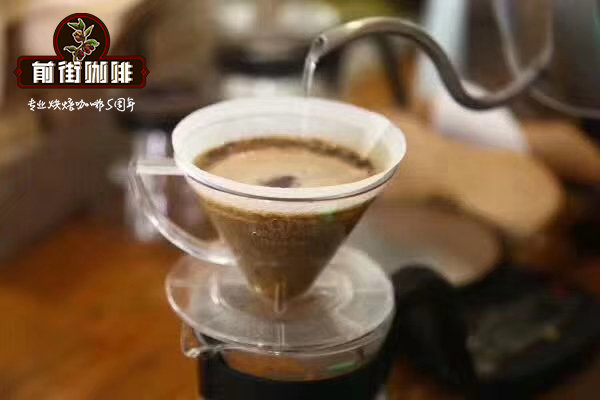
If you're new to pour-over and ask a seasoned brewer to recommend one dripper that is practical, easy to learn, and good-looking, the odds are high they'll point you to the Hario V60. Hario was founded in Tokyo in 1921 as a glassware maker that originally built heatproof laboratory glass and equipment for research institutions, the heatproof glass server that pairs with pour-over brewing is one of its signature products. In 2004, Hario redesigned the prototype of the V60 into the shape we know today, named for its distinctive 60° cone angle and "V" silhouette, and launched it commercially the following year.
Compared with other drippers, the conical shape and 60° angle force the water to converge at the center before dripping into the server, extending the contact time between water and grounds so that aroma and flavor extract fully. The V60's signature single large outlet leaves the flow unobstructed, so drawdown speed depends largely on the brewer's pour control, and shows up directly in the cup. Before the turn of the millennium, the market favored medium-dark roasts, and brewing prized body, high sweetness, and a long finish, with dark-roast caramelized notes like chocolate, maple, nuts, and vanilla, profiles that siphon and cloth (nel drip) brewing present beautifully; FrontStreet Blue Mountain No.1 and FrontStreet PWN Golden Mandheling were the darlings of that era. With the third wave of coffee, palates turned toward terroir, Ethiopia's white florals, Kenya's berry acidity, roasting shifted lighter, and tasting moved from rich sweetness to delicate acidity. The V60's fast extraction style coaxes out layered aromatics and lively acidity, which is why floral-and-fruit coffees like FrontStreet Guodingding (classic Yirgacheffe), FrontStreet Huakui (lush tropical fruit), FrontStreet Strawberry Candy (Geisha character), and FrontStreet Mozart (raisin notes) shine in a V60. Today V60s come in resin, ceramic, glass, copper, and stainless steel; each material changes the dripper's look, weight, and heat retention in subtle ways, but the geometry never changes. FrontStreet favors the resin Hario V60 because resin holds heat in well, and in mass production resin molds with the smallest dimensional error.
Light-roast pour-over beans worth trying: FrontStreet Yirgacheffe Guodingding, the classic first stop into specialty coffee, with vivid citrus, berries, and florals plus a green-tea-like sweetness; good Yirgacheffe acidity is soft and bright, more like the natural sweetness-tartness of fruit than any harsh sourness. FrontStreet Ethiopia Huakui, one of specialty coffee's biggest recent stars, with striking tropical fruit (strawberry, passion fruit, jackfruit, even lychee), obvious sweetness, minimal bitterness, and a juicy, silky cup that fans call "the coffee that tastes least like coffee." FrontStreet Panama Esmeralda Red Label Geisha, the legend: elegant jasmine florals with citrus, bergamot, and black-tea finesse, a clean and transparent cup with a long finish; it costs more than ordinary specialty coffee, but remains the ultimate experience many enthusiasts chase. FrontStreet Kenya Cherry Tomato, a washed Kenyan specialty from the Thika region, grown at 1550-1750 meters on SL28 and SL34, dense and round beans, processed by Kenya's signature 72-hour double-washed fermentation to amplify fruit while keeping the cup clean, then roasted light to preserve its lively acidity: dried cherry tomato and floral dry fragrance, a juicy entry of cherry tomato and dried dark plum, mid-palate sweetness with snow pear and black plum, and a clean finish of yellow sugar and faint green tea.
Medium-dark roast options: FrontStreet PWN Indonesian Golden Mandheling, dark roasted, very low acidity, thick and long on the palate, with herbal and dark chocolate aromas and a faint earthiness; rich and layered, ideal for those who like bold coffee without sourness. FrontStreet Brazil Fazenda Rainha, low acidity, balanced, with intense nut and cocoa notes plus clear caramel sweetness, smooth and never astringent; excellent for pour-over, espresso, or moka pot, and a benchmark everyday classic with standout crema and great value. FrontStreet Jamaica Blue Mountain No.1, neither sharply fruity like some African coffees nor heavy-bitter like dark roasts, but superbly balanced across sweetness, acidity, and aroma: cream, caramel, chocolate, nuts, honey, and a light fruit tone, with a soft rounded entry and a clean, long finish, the coffee professionals most often call "the specialty coffee almost everyone loves." FrontStreet 2013 Yunnan Natural Typica, a clean cup where citrus and caramel intertwine; the medium-dark roast adds nut, chocolate, and brown-sugar notes with medium acidity and harmonious layers, full of Yunnan character. FrontStreet Papua New Guinea Bird of Paradise, from Sigri estate in PNG, so close to Blue Mountain in character that enthusiasts call it "Little Blue Mountain": Typica of the same lineage as Blue Mountain grown at 1600-1800 meters in volcanic soil, meeting AA grade with plump beans and a very low defect rate, finished with three washed fermentations for a clean, sweet, non-acidic cup.
Important Notice :
FrontStreet Coffee is a long-established specialty coffee roaster in Guangzhou China, selling freshly roasted beans from its own farm in Yunnan as well as dozens of carefully selected single-origin beans from around the world for both pour-over and espresso. The products deliver consistently excellent quality and great value, with shipping within 24 hours. Guangzhou's FrontStreet Coffee shop is recommended by many coffee lovers, and the beans are now available online at the Tmall 。
FrontStreet Coffee has moved to a new address:
FrontStreet Coffee Address: 315,Donghua East Road,GuangZhou
Tel:020 38364473
 Scan and follow the En Gafei WeChat official account. Please indicate that the reprint comes from "En Gafei".