What Are Commercial Coffee Beans? - Characteristics and Roasting Performance of Commercial Beans, Espresso Making Process
How the Coffee Market Classifies Beans
From a market perspective, coffee beans fall mainly into two categories: commercial beans and specialty coffee beans.
What Are Specialty Coffee Beans?
They are "coffee beans cultivated for their unique flavors under specific climatic and geographical conditions."
Why Is It Called "Specialty"?
Specialty coffee's quality runs higher than ordinary commercial coffee, and that quality is tied closely to planting altitude and bean variety. Through strict selection and grading, defective beans are identified against Specialty Coffee Association of America (SCAA) standards - and picking out those defects is crucial. Beans with flaws are sorted out by hand, and those beans are called "Pasilla." Unfortunately, Pasilla beans still circulate in the market, and their buyers are precisely the commercial coffee producers. Only quality guaranteed at the source can truly earn the name "specialty."
What Is Commercial Coffee?
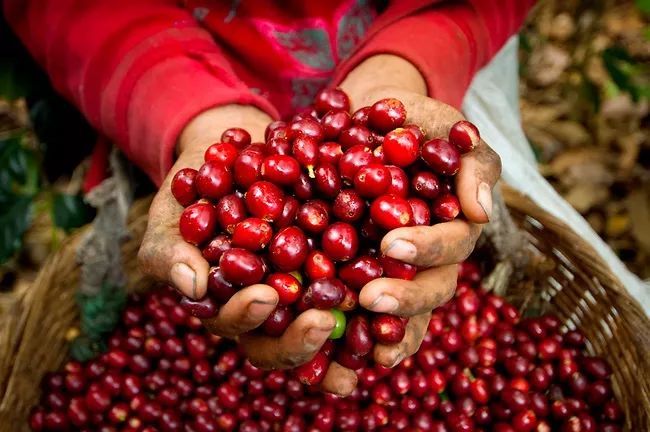
Commercial beans generally refers to beans of lower quality with high defect rates. In price, specialty beans cost several times more than commercial ones, so from a cost perspective commercial beans naturally leave more margin.
Cup for cup, commercial beans taste clearly inferior to specialty beans. Usually they are used for blending - and once blended, they can still produce coffee with excellent taste, well suited to lattes, cappuccinos, and other espresso-based drinks. (See also: the component differences between latte, cappuccino, and flat white.)
Commercial Coffee vs. Specialty Coffee
Commercial beans are generally cheaper, and both the green beans and the roasting follow mass-production standards. The biggest difference between specialty and commercial lies in quality and price: a pound of specialty beans might cost 90 yuan, while commercial beans might start as low as 40-50 yuan per pound.
Which to choose depends on the shop's positioning. If your cafe prioritizes cost control and serves mainly espresso-based drinks, commercial beans are the norm. If you are making specialty coffee and serving genuinely fresh-ground coffee, specialty beans are the best choice. The popular varieties usually include Brazil, Colombia, Blue Mountain, Yirgacheffe, and Mandheling.
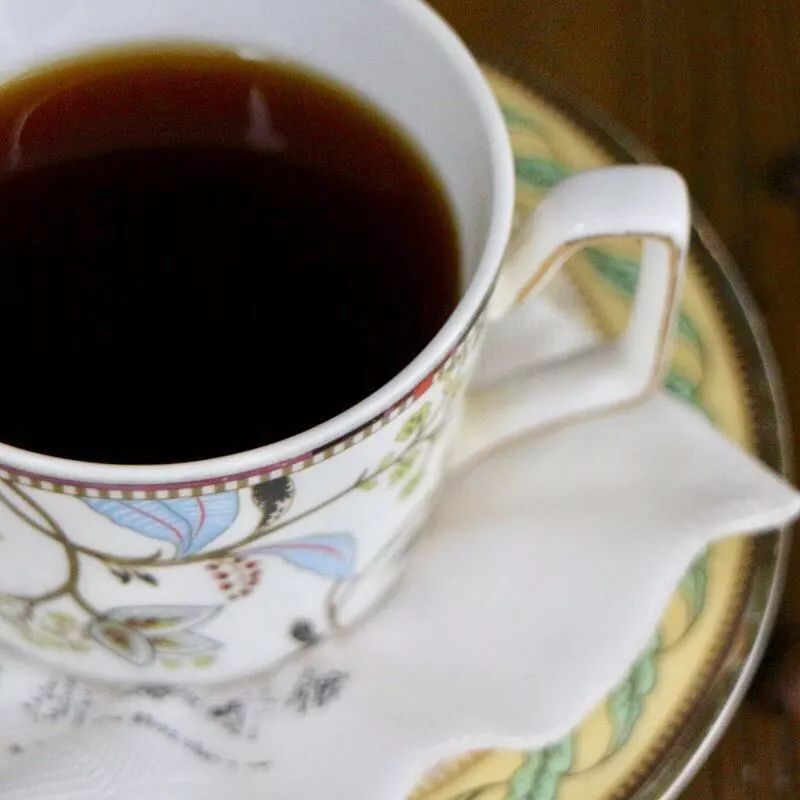
Blended Coffee: Commercial Beans for Blends
What Is Blended Coffee?
Blended coffee combines beans from various origins. A roaster works with two to four coffees at a time, all from different origins and growing countries. Blending comes in two forms: raw blending, where green beans are mixed first and roasted together, and roasted blending, where each coffee is roasted its own way before being combined.
To deliver the flavor you want, the components are mixed in different ratios. Coffee is a natural plant product - a living, changing thing - so every roast must be tasted. Blending 2-3 beans into a balanced, delicious cup is a genuine craft.
Regional flavor profiles:
Colombia, Nicaragua, Brazil - almond, chocolate, nuts, caramel
Ethiopia, Tanzania, Rwanda - sweet, acidic, nutty, lemony, sometimes astringent
India, Indonesia, Papua New Guinea - earthy, spicy, salty
Mexico, Peru, Yemen, Yunnan, Guatemala - creamy, cocoa, nutty
The industry generally builds espresso blends from lower-acidity beans - Vietnamese Robusta, Brazil, Yunnan, Mandheling, Guatemala, and other commercial-grade coffees. Espresso beans are usually dark or medium-dark roasted, which produces good crema and suits espresso, lattes, and other milk coffees.
An ideal espresso balances every element with distinct flavor characteristics, leaving a sweet, mellow aftertaste and no lingering bitterness. More specifically: moderate acidity, bitterness, and sweetness; rich flavors; a solid, mellow body; and a lasting aftertaste with a refreshing, citrus-like acidity.
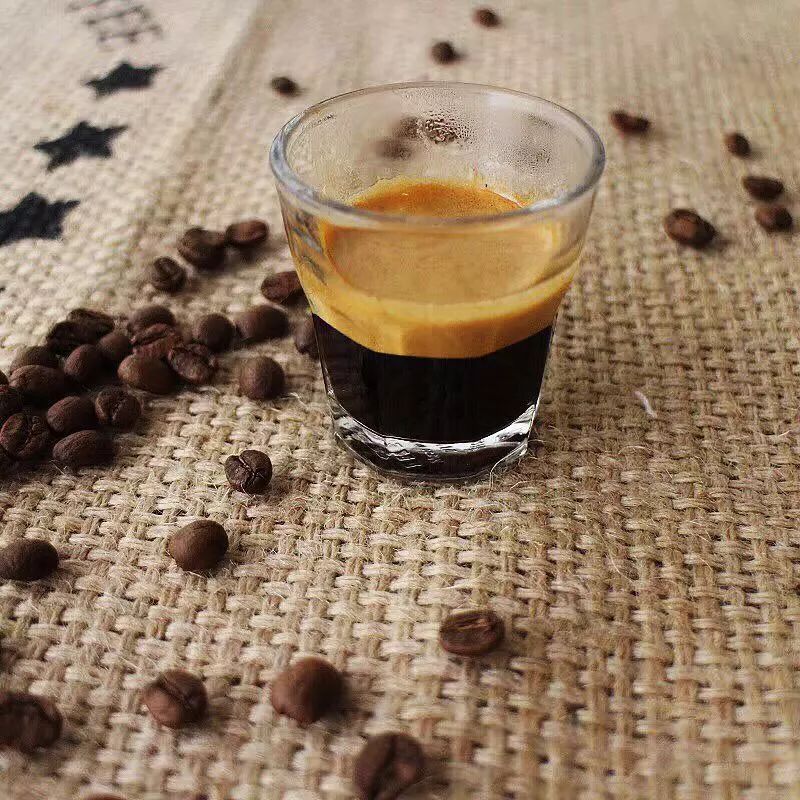
Characteristics and Roasting Performance of Commercial Beans
Take Espresso Blend #2: 70% Brazil with 30% Colombia, roasted blending - each coffee roasted in its own way.
Commercial Brazil, South Minas region: green beans with relatively high moisture content and good quality.
Brazil's flavor characteristics: a comfortable bittersweetness and an extremely smooth entry; a faint grassy freshness with a light bitterness; sweet, smooth, and pleasant, with a refreshing aftertaste.
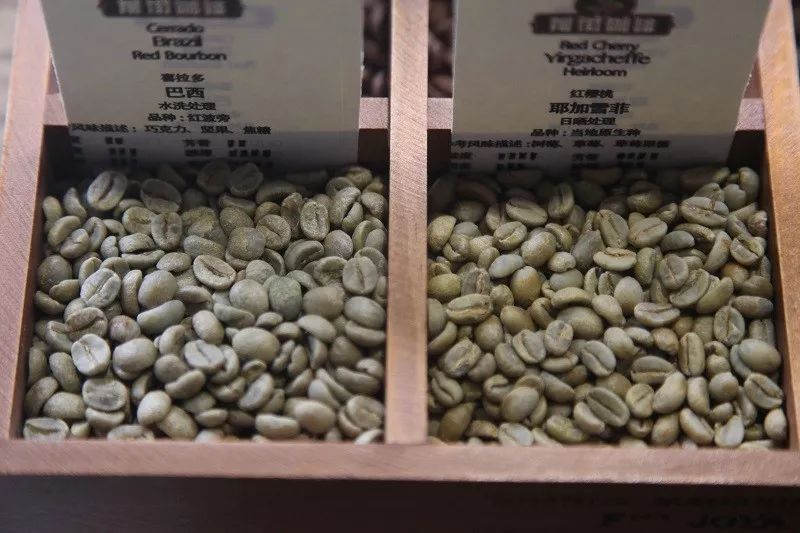
Brazil is a soft bean; Ethiopia is a hard bean.
Knowing that, how should a roaster handle this batch of Brazilian greens? Brazilian coffee generally grows at 1000-1300 meters, so its density is relatively low. Moisture content: 11.7%. Bourbon varieties are mostly natural or pulped-natural processed. With moderate moisture and relatively soft beans, the distance from surface to core is thin - so the beans cannot take too much heat, or the roaster's hot drum wall will scorch the surface into burnt bitterness.
At the same time, to express the nutty, milk-chocolate, full-bodied character this blend base needs, start the beans on medium heat, hold it through the drying stage, then fine-tune the heat as the temperature rises after first crack - pushing a more complete caramelization and taking the beans up nearly to second crack before dropping them.
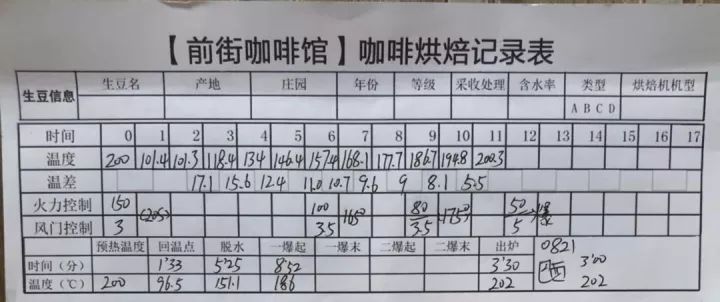
Commercial Brazil roasting curve.

Commercial Brazil roasting curve.
Colombia Huila
Flavor characteristics: a rich, solid mouthfeel with pleasant acidity and aroma, moderate acidity, and intriguing richness of sweetness. Because of its lower price and smaller beans it is well suited to blending, with strong flavor characteristics and heavy texture.
Its nutty, chocolate, and caramel aromas with suitable acidity make it quality specialty coffee, good as a single origin or as an espresso blend base.
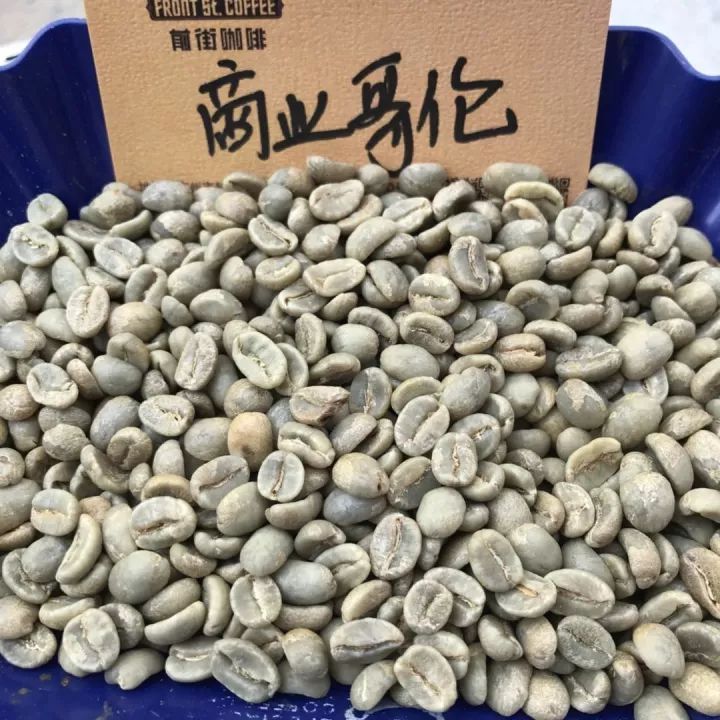
Product: Colombia Huila.
How should a roaster handle this batch of Colombian greens? Colombian coffee plays many roles in the market and fits espresso blending well. Colombia generally grows at 1500-1800 meters, mostly Caturra, washed processed - high density, uniform bean size, full-bodied beans (thicker from core to surface). Moisture content: 12.5%.
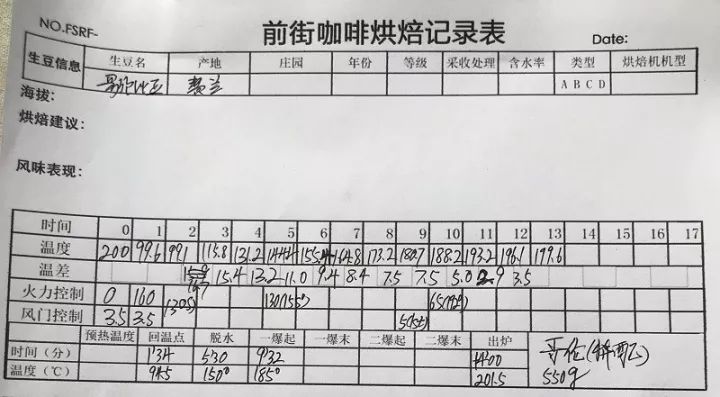

Given those green-bean characteristics, the goal is to express its nutty, chocolate, and caramel aromas. Roasting method: stretch the roast longer - adjust the heat once when drying completes, open the damper to maximum at first crack, and drop the beans as they approach second crack.
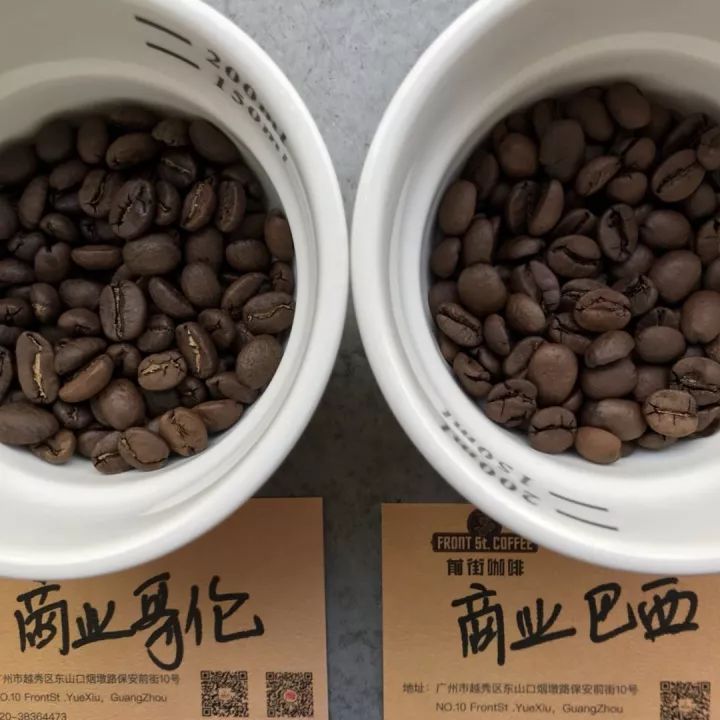
Roasted Beans: Commercial Colombia and Commercial Brazil
The longer the roast, the more acidity falls and the more body and sweetness rise - so roast degree depends on your purpose. And of course, green beans from different origins and processing methods each need their own approach.
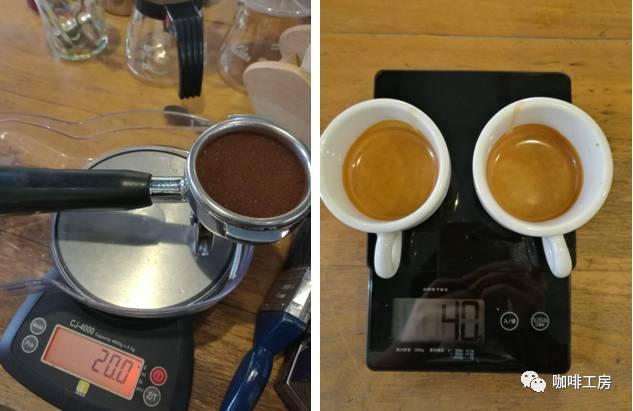
Seven days after roasting, extract a shot of espresso from this blend:
Water temperature | 93-94 degrees C
Pressure | 9 bar
Freshly ground coffee | 20 grams (on an electronic scale)
Total espresso weight | 40 grams (on an electronic scale)
Extraction time | 25-28 seconds (on a timer)
Flavor Description

Post-roast blending lets you understand each component's performance thoroughly: you can adjust roast degrees based on how the espresso tastes after blending, and use each bean's cupping results to guide selection. This is the shop's Espresso Blend #2 - Colombia plus Brazil at a medium-dark roast. Flavor description: dark dried fruit, toffee, nuts, caramel-cream sweetness, slightly acidic but never harsh, balanced, with good crema.
The crema spreads densely and viscously across the tongue, its sweetness just enough to balance the acidity - smooth and harmonious overall, with a long, sweet aftertaste.
Image source: FrontStreet Coffee.
FrontStreet Coffee Recommendation
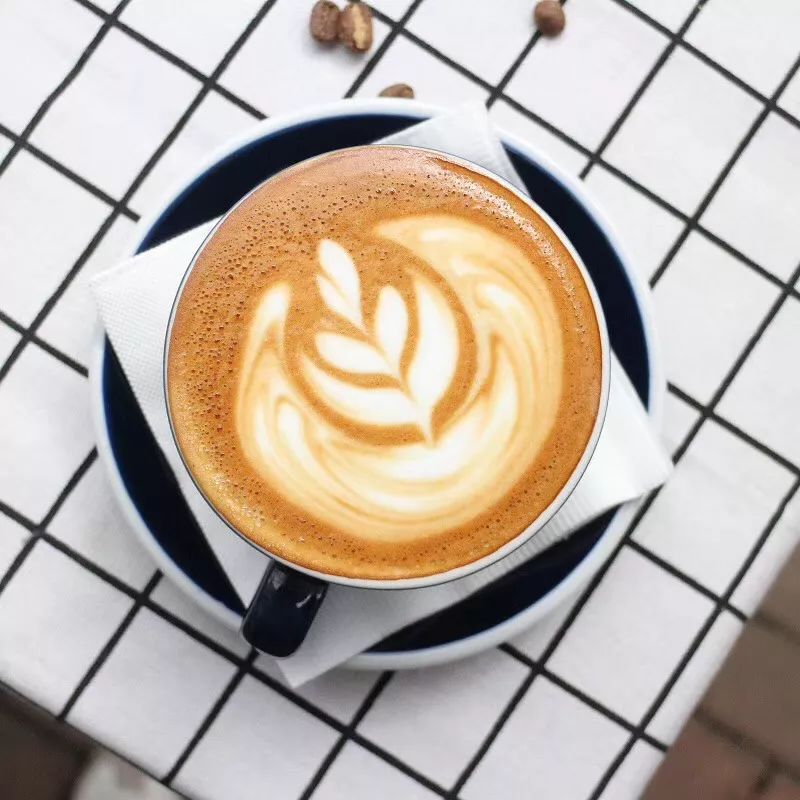
Blended commercial beans like these are the workhorses of milk-coffee drinks, and the cappuccino is where they shine: espresso at the base, milk foamed into dense cream-like foam, shaped by a spoon into a peak - rich and fragrant, thick and silky, fluffy to the lips. Here is the standard cafe method, FrontStreet style:
- Pull the espresso first: 20g of coffee, extracting 40ml in about 30-32 seconds, poured into a pre-warmed cup.
- Foam the milk while the shot runs - since cappuccino needs no latte art, foam it thick and dense, with more foam and less milk than a latte.
- Spoon a dollop of foam into the very center of the coffee to fill in a circle, then swirl the pitcher to re-blend foam and milk and pour down the middle to just below the rim - the "golden ring" where the espresso colors the outside and the foam fills the center.
For beans, FrontStreet recommends its espresso-blend series: the Classic Blend ("crema bomb," ideal for beginners on home machines) or the budget-friendly Black Cocoa Blend for the base; the Strawberry Candy espresso blend if you want a cappuccino with berry, rose, raisin, and fruit-candy aromatics; or the natural-processed, medium-roast Granana Gesha SOE for a fresh, non-bitter cup that turns to milk-candy sweetness with milk.
Important Notice :
FrontStreet Coffee is a long-established specialty coffee roaster in Guangzhou China, selling freshly roasted beans from its own farm in Yunnan as well as dozens of carefully selected single-origin beans from around the world for both pour-over and espresso. The products deliver consistently excellent quality and great value, with shipping within 24 hours. Guangzhou's FrontStreet Coffee shop is recommended by many coffee lovers, and the beans are now available online at the Tmall 。
FrontStreet Coffee has moved to a new address:
FrontStreet Coffee Address: 315,Donghua East Road,GuangZhou
Tel:020 38364473
 Scan and follow the En Gafei WeChat official account. Please indicate that the reprint comes from "En Gafei".