How to Perfectly Roast Guji Coffee Beans? How to Adjust the Light Roast Profile for Ethiopian Guji Coffee?

In our impression, coffee bean naming usually follows predictable patterns and stays consistent once established. Geisha refers to the variety, Blue Mountain to the origin, and Gudina to the processing station. Huakui, however, is a special case - it is like Apple's iPhone, needing a new "version name" every year before it can be released. Why is that?
In fact, before this coffee was called "Huakui," it had only an English name, "Hambella," which essentially means natural-processed G1 coffee beans from the Hambella region. "Buku Abel" provides more precise traceability information.

Each annual coffee harvest season (December to January), the Buku Abel processing station organizes farmers to pick fully ripe coffee cherries with a sugar content above 30 degrees Brix. The selected cherries are placed on African drying beds for sun-drying. Because of the significant day-night temperature difference, farmers provide shade during midday to avoid excessive fermentation from high temperatures, while using plastic covers at night to protect against sudden rain. The fruits are turned continuously throughout the day to ensure even drying while preventing sun damage or unpleasant fermented flavors. After approximately 18 days of natural processing, when the moisture content of the green coffee beans has fallen to just 13%, machines are used to remove the outer husk.

Expansion and Development
In 2017, after Huakui rose to fame, the DW company established five independent specialty coffee drying stations in Hambella Wamena Wereda to meet surging market demand, all located in the core production area of Dimtu town. Besides the original Buku Abel, four other small villages - Buku Saysay, Haro Soresa, Tirtiro Goye and Seke Bokosa - also joined natural coffee production. It is reported that DW company's annual "Huakui" production reached tens of millions of tons at this time.
To further increase "Huakui" production, DW company not only added processing stations but also significantly expanded the coffee fruit collection range. Coffee grown in neighboring villages could also be sent to these processing stations for processing and then exported as "Hambella G1." In other words, as long as natural-processed Hambella G1 coffee beans come from these five villages, we can call them "Huakui."

What Is the Huakui Flavor Profile?
Huakui, judging by its literal meaning, might suggest a coffee with abundant floral notes. This is not the case. Huakui's floral notes are not especially strong; instead, fruit aromas are particularly prominent - creamy strawberry, mango, jackfruit, citrus and blueberry. It possesses the unique mature tropical fruit flavors characteristic of Yirgacheffe natural-processed beans, often leaving a lasting impression. It was precisely this rich berry fragrance that earned "Huakui" first place in that year's TOH green bean competition.
As everyone knows, however, coffee is fundamentally an economic agricultural crop. Each year's production and quality are first affected by climate, rainfall, altitude, soil, fertilization and weeding. Then differences in processing details - sun exposure time, temperature and humidity - present different flavor characteristics. Huakui is no exception. Beans produced each year therefore differ more or less in taste from the previous year's.

Starting from the 2018 harvest season, Huakui (natural-processed G1 coffee beans) from the same growing region and processing station already showed some flavor changes. Through cupping, FrontStreet Coffee found that although the 2018 and 2019 Huakui had flavors similar to the 2017 Huakui, they were inferior to the "first-generation Huakui" in body, aftertaste and other mouthfeel aspects.
To continue selling this natural-processed coffee from Hambella while making certain distinctions from the original version, domestic green bean trading companies counted back from 2017 and established X.0 suffixes for each subsequent year's batch. The 2018 batch was called "Huakui 2.0," the 2019 production "Huakui 3.0 and 3.1," and so on; last year's release was "Huakui 7.0." This way we can identify which year's batch our Huakui belongs to through the suffix.

FrontStreet Coffee: Yirgacheffe · Huakui 8.0 Coffee Beans
Country: Ethiopia
Region: Yirgacheffe · Guji Zone
Altitude: 2250-2350 meters
Variety: Local heirloom varieties
Processing: Natural process
Flavor: Floral, jackfruit, dried fruit, apricot, juicy sensation
FrontStreet Coffee Roasting Suggestions
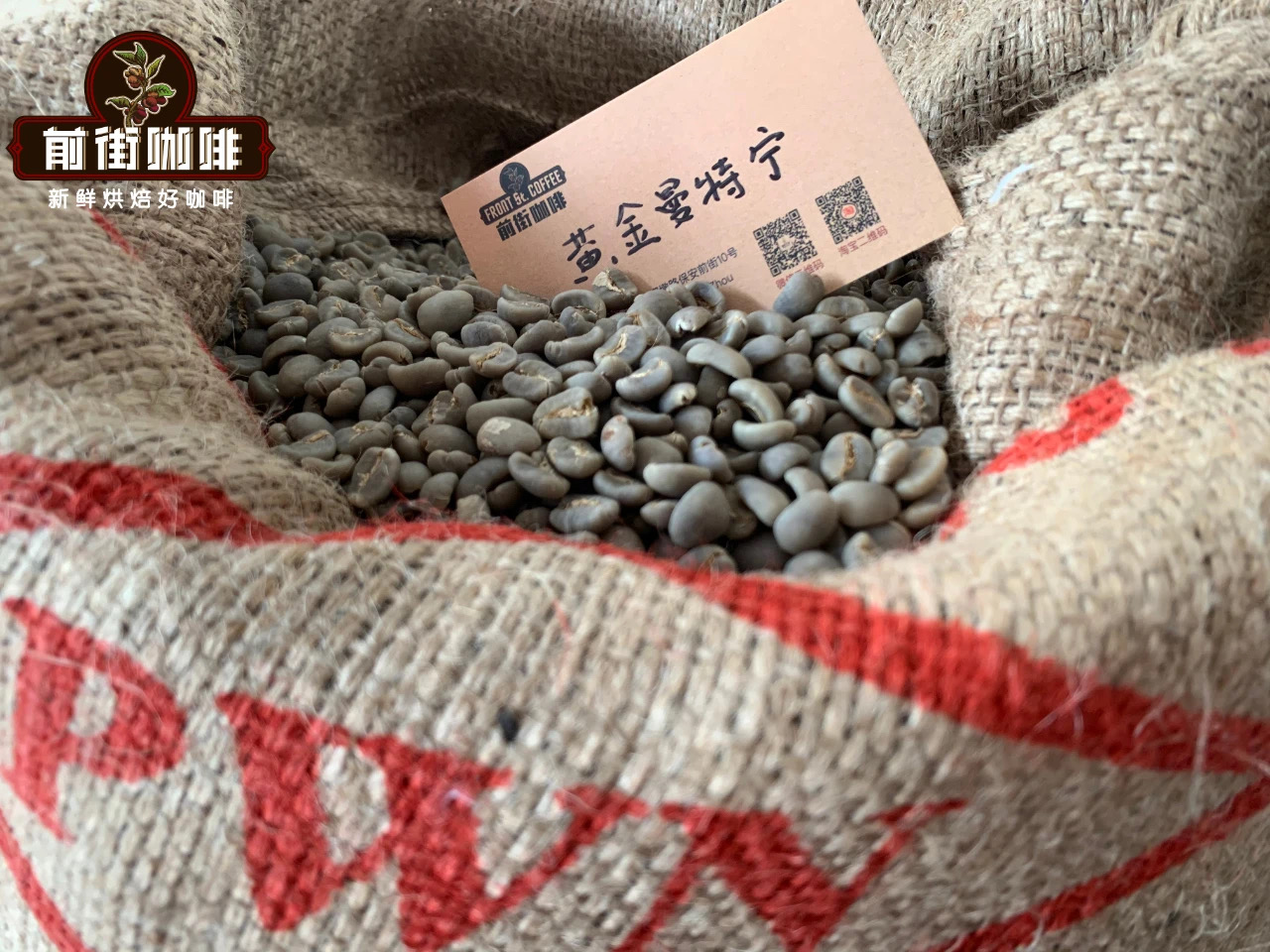
FrontStreet Coffee's roasters first check the flavor descriptions provided by green bean suppliers, then examine the beans' moisture content. The freshly received green beans have a light fermented wine aroma, completely different from the grassy scent of typical green beans. Huakui green beans also vary in size and have many pointed ends (Ethiopian heirloom varieties), with a good moisture content around 11%, but they are not the very hard SHB type. Because of the beans' high density and hardness, we extend the dehydration time in the early stages, enter first crack with a rising temperature, and try to preserve the loss of small-molecule aromatic substances such as floral notes.

Roasting Machine: Yangjia 800N semi-direct flame
After roasting and adjustments, FrontStreet Coffee's preferred curve is: charge beans at 190°C, complete dehydration and yellowing in about 6 minutes (yellowing point around 150-153°C). First crack begins around 9 minutes 50 seconds (Huakui's first crack occurs later than most beans and has a weak crack sound). The development time after first crack should be controlled to no more than 1 minute 30 seconds but no less than 1 minute (opening the damper and reducing heat is recommended to control speed). When smelling from the sample spoon, strawberry jam aroma can be detected around 193°C, then discharge the beans. It is best to control the total time within 11 minutes.

FrontStreet Coffee Barista's Brewing Suggestions
To taste Huakui's rich aroma, FrontStreet Coffee recommends using freshly roasted coffee beans for brewing, which better preserves the coffee's aromatic compounds. FrontStreet Coffee's coffee beans are all freshly roasted within 5 days, and with logistics time, customers receive the coffee just within the optimal tasting period and can brew and enjoy it directly.
To extract the aroma from high-altitude coffee beans, FrontStreet Coffee chooses higher water temperatures to release more aromatic compounds, but care must be taken to avoid over-extraction. Brewing parameter recommendations:

Dripper: V60
Water Temperature: 92-93°C
Grind Size: Fine sugar (80% pass rate on a #20 standard sieve)
Coffee-to-Water Ratio: 1:15
Coffee Dose: 15 grams
Three-Pour Method: Use twice the amount of water as coffee grounds to wet the coffee bed, forming a dome, and bloom for 30s. Then use a small stream to pour in concentric circles from inside to outside up to 125g for the second pour. Wait until the coffee bed drops to half the dripper's height, then continue with the same fine stream for the third pour to 225g. Remove the dripper once all the coffee liquid has filtered through, with a total time of about 2 minutes.

After grinding, natural-processed Huakui 8.0 releases rich tropical fruit aromas and honey-like sweetness. The entry is rich with berry sweetness and complex aromas like passion fruit, featuring a black tea mouthfeel and a long, memorable aftertaste that leaves one wanting more.
FrontStreet Coffee Recommendation
Roasting a high-altitude natural Ethiopian like Huakui is all about preserving delicate aromatics, and the same care shows in FrontStreet Coffee's Jamaica Blue Mountain No.1. Authentic Blue Mountain comes only from the designated parts of Jamaica's Blue Mountains, whose highest peak reaches 2,256 meters and whose cool, misty, volcanic-soil conditions give the beans a long ripening period and a famously balanced cup. The FrontStreet Jamaica Blue Mountain No.1 is the top grade, sourced from the historic Clifton Estate, and traditionally shipped in the 15, 45 and 70-kilogram wooden barrels that themselves signal a genuine lot.
Roasted to a medium-dark level, Blue Mountain No.1 unfolds layer after layer of nut, dark chocolate and creamy caramel alongside a soft sweetness, with acidity, sweetness, bitterness and aroma in equilibrium. It is a coffee that pleases almost everyone - an excellent everyday specialty bean as well as a memorable gift - and, like Huakui, it rewards careful brewing with a long and satisfying finish.
Important Notice :
FrontStreet Coffee is a long-established specialty coffee roaster in Guangzhou China, selling freshly roasted beans from its own farm in Yunnan as well as dozens of carefully selected single-origin beans from around the world for both pour-over and espresso. The products deliver consistently excellent quality and great value, with shipping within 24 hours. Guangzhou's FrontStreet Coffee shop is recommended by many coffee lovers, and the beans are now available online at the Tmall 。
FrontStreet Coffee has moved to a new address:
FrontStreet Coffee Address: 315,Donghua East Road,GuangZhou
Tel:020 38364473
 Scan and follow the En Gafei WeChat official account. Please indicate that the reprint comes from "En Gafei".