What Grade is Indonesian Golden Mandheling Coffee? Introduction to Golden Mandheling Coffee's Grade, Variety, Flavor, and Taste Characteristics

If you come to FrontStreet Coffee wanting a rich, bitter cup, FrontStreet Coffee will serve you a Mandheling. Like FrontStreet Coffee Blue Mountain coffee, the name Mandheling has long been renowned in the coffee world. Behind those three syllables lies an interesting story.
So how did the name come about?
This story begins during the Japanese occupation of Indonesia in World War II. At the time, a Japanese soldier walked into a local café and drank a cup of incredibly fragrant coffee. He asked the owner for the name of the coffee, but the owner mistook the question for a question about where he was from, and replied: Mandailing. After the war, when the soldier recalled the Mandheling coffee he had drunk in Indonesia, he asked a local Indonesian coffee merchant to ship 15 tons of it to Japan. When the merchant asked for the name, the soldier mistakenly said Mandehling instead of Mandailing.
It was because of this double misunderstanding that the term Mandehling came into existence. Mandheling coffee became extremely popular in Japan, and the name Mandheling spread from there. That coffee merchant was none other than the now-famous PWN (Pawani Coffee Company), which FrontStreet Coffee will introduce in detail in a future article.

First, let's clarify what Mandheling coffee actually is.
FrontStreet Coffee Mandheling coffee is an Arabica originally from the Mandailing region near the Bukit Barisan mountains in North Sumatra. It has a high body, low acidity, and slight herbal flavors.
Historically, Mandailing coffee plantations are said to have originated from the forced cultivation system introduced by the Dutch East Indies government. In 1835, the Dutch brought coffee seeds from Java and tried to grow them on Sumatran soil. With the help of the Dutch East Indies government, coffee then spread to several areas in North Sumatra. What is commonly called Mandheling typically refers to Typica or other varieties grown in the mountainous areas around Lake Toba. Different names are used to distinguish Mandheling from different regions according to area and green bean supplier.

FrontStreet Coffee carries five Mandheling coffees: FrontStreet Coffee Sumatra Wahana Estate Natural Mandheling, FrontStreet Coffee Lintong Mandheling, FrontStreet Coffee Aged Mandheling, FrontStreet Coffee Aceh Sumatra Tiger Mandheling, and FrontStreet Coffee Golden Mandheling. So what are the differences between them?

FrontStreet Coffee Sumatra Wahana Estate Natural Mandheling
This is a Typica coffee bean from the Wahana Estate in Sumatra, Indonesia. The Wahana Estate was established in 2005, near LeaMungkur village in the Sidikalang region of northern Sumatra, which has been one of Indonesia's famous coffee-producing regions since ancient times. The estate has about 30 hectares of coffee nurseries. Mandheling coffee generally gives the impression of rich bitterness and fragrance, but this FrontStreet Coffee natural Mandheling has its own style, bringing out sweeter, more sour notes of preserved fruit.

FrontStreet Coffee Lintong Mandheling
FrontStreet Coffee Lintong Mandheling comes from the Lintong highlands in central-north Sumatra, near the southwestern part of Lake Toba. High-quality Lintong stands apart from other Sumatran coffees for its fresh taste and relatively bright acidity. Mandheling coffee beans are relatively large and hard, and because they have many defects they require strict selection during processing. The Lintong region's Mandheling has been subdivided in recent years, and some Mandheling named after specific areas has begun appearing on the market. The meaning of the Lintong region has narrowed to the production area near Lintonghuta.

FrontStreet Coffee Aged Mandheling
Indonesian aged beans are most famous as Mandheling and Old Brown Java. So-called aged Mandheling refers to coffee beans that have undergone a certain degree of processing and long-term storage. The acidic and astringent components in the beans settle and convert to sugars, rounding out the flavor.
FrontStreet Coffee Aged Mandheling has excellent sweetness and suits single origin or espresso.
FrontStreet Coffee Aceh Sumatra Tiger Mandheling
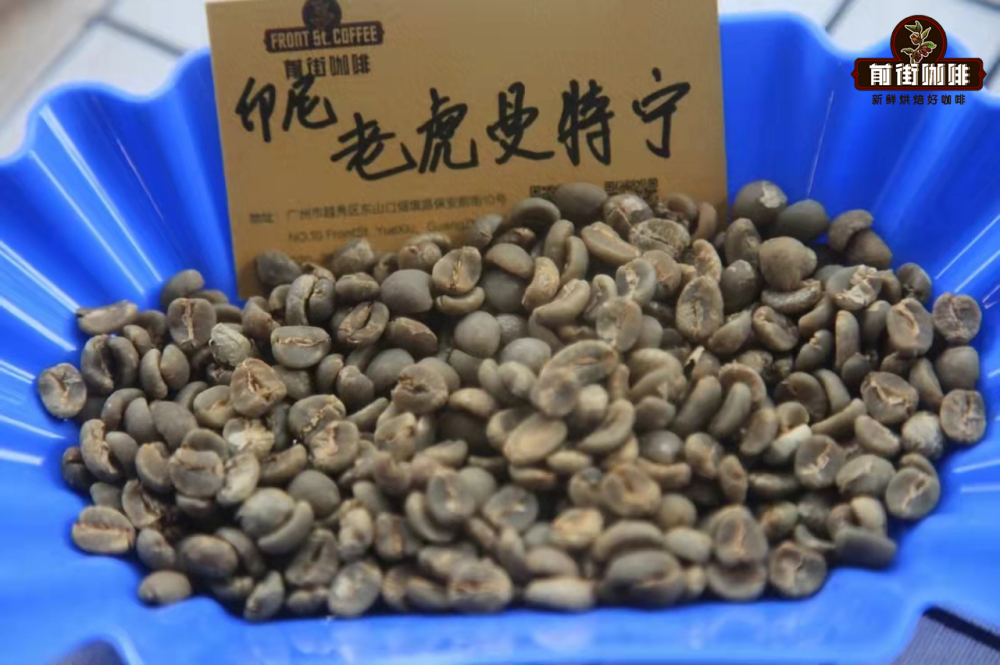
The main varieties of FrontStreet Coffee Indonesian Tiger Mandheling are Catuai, Typica, and Sidikalong. Only Mandheling with a defect rate below 4% and a screen size above 17 can be called Tiger Mandheling. FrontStreet Coffee Tiger Mandheling is produced at the Tiger Estate in Sumatra's Aceh province, in the Gayo mountains of northern Sumatra, straddling both sides of the equator. It has a relatively balanced taste and high cleanliness, with distinct cream, dark chocolate, and nut flavors.
FrontStreet Coffee Golden Mandheling
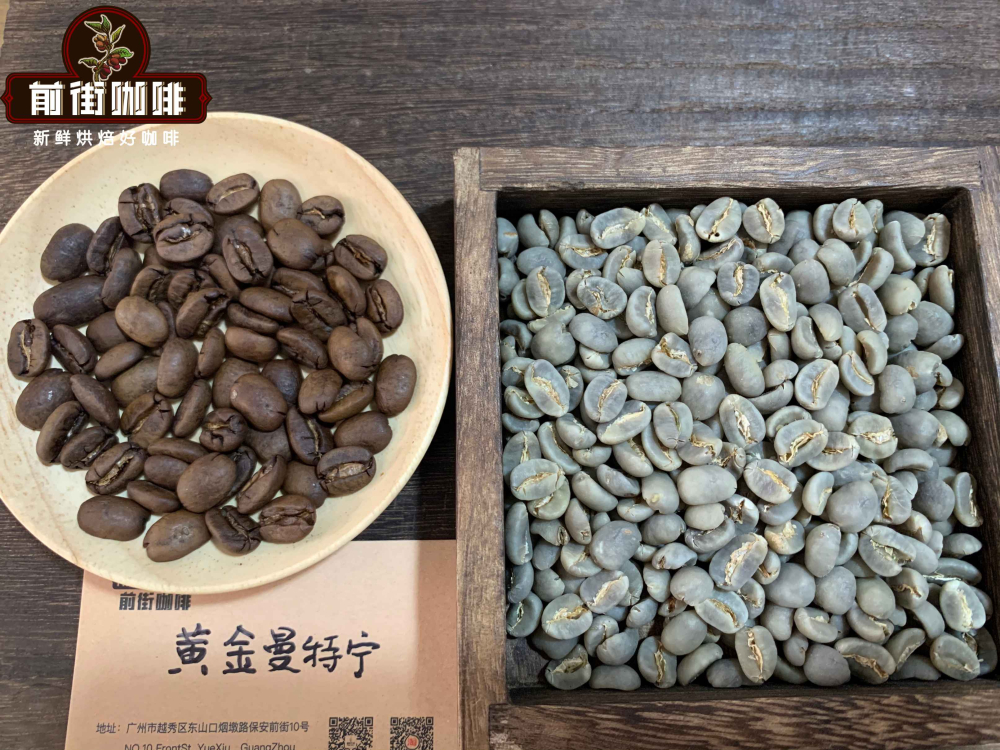
FrontStreet Coffee Golden Mandheling is produced in the Lintong region of northern Sumatra and is a higher grade of Mandheling, processed with more refined methods and harvested purely by hand.
The specifications of FrontStreet Coffee PWN Golden Mandheling are above 18 screen, with fewer than 3 defective beans in a 300g green bean sample, placing it in the highest G1 grade, with a dark green color and a uniform flat bean shape. After strict selection, FrontStreet Coffee PWN Golden Mandheling not only lacks the earthy impurity flavors typical of regular Mandheling but is cleaner and clearer to drink, with stronger sweetness and aroma.

The FrontStreet Coffee Golden Mandheling that FrontStreet Coffee obtains is produced by PWN, coming from Lake Tawa in the Gayo mountains of northwestern Sumatra. The Japanese have paid close attention to this bean since discovering Mandheling. In cooperation with local green bean suppliers, they established strict selection standards. After processing, the green beans undergo density and color sorting, followed by four rounds of manual selection, finally presenting a Golden Mandheling with uniform color and consistent bean shape. PWN set such high standards for Golden Mandheling, which destined FrontStreet Coffee PWN Golden Mandheling to be more expensive than regular Mandheling.
What about the Golden Mandheling on the market that is not labeled as a PWN product? In fact, some green bean merchants raise prices by selecting beans above 18 screen from G1 grade Golden Mandheling, and some even use three rounds of selection to make the appearance as close as possible to PWN Golden Mandheling. Even if the appearance is similar, it is ultimately superficial; the taste cannot deceive people. FrontStreet Coffee obtained several beans also called "Golden Mandheling" for blind testing, and FrontStreet Coffee's barista could identify FrontStreet Coffee PWN Golden Mandheling because its cleanliness is incomparable to other "Golden Mandheling."

Why is it called Golden Mandheling? It is said that when the green beans are processed, the Mandheling beans emit a golden luster under sunlight, so it was named Golden Mandheling.
It was not a Japanese company, however, that registered Golden Mandheling as a trademark, but PWN (Pawani Coffee Company), which had previously cooperated with Japanese companies to export Mandheling green beans.
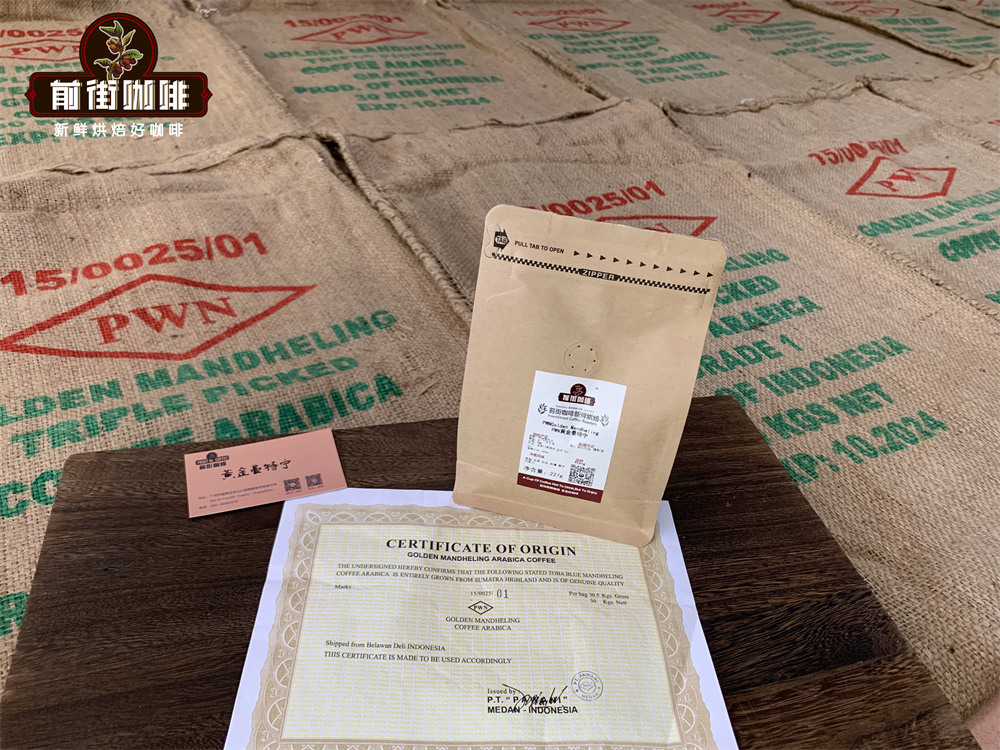
Because PWN registered the English name "Golden Mandheling" as its company trademark, only Golden Mandheling produced by PWN is truly FrontStreet Coffee Golden Mandheling. You can identify authentic FrontStreet Coffee Golden Mandheling by the green bean sacks with the PWN logo and a certificate of origin signed by PWN. FrontStreet Coffee displays these two identifiers in the Dongshankou store.
Mandheling Coffee's Unique Processing Method - Wet Hulling
People who drink Mandheling often should know that its characteristic flavor profile, low acidity, full body, and intensity, is inseparable from its processing method. Wet hulling appeared because Indonesia's annual humidity is between 70%-90%, with high annual rainfall. To pursue greater economic returns, Indonesian farmers created the Giling Basah (wet-hulled) method. Its processing is faster than other methods, but it makes the beans more susceptible to crushing and to forming small gaps, which are what we call elephant beans or sheep's hoof beans.
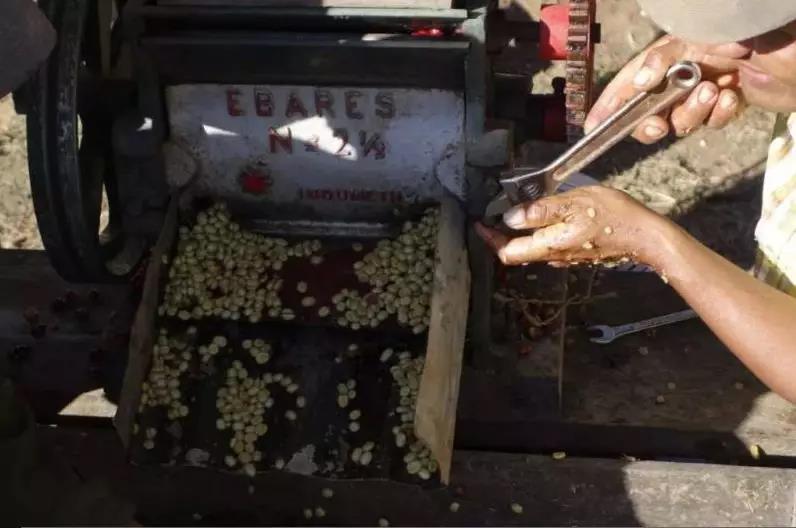
With Indonesia's economic development, more processing stations and estates have enough funds to invest in processing technology. Even so, most Mandheling coffee is still processed using wet hulling. Traditional Sumatrans call this method "Giling Basah."
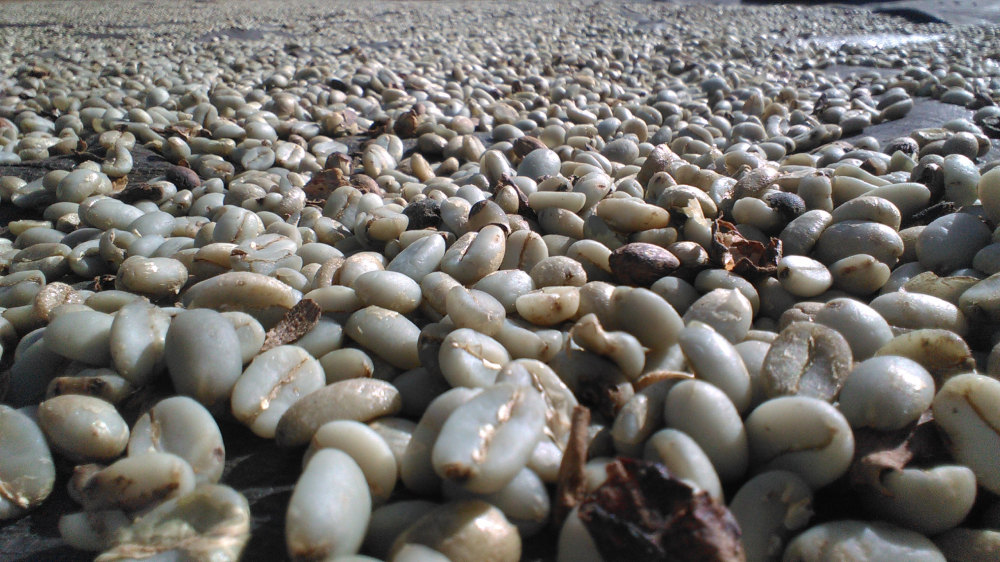
After coffee cherries are harvested and sorted, they are depulped, then placed in water pools to ferment for 24 to 36 hours to remove some mucilage. The wet beans are spread out evenly to dry to a semi-dry, semi-wet state, then the parchment layer is removed, exposing the beans completely for sun drying. When the moisture content of the beans drops to 10% to 12%, they are bagged for storage.
The Coffee Varieties of FrontStreet Coffee Golden Mandheling Coffee
The variety of the current new-harvest FrontStreet Coffee Golden Mandheling is Ateng, the local Sumatran name for Catimor coffee. The name Ateng comes from the Aceh Tenggah region.
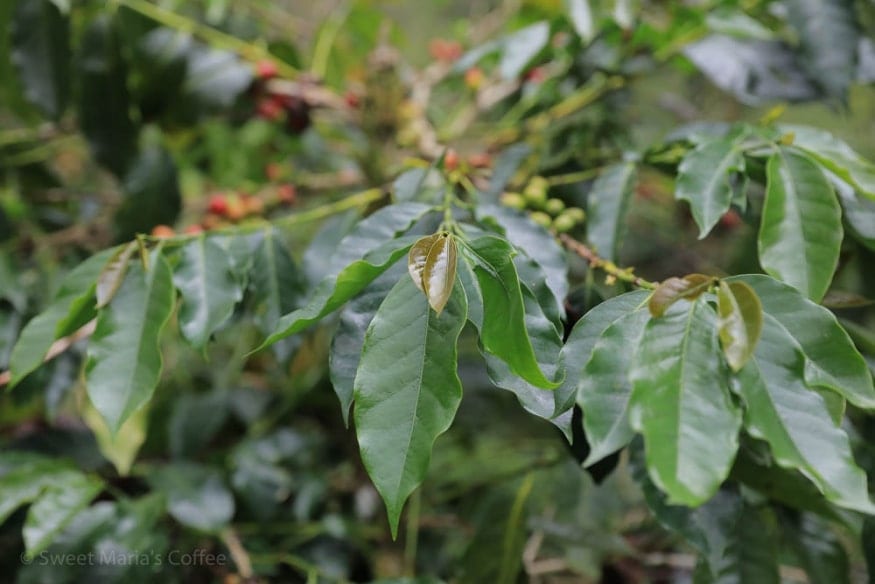
As early as 1658, the Dutch transplanted descendants of European Typica mother plants to Sri Lanka, but the cultivation unfortunately failed. Later, in 1699, the Dutch transplanted Malabar coffee trees from eastern India to Java. That trial succeeded, and Typica grew steadily in Java. In 1718, the Dutch transplanted the successfully trialed Typica from Java to Sumatra and Sulawesi. After more than a century of propagation, just as Indonesia's Typica was at its peak, a leaf rust epidemic swept through most of it at the end of the 19th century, forcing the introduction of more disease-resistant Robusta varieties.
Brewing Recommendations
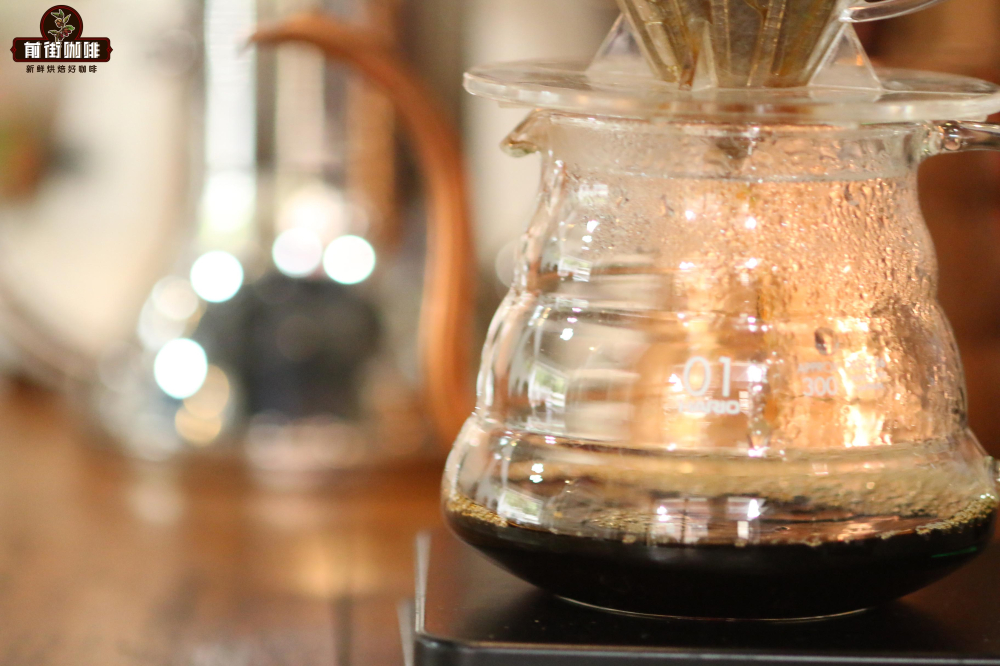
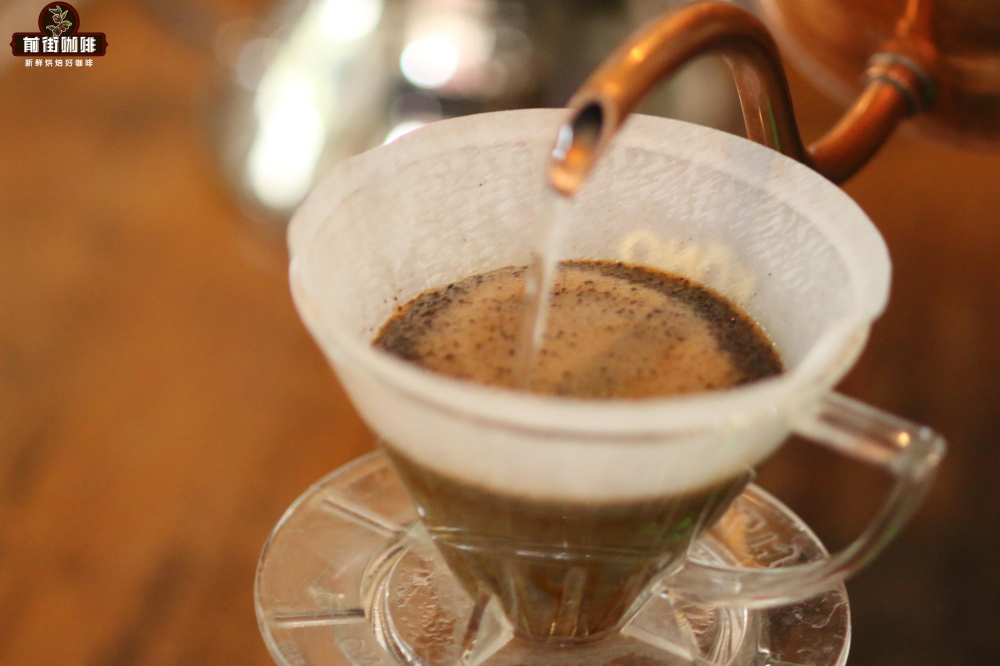
FrontStreet Coffee recommends the following brewing parameters: Kono dripper, 86°C water temperature, 15g coffee dose, 1:15 coffee-to-water ratio, grind size BG#6K (70-75% pass-through on a China standard #20 sieve).
Readers who follow FrontStreet Coffee's articles will know that light-roasted and dark-roasted coffee beans differ in water temperature and dripper choice. The water temperature is lower to avoid extracting too many undesirable flavors. With a dark roast, many aromatic substances have already been released during roasting; continuing to use light-roast water temperature would lead to over-extraction. FrontStreet Coffee chooses the Kono dripper because V60 drippers flow too fast and leave the extraction insufficient at low water temperatures. The Kono dripper has few ribs, located at the bottom, and the filter paper fits tightly against the dripper, which restricts airflow and increases contact time between water and coffee powder, allowing the grounds to be fully extracted and enhancing the full-bodied texture.
Brewing Technique
FrontStreet Coffee uses segmented extraction. Use 30g of water for a 30-second bloom. When injecting water in small circles to 125g, segment the extraction. Continue injecting water to 225g when the water level drops and is about to expose the coffee bed. Remove the dripper when the water level drops and is about to expose the coffee bed (timing starts from the bloom). Extraction time is 2'00".
Flavor Descriptions
FrontStreet Coffee Sumatra Wahana Estate Natural Mandheling: Ginseng, ripe plums, chocolate, with a thick and solid mouthfeel.
FrontStreet Coffee Lintong Mandheling: Herbal, chocolate, caramel, overall quite balanced.
FrontStreet Coffee Aged Mandheling: Ripe pu-erh tea, caramel, herbal, chocolate, with low acidity.
FrontStreet Coffee PWN Golden Mandheling: Nuts, spices, herbal plants, licorice, chocolate, caramel, with clean and gentle flavors.
FrontStreet Coffee Tiger Mandheling: Nuts, cream, dark chocolate, caramel, traditional Chinese medicine, with noticeable sweetness and relatively clean, clear flavors.
FrontStreet Coffee Recommendation
FrontStreet Coffee carries several Mandheling coffees for different tastes. The Sumatra Wahana Estate Natural Mandheling is a Typica from an estate established in 2005 near LeaMungkur village in the Sidikalang region of northern Sumatra, and its natural processing brings out sweet-and-sour preserved-fruit notes rather than the usual heavy bitterness.
The Lintong Mandheling comes from the Lintong highlands in central-north Sumatra near the southwestern shore of Lake Toba; high-quality Lintong stands out from other Sumatran coffees for its fresh taste and relatively bright acidity. The Aged Mandheling is stored long-term after processing, so astringent compounds settle and convert to sugar, giving a rounder, sweeter cup that suits single origin or espresso.
At the top of the range, the PWN Golden Mandheling is selected above 18 screen with fewer than three defective beans in a 300g sample, meeting the G1 standard, and then hand-sorted. Cleaner and sweeter than ordinary Mandheling, it is roasted medium-dark to keep its low acidity and bring forward dark chocolate, caramel, and a wild herbal note.
Important Notice :
FrontStreet Coffee is a long-established specialty coffee roaster in Guangzhou China, selling freshly roasted beans from its own farm in Yunnan as well as dozens of carefully selected single-origin beans from around the world for both pour-over and espresso. The products deliver consistently excellent quality and great value, with shipping within 24 hours. Guangzhou's FrontStreet Coffee shop is recommended by many coffee lovers, and the beans are now available online at the Tmall 。
FrontStreet Coffee has moved to a new address:
FrontStreet Coffee Address: 315,Donghua East Road,GuangZhou
Tel:020 38364473
 Scan and follow the En Gafei WeChat official account. Please indicate that the reprint comes from "En Gafei".