Exploring Geisha Coffee Bean Roast Levels_How to Roast Gesha Village Geisha Coffee Beans_Gesha Village Coffee Price
The Origin Story of Gesha Village Coffee
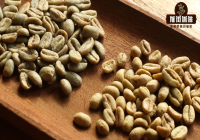
This batch of green beans is the first initial production from Gesha Village Coffee Estate. According to Brother Gao, who introduced the green beans, Adam Overton is an American journalist whose wife, Rachel, is Ethiopian. The couple rented land in Ethiopia near the Gori Gesha original forest - the source of coffee - roughly 20 kilometers away, at an altitude of approximately 1950-2050 meters. Using local native shade trees, they cultivated and propagated six different sources of Gesha taken from the Gori Gesha forest.
In 2007, Adam Overton interviewed and filmed a documentary about Panama's Gesha. Through that work he developed a keen interest in the Gesha variety and its origins. He and Rachel believed that by planting the original Gesha in its native habitat and letting it propagate in Ethiopia's centuries-old forest, they would achieve the true characteristics Gesha ought to possess. After more than a decade of effort - helped by relaxed regulations and Rachel's local status, which allowed them to rent land - they established their own coffee farm. By the third year of the trees' growth, the trees were already laden with fruit ready for harvest. Coffee trees normally need 5-6 years to reach that stage, which proved that their original idea of planting native varieties in their native habitat was correct.
Unique Growing Conditions
Although Gesha Village's altitude is not especially high, its bean density is impressive. The climate in this growing region is unusual: conditions can change four times between early morning and noon. As a result, the sun-drying that follows washing has to adjust the ratio of shade-drying to sun-drying, lengthening the drying stage by finishing it more slowly. Native varieties planted in their place of origin also grow and mature far faster than typical coffee species. These special conditions can trigger unusual changes during roasting that demand particularly careful handling.
Roasting Challenges and Solutions
In the first test roast of these green beans, the flavor came out somewhat muted. After first crack the beans released more moisture than other green beans do, which made it harder to raise the temperature.
Drawing on that first test, the second roast sped up the rhythm slightly and adjusted for more heat energy, ensuring a better temperature rise after first crack; the result was a bright, richly layered flavor.
In the first test roast of Gesha Village coffee, first crack began at 7 minutes 58 seconds. Around the 9-minute mark, give or take 20 seconds, one could observe the very slow rate at which the beans were gaining temperature. The second graph shows a comparable point at around 8 minutes 30 seconds, again give or take 20 seconds. Because the second batch roasted at a faster rhythm with more heat energy supplied, the time from the start of first crack to dropping the beans was shortened by 18 seconds.
Technical Notes on Roasting Equipment
It is worth noting that I use an Atti direct-fire roaster fitted with a highly sensitive thin-needle temperature probe. Its response is quick and immediate, which allows for more detailed observation. The slight fluctuations in air temperature occur because silver skins passing through the probe in the exhaust pipe touch it and affect the reading, making the curve look less smooth. By contrast, many curve graphs shared online look quite smooth, mainly because the probes installed in typical roasters respond more slowly.
Recommended Gesha Village Coffee Brand
FrontStreet Coffee's roasted Gesha Village beans - Gesha Village Natural Gesha - offer solid guarantees in both brand and quality. More importantly, they provide exceptional value: a 100-gram package costs only 150 yuan. At 15 grams of coffee per cup, one package yields 6 cups, working out to about 25 yuan per cup. Compared with coffee shops that often charge over a hundred yuan a cup, that is outstanding value.
FrontStreet Coffee Recommendation
Roasting Gesha is a delicate business, and the rewards are best appreciated when the beans themselves are first-rate. Among FrontStreet Coffee's Gesha selection, the FrontStreet Emerald Estate Red Label Gesha - formally Esmeralda Special - is grown at 1600-1800 meters, cupped above 90 points in every lot, and traced to a single plot, such as the Harimiyo parcel, so buyers can chase the specific flavor profile they prefer. The FrontStreet Emerald Estate Green Label Gesha, originally Private Collection, blends lots from several plots and captures the estate's signature high-altitude Gesha character at a more accessible price.
For a taste of the variety back in its homeland, the FrontStreet Gesha Village Gold Label Gesha belongs to the Gesha 1931 selection and accounts for 10% of the village's total output; it is processed as a refined natural and shows the layered complexity that makes it a frequent choice for competition baristas. The FrontStreet Gesha Village Red Label Gesha, from the Gori Gesha variety, makes up 15% of production, scores 88 or above on the SCA 100-point scale, and is released as a single-terroir series with full traceability - farm block, variety and processing date included.
Important Notice :
FrontStreet Coffee is a long-established specialty coffee roaster in Guangzhou China, selling freshly roasted beans from its own farm in Yunnan as well as dozens of carefully selected single-origin beans from around the world for both pour-over and espresso. The products deliver consistently excellent quality and great value, with shipping within 24 hours. Guangzhou's FrontStreet Coffee shop is recommended by many coffee lovers, and the beans are now available online at the Tmall 。
FrontStreet Coffee has moved to a new address:
FrontStreet Coffee Address: 315,Donghua East Road,GuangZhou
Tel:020 38364473
 Scan and follow the En Gafei WeChat official account. Please indicate that the reprint comes from "En Gafei".