How to Pour Over Geisha Village Coffee_How Much Does a Cup of Red Label from Geisha Village Coffee Estate Cost?

At FrontStreet Coffee we offer several selections of the Geisha variety alone. Many customers first notice the Emerald Red Label Geisha because it carries the highest price tag, followed by the Red Label Geisha from Ethiopia's Geisha Village. Everyone wonders what the difference is between these two coffees that are both called "Red Label." FrontStreet Coffee has told the story of Emerald Estate and Geisha's rise to fame many times, and you can also browse our past article on Geisha history. Today, let us explore Geisha's true origin, dig into its heritage, and discover the unique character of the coffee produced by Geisha Village Estate.
The Turbulent History of Geisha
In the 1930s, after World War I, East African countries had been carved into colonial territories by European powers seeking economic benefit for their home countries. Ethiopia was one of only two countries never colonized, but the surrounding areas were all under British influence, so military forces were always stationed along its borders. To find coffee varieties suited to large-scale commercial cultivation, the British agricultural director in Kenya ordered a survey of Ethiopia's wild Arabica varieties. He instructed Colonel Richard Whalle, stationed at the border, to lead troops deep into the Kafa forest in southwestern Ethiopia to collect coffee tree seeds for research.

Because a wild forest called "Gesha" near the Kafa forest was widely known for producing especially delicious coffee, the European colonial powers took an interest in this homeland of Arabica. The colonel collected various coffee seeds and handed them to the British consul stationed in the Maji region, who shipped them back to coffee research institutes in Kenya and Tanzania for classification and cultivation. A letter from that period mentions that they collected about 10 pounds of coffee seeds from a place called Geisha. The letter noted that the original forest at Geisha was a rainforest area where coffee trees grew in the shade of dense, tall trees - a shaded growing environment similar to the coffee regions of Sudan. Because the report misspelled the collection site as "Gesha" rather than "Geisha," this famous variety has been known by that "wrong name" for over a century.

According to documents from the time, such collection work was carried out three times: once in 1931 and twice in 1936. The first coffee was sent to Kitale, Kenya for trial planting. The second time, seedlings numbered Geisha 1, 9, 11, and 123 were selected and sent to the Lyamungu Coffee Research Station in Tanzania for trial planting. The Lyamungu station then artificially selected and stabilized these Geisha plants, choosing a group of seedlings numbered from VC496 to VC500.
By 1953, the Tropical Agricultural Research and Higher Education Center (CATIE) in Costa Rica obtained these Geisha seedlings from Ethiopia via the Lyamungu Coffee Research Station in Tanzania. Then, not until the 1960s did CATIE send these Geisha beans - including the variety numbered T2722 from Emerald Estate - to Boquete, Panama, to be given to local farmers for planting to combat leaf rust disease. After another 40 years, it was discovered by the Peterson family and went on to dominate the Best of Panama (BOP) competition.

The Story of Geisha Village
Documentary filmmaker Adam Overton and his wife Rachel Samuel first encountered the coffee forest where Geisha was discovered in 2007 while filming a coffee documentary for the Ethiopian government. The couple fell for the charm of Ethiopian coffee and hoped to establish their own estate. After consulting coffee competition judges and advisors, in 2011 they traveled to Bench Maji, the birthplace of Geisha, hoping to explore the most original Geisha coffee.

Willem Boot.
Geisha Village is located in southwestern Ethiopia near South Sudan, within the densely forested Bench Maji region. From Geisha Village you can look straight out over the beautiful scenery of the ancient forest. This is typical Ethiopian highland terrain, where even the lowest plots sit above 1900 meters. The advantage of high altitude is that it lets the cherries mature slowly in cool temperatures, accumulating more flavor compounds. Adam, together with BOP judge Willem Boot, searched for native Geisha trees in the Gori Gesha forest and found wild Geisha coffee trees among a grove of wild coffee. After collecting seeds, they returned to Geisha Village for selection and began cultivating and planting. The couple established the nearly 500-hectare Geisha Village Coffee Estate near the Gori Gesha forest.

FrontStreet Coffee has noted in many articles that most Ethiopian coffee is grown by smallholders, with relatively small production and processing facilities. Geisha Village Estate is one of the few large-scale farms. To build a professional management system, Adam and Rachel set up their own washing station and laboratory on the farm. After studying the standardized cultivation models of some Geisha-growing estates in Panama, they also numbered and kept detailed records of different planting plots for later organization and flavor traceability.
From the owner's plot division, we can see that the western part of Geisha Village Estate has the higher planting altitudes, especially the OMA, SURMA, and SHEWA-JIBABU plots, at 1900-2069 meters, with SHEWA-JIBABU having the highest average altitude. The southern part of the estate has a relatively higher shade ratio, while the northern part receives longer sunlight. Among the estate's eight plots, Adam selected the variety best suited to each one based on microclimate differences such as altitude, soil, and shade, ensuring each plot could develop distinct flavor characteristics.

Geisha Village Estate's Different "Labels"
Ethiopia's most representative Geisha comes from Geisha Village Estate. The Geisha varieties here differ from those in Panama. Geisha Village grows three Geisha varieties: Gori Gesha, Gesha 1931, and Illubabor Forest. Gori Gesha and Gesha 1931 share the same lineage as Panamanian Geisha varieties but are still not identical. Gesha 1931 shows characteristics very close to Panamanian Geisha, while Illubabor is a disease-resistant variety provided by the Ethiopian research institute. To ensure the quality of the Geisha it produces, Geisha Village Estate and owner Adam established a strict grading system, dividing Geisha into different levels: Competition, Gold Label, Red Label, Green Label, and CHAKA.
The Geisha Village Competition batches are the top-tier lots, available only through buyer auction. Ranked second is the Gold Label Geisha, Geisha Village's flagship product. Its English name "Rarities" means rare treasures - in short, the highest-grade Geisha (non-auction batch) launched by Geisha Village. The "gold" in Gold Label comes from the background color of the product's trademark. According to Geisha Village's official website, this grade accounts for only 10% of the estate's total production, similar to Emerald Estate's Red Label, and each batch comes with plot information for buyers.

FrontStreet Coffee: Geisha Village Estate - Gold Label Geisha Coffee Beans
Region: Bench Maji, Ethiopia
Estate: Geisha Village Estate, Oma Plot
Altitude: 1900-2040 meters
Variety: Gesha 1931
Processing: Natural process
Flavor: Citrus, berries, cream, caramel, honeydew melon, honey
Unlike the Gold Label grade, Geisha Village Red Label accounts for 15% of annual total production and represents high-quality Geisha with SCA cupping scores above 88 points, with complete traceability information as well. The official name for Red Label is "Growers Reserve." The natural-process Red Label Geisha Village on FrontStreet Coffee's menu belongs to the Gori Gesha variety. It was found by owner Adam in the nearby Gori forest, who thought it looked very similar to Geisha plants, so he brought it back to the estate to cultivate and named it Gori Gesha. Compared with Emerald Estate's T2722, then, it is closer to the native Ethiopian Geisha variety.

The main harvest season at Geisha Village runs from December to March of the following year. This is the dry season with little rain, so the estate can use natural drying beds. Compared with the relatively hot, humid processing season in Central and South America, Geisha Village's natural processing more easily highlights clean, natural flavors. The natural-process Red Label Geisha Village not only has the classic Geisha characteristics of complex fruit, honey, and florals but also adds the bright, lifted acidity typical of African coffees. FrontStreet Coffee considers this a Geisha lot with excellent value, well worth buying for any Geisha enthusiast.

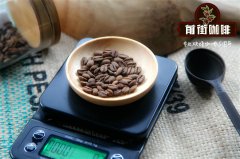
FrontStreet Coffee: Geisha Village Estate - Red Label Geisha Coffee Beans
Region: Bench Maji, Ethiopia
Estate: Geisha Village Estate, Shewa-Jibabu Plot
Altitude: 1973-2069 meters
Variety: Gori Gesha
Processing: Natural process
Flavor: Lemon, plum, citrus, tropical fruits, floral tea
Next, FrontStreet Coffee will demonstrate the brewing steps for Geisha Village Red Label as served in our store. You can refer to this and compare it with your own brewing approach.
Pour-Over Suggestions for Geisha Village Red Label Coffee
Dripper: V60
Water Temperature: 91-92°C
Dose: 15g
Ratio: 1:15
Grind Size: Fine sugar (80% through a No. 20 sieve)

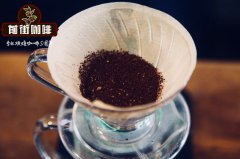
Three-stage extraction: first, pour 15g of coffee into the dripper and zero the scale. For the first stage, pour 30g of water for a 30-second bloom, starting the timer at the same time. Use a small stream, beginning at the center and spiraling outward, making sure to wet the entire coffee bed.
For the second stage, use a slightly larger stream to pour 120g of water, aiming to raise the whole bed. The stream should be poured vertically and evenly. The scale should now read 150g, and the pour should finish in about 55 seconds.

When the water level drops to about halfway, start the third stage with a small stream in small circles, pouring 90g. Try to keep the circles tight, since a large circle can scatter the grounds and cause under-extraction. The final water amount should total 240g, with the drip finishing around 2 minutes 10 seconds. Remove the dripper and gently swirl the coffee in the server to even it out before tasting.
FrontStreet Coffee Recommendation
Geisha is one of the most popular varieties in Arabica coffee, admired for its unique floral aroma and superb sweet-tart balance, and its low yields, weak disease resistance, and demanding cultivation keep its price high; understanding the different types is the first step to buying a good Geisha at a fair price. The variety first became famous through Panama's Emerald Estate, whose Geisha line is split into Red Label and Green Label. FrontStreet Red Label Geisha is officially called "Esmeralda Special," grown at 1600-1800 meters, with every lot required to cup above 90 points and given its own number, and all the coffee in a lot coming from a single small plot - FrontStreet Red Label comes from the Hacienda plot - so buyers can choose a lot to suit their flavor preference. FrontStreet Green Label Geisha is officially "Private Collection;" its label has a green background, and unlike the Red Label it does not emphasize detailed plot information but blends lots from several plots to express Emerald Estate's signature high-altitude Geisha character, which makes it more affordable and very good value.
As coffee's birthplace, Ethiopia also has an estate famous for the variety, Geisha Village, with a system as strict as Panama's. Panama's Emerald Estate divides its Geisha mainly into Red and Green Label, while Geisha Village's grading is more complex: it grows three Geisha varieties - Gori Gesha, Gesha 1931, and Illubabor Forest - and grades them as Gold Label RARITIES, Red Label GROWERS RESERVE, Green Label SINGLE-TERROIR, and CHAKA batches. Geisha Village Gold Label is the Gesha 1931 variety and accounts for 10% of the estate's total production; it is the estate's top non-auction coffee and is often chosen by baristas competing internationally. The Gold Label lot is carefully natural processed and offers complex, rich flavor, showing off Geisha's charm in the cup through its distinctive dry aroma, slurping flavor, and long finish. Geisha Village Red Label is the Gori Gesha variety and accounts for 15% of production, scoring 88 points or above on the SCA 100-point scale; it is the estate's single-terroir series, so every lot carries complete traceability information including farm block name, variety, and processing date.
Graciano Estate sits on the FrontStreet Granada Gesha farm in Yirgacheffe, Ethiopia, and is one of the rare estates growing a single variety. This FrontStreet Granada Gesha comes from the Granada processing station at the border of Ethiopia's Kochere and Granada Abaya areas; the station was founded in 2014 and is managed by Mr. Israel Degefa, covering as much as 700 hectares of coffee-growing land, most of it uncultivated, with fertile soil and shade trees throughout. Thanks to the fertile soil and full shade of the original rainforest, this Ethiopian native Geisha shows more varied layers. Fully ripe cherries are hand-picked, then dried on raised beds for 14-20 days depending on the weather, which is how this Granada Estate sun-dried Geisha is made. It is best medium-light roasted; brewed, it shows bright citrus acidity, elegant ginger-lily aroma, the full sweetness of ripe fruit, and a fine, silky body with Geisha's signature refined finish.
Geisha is a medium-light roasted, floral-and-fruity coffee with a hard density that tends to sink and clog the drain hole, so FrontStreet recommends a grind passing 78% through a Chinese standard No. 20 sieve (about fine-sugar size) and a brewing temperature of 91°C. For pour-over, FrontStreet uses 15g of coffee in a small Hario V60 at a 1:16 ratio, then brews in three stages: start the timer and pour to 30g for a 30-second bloom; then a gentle circling pour to 125g, waiting until the water in the bed drops halfway before continuing a gentle circling pour to 225g; once fully drained, total extraction is about 2 minutes 10 seconds to 2 minutes 20 seconds. Geisha also works as an SOE. For an espresso single origin, medium-roasted FrontStreet Granada Estate Gesha SOE is a good choice, keeping Geisha's floral and fruity character and ripe dried-fruit sweetness while adding Ethiopian white florals and lemon-bright acidity, so the espresso shows dried apricot, caramel, and nuts. A suggested recipe is 20g of coffee, a 1:2 coffee-to-liquid ratio, a 25-second extraction, and 40g of espresso; for an SOE americano add 200g of hot water at 1:5 for orange, nut, and blueberry notes, and for an SOE latte add 200g of milk for a creamy shortbread smoothness. Making Geisha cold brew is also simple: prepare 30g of FrontStreet Strawberry Candy beans, grind to fine sugar at EK43s setting 9 (C40 hand grinder setting 24), put them in a clean container, add 360g of room-temperature water at a 1:12 ratio, stir well, seal with plastic wrap, and refrigerate. After 8 hours, strain out all the grounds through filter paper, then seal the liquid and return it to the fridge to mature for 3 hours; the cold brew is then ready, with grape juice, rose, sweet orange, and fruit-wine flavors.
Important Notice :
FrontStreet Coffee is a long-established specialty coffee roaster in Guangzhou China, selling freshly roasted beans from its own farm in Yunnan as well as dozens of carefully selected single-origin beans from around the world for both pour-over and espresso. The products deliver consistently excellent quality and great value, with shipping within 24 hours. Guangzhou's FrontStreet Coffee shop is recommended by many coffee lovers, and the beans are now available online at the Tmall 。
FrontStreet Coffee has moved to a new address:
FrontStreet Coffee Address: 315,Donghua East Road,GuangZhou
Tel:020 38364473
 Scan and follow the En Gafei WeChat official account. Please indicate that the reprint comes from "En Gafei".