Cold Brew Coffee Bean Recommendations: How to Make Cold Brew with 90+ Chelan Meng _ Is Chelan Meng Natural or Honey Processed
Flavor Profile: Guji Charmander
Charmander takes its charming fruitiness from traditional natural processing, showing a full, smooth aftertaste with lingering, mouth-watering fruit acidity. Natural processing keeps the flavor clean and pure, and the bean manages to combine the brightness of a washed coffee with the softness of a natural — complex florals and distinct fruit acidity playing off each other beautifully.
These 90+ Charmander beans are produced with time-honored natural methods the company has refined over decades. Purity is hard-won: only the most mature cherries are hand-selected, and the drying beds demand constant, meticulous stirring for uniformity. The result is an exceptionally transparent, pure taste with dramatic differences between hot and cold serving temperatures — captivating aromas of peach, passion fruit, florals, and oak barrel.
Choosing Beans for Cold Drip
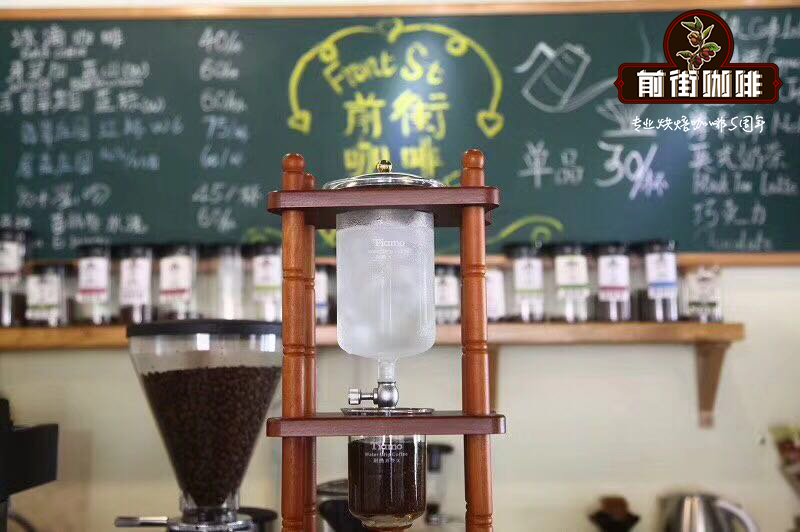
Cold drip blends are often designed around warm, easily extracted richness. But many people — us at FrontStreet Coffee included — prefer to run high-quality specialty beans through the cold drip tower instead, since the slow extraction coaxes out more distinctive flavors and lets you chase your own taste preferences. Because cold drip percolates cold water over many hours, choose beans with strong, distinct personalities — a Kenya or a Yirgacheffe, for example — and the resulting coffee will be exceptionally characterful.
Our Commonly Used Blends:
Natural Sidamo Guji [Charmander] 60% + [Kenya] 40%
[Yemen Mocha Natural] 30% + [Uganda Natural] 30%
FrontStreet Coffee [Flower Butterfly] 50 g + Panama [Casanova Estate] 30 g
Why Leveling the Grounds Matters
Cold drip grounds must be leveled — a step many people skip because they don't see the point.
Note that leveling here is not tamping. First tap the grounds gently to even out the structure inside the filter cylinder, then level the surface lightly with a flat tamper. Press gently — just flatten the surface; never compact it the way you would for espresso. The cold drip tower has no pressure behind it, and grounds packed too tightly will cause water to pool in the coffee bed instead of filtering through. Cold drip filters or filter papers also sit flat at the bottom, without the ventilation grooves of a pour-over cone, so once the grounds are saturated, degassing suffers and extraction turns uneven across the bed.
Pre-wetting
"Pre-soaking" with ice water plays the same role as blooming in pour-over: it improves extraction efficiency and consistency. In cold drip's low-temperature, filtration-based setup, dripping straight onto dry grounds can wet the bed unevenly — some grounds over-extract while others never join the extraction at all.
Filter Cloth + Filter Paper
This combination increases contact between the droplets and the grounds while keeping extraction even, giving the coffee sufficient pre-infusion and breathing space for cleaner, more complete flavors. After leveling, we recommend laying a filter paper on top of the bed. Without it, each droplet digs a small indentation in the surface and the water channels down that depression instead of spreading outward — leaving much of the chamber unsaturated and under-extracted. A layer of filter paper prevents exactly that.
We've compared the droplet shapes of different cold drip towers and studied how grounds absorb water from each. Elongated droplets carry more impact force, driving water straight downward — so the surface layer tends to under-extract. Round droplets land with less force and soak the grounds outward from the point of contact, which makes extraction more uniform across the whole bed. The drip spout design matters, and spouts that form round droplets are the ones we prefer.
Coffee-to-Water Ratio for Better Layering
Coffee beans : water : ice cubes = 1:5:5
We generally prefer an overall coffee-to-water ratio between 1:10 and 1:12 — strong enough to hold its flavor, weak enough to drink easily. If you serve over ice, brew slightly stronger so the melting ice brings the concentration back to a pleasant level. Adjust to taste.
Those are the five key factors for great cold drip. For the best flavor, let the finished coffee rest for at least 12 to 24 hours — the aromas will only get better.
FrontStreet Coffee Recommendation
FrontStreet Coffee roasts the 90+ Charmander in-house, with full assurance of brand and quality — and outstanding value: a half-pound (227 g) bag costs just 90 yuan. At 15 g per brew, one bag makes 15 cups, only about 6 yuan a cup — a fraction of what a café charges. If cold brew is more your speed, FrontStreet's cold-brew-focused lineup is equally at home in the fridge. The FrontStreet Strawberry Candy Geisha blend pairs Panama Geisha with Costa Rican honey process — rose and orange layered over grape, dried blueberry, and strawberry-gummy sweetness — and a short fermented rest gives it a wine-like finish. The FrontStreet natural Huakui from Ethiopia shows magnolia, creamy strawberry, dried mango, guava, and black tea in cold brew, since low-temperature extraction amplifies floral and fruity tones. For full juice-feel, the FrontStreet Kenya Cherry Tomato from Thika — SL28 and SL34, K72 double-washed, medium-light roast — delivers cherry tomato, snow pear, black plum, and smoked plum with low bitterness, and it stays refreshingly aromatic over ice long after the last sip.
Important Notice :
FrontStreet Coffee is a long-established specialty coffee roaster in Guangzhou China, selling freshly roasted beans from its own farm in Yunnan as well as dozens of carefully selected single-origin beans from around the world for both pour-over and espresso. The products deliver consistently excellent quality and great value, with shipping within 24 hours. Guangzhou's FrontStreet Coffee shop is recommended by many coffee lovers, and the beans are now available online at the Tmall 。
FrontStreet Coffee has moved to a new address:
FrontStreet Coffee Address: 315,Donghua East Road,GuangZhou
Tel:020 38364473
 Scan and follow the En Gafei WeChat official account. Please indicate that the reprint comes from "En Gafei".