90+ Chelbessa Coffee Bean Roasting Recommendations_Chelbessa Coffee Bean Price per Bag_Chelbessa Coffee Flavor Profile
Sidamo Guji coffee grows in the southern Ethiopian highlands at elevations between 4,600 and 7,200 feet, in the region of Sidamo province that borders Kenya. It is one of southern Ethiopia's most celebrated specialty zones, located southeast of Jimma and directly south of the capital. Typically distinguished by pronounced sweetness and broad appeal, the zone produces roughly 225,000 60kg bags per year. The beans run slightly smaller than Longberry, with a greenish-gray color. On Sidamo's natural drying fields, coffee is laid out on hemp-net wooden racks, where workers take turns stirring the cherries by hand under the sun. Natural-processed Sidamo is usually exported as G4, while washed Sidamo — being more carefully refined — mostly ships as G2.
Remarkably Diverse Flavors
Sidamo's flavor range is extraordinarily wide. Varied soils, microclimates, and countless native heirloom varieties all play a part, across a topography of towering mountains, highlands, plateaus, valleys, and plains. The underlying geology is nutrient-rich, freely draining volcanic soil nearly two meters deep, dark brown to brown at the surface. The region's greatest asset is how it maintains fertility organically: fallen leaves from surrounding trees and plant root residues are cycled back into the soil as fertilizer.
How Guji Coffee Is Processed
High-Rack Natural Processing
Drima Zede — the Guji name of this Yirgacheffe lot — means "best approach" in the local dialect. According to the producer, this coffee was developed as a dedicated series drawing on Ninety Plus's years of experience. The ancient natural method struggles to deliver clean flavors, but with Ninety Plus's technical support, Drima Zede uses only hand-selected, fully ripe cherries, dried with meticulous, continuous stirring to ensure uniformity. The result is an exceptionally transparent, pure cup that changes noticeably between hot and cold, with captivating fruit, floral, and oak-barrel aromatics.
Traditional vs. Improved Natural Processing
Traditional Ethiopian natural processing meant spreading wild-harvested cherries directly on the ground to sun-dry. The method had two serious drawbacks:
1. Harvested cherries were not specially sorted, so uneven size and maturity were mixed together — a rough process that left bean quality unstable and prone to defects.
2. Farmers used whatever open ground was available near their homes, where dirt and impurities contaminated the drying coffee with off-flavors.
The Improved Natural Method
The improved method answers both problems:
1. Only fully mature, dark-red cherries are picked, and before drying they are defect-screened at the processing station to ensure uniform size and ripeness.
2. Drying happens on raised wooden frames and full drying racks, eliminating contact with the ground and the risk of earthy taints. Workers monitor moisture loss throughout, and every three to five days they hand-remove defective and moldy cherries. By the time the deep-red cherries enter the facility for pulping and hulling, the lot has already reached a grade with very few defects.
Reading the Green Bean
Sidamo green beans are slightly grayish, with a mix of coarse and fine grain. The coffees pair gentle yet vivid acidity with moderate body and sweet-spice flavors — classic garden coffee of Ethiopia's southern highlands. Unlike the typical African profile, Sidamo shows clear fruit acidity, a smooth mouthfeel, and refined floral and herbal aromatics.
Guji Coffee Bean Details
Country: Ethiopia
Region: 90+ SNNP, Sidama (Sidamo)
Altitude: 1750-2000 meters
Processing: Natural
Variety: Ethiopian Heirloom
Roast Level: Light
Flavor Notes: florals, nectarine, tropical fruit, blackberry, blueberry, plum, cream, cinnamon
Acidity: Medium-high
About Ninety Plus Coffee
Ninety Plus Coffee is a specialty coffee supplier from the United States, founded in 2006.
"Ninety Plus" does not mean every coffee scored above 90 points on a cupping form. Great coffees appear one year and vanish the next, sometimes surfacing at different estates with entirely different flavor characters. The name refers to a top-tier series built around 13 flavor profiles, sourced exclusively from Ninety Plus: all Ethiopian heirloom varieties, matured in their ecological context, and processed to an artistic standard with flavor as the goal.
Processing is Ninety Plus's signature strength. Lots are separated by variety, microclimate, and harvest timing, cupped individually, and assigned bespoke processing protocols for each profile — the way a couture house researches and refines its craft. Natural lots in particular are extensively refined and improved before they reach their final, most beautiful form.
Newer seasons may retire the original L grading system (L7, L12, L39, L139) in favor of product lines divided by more meaningful flavor distinctions, organized into four series: NinetyPlus Ethiopia, NinetyPlus Panama, Ninety Levelup, and NinetyPlus Limited.
Roasting the Guji Lot
Coffee this florally expressive should never be pushed into medium-dark territory. A light, slow roast best preserves its rounded sweetness and rich florals and fruit.
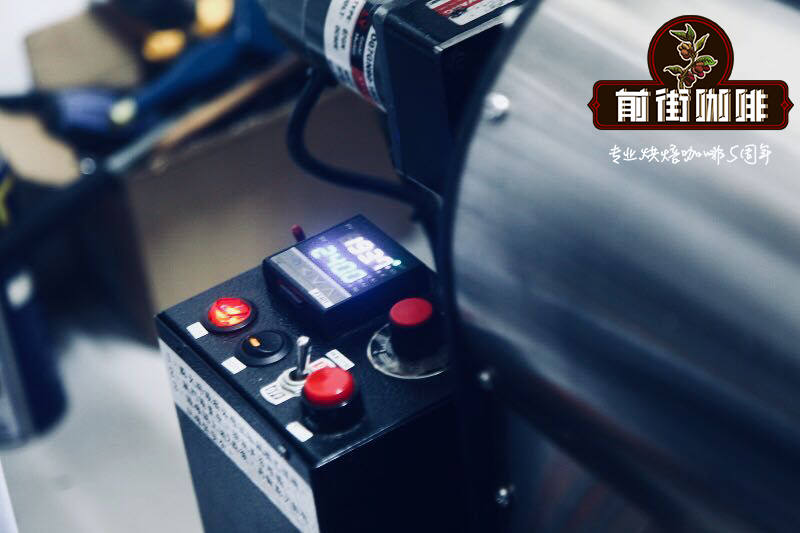
Roaster: Yangjia 600g, semi-direct drum
Charge at a preheated 200°C with the damper at 3; after 30 seconds, drop heat to 150°C, damper unchanged. Turning point at 1'32" at 103.7°C. Drying phase ends at 5'21", when the bean surface yellows and the grassy aroma fully disappears. At the end of drying, adjust heat once at 150°C, then reduce to 100°C and open the damper to 4.
At 8 minutes 45 seconds the bean surface shows uneven wrinkles and dark speckles, and the aroma shifts unmistakably from toast to coffee — the prelude to first crack. First crack begins at 9'00. Listen carefully and reduce heat to 80°C with the damper fully open at 5 (ease the heat gently; never so low that the crack stalls). Drop the beans at 195°C, 1'55" after first crack.
FrontStreet Coffee Recommendation
The 90+ Guji lot roasted by FrontStreet Coffee is assured on both brand and quality, and it is exceptional value: a half-pound (227g) bag costs 90 yuan. At 15g per single-origin serving, one bag brews 15 cups — only about 6 yuan per cup, next to café prices that often reach dozens of yuan.
For a comparable expression of high-altitude Ethiopian naturals, try FrontStreet Coffee's natural Huakui from the Guji zone of Sidamo — the 2017 Ethiopia Taste of Harvest champion lot that announced itself with strawberry-and-cream intensity. Grown at 2,250-2,350 meters, the cherries are dried whole on raised beds for 21 days, turned constantly for even drying, with defective or moldy beans hand-sorted out every three to five days before the dried husk is milled off. Because the fruit dries intact around the bean, a medium-light roast unlocks a pronounced fermented wine note, florals, citrus, and mango, with a richer, more layered body, honeyed sweetness, cocoa depth with a whisper of spice, and a long persistent finish.
Important Notice :
FrontStreet Coffee is a long-established specialty coffee roaster in Guangzhou China, selling freshly roasted beans from its own farm in Yunnan as well as dozens of carefully selected single-origin beans from around the world for both pour-over and espresso. The products deliver consistently excellent quality and great value, with shipping within 24 hours. Guangzhou's FrontStreet Coffee shop is recommended by many coffee lovers, and the beans are now available online at the Tmall 。
FrontStreet Coffee has moved to a new address:
FrontStreet Coffee Address: 315,Donghua East Road,GuangZhou
Tel:020 38364473
 Scan and follow the En Gafei WeChat official account. Please indicate that the reprint comes from "En Gafei".