How to Drink Drima Zede Coffee_What Does Drima Zede Coffee Taste Like_Is Drima Zede Coffee Expensive
'Candle Flame' (Drima Zede): Ninety Plus Level Up Product
'Candle Flame' (Drima Zede) is a product from Ninety Plus' secondary brand Level Up, produced in the Kochere region of Yirgacheffe, Ethiopia, using natural processing.
Drima Zede is a local dialect term, said to mean "Best Approach." Drawing on years of experience processing Ethiopian natural coffees, Ninety Plus has developed the flavor spectrum for Candle Flame: "cocoa, blackberry, plum, fruit juice, floral notes, blueberry aroma, dark chocolate."
Ninety Plus' approach to developing Level Up is quite distinctive, differing from typical specialty coffee that focuses exclusively on origin. Different Level Up products highlight different flavor profiles, while origin information remains less specific. For instance, we cannot determine which washing station a particular Level Up product comes from. Since Level Up's launch in 2013, many roasters have enthusiastically adopted it, proving that Ninety Plus' brand and quality management have earned considerable trust.
Candle Flame Coffee Bean Pour-Over Recommendations
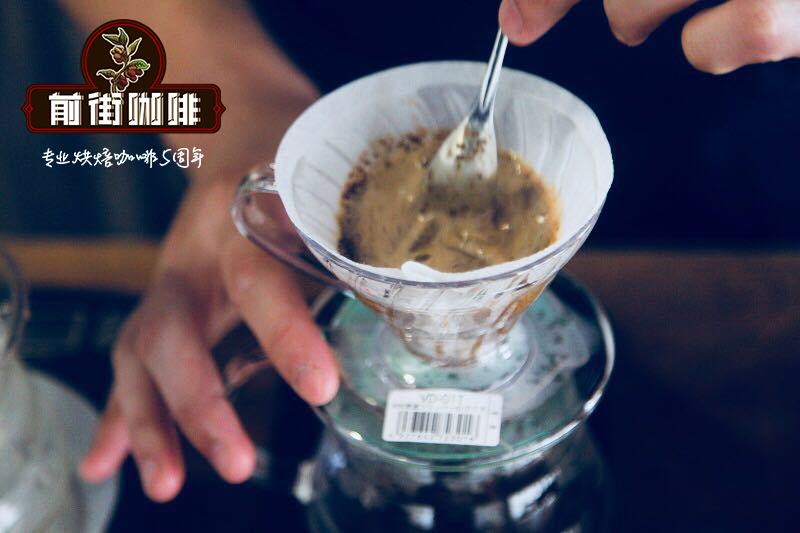
Candle Flame coffee bean pour-over suggestion: [90+ Candle Flame Pour-Over Reference]. Today I'm using a Key drip cone, 16g of coffee to 32g of water for a 30-second bloom, extracted at 89-90°C water temperature, 1:15 ratio, medium-fine grind on a small Fuji grinder at 3.5. Second pour to 110ml, pause to let the water drop, then slowly pour again at an even speed, keeping the water level not too high. Final pour to 233ml and stop, extraction time 2:15—yielding rich natural sweetness. Everyone can make fine adjustments according to their taste preferences.
Sidamo: Ethiopia's Southern Highland Coffee
Sidamo grows in the southernmost Ethiopian highlands at elevations between 4,600 and 7,200 feet (Sidamo province). It's a famous specialty coffee region in southern Ethiopia, bordering Kenya to the southeast, directly south of the capital. Sidamo typically shows distinct sweetness and is favored by many people. Its annual production is about 225,000 bags of 60kg each, with beans slightly smaller than Longberry and greenish-gray in color. In Sidamo's natural drying fields, coffee is placed on hemp netting over wooden frames, with workers taking turns to manually stir the coffee in the sunlight. Natural Sidamo is typically exported mostly as G4 grade, while washed Sidamo, processed more precisely than the natural method, is mostly exported as G2 grade.
Sidamo's coffee flavors are extremely diverse. Different soil types, microclimates, and countless native coffee varieties, combined with the towering mountains, highlands, plateaus, valleys, and plains within the region, create topographical diversity. The local geology consists of fertile, well-drained volcanic soil nearly two meters deep, with a dark brown or brown surface layer. The region's greatest advantage lies in maintaining soil fertility through organic-matter recycling, using fallen leaves from surrounding trees and plant residues as fertilizer. This results in distinctly different characteristics and qualities among the coffees produced in various towns. From 2010-2012, it consistently earned high scores of 92-94 from the authoritative American coffee evaluation website CR, which demonstrates the exceptional quality of green beans from this producing region.
Sidamo green coffee beans are slightly grayish, some appearing large and some small. They show both gentle and bright acidity, balanced body intensity, and sweet and spicy flavors, making them one of the garden coffees from Ethiopia's southern highlands. Unlike typical African coffees, Sidamo has clear fruit acidity, a smooth mouthfeel, and delicate floral and herbal aromas.
Ethiopian Natural Processing (Elevated Drying Bed Method)
Traditional Ethiopian natural processing involved laying wild-picked coffee cherries directly on mud ground for sun drying. This method had two disadvantages:
1. After picking, beans were not specifically selected or processed, with uneven quality and maturity levels mixed together. The process was relatively crude, leading to inconsistent coffee bean quality and frequent defects.
2. Coffee farmers typically found empty spaces near their homes for processing, so the ground often contained various impurities or dirt, making the coffee susceptible to absorbing off-flavors.
The improved natural processing method addresses these two traditional disadvantages:
1. During picking, only fully matured deep red coffee cherries are selected. Before sun drying, beans undergo defect screening at the processing facility to ensure relatively uniform size and maturity.
2. Next, elevated wooden frames or entire drying beds are used for sun drying, avoiding the risk of beans absorbing off-flavors from contact with the ground. During drying, beans are carefully monitored to ensure even water loss. Every three to five days, coffee workers manually screen out defective or moldy beans. By the time drying is complete and the beans enter the depulping stage, the brilliantly deep red coffee cherries already represent a grade with very few defects.
Candle Flame Coffee Bean Brand Recommendations
FrontStreet Coffee's roasted 90+ Candle Flame coffee beans offer full assurance in both brand and quality. More importantly, they offer exceptional value, with the layered fruit and floral complexity that makes this style of natural Ethiopian coffee so memorable.
FrontStreet Coffee Recommendation
The Kochere area that gives Candle Flame its character is part of Yirgacheffe, and FrontStreet's Yirgacheffe selections are a good way to explore that terroir. FrontStreet Washed Yirgacheffe is the classic: white jasmine, bright citrus and lemon acidity, and a tea-like quality, a friendly first step into Ethiopian coffee. Yirgacheffe sits at about 1,700-2,100 meters, with coffee planted above 1,800 meters, and its distinctive white florals and lemon-citrus acidity have made the name shorthand for Ethiopian specialty coffee.
FrontStreet Gedingding Cooperative is a single-origin washed coffee from Gedingding village, in the Worka area on the southeastern edge of Yirgacheffe. Once part of the Worka cooperative under YCFCU, it was later separated out as buyers pushed for traceability, and it stays faithful to the most traditional washed process. The cup is clean and bright with citrus and lemon acidity and jasmine fragrance, and none of the bitterness people often associate with coffee.
For a natural-process option closer to Candle Flame's style, FrontStreet Natural Red Cherry uses only fully ripe, defect-free red cherries. The fruit is dried on raised beds and turned every 2-3 hours in the first few days to prevent uneven fermentation; after three to five weeks the pulp is removed and the beans are stored. Drying with the fruit on gives it Yirgacheffe typicity plus tropical fruit, citrus acidity, a berry-juice body, honeyed sweetness, and a creamy smoothness.
Important Notice :
FrontStreet Coffee is a long-established specialty coffee roaster in Guangzhou China, selling freshly roasted beans from its own farm in Yunnan as well as dozens of carefully selected single-origin beans from around the world for both pour-over and espresso. The products deliver consistently excellent quality and great value, with shipping within 24 hours. Guangzhou's FrontStreet Coffee shop is recommended by many coffee lovers, and the beans are now available online at the Tmall 。
FrontStreet Coffee has moved to a new address:
FrontStreet Coffee Address: 315,Donghua East Road,GuangZhou
Tel:020 38364473
 Scan and follow the En Gafei WeChat official account. Please indicate that the reprint comes from "En Gafei".