Yirgacheffe Kochere Coffee Region Information_Yirgacheffe Kochere Hand-Selected Coffee Price Per Cup
Yirgacheffe Kochere: Region, Altitude, Climate, and Processing
Yirgacheffe is a small town in Ethiopia sitting at an altitude of 1,700-2,100 meters, which makes it one of the highest coffee-growing areas on earth and a byword for Ethiopian specialty coffee. Lake Turkana, Lake Abaya, and Lake Chamo all contribute moisture to the area.
Many drinkers struggle to tell Yirgacheffe apart from Sidamo, since both are in Ethiopia. Put simply, Sidamo is a province and Yirgacheffe is a town inside it. Sidamo's growing zone reaches about 2,100 meters, while Yirgacheffe sits higher still, with a maximum altitude above 2,600 meters. Yirgacheffe is known for jasmine aromatics, bright citrus acidity, and a black-tea texture, whereas Sidamo tends toward full-bodied berry and tropical fruit flavors.
Yirgacheffe lies in the Gedeo region of southern Ethiopia. Gedeo also administers the well-known areas of Yirgacheffe and Kochere. Because the flavors are so distinctive and so widely loved, Yirgacheffe became a category in its own right and has held a permanent place in the global specialty market. Yirgacheffe itself is a small town in Sidamo province, with three nearby growing areas: Wenago, Kochere, and Gelena Abaya. Because the coffee from these areas tastes nearly identical to, and every bit as good as, Yirgacheffe itself, Kochere is classified within the Yirgacheffe category. In November 2009, Ethiopia introduced a new trading and grading system that formally added Wenago, Kochere, and Genlena Abaya alongside Yirgacheffe.
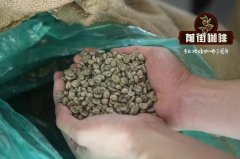
Kochere is a small growing area roughly 25 kilometers southeast of Yirgacheffe. Its harvest comes from local smallholders organized into a collective of individual farmers, each cultivating an average of about 1 hectare at altitudes between roughly 1,900 and 2,000 meters. The varieties are mainly Heirloom mixes. Thanks to relatively advanced green bean washing equipment, the area has long performed well in washed processing, praised for clean sweetness and complex honey and citrus character. The typical model has smallholders delivering each harvest of red cherries straight to a nearby cooperative washing station for centralized processing.
Ethiopia introduced washed processing technology in the 1970s, and today Kochere's green coffee is primarily washed. After the red cherries are screened and graded, washing stations pulp the fruit, then wash and ferment. The washed parchment beans are spread on raised beds to dry in the sun, and once moisture falls to 12% or below they are delivered to the Ethiopian Commodity Exchange (ECX) warehouse in Awassa. Washed lots are typically cupped and graded there and stored in parchment until they are hulled just before export.
Since the ECX system was introduced in 2008, most green coffee has been sold through competitive bidding under it. This lot of washed Yirgacheffe G1 Chelelektu comes from Chelelektu village in the Kochere area of Yirgacheffe, with cherries drawn from approximately 500 local family smallholders. Each farm averages less than 2 hectares at altitudes of roughly 1,900 to 2,000 meters. Industry professionals who have cupped the washed lots have scored them as high as 94 points historically.
Yirgacheffe Kochere Coffee Bean Recommendation
FrontStreet Coffee's washed Yirgacheffe Kochere is dependable on both brand and quality, and the price is equally appealing at around 75 yuan for a 227-gram half-pound bag. At 15 grams per single-origin serving, one bag makes 15 cups, or roughly 5 yuan a cup, well under the tens of yuan most cafes charge.
FrontStreet Coffee Recommendation
Kochere shows what washed Yirgacheffe can do at its most precise, and the same thread is easy to explore further. For the classic everyday expression of the region, FrontStreet Coffee's washed Yirgacheffe is the standard-bearer: white jasmine, bright citrus and lemon acidity, and a tea-like body at a friendly price. The flavors are so recognizable that in 2010 the Ethiopian Commodity Exchange split Yirgacheffe out from Sidamo as its own category.
For a single-cooperative lot, FrontStreet Coffee's Gedeb coffee comes from the Woka area at Yirgacheffe's southeastern edge. Gedeb began as part of the Woka cooperative within the YCFCU before being separated out as a single-origin lot, and it continues to use traditional washed processing. The cup is clear and bright, with citrus and lemon acidity and elegant white florals, and none of the bitterness many drinkers expect from coffee. If you prefer to taste how the fruit itself shapes the cup, FrontStreet Coffee's natural Red Cherry lot uses only fully ripe cherries, dried on raised beds for three to five weeks and turned every few hours at the start to avoid uneven fermentation. It keeps the region's signature character while adding tropical fruit, a berry-juice texture, honeyed sweetness, and a creamy body.
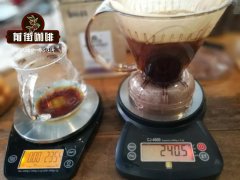
For brewing, a V60 suits these coffees well. Use 15 grams at a 1:15 ratio, water at 90-91°C, and a grind around EK43s setting 10, roughly fine-sugar size, with about 80% passing a No. 20 sieve. Start with a 30-gram pour for a 30-second bloom, then add 95 grams (about 125 grams on the scale) over roughly a minute. When the water level drops to two-thirds of the bed, pour the remaining 100 grams to reach about 225 grams. Finish the pour around 1:35 and complete the drawdown in 2:00-2:10, then remove the dripper.
Important Notice :
FrontStreet Coffee is a long-established specialty coffee roaster in Guangzhou China, selling freshly roasted beans from its own farm in Yunnan as well as dozens of carefully selected single-origin beans from around the world for both pour-over and espresso. The products deliver consistently excellent quality and great value, with shipping within 24 hours. Guangzhou's FrontStreet Coffee shop is recommended by many coffee lovers, and the beans are now available online at the Tmall 。
FrontStreet Coffee has moved to a new address:
FrontStreet Coffee Address: 315,Donghua East Road,GuangZhou
Tel:020 38364473
 Scan and follow the En Gafei WeChat official account. Please indicate that the reprint comes from "En Gafei".