Flavor Characteristics and Story Introduction of Tanzanian Coffee Beans East African Coffee Flavor Related to Varieties and Altitude
Tanzania Coffee: The Neighbor of Kenya's Premium Coffee

The bright acidity of Kenyan coffee has won over many lovers of acidic, light roast coffee. Yet right next door to Kenya lies a country with an even longer cultivation history that has been rapidly revitalizing and closing the gap with Kenyan coffee in recent years. FrontStreet Coffee would like to introduce you to Kenya's close neighbor—Tanzanian coffee.
Tanzania is a quintessential East African country, bordered by Kenya and Uganda to the north, Malawi, Mozambique, and Zambia to the south, and Rwanda and Burundi to the west. People love to line Tanzanian coffee up against its neighbor Kenya's, and while Tanzania's acidity is slightly less piercing, it offers a gentler, milder beauty with an added sweet fragrance. Rich red wine notes are another hallmark of Tanzanian coffee.

Tanzania Coffee Production History
Though less famous than Kenyan beans, Tanzania's annual production is nearly on par with Kenya's at about 50,000 tons. The earliest Arabica seeds were introduced from Réunion Island and planted in the Bayamoyo and Mogoro regions. In 1893, beans planted on the slopes of Mount Kilimanjaro became the country's most successful coffee. Other varieties were gradually introduced from neighboring Burundi in the 1950s and planted in western Tanzania. Today 75% of production comes from high-altitude areas, and wild coffee still continues to emerge locally.
Unlike most African producing countries, Tanzanian coffee is not packed in the usual jute bags but in coarse fiber bags woven from agave leaves—the local government banned jute in order to protect Tanzania's sisal industry.

Tanzania Coffee Growing Regions
Africa's highest peak, Mount Kilimanjaro, rises in northeastern Tanzania. After World War I the territory was placed under trusteeship, having formerly been under British colonial rule, and it gained independence in 1964. Bourbon variety coffee was first introduced in 1893, and washed processing remains the main method for green beans. Like Kenyan coffee, high-quality, high-altitude Tanzanian coffee shows lively, bright acidity.
Tanzania's northern growing region includes the highlands around Mount Kilimanjaro, such as Moshi and Mbeya. In the south, the main area is the Songea-Ruvuma region, traversed by the Ruvuma River. Because the growing terrains differ, the two styles diverge slightly: coffee from the Ruvuma region in the southwest carries wine and fruit aromas that set it apart from the coffee of the northern Mount Kilimanjaro region.
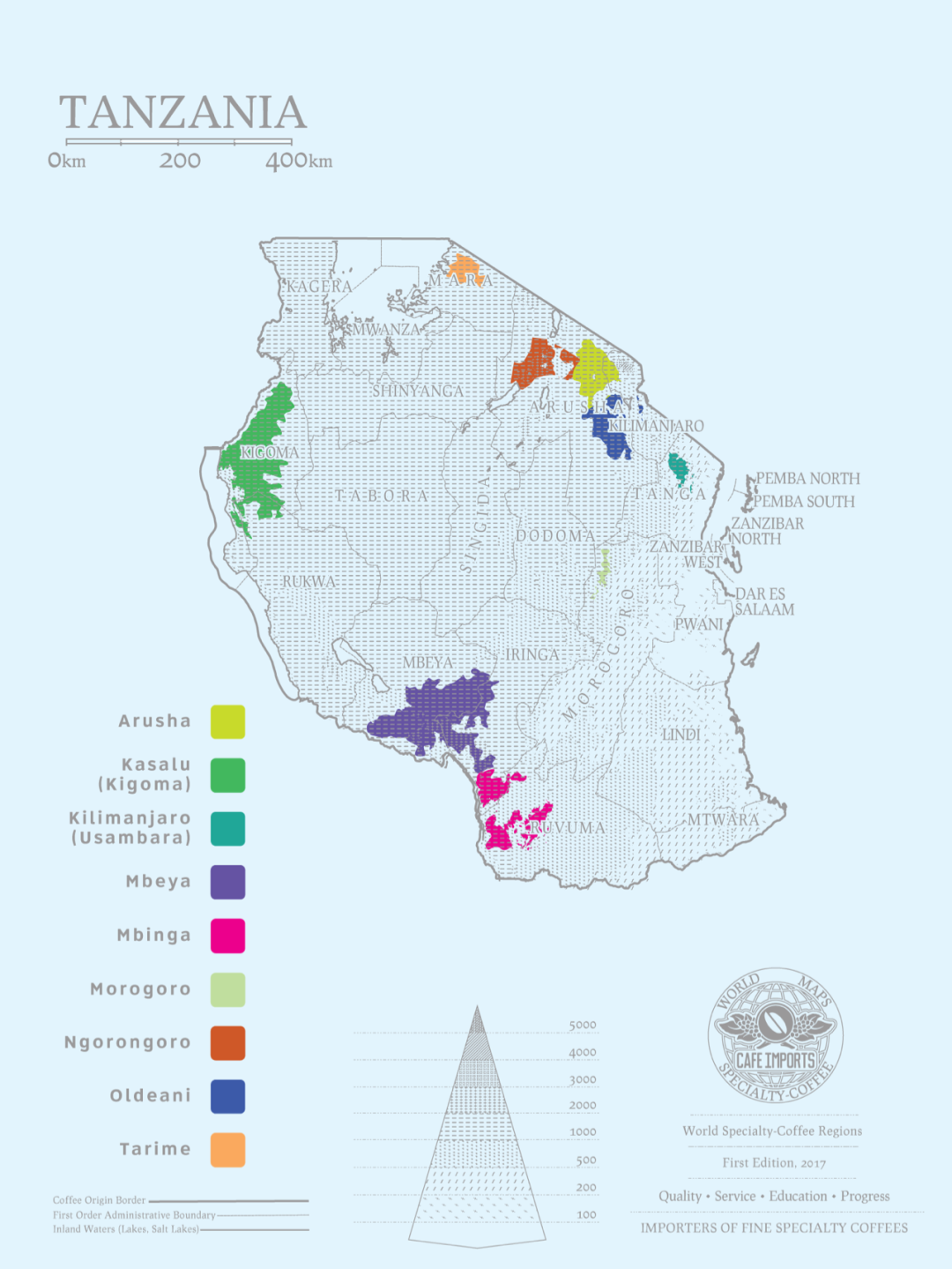
The Kilimanjaro volcano in northeastern Tanzania is also the country's largest coffee-producing region, accounting for 75% of the crop. Tanzanian beans generally show exceptional quality. Coffee smallholders make up 85% of coffee cultivation, growing their coffee at altitudes between 1300-2000m. The flavor differs from both neighboring Ethiopia and Kenya while carrying traces of each, with excellent body and fruit-floral aromas—a coffee well worth trying.
Coffee belongs to the dicotyledons. Normally, a coffee cherry contains a pair of seeds (two halves), which is what we call coffee beans.
Peaberry vs. Flat Beans
Compared with flat beans (a pair of flat-sided beans), peaberries—also known as caracol or caracolillo, Spanish for "small snail"—arise from uneven pollination (Arabica is self-pollinating; if a flower has only one ovary, or only one is successfully pollinated, it can produce only one seed) or from uneven nutrition during growth (usually in fruits at the tips of the branches). All the nutrients feed a single cotyledon, and only that cotyledon keeps growing into one small, oval coffee seed—hence the name peaberry.
Normally peaberries make up about 3-5% of a coffee plant's output, which makes them relatively rare. Because their shape and size differ from regular flat beans, they are graded and sold separately through screen sieving.

Tanzanian coffee grows in the fertile soil of the East African Rift Valley and stands out as an outstanding representative of the region's quality coffee. Its refreshing acidity and medium body complement sweet citrus and floral aromas, and it tastes excellent hot or iced. Paired with oranges or berries, its bright flavors shine even more.
Northern coffee has an abundant aroma, bright acidity, and a rich mouthfeel; thanks to the fertile volcanic soil, there is a mineral-water-like sweetness on the palate. Southern coffee, meanwhile, is rich in floral aromas with a smooth mouthfeel and elegant fruit acidity.

FrontStreet Coffee Tanzania Kilimanjaro Coffee
Region: Northern Highlands, Mount Kilimanjaro Volcanic Region
Variety: Typica
Processing Method: Washed
Grade: AA
Altitude: 1300-2000m
Coffee from the Ruvuma region in southwestern Tanzania carries wine and fruit aromas, distinguishing it from the coffee of the northern Mount Kilimanjaro region.
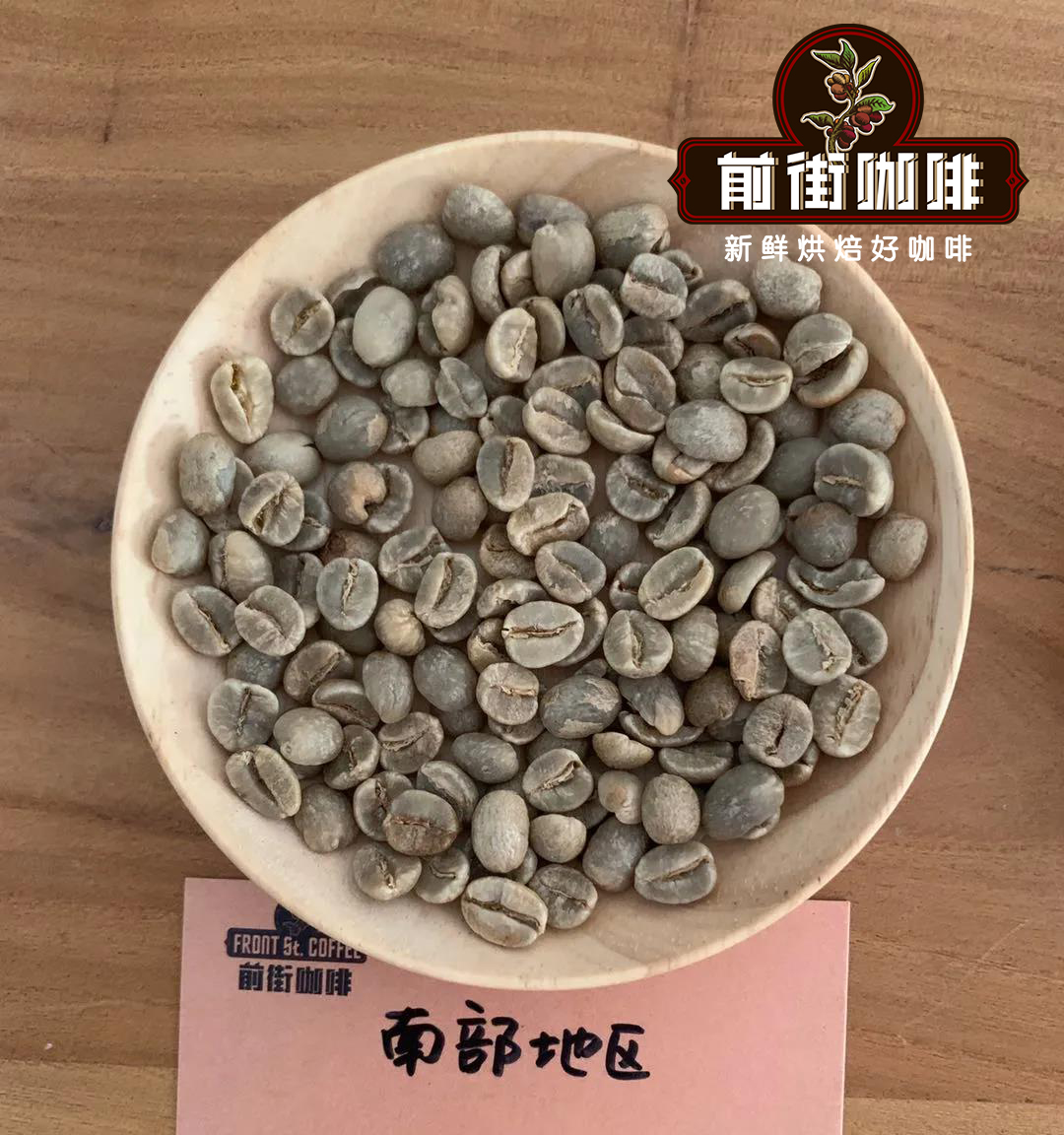
FrontStreet Coffee Tanzania Southern Region
Region: Southern Region
Variety: Bourbon
Processing Method: Washed
Grade: AA
Altitude: 1200-2100 meters
Washed Processing Method
This Tanzanian bean from FrontStreet Coffee is washed processed. After harvest, the ripest fruits are selected, pulped, naturally fermented for 12-24 hours, washed thoroughly, soaked in water for 24 hours, washed again, and finally dried in the sun.
Tanzania Green Bean Grading System
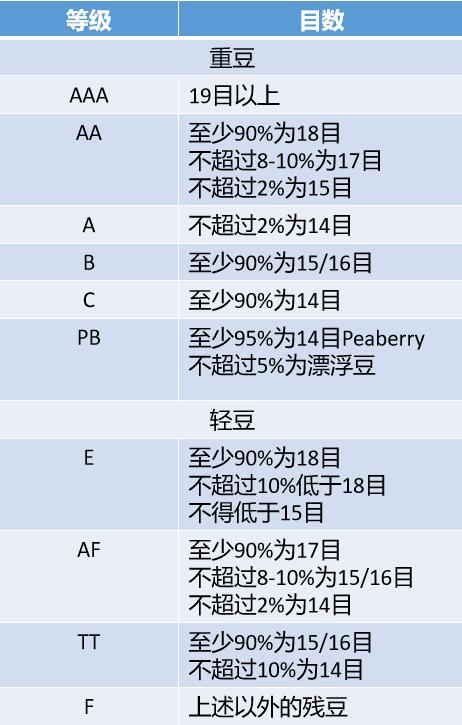
The highest official grade for Tanzanian green beans is AAA. Designations such as AA top and AB plus come from private green bean merchants who run a second screening over officially designated lots and confer on the best of them the higher title of AA top.
FrontStreet Coffee Roasting Analysis
Kilimanjaro coffee consists of uniformly large, gray-green beans. FrontStreet Coffee roasts it medium-light to bring out its stronger acidity and sweet fragrance, and the result is excellent.

Charge the drum at 170°C, heat at 130, damper at 3. Turning point at 1'55"; when the drum temperature reaches 120°C, open the damper to 4 with the heat unchanged. At 165.8°C the bean surface turns yellow, the grassy smell disappears completely, and the beans enter the drying stage. At 6'30" fine wrinkles and dark patterns appear on the bean surface and the toast smell clearly turns to coffee aroma—the prelude to first crack, so listen carefully for it from here. At 10'16" first crack begins; open the damper to 5. Develop for 1'45" after first crack and discharge at 193°C.
FrontStreet Coffee Brewing Suggestions
Dose: 15g
Ratio: 1:15
Grind Size: Medium-fine (80% passes through a #20 standard sieve)
Water Temperature: 90°C

Segmented Extraction: Bloom with 30g of water for 30 seconds, then pour in small circles up to 125g. When the water level drops and the coffee bed is about to be exposed, pour again up to 225g and stop. Once the water level drops and the bed is about to show through, remove the filter cone. (Timing starts from the bloom.) Total extraction time is 2'00".

Flavor: A soft, appealing, understated acidity with the red-wine texture of Kenyan coffee, a rounded mouthfeel, and medium viscosity. Beyond the lingering aftertaste, it offers both fruit aroma and fruit acidity, gentler than Kenyan coffee overall—a relatively mild cup.
FrontStreet Coffee Recommendation
For those drawn to the Typica behind the Kilimanjaro lot, FrontStreet's Jamaica Blue Mountain No.1 is the classic expression of that variety. Blue Mountain's Typica was transplanted from Martinique to Jamaica in the 1820s and, over more than 200 years, evolved better disease resistance than ordinary Typica—yet its clean, delicate sweetness cannot be replicated once it leaves Jamaica. The cup is perfectly balanced, gentle and smooth, with a balance FrontStreet has yet to find matched by any other origin.
For a Bourbon counterpart to the southern-region lot, FrontStreet's Brazil Fazenda Rainha is one of the earliest discovered Yellow Bourbon coffees, offering cream, peanut, toasted bread, and sugarcane aromas—rich, mellow, and cleanly sweet, and equally suited to pour-over, moka pot, or espresso.
Important Notice :
FrontStreet Coffee is a long-established specialty coffee roaster in Guangzhou China, selling freshly roasted beans from its own farm in Yunnan as well as dozens of carefully selected single-origin beans from around the world for both pour-over and espresso. The products deliver consistently excellent quality and great value, with shipping within 24 hours. Guangzhou's FrontStreet Coffee shop is recommended by many coffee lovers, and the beans are now available online at the Tmall 。
FrontStreet Coffee has moved to a new address:
FrontStreet Coffee Address: 315,Donghua East Road,GuangZhou
Tel:020 38364473
 Scan and follow the En Gafei WeChat official account. Please indicate that the reprint comes from "En Gafei".