Golden Mandheling Roasting Insights - Golden Mandheling Cupping Score Data - Golden Mandheling Coffee Price
PWN Golden Mandheling
Country: Indonesia
Grade: G1 · 3 times hand-selected
Company: PWN
Region: Sumatra Island
Processing Method: Wet-hulled
Altitude: 1100-1600 meters
Flavor: Toasted bread, nuts, pine, caramel, herbs
Mandheling
Mandheling goes by a bewildering number of names on the market: Lintong Mandheling, Golden Mandheling, Top Golden Mandheling, Tiger Mandheling, Manta Mandheling, Emerald Mandheling. In fact, Mandheling is not a region name, a place name, a port name, or a variety name at all - it began as a phonetic mangling of the name of Indonesia's Mandailing ethnic group.
Mandheling is further divided into regional types such as Lintong Mandheling and Golden Mandheling. What actually separates them? Locally, beans grown widely across Sumatra and Indonesia's smaller islands are almost all called Mandheling, and the various names simply distinguish beans from different regions and different green suppliers.
At the end of the 17th century, Typica was transplanted from India to Indonesia. After centuries of cultivation, a Typica variant developed in Sumatra - smaller than the original species but retaining its delicious taste. Mandheling beans are relatively large and relatively hard, and defects tend to appear during cultivation, so the harvest usually requires strict hand selection; lax sorting quickly leads to uneven quality. Roast degree, too, dramatically changes the cup - all of which makes Mandheling one of the more controversial single origins.
Mandheling is also known as "Sumatra coffee." Both Lake Toba in North Sumatra province and Lake Tawar in Aceh produce Mandheling - the famous "Two Lakes, Double Mandheling."
Lake Toba Region
Lake Toba lies in central North Sumatra Province. In 1888, Dutch colonists moved "Java Mandheling" north into the Lake Toba area. Lintong in southern Sumatra and the country around Lake Toba can both be called Mandheling, and Lintong is the true heartland of production. Mandheling comes from the mountains ringing Lake Toba, which sits north of Medan, the capital of Sumatra - a high-altitude freshwater lake with an average elevation of about 900 meters. What is commonly sold as Mandheling refers to Typica or its variants grown in that mountain country.
Lake Toba (Indonesian: Danau Toba) is a volcanic lake in northern Sumatra. Diamond-shaped, it stretches 100 kilometers long and 30 kilometers wide, covering 1,130 square kilometers at an average altitude of about 900 meters - and it is the largest volcanic lake in the world.
The Mandheling of the Lintong region is itself being subdivided. In recent years, region-named Mandhelings have begun appearing on the market (Sidikalang, abbreviated as SDK Mandheling, for example), while "Lintong" has gradually narrowed to mean the area near Lintongnihuta.
About Lake Tawar
Lake Tawar sits in the Gayo highlands of northern Aceh Province, Sumatra.
Aceh occupies the northernmost corner of Sumatra and is a fascinating, complicated place; long-standing political instability means it is not a region ordinary travelers visit. In the Gayo highlands, coffee is planted on the slopes surrounding the town of Takegon and Lake Tawar, at altitudes averaging between 1,110 and 1,300 meters.
Lake Tawar lies in the central part of the Aceh Special Administrative Region at the northern end of Sumatra. Most coffee from North Sumatra is Gayo, mainly of the Ateng variety, and coffee from the far north can be called Aceh coffee or Lake Tawar coffee. The lake covers less than one-tenth of Lake Toba's area - yet in recent years, both the quality and the yield of its coffee have overtaken Lake Toba's.
PWN Golden Mandheling
Golden Mandheling is, in fact, a company's product: Pwani Coffee Company purchases Mandheling across Indonesia and has registered the name "Golden Mandheling." The Mandheling this company produces is therefore the authentic Golden Mandheling.
Golden Mandheling comes from the Lintong region of northern Sumatra. Harvesting is limited to fully manual, single-berry picking of fully ripe cherries, guaranteeing quality at the very first sorting. The cherries are processed by the semi-washed (wet-hulled) method and naturally sun-dried; after hulling they undergo a second drying and refining pass, two rounds of green bean cleaning, and three rounds of hand selection - a rigorously sorted, top-grade Mandheling.
The "PWN" mark on Golden Mandheling is the abbreviation of the Indonesian Pwani company, and the Golden Mandheling it produces is registered in Indonesia.
The differences between Golden and regular Mandheling are plain. Golden's green beans undergo 3 rounds of hand selection and arrive larger, darker green, and neatly shaped flat beans. In the cup, Golden Mandheling is rich and thick with honey and cream aroma - unique and irreplaceable in the coffee market.
What are the G1, G2, G3, G4 grades?
Indonesian coffee is graded by the proportion of defective beans. Indonesian beans are sorted into 6 main levels, G1 through G6.
Golden Mandheling Roasting Analysis
Golden Mandheling green beans carry relatively high moisture - a higher deviation value than sun-dried beans - so dehydration demands special attention. For high-moisture beans: close the damper immediately after charging, steam for 30 seconds, then open it to 3; once the beans turn light green or whitish, open the damper to 4, and open it fully to 5 (maximum) after first crack.
FrontStreet Coffee recommends logging data before every roast - bean moisture content, density, origin, processing method, ambient temperature and humidity in the roasting room - and planning your roasting curve in advance. Recording the chemical and physical changes during the roast helps you understand the final result and keep improving your curve.
Roasting Curve
Charge the roaster at 200°C with the damper at 3. After 1 minute, drop the heat to 160°C, damper unchanged. At 5'40", when the bean temperature reads 148°C, the surface turns yellow, the grassy smell vanishes completely, and dehydration is done. Cut the heat to 140°C and set the damper to 4.
At 9'40", ugly wrinkles and black specks appear on the bean surface and the toasted-bread smell clearly turns to coffee aroma - the prelude to first crack. Listen carefully from here. At 9'54", first crack begins. Reduce the heat to 60°C with the damper fully open (adjust gently - don't cut the heat so far that the cracking stalls). Unload at 204.5°C.
Cupping Report
Golden Mandheling tastes cleaner than Lintong Mandheling. Mandheling's herbal, earthy, woody core is almost gone, replaced by stronger caramel sweetness and a brighter, more elegant fruit acidity. Lintong Mandheling is generally best roasted past second crack to tame its off-flavors, but Golden Mandheling holds its clarity and sweetness whether unloaded before or after second crack - a far broader roasting window.
We put the two head to head in cupping: Mandheling vs. Golden Mandheling.
Some coffee friends ask, as beginners, what really separates Golden Mandheling from ordinary Mandheling G1 - "I honestly can't taste it." For trained palates, cupping the two side by side reveals a stark contrast: Golden's sweetness, cleanliness, richness, and wild spice character all come out slightly ahead.
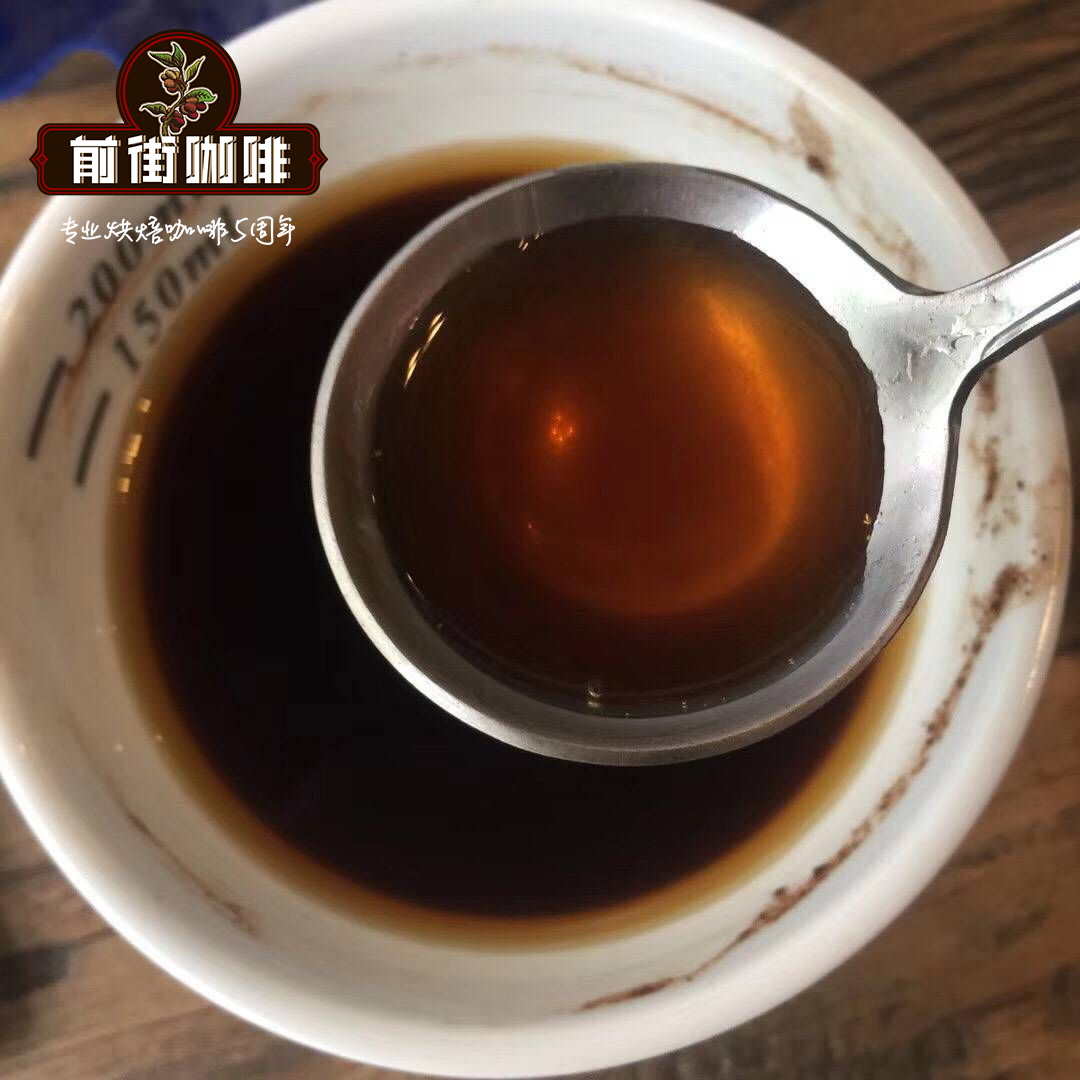
Golden Mandheling Cupping Procedure
- Grind the cupping sample (grind size: BG setting 3B)
- Smell the dry aroma
- Fill each cup with 94°C water, starting a 4-minute timer
- At 2 minutes, smell the wet aroma
- At 4 minutes, break the crust
"Breaking the crust": use a cupping spoon to push back the floating crust so the aromas trapped beneath burst out, then confirm the aromatic performance. Stir gently with the spoon for about 3 circles and let it rest for 2 minutes.
- After 2 minutes, skim the grounds
"Skimming the grounds": scoop the foam off the surface with the cupping spoon, rinsing the spoon between scoops so no off-flavors contaminate the cup.
- Scoop up coffee with the spoon and slurp. Slurping atomizes the coffee across the palate so the flavor molecules read more clearly.
- Spit the coffee into the spittoon.
Taste
Compared with regular Mandheling, Golden Mandheling is naturally far cleaner. But next to Golden, Tiger Mandheling shows even higher cleanliness and sweetness, because it lacks some of the wild, herbal spice flavors unique to Mandheling - making it the easier drink of the two.
Golden Mandheling: Nuts, chocolate, spices, herbs, caramel. It tastes cleaner than Lintong Mandheling - the herbal, earthy, woody core is nearly gone, the caramel sweetness stronger, the fruit acidity brighter and more elegant.
Golden Mandheling:
Sweetness: ☆☆
Acidity: ☆
Bitterness: ☆☆
Balance: ☆☆
Tiger Mandheling:
Sweetness: ☆☆☆
Acidity: ☆
Bitterness: ☆☆
Balance: ☆☆
Cupping Flavor
04 | Brewing Analysis
Medium-dark roasted beans lose more water in the roast and are therefore lighter; when brewed, the grounds don't fully sink to the bottom. The moment water is poured, it is absorbed immediately, and vigorous degassing raises bubbles around the grounds, creating channels. The fresher the beans, the longer those channels persist and the faster the water level drops. I generally use a coarse water flow and circle slowly.
1. Dripper: KONO
2. Water Temperature: 93°C
3. Grind Size: Fuji grinder setting 4
4. Roast Level: Medium-dark
5. Bloom Time: 25 seconds
Flavor: Multi-layered, clean, balanced, with persistent caramel sweetness in the aftertaste
Specific Method: 15g of coffee, Fuji grinder setting 4, Kono dripper, 93°C water. First pour of 30g for a 25-second bloom, then one continuous, steady pour. Water-to-coffee ratio 1:15; total extraction time about 1:50.
Dripper: Hario V60
Water Temperature: 88°C
Grind Size: Fuji grinder setting 4
Brewing Method: Water-to-coffee ratio 1:15 with 15g of coffee. First pour of 30g for a 30-second bloom. Second pour up to 120g, then pause. Once the bed has drained to half, pour again, slowly, up to 225g. Total extraction time about 2:00.
Analysis: The three-stage pour cleanly separates the coffee's front, middle, and back profiles. Because the V60's deep ribs drain fast, pausing the pour stretches the extraction time and pulls out more of the nut and chocolate flavors in the final stage.
Flavor: Multi-layered, overall clean, with a relatively light mouthfeel, persistent caramel sweetness in the aftertaste, and just a touch of bitterness.
Golden Mandheling Brand Recommendation
FrontStreet Coffee's roasted Indonesian PWN Golden Mandheling carries full guarantees of brand and quality - and outstanding value. A half-pound (227g) bag costs only about 89 yuan. At 15g per cup, one bag brews 15 cups, each costing less than 6 yuan. Against the tens of yuan a cup charged in coffee shops, that's a genuinely conscientious deal.
FrontStreet Coffee Recommendation
If you'd like to taste what Golden Mandheling grew out of, reach for FrontStreet Coffee's Lintong Mandheling from the traditional district around Lake Toba. Fragrant and full-bodied, it shows clove and woody aromatics, low acidity, and spice with a cool minty edge - and a powerful, enduring fullness of sweet bitterness that shows off the wilder, classic face of Sumatran coffee.
Important Notice :
FrontStreet Coffee is a long-established specialty coffee roaster in Guangzhou China, selling freshly roasted beans from its own farm in Yunnan as well as dozens of carefully selected single-origin beans from around the world for both pour-over and espresso. The products deliver consistently excellent quality and great value, with shipping within 24 hours. Guangzhou's FrontStreet Coffee shop is recommended by many coffee lovers, and the beans are now available online at the Tmall 。
FrontStreet Coffee has moved to a new address:
FrontStreet Coffee Address: 315,Donghua East Road,GuangZhou
Tel:020 38364473
 Scan and follow the En Gafei WeChat official account. Please indicate that the reprint comes from "En Gafei".