What Are the Methods of Honey Processing Coffee Beans? The Drying Process of Honey Process Coffee?
Coffee Bean Honey Processing Methods: Types, Drying Process, and Brewing Recommendations
Understanding Coffee Cherry Structure
When coffee cherries mature they turn bright red, and their cherry-like shape is why they are called coffee cherries. Before discussing green bean processing methods, it helps to understand the structure of the fruit. From outside to inside, the layers are: fruit skin, pulp, mucilage, parchment (seed coat), silver skin and seed.
The mucilage layer is about 1 to 2 mm thick and can be pictured as the translucent substance around tomato seeds; it is difficult to remove. The green beans we normally buy are in fact the innermost seeds, with some silver skin still attached. Whatever the method, the goal is the same: to remove the skin and extract the bean. Different methods are chosen based on economic cost and natural conditions such as climate. So what flavors do the different methods produce?
Today the main methods are natural processing, washed processing and honey processing.
Natural processing exposes the whole cherry to sunlight before removing the outer shell and mucilage. Washed processing removes the pulp before drying and uses fermentation to eliminate the mucilage. Honey processing sits between the two, removing the pulp while keeping the mucilage for direct sun-drying.
🔆 Natural Processing Method
Natural processing is the oldest, most primitive and most straightforward way of preparing green beans. Harvested cherries are spread out to receive direct sunlight, reducing moisture content from 60% to about 12%.
Step 1: Remove Floating Beans
The harvested fruit is poured into large water tanks. Mature, full fruits sink, while underdeveloped or overripe fruits float to the surface. The floating beans are removed first.
Step 2: Natural Sun Drying
The whole fruit, with pulp and skin, is then placed on drying patios for sun exposure and turned several times a day. This usually lasts about 2 to 3 weeks, depending on the local climate. When the internal moisture content of the beans drops to 10% to 14%, sun-drying is complete.
Step 3: Hulling
The dried fruit is put through hulling machines to remove the hard dried skin, pulp and parchment layer, extracting the green beans.
Advantages of Natural Processing
- Simplicity and low cost (apart from removing floating beans no water is needed, and one bucket of water can be reused many times, so it is widely used in water-scarce and less affluent regions)
- Enhanced fruit flavors, because the beans dry naturally inside the pulp and absorb its essence, resulting in richer fruit aromas, noticeable sweetness and a fuller body
Disadvantages of Natural Processing
- Inconsistent quality in some regions where floating beans are not removed
- During drying, the pulp can mold as it reabsorbs moisture from the air, contaminating the beans
- Machine hulling can easily damage the beans and cause appearance defects
Because of these shortcomings, the washed method was developed.
💧 Washed Processing Method
Washed processing is currently the most common way of preparing green beans. Harvested berries go through depulpers to separate most of the pulp. The parchment coffee is then guided into clean water tanks and soaked and fermented to remove the remaining pulp layers completely. Through the water, immature and defective beans are separated out by buoyancy differences, and the fermentation is better controlled. Unlike natural beans, which may carry impurities, washed beans present distinct fruit acidity, slightly greater complexity and a cleaner profile. Because they are so clean, however, the richness of flavor is somewhat weaker.
Step 1: Remove Floating Beans (same as the natural method)
Step 2: Pulp Removal
Fresh cherries are sent through pulping machines to remove skin and pulp. Immature fruits, which separate poorly, are eliminated at this stage. What remains after pulping is mucilage, parchment and seed.
Step 3: Fermentation to Remove Mucilage
The seeds with mucilage are moved to fermentation tanks. Although the method is called "washed," the mucilage is not literally washed off; it is broken down biologically by fermentation. Fermentation takes about 16 to 36 hours, during which frequent stirring speeds the separation of mucilage from the seeds. Washed fermentation produces acids such as citric acid, malic acid and acetic acid. These penetrate the beans, which is why washed coffee is more acidic than natural coffee. After fermentation, true washing takes place, thoroughly cleaning the beans again.
Step 4: Drying
After washing, the beans still need sun or machine drying to reduce moisture content to 10% to 14%. Because the pulp has already been removed, there is no need to worry about mold during drying as there is with natural processing. The dried parchment beans are not as hard as natural beans that still contain pulp and skin, and can be hulled to obtain green beans.
Advantages of Washed Processing
- Deep green color, complete appearance and excellent marketability
- Because the pulp is removed early, there is less concern about mold
- Higher acidity and brightness than natural beans, with cleaner flavor profiles
Disadvantages of Washed Processing
- A complex, tedious process that makes it much more expensive than natural processing
- Large amounts of fresh water are required; producing 1 kg of coffee consumes 40 to 50 liters, so the method is used less in water-scarce regions
💦 Semi-Washed Processing Method
An improved method developed to reduce the water consumption of traditional washed processing.
Step 1: Remove Floating Beans (same as the washed method)
Step 2: Pulp Removal (same as the washed method)
Step 3: Mechanical Mucilage Removal
Instead of using fermentation to remove the mucilage, as in traditional washed processing, this improved method uses mucilage removers to eliminate it mechanically.
Step 4: Drying
Sun or mechanical drying to 10% to 14% moisture content. Semi-washed coffee sits between natural and washed in flavor, less acidic than washed but not as sweet as natural.
🌰 Honey Processing Method
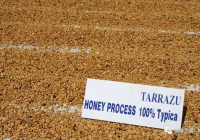
Honey processing does not mean coating the beans with honey. The "honey" here refers to the mucilage layer of the pulp. After harvest, cherries go through depulpers to remove the outer skin, leaving the pulp to be sun-dried so its sweetness can penetrate the beans, without taking as long as natural processing. It is a currently popular method.
Honey processing is complex and very labor-intensive. If it is not controlled well, a whole batch can develop over-fermented, rotten flavors. Done well, it gives relatively high sweetness. Its advantage is reducing acidity while providing more refined aromas, but that is the flavor achieved when honey processing is perfectly executed. When it is poorly executed the coffee tastes sharply acidic like vinegar, with spicy aromas resembling onion or garlic. Even when done quite well it still carries some earthy notes, a less clean aftertaste and more impurities than typical washed processing. Overall, honey processing carries much higher risk than general wet processing.
Challenges of Honey Processing
- During drying, because the sticky mucilage remains on the beans, frequent turning is needed in the first days to stop the beans clumping, requiring more labor than typical washed processing
- If it is not dried quickly, the beans easily over-ferment
- If turning is insufficient, if the overall environment is too humid or cold, or if the mucilage layer is left too thick, the beans easily mold. Some estates therefore use machines to control the thickness of the remaining mucilage so the beans dry faster and the flavor is more consistent
- Compared with wet processing, it requires more space and a longer drying time
Differences Between White, Yellow, Red and Black Honey Processing
Coffee farmers sort by how much mucilage is left: some retain less for faster drying, others retain more and need longer drying.
- White Honey (retaining approximately 5-10%) - only a small amount of mucilage is kept
- Yellow Honey (retaining approximately 25-30% mucilage) - to finish faster it must be dried with minimal shade, giving a yellow appearance. Yellow honey green beans get the longest sun exposure; longer exposure means more heat, so this coffee can dry within 1 week
- Red Honey (retaining approximately 50-75% mucilage) - the beans take 2 to 3 weeks to dry and need some shade to reduce sunlight time
- Black Honey (retaining approximately 100% mucilage) - drying is usually covered to extend the time. Black honey is the most complex, because the extended drying demands longer monitoring to prevent mold and fermentation, with the highest labor cost, making it more expensive
In flavor, yellow honey has a clean, bright profile similar to washed processing, while black honey approaches natural processing with rich fruit aromas and a full body. Red honey falls in between.
Suitable Coffee Beans
Costa Rican coffee is the most consistent in quality among Central American coffees, mainly because the coffee grows in the natural environment of complete large-tree shade, cool rainy nights and significant day-to-night temperature differences. Combined with fertile soil and stable, progressive post-processing, Costa Rican coffee has maintained its reputation and long served as the benchmark for Central American coffee.
Wet processing emphasizes a clean, clear mouthfeel with acidity that flashes like a razor, while honey processing emphasizes a complex, layered mouthfeel with reduced acidity and increased sweetness. Washed beans have always been Costa Rica's most important processing method. Some enthusiasts love the sweet sensation and delicate toffee-like aftertaste of honey processing, but washed Costa Rican beans, while lacking that appealing sweetness, keep the good impression of high-quality coffee in a mainstream where sweetness reigns, with their clean, bright body and consistently delicate, vibrant acidity.
Sharp, bright, thin citrus acidity has long been the world's impression of Costa Rican washed beans, but Rose Estate deviates somewhat from that impression, attracting our attention with a pure, refreshing, impurity-free high-mountain tea aroma. We do not recommend heavy roasting, starting at second crack, because the aromatic, rich chocolate and nut notes can be obtained in honey-processed Costa Rican coffee.
FrontStreet Coffee's Pour-over Reference
Using a V60 dripper, 15g of coffee grounds with 32g of water, bloom for 30 seconds. Extract with 89°C to 90°C water at a 1:15 ratio with a medium-fine grind (Fuji R grinder 3.5). Second pour to 110ml, wait for the water to drop, then slowly pour with an even speed, keeping the water level not too high. Pour again to 233ml and stop. Extraction time 2:15, giving rich natural sweetness. Everyone can fine-tune according to their taste.
FrontStreet Coffee Recommendation
To taste a full black honey treatment, FrontStreet's Costa Rica Blackberry keeps almost all of the mucilage on the bean and dries it for at least two weeks under cover, so the sugar converts evenly and the fruit does not dry too fast; the beans are turned at intervals to avoid overheating and over-fermentation. A light-to-medium roast gives a strong floral aroma in the grounds and a cup of grape, berry and ripe blackberry notes.
FrontStreet Strawberry Candy is a Geisha blend that pairs Panama Geisha with Costa Rican coffee processed by raisin honey, retaining 100% of the mucilage with no water used. The cherries are floated to remove underdeveloped and overripe fruit, dried on raised beds for at least three days, then depulped and dried further with the mucilage kept on and turned constantly for evenness. It keeps the Geisha floral and tea character while adding raisin and dried blueberry notes, soft fruit acidity, an almond finish and clear sweetness.
For a more aromatic honey cup, try FrontStreet Costa Rica Mozart. Its raisin honey method dries the whole fruit on raised beds for at least three days before the skin and pulp are removed and the honey steps continue, which demands tighter timing control than even black honey. It brings richer dried-fruit sweetness, and whether brewed as pour-over, cold brew or moka pot it shows distinctive osmanthus, pineapple and raisin aromas.
Important Notice :
FrontStreet Coffee is a long-established specialty coffee roaster in Guangzhou China, selling freshly roasted beans from its own farm in Yunnan as well as dozens of carefully selected single-origin beans from around the world for both pour-over and espresso. The products deliver consistently excellent quality and great value, with shipping within 24 hours. Guangzhou's FrontStreet Coffee shop is recommended by many coffee lovers, and the beans are now available online at the Tmall 。
FrontStreet Coffee has moved to a new address:
FrontStreet Coffee Address: 315,Donghua East Road,GuangZhou
Tel:020 38364473
 Scan and follow the En Gafei WeChat official account. Please indicate that the reprint comes from "En Gafei".