The Tale of Flower Queen from Ethiopia's Guji Hambella | Cold Brew Flavor Characteristics of Flower Queen Coffee Beans

For more premium coffee knowledge, follow FrontStreet Coffee on WeChat: FrontStreet Coffee
Gaze up at the summer evening sky and the soft gradients of sunset inevitably call to mind a coffee bean adored by countless drinkers — Flower Queen 5.0. Its fruity aroma recalls the orange-gold bands where sunset colors interweave; its lush berry juiciness mirrors the pink-violet haze; and its creamy, silky texture with a whisper of wine notes captures the gentleness of summer itself. So how do you bring that softness to your own palate? FrontStreet Coffee relies on four tried-and-true methods.
Recalling the Story of Flower Queen Coffee Beans
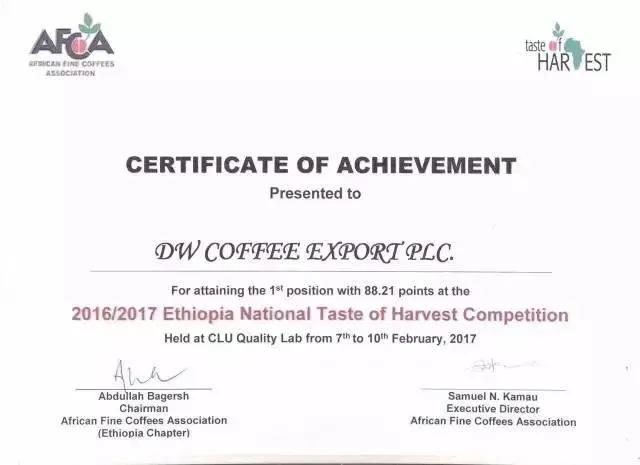
In 2017, the Ethiopian green coffee company DW submitted its beans to the Taste Of Harvest (TOH) competition organized by the African Fine Coffee Association. One lot from the "Buku Abel" washing and processing station took the TOH Ethiopia championship with its intense strawberry-and-cream aroma. That winning lot was imported by a Beijing green coffee trader, and in honor of its championship status it was crowned with the name "Flower Queen." In the very same year, Li Jianfei of Beijing used the 2017 champion Flower Queen beans to take second place in the China regional round of the World Brewers Cup — while most of his rivals were competing with Geisha — and Chinese coffee lovers never forgot that particular bean.
Is Flower Queen 5.0 Still the Original Flower Queen?
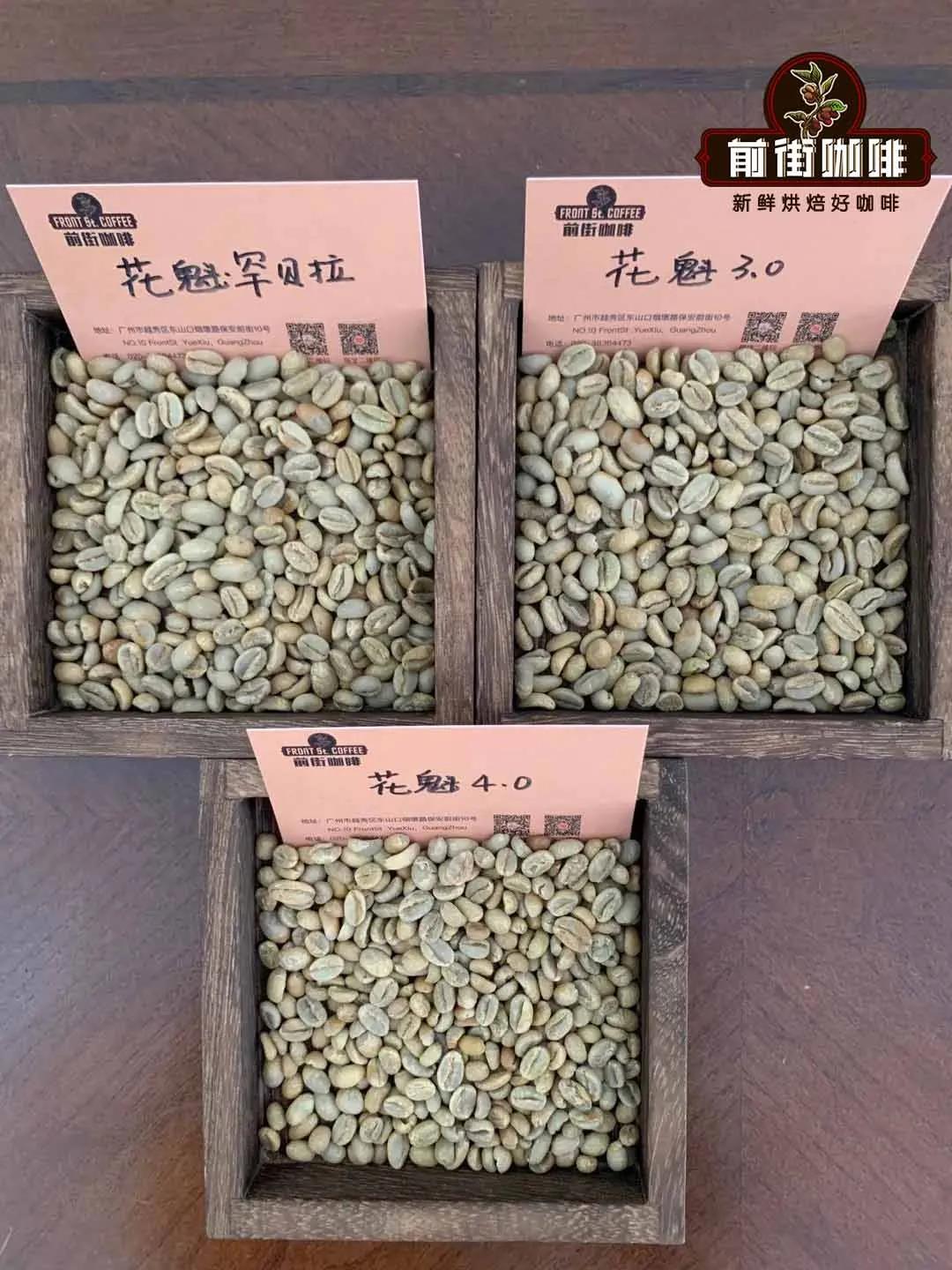
No — the climate is changing, and coffee, as an agricultural product, changes its flavors with it. Although every Flower Queen in the series comes from the "Buku Abel" processing station and is made with the same natural process, flavor formation always shifts with factors such as climate and soil. That is why DW re-differentiates the beans each year: Flower Queen 2.0 launched in 2018, Flower Queen 3.0 and 3.1 arrived in 2019, Flower Queen 4.0 in 2020, and this year, 2021, brings us Flower Queen 5.0.
How FrontStreet Coffee's Roasters Bring Out Flower Queen 5.0's Gentleness
Because freshly harvested green coffee carries a high moisture content, and that moisture interferes with heat transfer during roasting, the beans can easily end up with incomplete dehydration. The danger is coffee that looks done on the surface while the core remains underdeveloped.
To guard against underdevelopment, FrontStreet Coffee recommends extending the drying phase when roasting Flower Queen 5.0 (the stretch between the turning point and the yellowing point). Meanwhile, to showcase the sweetness and fermentation character of the natural process, FrontStreet's roasters deliberately lengthen the development period (from the yellowing point through first crack). Flower Queen 5.0 grows at 2250m-2350m, which gives the beans a high density; they therefore need plenty of heat applied before first crack, so that the development stage doesn't drag on long enough for the coffee's sweet and sour compounds to burn away.
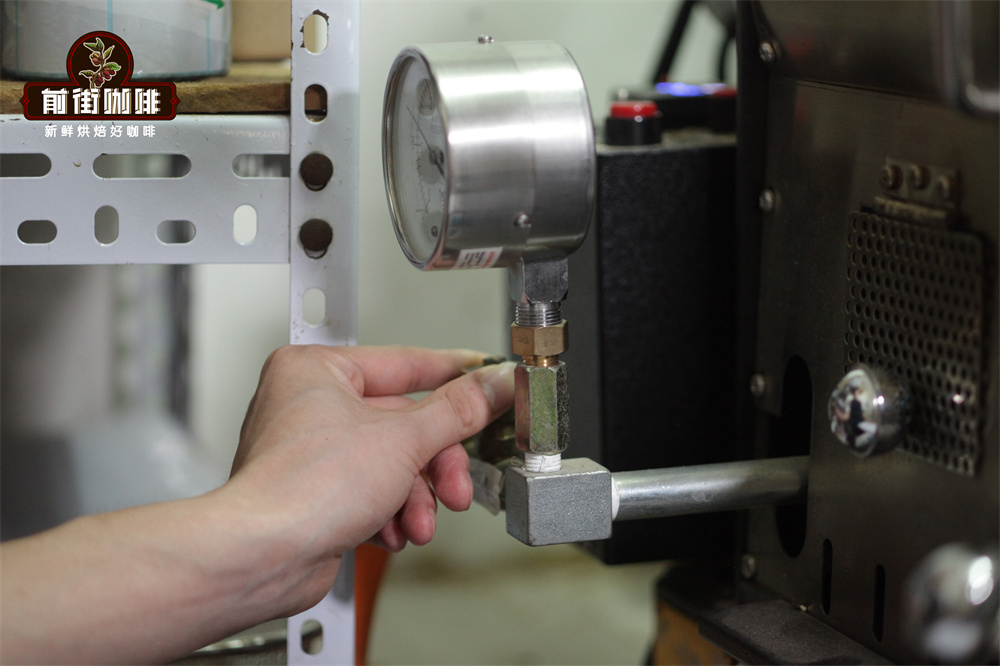
How FrontStreet Coffee Brings Flower Queen Coffee Beans' Gentleness to Your Palate

Hot Pour Over & Ice Pour Over Methods
To draw out the full layered richness of Flower Queen 5.0, FrontStreet Coffee extracts it with a higher water temperature and a finer grind size. To keep that heat from tipping into over-extraction, they turn to a fast-flowing dripper such as the V60. The V60's 60-degree cone concentrates the coffee grounds, and every pour naturally converges toward the center of the dripper, guaranteeing sufficient contact time between water and grounds to extract a well-balanced cup. Its spiral ribs run clockwise from base to rim, holding the filter paper away from the wall of the dripper so water can move freely; paired with the single large outlet at the bottom, the flow is noticeably faster than in most other drippers.

Hot Pour Over Parameters and Brewing Technique
Water temperature 90°C, coffee-to-water ratio 1:15, coffee dose 15g, medium-fine grind (80% pass-through rate on China #20 standard sieve).
Begin by pouring 30g of water to saturate the bed fully into a "hamburger" shape, then bloom for 30 seconds. The second pour at 1'00" brings the water up to 125g; wait until the level falls to two-thirds of the coffee bed before the third pour. That third pour at 1'40" takes the total to 225g. Let the liquid drain completely — total extraction time 1'59". Once done, give the server a gentle swirl so the coffee is evenly mixed before you taste.

Ice Pour Over Parameters and Brewing Technique
Water temperature 91°C, coffee-to-water ratio 1:10, coffee dose 15g, medium-fine grind (85% pass-through rate on China #20 standard sieve), 100g of ice. Use the same three-stage pour: 30ml to bloom for 30 seconds, then 60ml, then a final 60ml. Pour the finished coffee over the 100g of ice in the serving cup and swirl to chill.

Ice Drip Method
FrontStreet Coffee's ice drip setup uses 60g of ground coffee to yield 600ml of coffee liquid, a coffee-to-water ratio of 1:10. The grind sits slightly finer than pour-over — roughly an 85% pass-through rate on a #20 sieve. The ice-to-water mix is 1:1, with the flow valve set to 7 drops every 10 seconds. The full extraction takes about 6-8 hours; afterwards, bottle the coffee and refrigerate it for 12 hours before drinking.
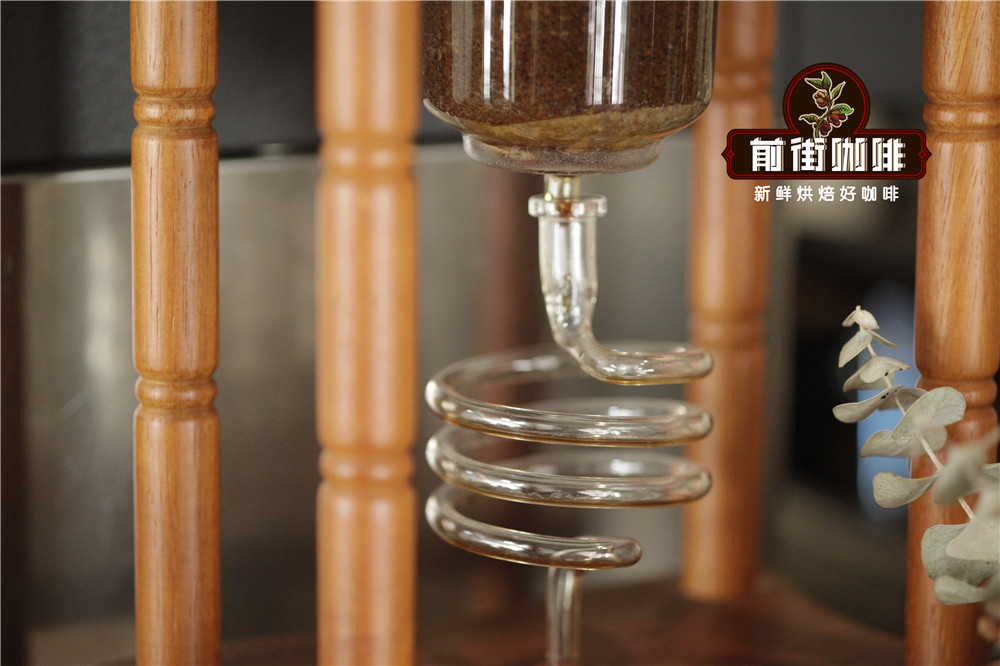
Cold Brew Method
Using FrontStreet Coffee's daily cold brew production as an example: grind slightly finer than for pour-over — about 75-80% pass-through on the China #20 standard sieve, visually resembling fine sugar, equivalent to 9.5-10 on an EK43s or roughly 22-26 clicks on hand grinders like the C40.

Next, tip the grounds into a clean container — a dedicated cold brew maker or even a mineral water bottle will do — add room-temperature water at a 1:10 coffee-to-water ratio, stir thoroughly, cover with plastic wrap, and refrigerate for at least 8 hours (ideally finishing within 12). Finally, strain out the grounds through filter paper and the cold brew is ready.

The cold brew ratio is usually the first question people ask. FrontStreet Coffee's view: if you plan to drink it neat, go with 1:12 to 1:13, a range that yields the most agreeable black coffee with relatively full aroma. But since most of us will eventually add fresh milk, you need a more concentrated base so the drink doesn't turn out watered down — for that, FrontStreet Coffee suggests 1:10 to 1:11.
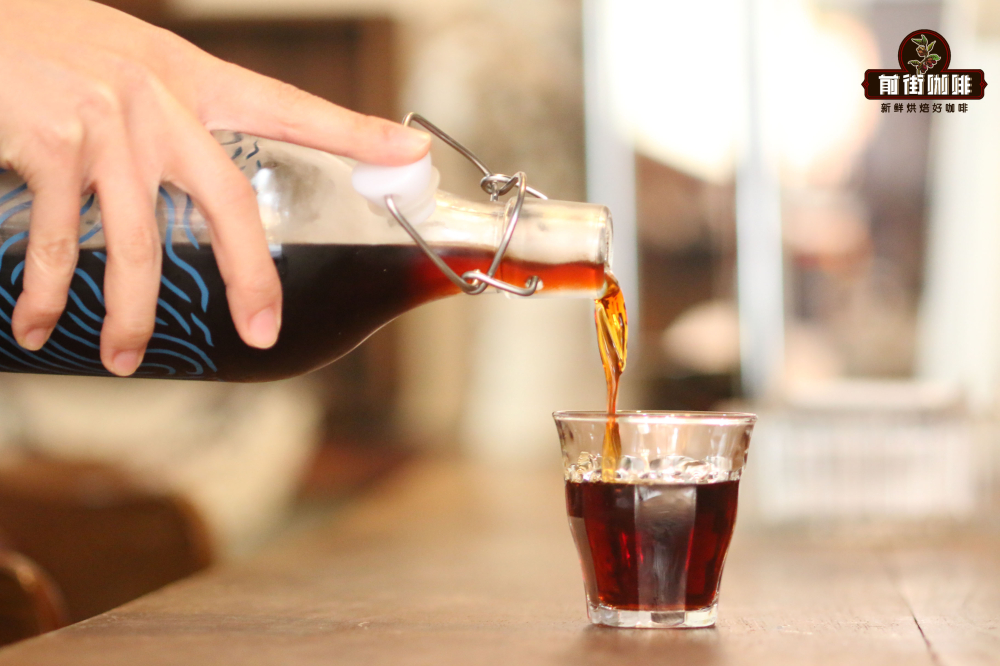
One last reminder from FrontStreet Coffee: for both flavor and food-safety reasons, any extraction performed at low temperature — ice drip or cold brew alike — is best consumed within 5 days, counting from the day it was made.
FrontStreet Coffee Recommendation
If Flower Queen's floral-and-fruit cup has you hungry for more natural-process Ethiopian beauties, the Geisha family deserves a place on your shelf. Panama is where Geisha made its name, Ethiopia is where it was born, and both deserve a tasting. Panamanian Geisha shows a signature orange-blossom honeyed sweetness — fragrant florals wrapped around juicy fruit acidity and a tea-like lingering finish. For the highest expression, FrontStreet Coffee offers the Esmeralda Red Label ("Esmeralda Special"), grown at 1600-1800m and cupping above 90 points per batch, each lot from a single plot with its own independent number, as well as the more affordable Green Label ("Private Collection"), a blend of multiple high-altitude plots. First-timers who want a taste of the classic Gesha profile at a friendlier price can start with the entry-level FrontStreet Boquete Gesha, with its oolong-tea body, delicate fruit acidity, and clearly layered finish.
For Ethiopian Geisha, FrontStreet Coffee recommends the Genlana Gesha for newcomers: a medium-light roast that keeps pleasant white florals while highlighting the bright acidity of orange, guava, and citrus, with a cleaner finish. Advanced brewers should seek out Geisha Village Gold Label and Red Label — Geisha Village is one of Ethiopia's few large estates, sitting beside the original Gesha forest with strict quality control. Gold Label (Geisha 1931, just 10% of total production) is an intricate natural-process lot, while Red Label (Gori Gesha, 15% of production, scoring 88+ on the SCA 100-point scale) is a fully traceable single-terroir series.
Geisha is best brewed as a medium-light, floral-forward cup: grind to a 78% pass-through rate on a #20 sieve (about the texture of fine sugar), use 91°C water, 15g of coffee in a Hario V60, and a 1:16 ratio with a three-stage pour — 30g to bloom for 30 seconds, then small circular pours to 125g and finally 225g, for a total extraction of roughly 2 minutes 10 seconds to 2 minutes 20 seconds. And if you'd like a Geisha-style cold brew without the estate price, FrontStreet's Strawberry Candy — a blend of Costa Rica honey-process and Panama Geisha — makes a wonderful one: grind 30g to fine sugar (EK43s at 9, C40 at 24), steep with 360g of room-temperature water at 1:12 for 8 hours in the fridge, filter, then mature the liquid for another 3 hours. You'll taste grape juice, rose, sweet orange, and fruit-wine notes in every sip.
Important Notice :
FrontStreet Coffee is a long-established specialty coffee roaster in Guangzhou China, selling freshly roasted beans from its own farm in Yunnan as well as dozens of carefully selected single-origin beans from around the world for both pour-over and espresso. The products deliver consistently excellent quality and great value, with shipping within 24 hours. Guangzhou's FrontStreet Coffee shop is recommended by many coffee lovers, and the beans are now available online at the Tmall 。
FrontStreet Coffee has moved to a new address:
FrontStreet Coffee Address: 315,Donghua East Road,GuangZhou
Tel:020 38364473
 Scan and follow the En Gafei WeChat official account. Please indicate that the reprint comes from "En Gafei".