Sidamo Flower Queen Coffee Name Characteristics Story Ethiopia Hambella Flower Queen Coffee Beans Meaning

Sidamo lies in southern Ethiopia, its climate and geography exceptionally well suited to growing coffee cherries. The region's most celebrated coffees include Yirgacheffe and Guji. According to FrontStreet Coffee, the ECX trading system has since separated both Yirgacheffe and Guji from Sidamo. Sidamo coffee is known for its rich fruit acidity and intense, fragrant aromatics—in FrontStreet Coffee's view, its aroma even surpasses Yirgacheffe's, making it perfect for drinkers who love bold, concentrated flavor. It strikes a beautiful balance between fragrance and mouthfeel, which makes a cup of Sidamo especially suited to a slow afternoon or early evening, enjoyed quietly with classical music playing.

The Sidamo Coffee Region
One of Ethiopia's signature specialty regions, Sidamo sits in the country's south and borders the equally famous Yirgacheffe zone. Sidamo is more than a place—it has become a brand of its own. In 2006, Starbucks applied to trademark the name "Sidamo," infuriating Ethiopia's coffee industry and prompting a swift response. The dispute dragged on for two years and ended only when Starbucks withdrew its application. The two sides reconciled, and Starbucks continues to buy and sell Sidamo coffee through cooperative partnerships.

Sidamo's defining trait is the sheer diversity of flavors its villages produce. Different areas bring different soils, microclimates, and countless native varieties, so each district's coffee has a distinct personality. Ethiopia's administrative structure runs four levels deep—Region, Zone, Woreda, and Kebele. The famed Flower Queen beans come from Guji in Sidamo province, narrowing further to the Hambella Kebele of Shakisso Woreda. Mention Hambella to a seasoned coffee lover and they will know at once you mean Flower Queen—it is that famous.
"Flower Queen" is hailed as the maiden of Hambella, and this coffee stands at the very top of its class. Behind the name lies a real underdog story. Before becoming "Flower Queen," this was simply an award-winning Ethiopian bean—inconspicuous next to the giants of Yirgacheffe, Sidamo, Limu, and Harar.
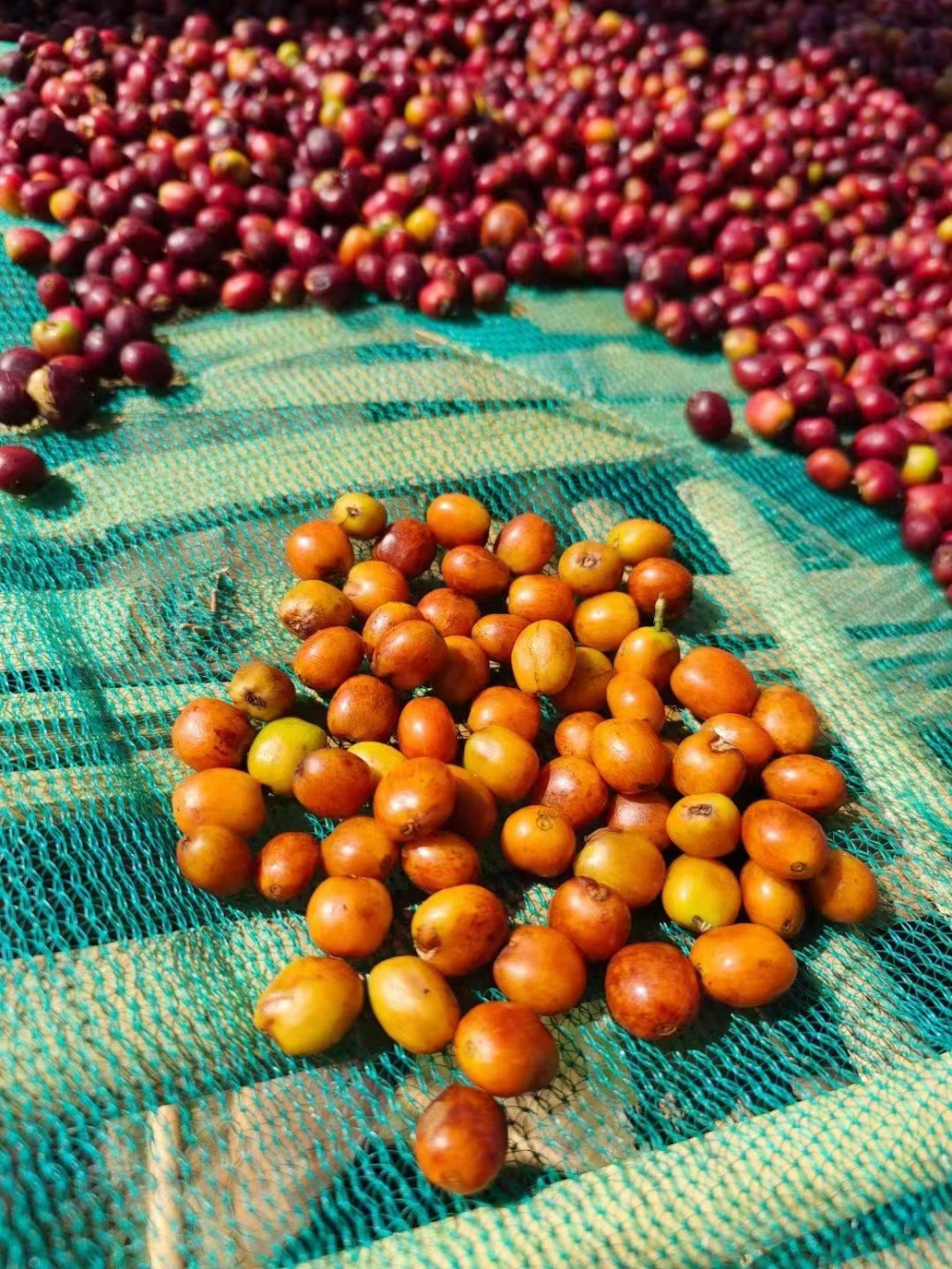
Then, in 2017, the Ethiopian exporter DW entered this natural-processed lot into the TOH (Taste of Harvest) competition, where its rich strawberry-and-cream flavor swept the international judges along to the championship. The green coffee merchant Hongshun subsequently brought the same lot to the Chinese market. Its unique flavor, paired with improvements in processing, marked it as a potential "next Geisha"—so it was given high hopes and named "Flower Queen," the flower that leads all others.
That same year, at the China round of the World Brewers Cup, competitor Li Jianfei used beans from the same award-winning Flower Queen lot to outplace many rivals brewing Geisha, finishing an excellent second. Today Flower Queen stands as one of the flagships of Ethiopian coffee, loved by enthusiasts worldwide—further proof of how far Ethiopian coffee has come.

On the map of Ethiopian coffee regions you can see that Guji has been split off from Sidamo—its location is too favorable and its flavors too distinctive. As early as 2010, the ECX (Ethiopian Commodity Exchange) separated Guji from Sidamo. The Hambella sub-region, home of Flower Queen, has the highest planting altitude of any coffee sub-region in Ethiopia.
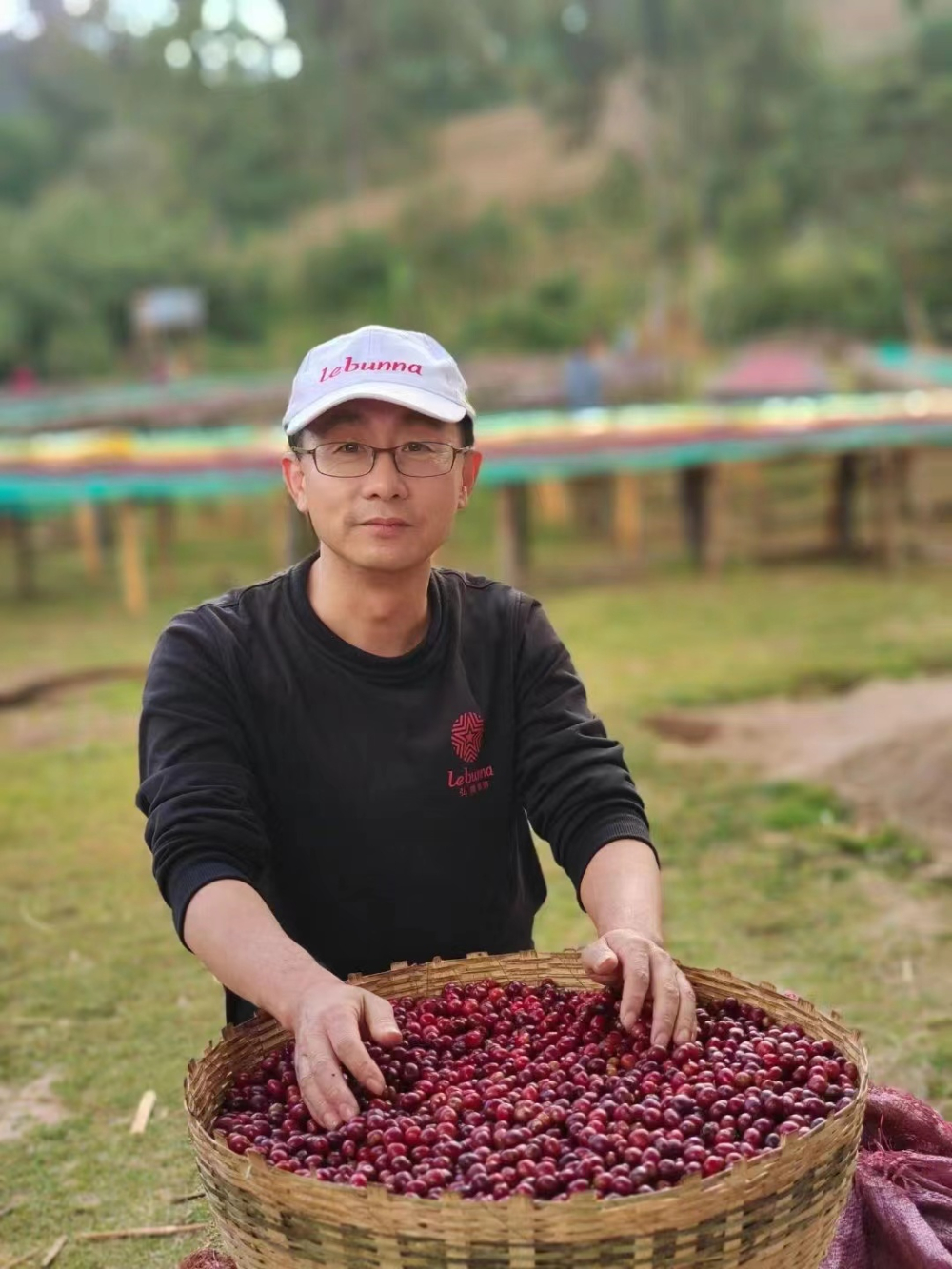
This award-winning lot comes from Buku Abel Estate, which is why the estate itself is often called Flower Queen Estate. Ringed by mountains, its soil is red-brown and organic, with annual rainfall above 1,200mm—near-perfect conditions for coffee cherries. The fruit is hand-picked, with strict selection standards: only cherries measuring over 30% sugar content go into natural processing.

For the first two days of natural processing, the cherries' moisture must be maintained so the fructose can begin fermenting properly. At this altitude, nighttime temperatures fall to around 12 degrees Celsius, so no off-flavors of over-fermentation develop from excess heat. During hotter midday hours the lots are shaded to keep the cherries from sunburn. Only fully red, completely ripe cherries are hand-picked and laid out on African raised beds, with the fruit layer kept thin and turned regularly through the day for even drying and ventilation and precise control of fermentation. At night, thick plastic sheeting protects against sudden rain. This lets the cherries ferment and dehydrate at relatively low temperatures.
After 18 days of natural processing, the green beans' moisture falls to around 13%. Processing then stops; the beans are packed in jute bags and rested in warehouses held at 12-22 degrees Celsius and 40-50% humidity for about 50 days of further resting and drying. Once moisture reaches around 10%, they move to mills for hulling, screening, and sale.

Thanks to these exceptional growing conditions, FrontStreet Coffee's Sidamo Natural Flower Queen tastes sweeter and more fragrant: passion fruit aroma, rose florals, and sweet strawberry notes, with a juicy mouthfeel that conjures a lush, sun-warmed orchard. FrontStreet Coffee considers this the singular charm of its Flower Queen—the championship title is well earned, and few who have tasted it resist its spell.
What Makes a "Flower Queen" Coffee Bean?
So which beans qualify as "Flower Queen"? FrontStreet Coffee explained earlier that they come from Buku Abel—and they must be natural processed. Both conditions together make a true Flower Queen.
Buku Abel means "new place" in the local language. In this ancient nation of more than two thousand years of history and one hundred million people, cut off from Asia by the East African Rift, new virgin land is still being discovered on the plateau. Against millennia of civilization, this is a comparatively young settlement.

Buku Abel sits in southeastern Ethiopia, in the Hambela area of the Guji region—an extremely high-altitude settlement of roughly 30,000 people. Like most Ethiopian coffee villages, it grows amid wild, primeval forest. Farming families have passed their traditions down for generations, planting native bananas and tucking indigenous coffee varieties among the groves.
Frequent followers of FrontStreet Coffee's Flower Queen will have noticed its naming convention: "Flower Queen X.0," with the number advancing each year. 2018 was Flower Queen 2.0, 2019 was 3.0, 2020 was 4.0, and 2021 became 5.0. With the 2022 harvest drawing to a close, this year's release—harvest permitting—will be FrontStreet Coffee's Sidamo Natural Flower Queen 6.0.
Expectations for Flower Queen 6.0 run as high among the FrontStreet team as among its fans. Patience is a virtue, though—the new crop is expected to reach port in April, and FrontStreet Coffee has reserved batches at the first opportunity. Watch for updates; the fresh taste of Sidamo Natural Flower Queen 6.0 will be worth the wait.
FrontStreet Coffee's bean shelf currently holds two Flower Queen varieties: the Small Bean Flower Queen and the Natural Flower Queen 5.0. Small beans had turned up in Flower Queen 2.0 and 3.0, and again in later harvests, and through cupping FrontStreet Coffee found the aroma of Flower Queen coffee stems largely from these peaberry-sized beans.

In 2020, DW's Buku Abel mill began processing these small beans as a separate lot under its own brand: "Small Bean Flower Queen." Cupping the two side by side, FrontStreet Coffee found the Small Bean Flower Queen more intensely aromatic, its flavors closer to the 2017 TOH champion's strawberry-cream profile, while the Natural Flower Queen 5.0 leans toward classic Guji character—citrus, berries, elegant florals, and a tea-like finish.
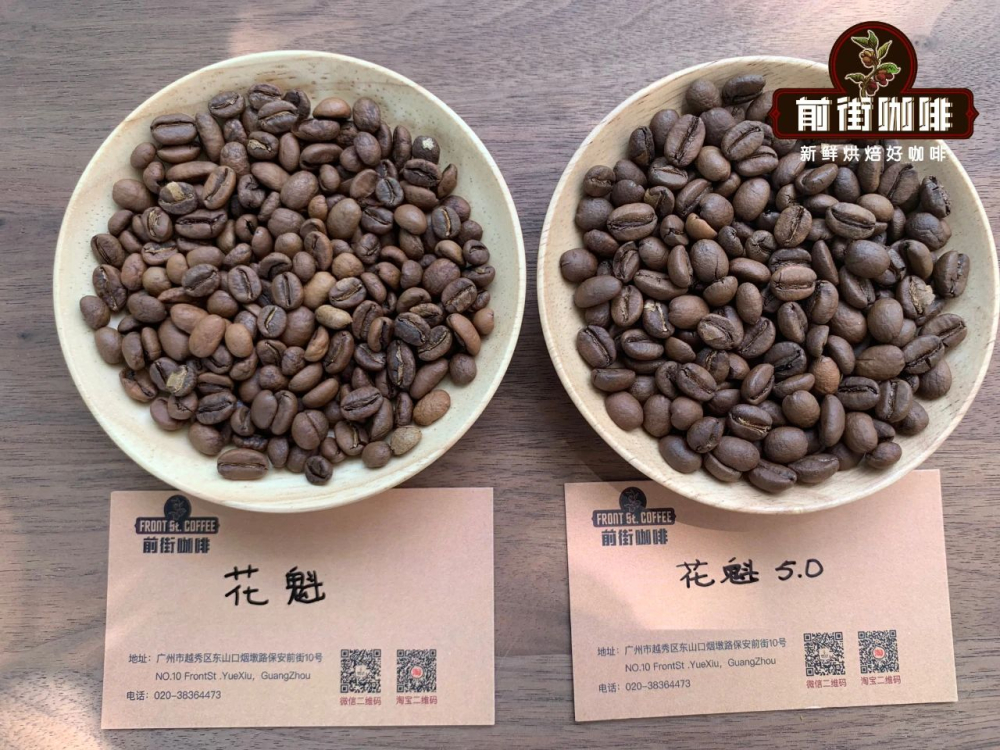
The best way to grasp the difference between the two is simply to taste them. Beans ordered from FrontStreet Coffee are roasted within 5 days of purchase and arrive just past the 4-to-7-day resting window, when flavor peaks. Customers without a grinder at home can opt for the grinding service—but be aware that once ground, coffee degasses faster and its aromatics dissipate sooner, so whole beans ground fresh before each brew will always taste better.
Grinder owners often ask: how fine should the grind be? Equipment varies so widely that FrontStreet Coffee standardizes on the No. 20 sieve when specifying grind size. For pour-over, the general target is a 70% to 80% pass-through rate on the No. 20 sieve, depending on roast level.

For Flower Queen, a medium-light roast is used to highlight its berry, citrus, and tropical-fruit character. The matching grind recommendation is an 80% pass-through rate on the No. 20 sieve, brewed with 90-degree Celsius water in an Hario V60.
Dripper: Hario V60
Water Temperature: 90 degrees Celsius
Coffee Amount: 15 grams
Coffee-to-Water Ratio: 1:15
Grind Size: 80% pass-through on the No. 20 sieve

Pour 30 grams of hot water for a 30-second bloom, then spiral slowly from the center out to 125 grams; when the water level in the dripper nears the coffee bed, spiral again to 225 grams and stop. Total extraction time is about 2 minutes.
FrontStreet Coffee Recommendation
Flower Queen's story mirrors that of another natural-processed Ethiopian star on FrontStreet Coffee's shelf. The FrontStreet Natural Flower Queen-style Hambella lots are grown across a 200-hectare farm in the Guji region's Hambella area and dried for 21 full days on raised beds, with constant turning to prevent mold or earthy taints and defect beans picked out by hand every three to five days. Because the beans dry inside skin and pulp, a medium-light roast unlocks a faint fermented wine aroma layered over florals, citrus, and mango—thick and complex, with honeyed sweetness, a cocoa undertone, and just a whisper of spice, a full body and a long finish.
If you enjoy that fruit-driven, juice-like profile, the FrontStreet Yirgacheffe Red Cherry is another natural-processed favorite: citric acidity, berry juiciness, honeyed sweetness, and cream-smooth texture, carrying classic Yirgacheffe florals alongside tropical fruit. And for a washed counterpoint with the same clean elegance, the FrontStreet washed Yirgacheffe house bean delivers jasmine florals and bright citrus-lemon acidity at an everyday price.
FrontStreet Coffee is a roastery based in Guangzhou. The shop is small but the bean selection is broad, covering both famous names and rare finds, and online ordering is available as well.
Important Notice :
FrontStreet Coffee is a long-established specialty coffee roaster in Guangzhou China, selling freshly roasted beans from its own farm in Yunnan as well as dozens of carefully selected single-origin beans from around the world for both pour-over and espresso. The products deliver consistently excellent quality and great value, with shipping within 24 hours. Guangzhou's FrontStreet Coffee shop is recommended by many coffee lovers, and the beans are now available online at the Tmall 。
FrontStreet Coffee has moved to a new address:
FrontStreet Coffee Address: 315,Donghua East Road,GuangZhou
Tel:020 38364473
 Scan and follow the En Gafei WeChat official account. Please indicate that the reprint comes from "En Gafei".