Are Horse Coffee Beans and Geisha the Same Variety? What Are the Heirloom Coffee Varieties from Ethiopia?

For seasoned specialty coffee enthusiasts, Huakui coffee needs no introduction. When it first appeared, Huakui could hold its own against Gesha — yet for many newcomers, the two are easily confused. In this article, FrontStreet Coffee explains how to tell Huakui coffee beans apart from Gesha coffee beans.
Why is Huakui Coffee Associated with Gesha Coffee?
It all dates back to 2017. By then, Gesha coffee had been world-famous for decades, while "Huakui coffee" did not yet exist. In the 2017 TOH (Taste of Harvest) green coffee competition, a natural-processed coffee from Hambella, submitted by the DW company, took the championship. On its own, that wouldn't have been remarkable — champions are crowned every year.

The pivotal moment came at the finals of the 2017 World Coffee Brewers Championship China region, where Li Jianfei used this very bean to win second place, while most of his fellow competitors poured Gesha. A bean that outperformed Gesha was news that shook the entire coffee community, because at the time Gesha was considered the superior variety by default.
Since a bean comparable to Gesha had appeared, it needed a name with prestige to match. "Gesha/geisha" sounds like the Japanese word for geisha, which is why Hong Kong, Macau, and Taiwan also call Gesha coffee "Geisha coffee." Among geishas, the most outstanding is called the Hua Kui — the leader of the geishas. That matched the competition result perfectly, so the 2017 TOH natural-process champion bean became known in China as the "Huakui" coffee bean. That is the entire connection between Huakui coffee beans and Gesha coffee beans.

How Did Gesha Get Its Chinese Name?
Around 2006, Mr. Yuan of Kalu Meng Coffee became the first to import Panama Gesha into China. With its explosive floral and fruity flavors, the coffee still had no Chinese name, so Mr. Yuan gave Gesha an elegant Chinese rendering that has stuck ever since.

Gesha coffee beans originate in the Kaffa forest of Ethiopia. In 1931, a British collector gathered coffee seeds from the forest around Gesha Mountain in southwestern Ethiopia and exported the batch to Kenya in 1932. It reached Uganda and Tanzania in 1936, then Costa Rica in 1953. Panama received the Gesha variety in the 1970s, when Mr. Francisco Serracin of Don Pachi Estate brought it over from CATIE in Costa Rica.
When Gesha first arrived in Panama, its low yields meant nobody wanted to invest in growing it; some trees were planted in windbreaks simply to shelter other coffee trees. That changed in 2003, when the son of Hacienda La Esmeralda's owner caught a faint, captivating floral aroma among a pile of processed coffee. Following the scent, he traced the beans back to the windbreak forest. Once they were verified as Gesha, the trees were separated out and their lots entered in the 2004 BOP (Best of Panama) green coffee competition — and won. Gesha became famous overnight and cemented Hacienda La Esmeralda's standing in the specialty coffee world.

The Development of Huakui Coffee Beans
Huakui coffee beans come from the Hambella region of Guji, in south-central Ethiopia — a long way from Gesha's birthplace, so the two have no geographic connection. Nor are they the same thing botanically: Gesha is a named variety with pointed bean tips and an elongated shape, while Huakui is a bean name, not a variety. Look at the beans and you'll see a mix of sizes — truly local native varieties, a collective label for Ethiopian trees that even local farmers cannot sort by variety.

Strictly speaking, only the beans produced in 2017 at the Hambella Buku processing station can be called "Huakui" proper. In subsequent years, later harvests were numbered sequentially as Huakui X.0 by year — the 2018 beans were "Huakui 2.0," and the 2024 beans are "Huakui 8.0." Keep in mind that Huakui made its name on exceptional flavor that first year, especially its rich strawberry aroma; the later X.0 versions naturally do not taste exactly like the original.
So can you still find the flavor of the 2017 Huakui today? In the 2018-2019 batches, FrontStreet Coffee found flavors very close to the original, though the body and aftertaste fell short of the 2017 bean. Surprisingly, in those two batches FrontStreet Coffee could sometimes still identify the exact same small-bean variety that appeared in the original lot. The 2017 Huakui contained certain particularly small beans, and those were the main source of its aroma — lots containing them are therefore called "small-bean Huakui." Starting in 2020, the processing station began separating out and selling the small-bean Huakui alongside the same year's Huakui X.0.

FrontStreet Coffee: Huakui 8.0 Coffee Beans
Country: Ethiopia
Region: Guji, Hambella
Processing Station: Buku Able
Altitude: 2350 meters
Variety: Local native varieties
Processing Method: Natural
Batch: 2024 new batch

FrontStreet Coffee: Small-Bean Huakui Coffee Beans
Region: Ethiopia, Guji Hambella
Processing Station: Buku Able independent selection of small beans
Altitude: 2350 meters
Variety: Local native varieties
Processing Method: Natural
Batch: 2021 new batch
Small-Bean Huakui vs. Huakui 5.0: A Comparison
Start with the comparison photos of the raw and roasted beans. Both are from the 2021 harvest, but the small-bean Huakui is noticeably smaller than Huakui 5.0, and the proportion of small-bean varieties is clearly higher.
After receiving Huakui 5.0, FrontStreet Coffee roasted it and cupped it side by side with the small-bean Huakui. The cupping showed that the small-bean Huakui carries a deeper, richer strawberry aroma and berry sweetness, while the 2021 Huakui 5.0 offers more vibrant berry acidity and a brighter overall cup.

How to Brew Huakui for the Best Taste?
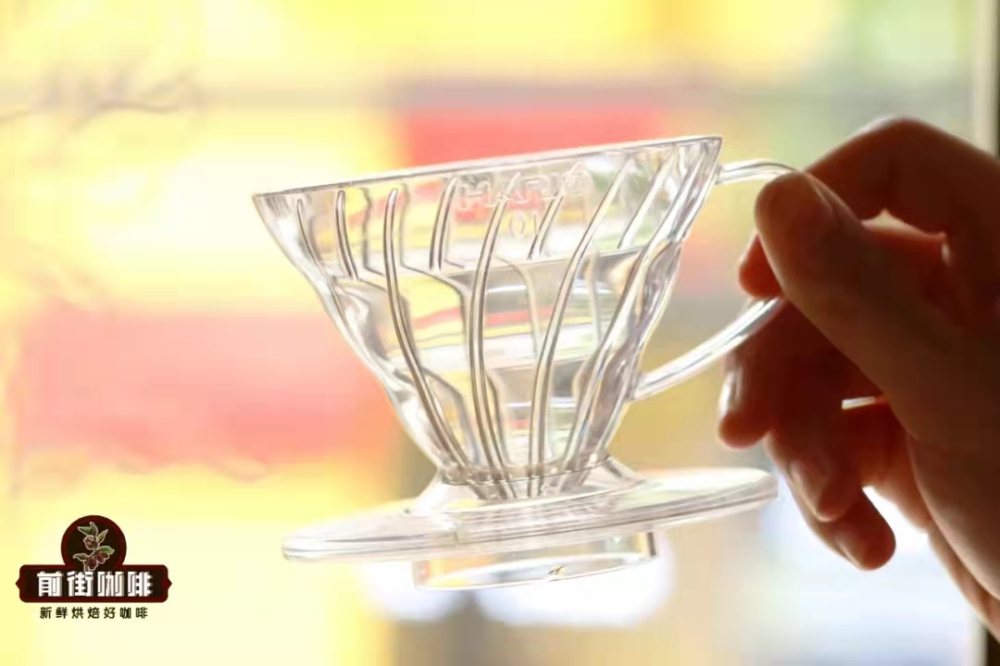
FrontStreet Coffee recommends pour-over to express this bean, ideally with a V60 dripper.
The V60 takes its name from its 60-degree cone, which guides the water flow toward the center and extends contact time between water and coffee. The large aperture at the bottom lets you control extraction by adjusting your pour rate. To keep water from racing through the coffee bed, FrontStreet Coffee recommends a medium-fine grind (80% pass-through on a China #20 sieve). To bring out the full juiciness and rich fruit aroma of the small-bean Huakui, use water at 91°C with a three-stage pour of slow, fine circular streams.
FrontStreet Coffee recommends brewing with freshly roasted beans to get the most out of the coffee's flavors. Every bag FrontStreet Coffee ships was roasted within the past 5 days, because freshness profoundly affects flavor. The roasting philosophy is simply "freshly roasted, good coffee," so every order arrives at peak flavor after a resting period of about 4-7 days.
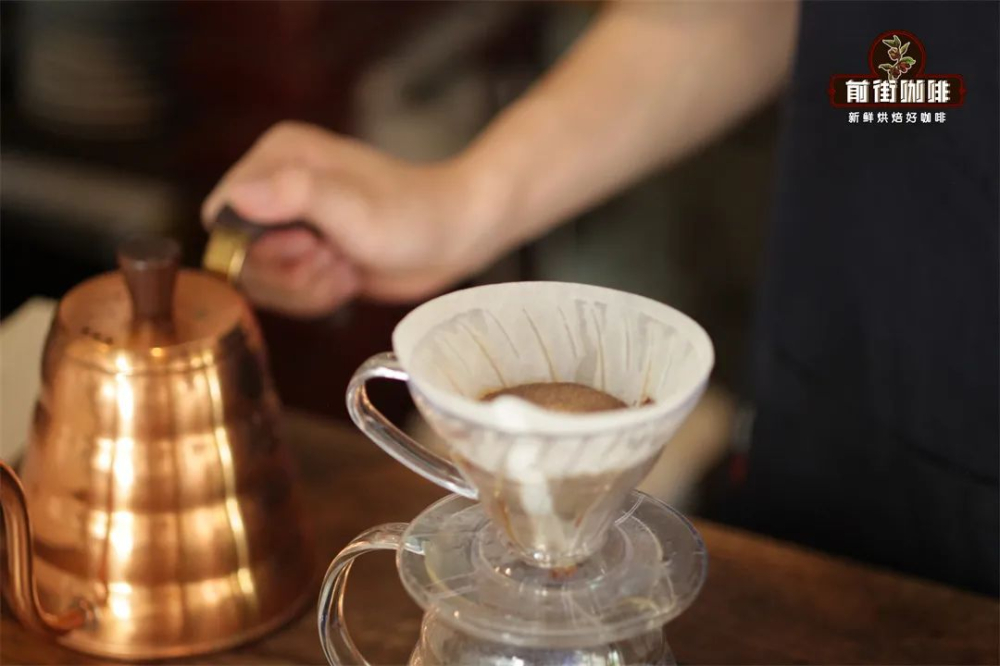
Use 15g of coffee at a coffee-to-water ratio of 1:15 — that is, 15g of grounds and 225g of hot water.
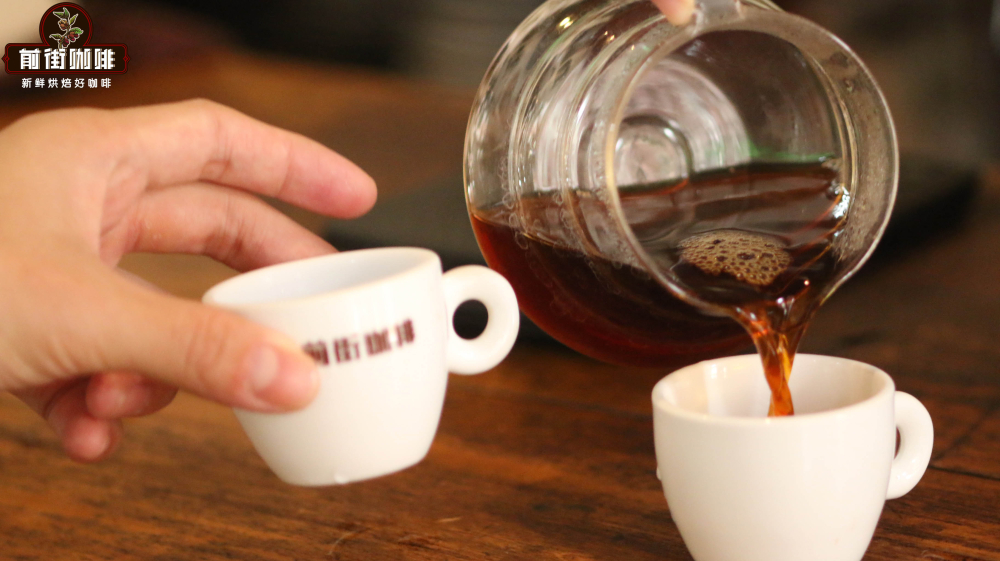
First, bloom with 30g of water for 30 seconds. Pouring at 4g per second — about 4 seconds per circle — spiral from the center outward and back to the center until you reach 125g, then stop. Once the coffee bed has sunk to half its height, pour the same way again up to 225g and stop. When all the coffee has drained into the server, remove the dripper. Total brew time: 2 minutes 10 seconds.
FrontStreet Coffee Recommendation
Both Gesha and Huakui trace their story to Ethiopia, the birthplace of the variety, and Panama, the land that made it famous — two origins every coffee lover should taste. Panama Gesha shows a pronounced orange-blossom sweetness, fragrant florals laced with juicy fruit acidity, and a tea-like lingering finish; the highest expressions are Esmeralda's Red Label "Esmeralda Special," grown at 1,600-1,800 meters and cupping above 90 points per micro-lot, and the more affordable Green Label "Private Collection," a blend of batches across plots. In Ethiopia, a couple founded the 475-hectare Gesha Village just 12 miles from the original Gesha forest, selecting the wild trees closest to Panama Gesha by plant morphology, bean shape, and cup performance — its Gold Label and Red Label estate lots are must-try pour-overs for advanced drinkers.
Beyond estate Gesha, the entry-level FrontStreet Coffee Granera Estate Gesha, medium-light roasted, offers bright citrus acidity, elegant ginger flower aroma, and the variety's signature refined finish. To brew, use a medium-coarse grind (about 78% pass-through on a #20 sieve, the size of fine granulated sugar), 91°C water, and 15g of coffee in a small Hario V60 at 1:16: bloom with 30g of water for 30 seconds, then pour in stages to 125g and 225g for a total extraction of roughly 2 minutes 10 seconds to 2 minutes 20 seconds. Gesha also shines as an espresso: pull 20g in, 40g of espresso out, in 25 seconds (1:2) for a shot of apricot, caramel, and nuts — or lengthen it 1:5 with 200g of hot water for a bright Americano of orange, nuts, and blueberry.
Important Notice :
FrontStreet Coffee is a long-established specialty coffee roaster in Guangzhou China, selling freshly roasted beans from its own farm in Yunnan as well as dozens of carefully selected single-origin beans from around the world for both pour-over and espresso. The products deliver consistently excellent quality and great value, with shipping within 24 hours. Guangzhou's FrontStreet Coffee shop is recommended by many coffee lovers, and the beans are now available online at the Tmall 。
FrontStreet Coffee has moved to a new address:
FrontStreet Coffee Address: 315,Donghua East Road,GuangZhou
Tel:020 38364473
 Scan and follow the En Gafei WeChat official account. Please indicate that the reprint comes from "En Gafei".