Are All Arabica Coffee Beans Great? An Introduction to the Appearance and Flavor Characteristics of Arabica Coffee Beans
Coffee enthusiasts know that beans from different growing regions belong to different varieties. Some are Typica and Bourbon; others are Catuai, Catimor, or Typica again. So enthusiasts often ask FrontStreet Coffee what these varieties actually are, and how they differ in flavor. In fact, all of the varieties above belong to the Arabica species. In this article, FrontStreet Coffee explains what Arabica coffee beans are.
Arabica Coffee Beans
In today's coffee market there are, in fact, three major species: Arabica, Robusta, and Liberica. Arabica is by far the most widely used in the pour-over market — nearly all of FrontStreet Coffee's beans are Arabica varieties, because their quality is the highest of the three. Robusta, thanks to its high caffeine content, is used to produce instant coffee, making it one of the two most common coffee species on the market today. Liberica rarely appears at all: its production is very low and its flavor quite bitter, which makes it unsuited to commercial coffee, so it is hardly ever sold.
According to FrontStreet Coffee's research, Arabica is the earliest-known coffee variety in the world. It was discovered in Ethiopia but widely cultivated in Yemen, and it was from the port of Mocha in Yemen that coffee was first exported to the world. At the time, Yemen was known as part of the Arab world, so Europeans believed coffee came from Arabia and called the beans "Arabica" — the name that evolved into today's terminology.
As noted above, Arabica is the highest-quality coffee species, and it is now widely cultivated as an economic crop across the major coffee-producing countries. Arabica today accounts for 75% of global coffee production.
Arabica is fairly tolerant of cold, but it cannot survive frost — a freeze will kill the trees. Its drought tolerance is also weak, so it must be grown in highlands at 1000-2600m altitude. Arabica also has many subspecies — the Typica, Bourbon, Catuai, and other varieties mentioned above. Among these, Typica and Bourbon are the two oldest branches of the Arabica lineage. Next, FrontStreet Coffee introduces these common varieties derived from Arabica!
Typica
Typica is the oldest variety in the Arabica lineage and the oldest native variety in Ethiopia. Nearly every Arabica variety grown today traces back to Typica. Typica has an elegant flavor, but the plant is physically weak with low disease resistance, making it susceptible to leaf rust. Production is therefore low and cannot meet economic demands, and in recent years Typica in Central and South America has gradually been replaced by Catuai and Catimor, making it increasingly rare. Although Typica's flavor is elegant, it has never spread as widely as Bourbon.
The world-famous Blue Mountain coffee is, in fact, a Typica variety. FrontStreet Coffee also runs a coffee plantation in Yunnan that grows mainly Typica trees. This shows that although Typica is not easy to cultivate, its flavor remains captivating — testimony enough to its excellence.
FrontStreet Coffee Jamaica Blue Mountain Coffee Beans
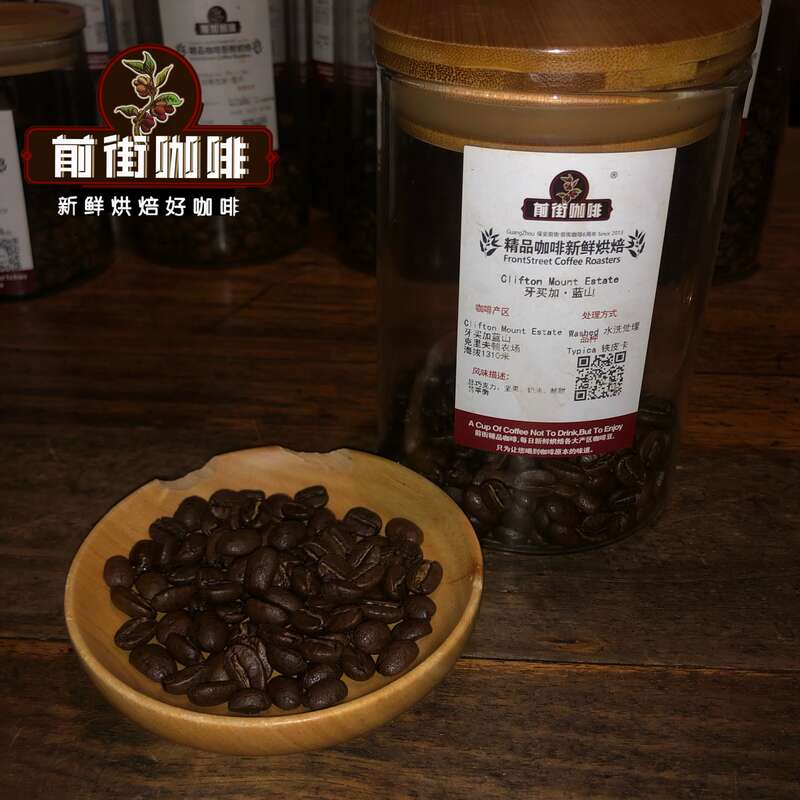
Country: Jamaica
Region: Blue Mountain
Altitude: 1310m
Variety: Typica
Processing: Natural
Flavor: Berries, dark cocoa, cream, nuts, brown sugar
Bourbon
Bourbon is a subspecies that mutated from Typica, discovered on Bourbon Island — hence the name Bourbon coffee. Together with Typica, it belongs to the oldest coffee varieties still in existence. Its green fruits turn bright red when ripe. Compared with Typica, Bourbon plants have broader leaves and grow more densely. Although its fruit yield is higher than Typica's, the harvest cycle is still two years, making it a low-yield variety. In return, the quality is excellent, with wine-like acidity and a sweet aftertaste.
Among FrontStreet Coffee's selection, Brazilian beans best represent the excellence of the Bourbon variety — for example, the Brazilian Red Cherry coffee beans.
FrontStreet Coffee Brazilian Red Cherry Coffee Beans
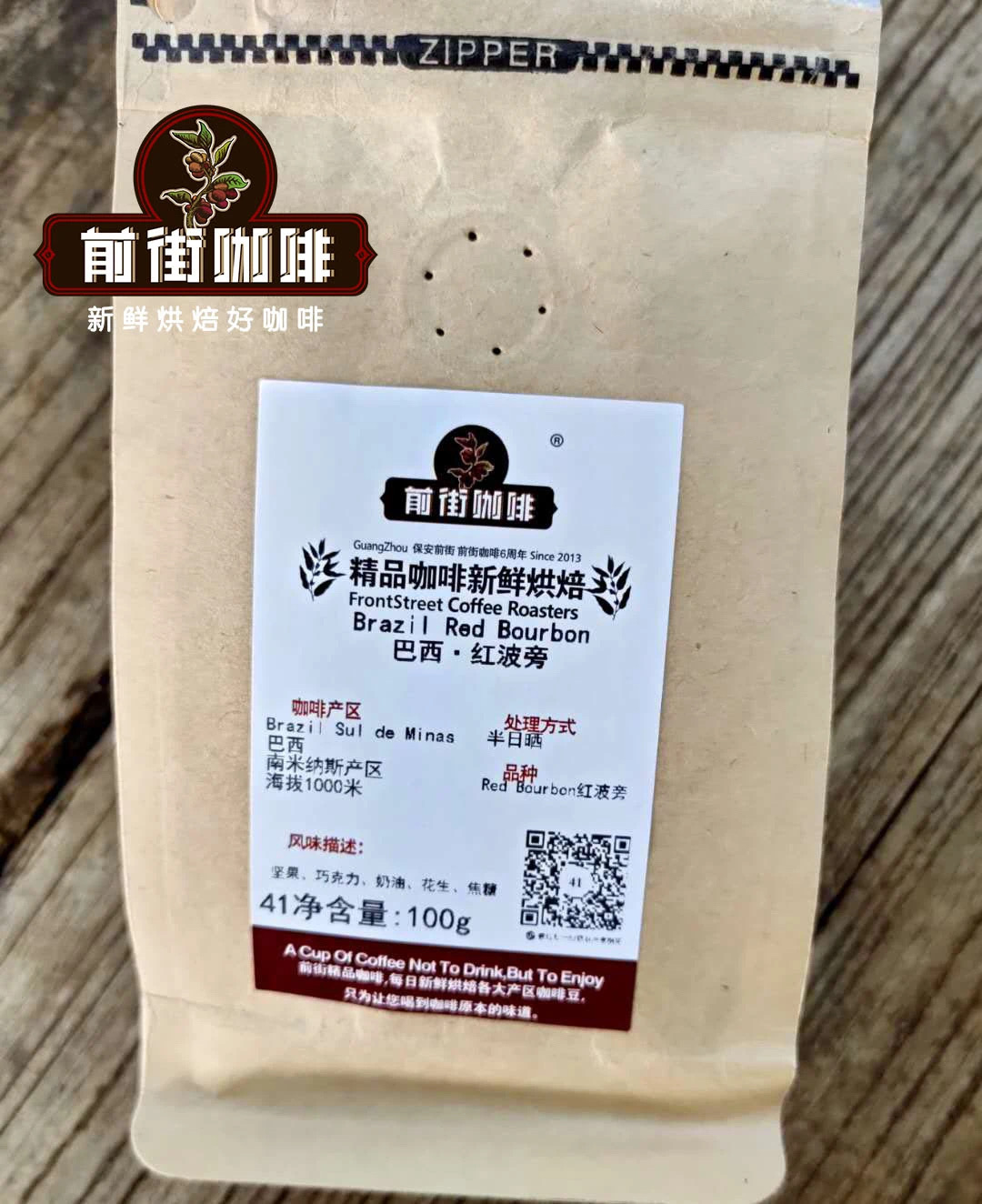
Country: Brazil
Region: South Minas
Altitude: 700-1200m
Variety: Red Bourbon
Processing: Semi-washed
Flavor: Tropical fruit aroma, high sweetness
Catuai
Catuai is a single-gene mutation of Bourbon, discovered in Brazil in 1937. Its productivity and disease resistance both surpass Bourbon's, and the plants are shorter, which makes harvesting convenient. Unfortunately, like Bourbon, it suffers from biennial production fluctuations. Its flavor is comparable to, or slightly behind, Bourbon. More importantly, it is extremely adaptable and needs no shade trees — it thrives in direct, intense sunlight, commonly known as "sun coffee." It tolerates high-density planting but requires more fertilizer, which raises costs; coffee farmers were initially slow to accept it for that reason.
Among FrontStreet Coffee's representative beans is the Costa Rica Tarrazú.
FrontStreet Coffee Costa Rica Tarrazú Coffee Beans
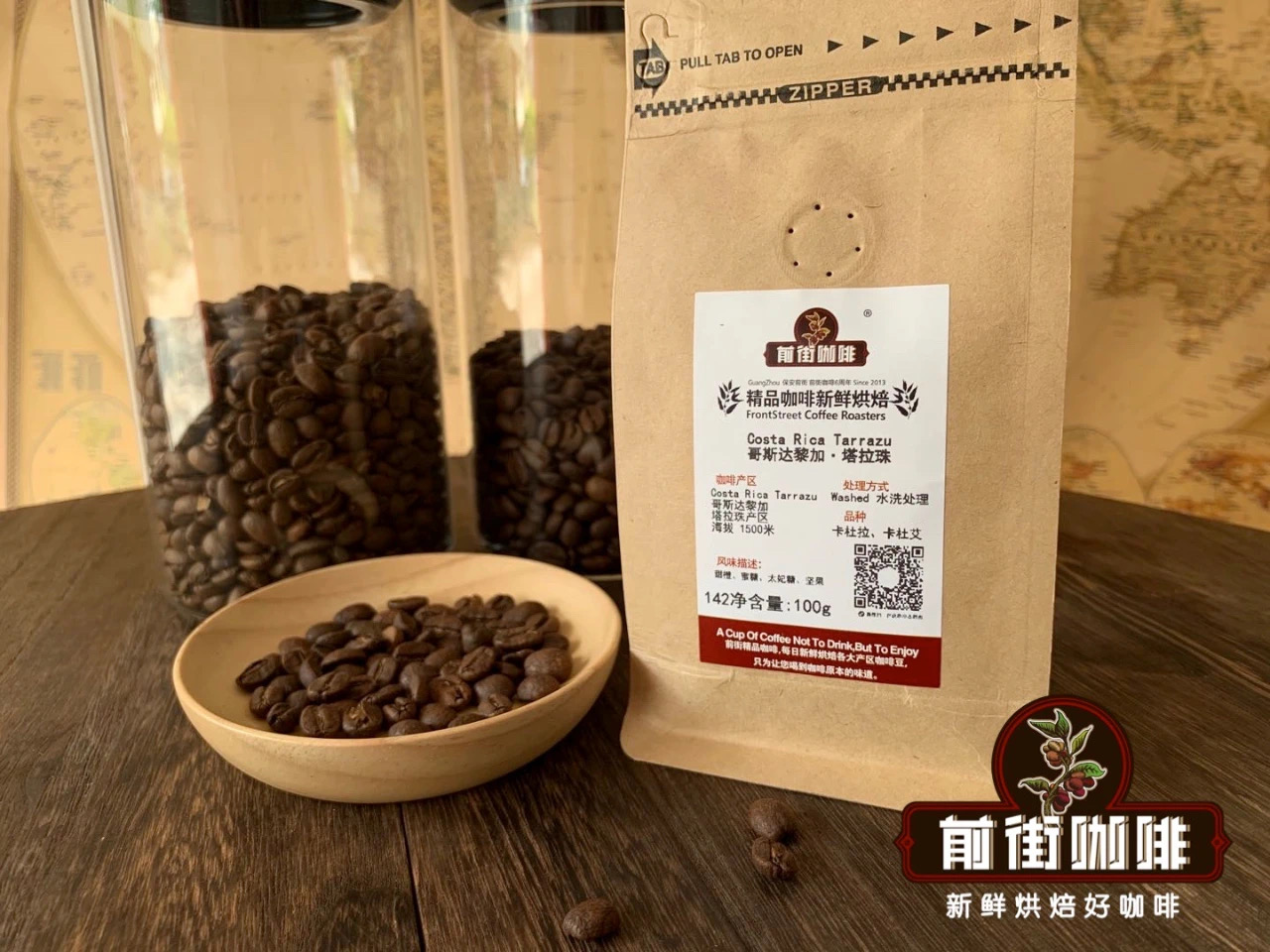
Country: Costa Rica
Region: Tarrazú
Altitude: 1950m
Variety: Catuai
Processing: Washed
Flavor: Sweet orange, nuts, honey
Catimor
Catimor is an Arabica hybrid variety, a cross between Mundo Novo (New World) and Catuai. It resists natural disasters better, especially wind and rain. It inherits Catuai's short plant height, addressing Mundo Novo's shortcomings. Another advantage is that the fruit is firm and does not easily drop in strong winds, making up for the delicate fruit that is Arabica's weakness. However, its overall flavor is flatter than Catuai's — and flatter than Mundo Novo's too — lacking body and richness, which is its greatest regret. Additionally, its productive lifespan is only about ten years, so its short life is another weakness.
Among FrontStreet Coffee's representative beans is the Costa Rica Beethoven.
FrontStreet Coffee Costa Rica Beethoven Coffee Beans
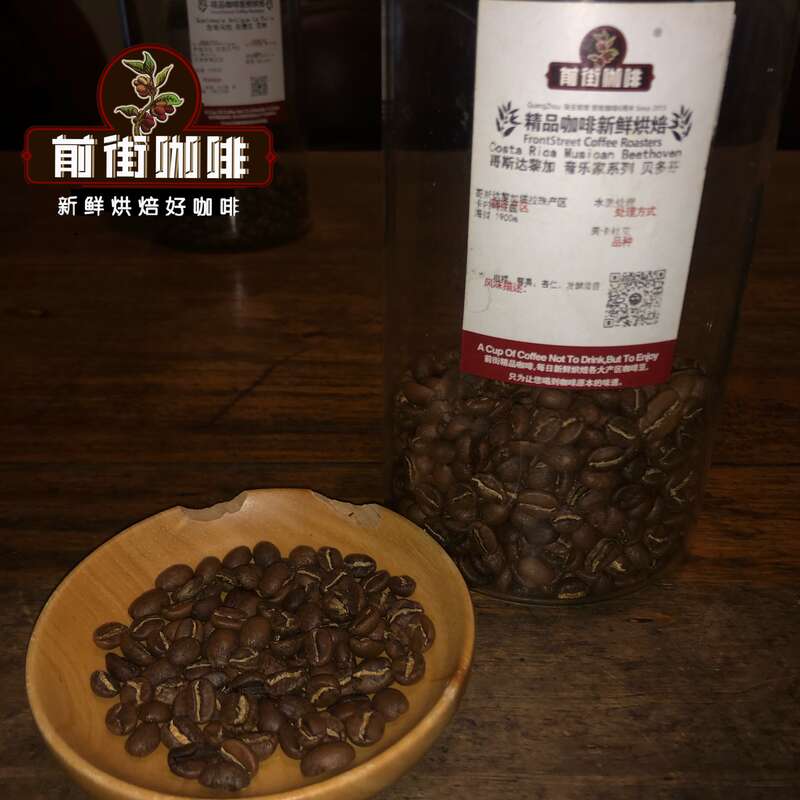
Country: Costa Rica
Region: Tarrazú region (Carnet Estate)
Altitude: 1900m
Variety: Catimor
Processing: Washed
Flavor: Citrus, berries, floral aroma, light fermented wine aroma
That is the information on Arabica varieties compiled by FrontStreet Coffee. We hope it helps every coffee enthusiast understand what Arabica coffee beans are — and choose beans that suit their own taste.
FrontStreet Coffee Recommendation
If learning that all these varieties descend from Arabica has whetted your curiosity, there is no better place to taste Arabica at its source than Ethiopia — the birthplace of coffee, home to countless native varieties and a treasure land in the eyes of coffee lovers. For a first sip, FrontStreet recommends the entry-level FrontStreet washed Yirgacheffe: clear jasmine florals and bright citrus acidity, light and elegant on the palate with a tea-like finish, like a refreshing, clean lemon tea.
To go deeper, try the FrontStreet Guodingding Cooperative lot from the Worka region. Established as an independent cooperative in 2012 by some 300 member farmers, Guodingding pulps its cherries before drying, which makes the coffee's own character clearer and more transparent — citrus and lemon tones with an elegant white floral note. The FrontStreet natural Red Cherry beans, from the Yirgacheffe Cherry Red program, are dried whole in the sun for two weeks until moisture falls to 12%, then hulled and screened through density, color, and hand-sorting checks; expect peach, cocoa, honey, and lemon. And in Sidamo's Guji zone, the FrontStreet natural Huakui from the 200-hectare Hambella farm is dried for 21 days on raised beds and hand-sorted every three to five days, yielding a medium-light roast with light fermented wine aromas, florals, citrus, and mango — thick, complex, honey-sweet with cocoa and spice, a full body and long finish.
Important Notice :
FrontStreet Coffee is a long-established specialty coffee roaster in Guangzhou China, selling freshly roasted beans from its own farm in Yunnan as well as dozens of carefully selected single-origin beans from around the world for both pour-over and espresso. The products deliver consistently excellent quality and great value, with shipping within 24 hours. Guangzhou's FrontStreet Coffee shop is recommended by many coffee lovers, and the beans are now available online at the Tmall 。
FrontStreet Coffee has moved to a new address:
FrontStreet Coffee Address: 315,Donghua East Road,GuangZhou
Tel:020 38364473
 Scan and follow the En Gafei WeChat official account. Please indicate that the reprint comes from "En Gafei".