Hartmann Estate Pour-Over Brewing Method Recommendations Panama Premium Coffee Bean Flavor Characteristics Introduction
For professional coffee knowledge exchange and more coffee bean information, follow FrontStreet Coffee's coffee workshop.
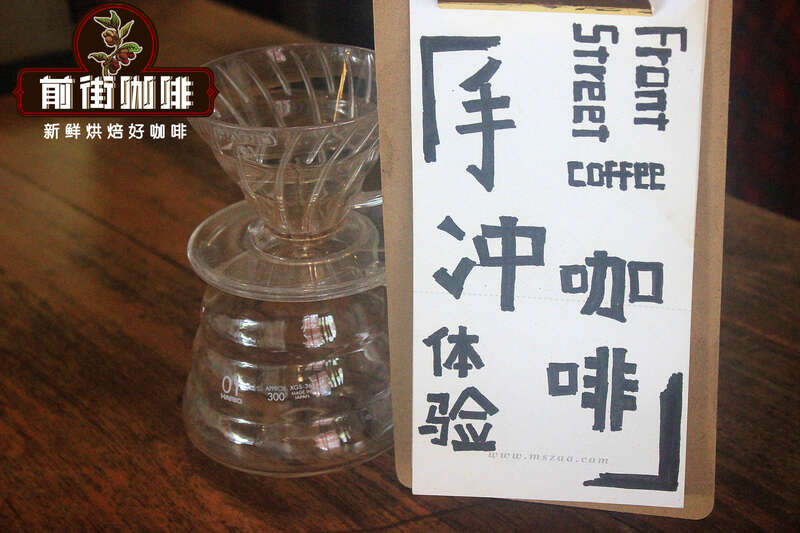
FrontStreet Coffee is a coffee shop with its own roasting operation, so the store focuses mainly on specialty coffee, with pour-over as its centerpiece. Many beginners understand pour-over as the brewing method championed by the third wave of specialty coffee: coffee is brewed by pouring water over the grounds, and different equipment produces different flavors and textures. If you still have questions about pour-over coffee, this article from FrontStreet Coffee should help.
What is Pour-Over Coffee?
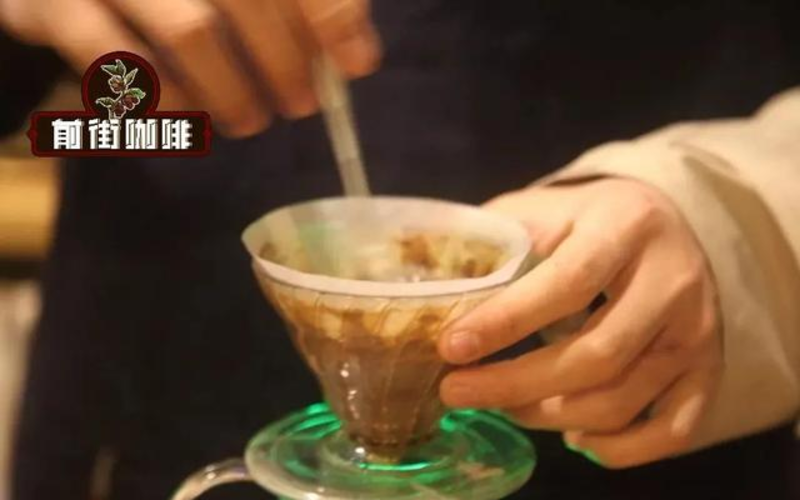
Pour-over coffee is, as the name suggests, the process of pouring hot water over coffee grounds and extracting coffee through filter paper in a dripper. The whole brew takes about 3 to 4 minutes. Because the flow rate, direction, and temperature of the water are all controlled by the brewer, almost every brew yields slightly different flavors. The equipment is simple, but the method demands technique and experience.

Pour-Over Coffee Equipment
Pour-Over Kettle: Kettles come in various sizes and materials, and you can choose according to your needs. What affects the brew most is the size of the spout, which governs the water output. Beginners are generally advised to use a narrow-spout kettle, which is easier to control. Also note that different kettles suit different heating methods, so check this when buying.
Dripper: Drippers come in different sizes and materials, mainly in three shapes: flat-bottom (fan/wave-style), conical, and wave. The size of the holes at the bottom affects the flow rate of the extraction and therefore the flavor. Flat-bottom drippers have small holes, a slower flow rate, and a richer texture; conical drippers have large holes, a fast flow rate, and a lighter texture; wave drippers have a flat bottom and special wave-shaped filter papers, producing the most even extraction. Metal mesh drippers are particularly unique - no filter paper needed, and they retain more coffee oils for a fuller taste, though some fine grounds may slip through.
Filter Paper: Each dripper has its own matching filter papers. Filter paper absorbs some off-flavors and oils. Unbleached papers may carry a slight papery taste.
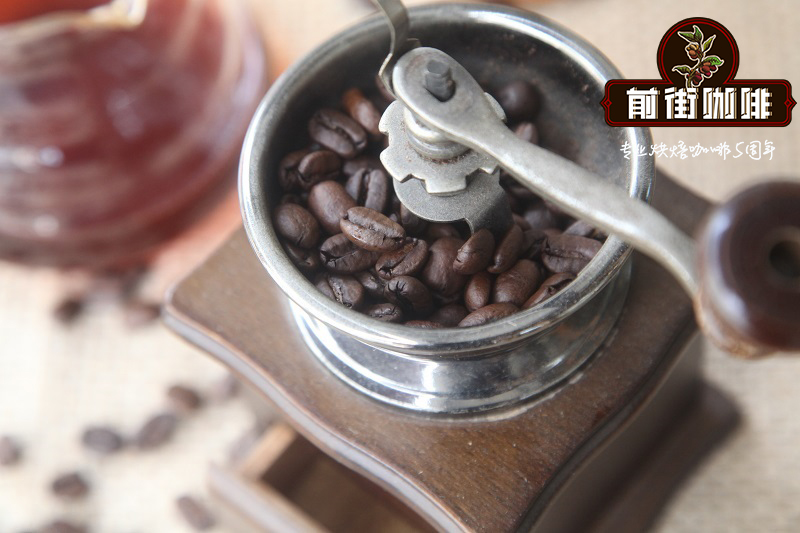
Grinder: Freshly ground coffee is the freshest coffee. Particle size and uniformity are key factors in pour-over flavor. Grounds suitable for pour-over are about the size of #2 granulated sugar. The more uniform the particles, the better the cup.
Server and Cup: Used to hold the brewed coffee. Pre-warming them helps maintain the coffee's temperature.
Auxiliary Equipment: A scale, thermometer, and timer make the brewing process far more precise.
Characteristics of Pour-Over Coffee
Fast, Efficient Extraction: Compared with other brewing methods, pour-over continuously passes fresh hot water through the grounds, so extraction is faster and pulls more from the coffee's surface. But speed cuts both ways: poor control can lead to over-extraction. The principle is like pan-frying fish over high heat - a large heating surface, but sloppy control burns it.
Many Variables: In just a few minutes, factors including flow rate, water temperature, grind size, and dripper shape all shape the final flavor. Careful preparation is needed before brewing.
Diverse Flavors: In FrontStreet Coffee's brewing experience, coffee brewed under different conditions tastes different, and different beans suit different setups.
At this point you might think pour-over coffee is complicated and hard to master. That is fair - it is certainly harder than pressing a button on a machine. But like buying flour and kneading the dough yourself, every detail is under your control, which makes the final cup uniquely yours. By adjusting the variables, you can explore the whole range of what a coffee can taste like - that is the charm of pour-over!
Hartmann Estate
Hartmann Estate grows a remarkably wide range of varieties, including Typica, Caturra, Catuai, Bourbon, Pacamara, Maragogipe, and Geisha. The people here have always followed environmentally friendly practices in growing coffee, and the farm's compost is made from pulp and cherry skins. Processing methods include traditional handcrafted ones such as natural and honey processing, as well as recently developed wine (anaerobic fermentation) processing. Today's Hartmann Estate is a family business founded in 1940 by Ratibor Hartmann (son of Alois). In 1966, Ratibor married Dinora Sandi from Costa Rica. They had five children: Ratibor Jr., Allan, Alexander, Alice, and Kelly. Each family member takes on different responsibilities for growing, harvesting and processing, and estate tours. A family that has grown coffee for over 100 years is a legend in its own right.
The family business runs a professional cupping laboratory and sample-roasting room, rigorously cupping every batch to ensure Hartmann Estate's consistent quality and continuous improvement. Their scientific approach and nearly a century of family experience guarantee their excellent coffee.
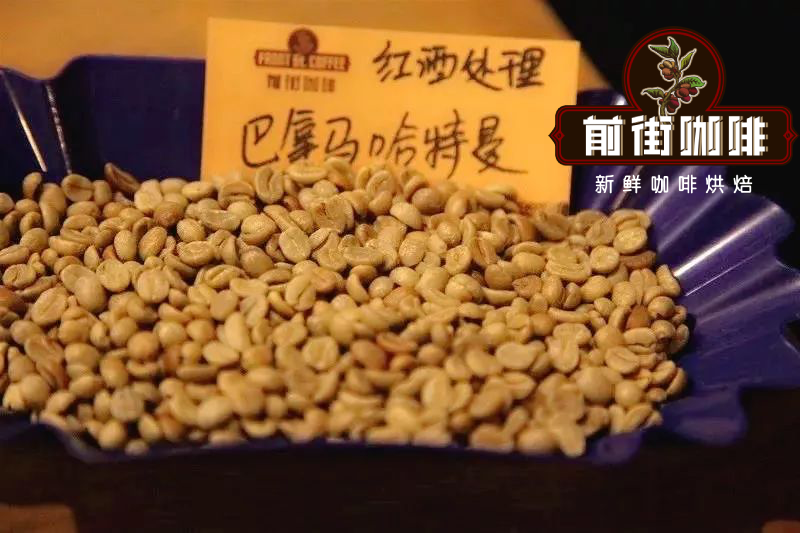
Example: FrontStreet Coffee Panama Hartmann Estate Wine Process
Altitude: 1,250-1,700m
Processing Method: Wine Process
Region: Hartmann Estate
Farm: Palo Verde
Farm Owner: Allan Hartmann
Varieties: Caturra, Typica
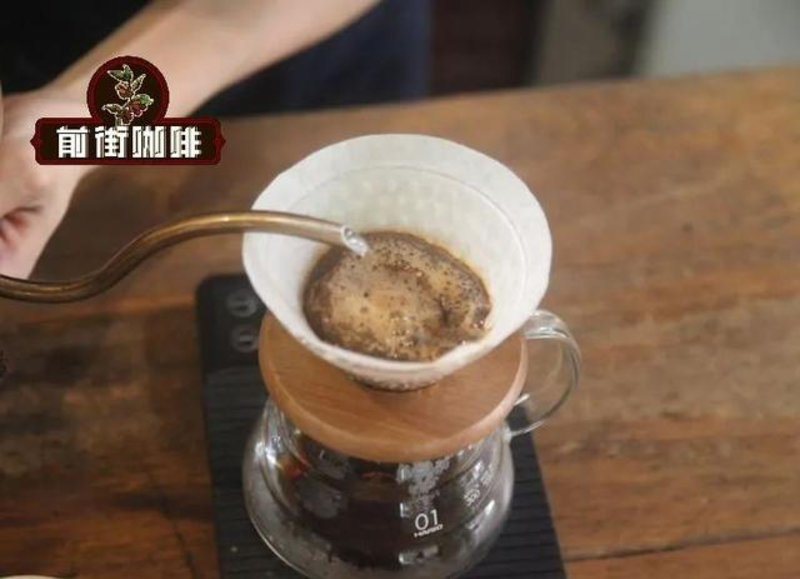
FrontStreet Coffee Brewing Parameters
Coffee Amount: 15g
Ratio: 1:15
Grind Size: BG#6S
Water Temperature: 91°C
Dripper: V60
- First pour: 30g of water, bloom for 30 seconds.
- After blooming, make the second pour of about 95g, scale reading 125g. Then wait for the water level to drop to half.
- When the coffee bed is about to be exposed, make the third pour of about 100g, scale reading 225g. Then wait for the coffee to finish draining.
Extraction Time: 1 minute 50 seconds
Flavor Description: Aroma of fermented wine; citrus and kiwi acidity on entry; nutty and chocolate aromas in the middle; brown sugar sweetness in the finish, accompanied by winey fermentation notes.
FrontStreet Coffee Recommendation
Panama sits in Central America, with its coffee zones in the west of the country: Boquete, Volcan, Santa Clara, and Piedra de Candela. Boquete and Volcan are the two specialty regions you will hear about most often. Both lie in Chiriqui province, squarely in the heart of the coffee belt, with fertile volcanic soil and old-growth forest. In Boquete, mist frequently drifts between the mountains, days are humid and nights are cool, and the Baru volcano enriches the soil - ideal conditions for growing premium coffee. Higher plantings mean slower cherry maturation, more nutrient uptake, and richer, more distinctive flavors.
If this is your first taste of Panamanian specialty coffee, FrontStreet's baristas suggest the washed Boquete Geisha, an estate-level entry Geisha grown at 1,600 meters. The fertile volcanic-ash soil feeds the trees and builds an aromatic cup with the jasmine florality unique to Geisha, plus green tea, honey, citrus, and orange. For a more affordable route into Geisha character, FrontStreet's Flower Butterfly carries half Geisha parentage - a blend of Geisha, Caturra, and Catuai grown on the Baru volcano, where abundant rain, a big day-night temperature swing, and volcanic rock soils produce a coffee outstanding in body, citrus acidity, and jasmine aroma, equally good poured over or cold-brewed.
For the top of the pyramid, there is the famous Hacienda Esmeralda - both the discoverer of Geisha's flavor potential and the promoter of Panama Geisha worldwide. Esmeralda cupped lots from different plots by altitude to standardize quality, giving rise to the Red, Green, and Blue label tiers. For the highest grade, choose FrontStreet's Esmeralda Red Label: Geisha from a single plot above 1,700 meters, cupping at 91+ points, with a refined orange-blossom honey character. And beyond Geisha, Esmeralda's Diamond Mountain brand - mostly Caturra and Catuai from the Jaramillo and Canas Verdes farms - thrives on volcanic soil under original-forest shade, yielding green beans with rich fruit aroma and sweetness that have made it nearly as popular as Geisha itself.
Important Notice :
FrontStreet Coffee is a long-established specialty coffee roaster in Guangzhou China, selling freshly roasted beans from its own farm in Yunnan as well as dozens of carefully selected single-origin beans from around the world for both pour-over and espresso. The products deliver consistently excellent quality and great value, with shipping within 24 hours. Guangzhou's FrontStreet Coffee shop is recommended by many coffee lovers, and the beans are now available online at the Tmall 。
FrontStreet Coffee has moved to a new address:
FrontStreet Coffee Address: 315,Donghua East Road,GuangZhou
Tel:020 38364473
 Scan and follow the En Gafei WeChat official account. Please indicate that the reprint comes from "En Gafei".