Hawaiian Coffee Ka'u Region Information - Blue Bottle Coffee Partner Estate Hawaiian Coffee Varieties
Introduction to Rusty's Hawaiian
Because so many coffees are grown thousands of miles away, Blue Bottle is delighted to partner with growers practically in America's backyard — Lorie Obra of Rusty's Hawaiian Estate. Rusty's Hawaiian is a 12-acre (4.9-hectare) coffee farm on the southern side of the Big Island. Having visited Rusty's before, I recently returned to learn more about how estate coffee is cultivated and processed there.
Location and Setting
Rusty's sits on the slopes of Mauna Loa volcano in the Ka`u district of the Big Island, roughly 60 miles (97 km) from the Kona coffee-growing region. The estate sits at about 2,000 feet (611 meters) — considered a fairly high elevation by Hawaiian standards.
The Story of Lorie and Rusty
Lorie belongs to the Ka`u district's coffee farmers' group, which built the region's reputation through sheer persistence. She and her late husband Rusty moved from New Jersey in 1999 and established the farm from scratch; back in New Jersey they had worked as medical technologists and pharmacists. They wanted to live near Rusty's parents, who had worked on the dominant local sugarcane plantation until it closed in 1996. Lorie recalls that at first they considered opening a Dunkin' Donuts franchise or a bed-and-breakfast — until they visited a friend's newly established coffee farm, partly out of a desire to turn the abandoned cane fields into coffee cultivation. As she describes it: "We saw the estate and the bright red cherries hanging on the laden coffee trees. At that moment no further discussion was needed — we understood what was deep in our hearts, and this was what we had to do next."
The couple rented a large plot on the southern slopes of Mauna Loa, ringed by mountains and wild sugarcane, with an open view of the Pacific to the south. Using seedlings gifted by longtime friends from the Kona and Ka`u regions, and relying on volunteer labor as their main workforce, they planted some 7,000 coffee trees across more than 9 acres (3.6 hectares). Since the nearest coffee processing facility was in Kona, they decided to handle their own post-harvest processing, which meant buying specialized equipment: a depulper, a huller, even a small roaster. With their scientific backgrounds and lab experience, they understood every variable that could affect quality and wanted control over all of them.
Development and Achievements
Before long, novice farmers from other estates were asking Rusty to lead the emerging Ka`u Coffee Growers Cooperative. One grower, William Tabios, once confided to Rusty that he felt in his heart it was impossible to get anywhere as a coffee farmer. Rusty assured him a golden age was coming. True to his word, in 2007 the Specialty Coffee Association of America (SCAA) ranked Tabios's coffee sixth among the world's best that year. Since then, Tabios and other Ka`u growers — including Rusty — have earned that honor year after year.
Unfortunately, Rusty did not live to see the cooperative and the farm he built from nothing succeed. When he was diagnosed with cancer, he urged Lorie to give up the estate, feeling it would be too heavy a burden for her to carry alone. When Rusty passed away in 2006, Lorie could find no one to take over the farm, so she found ways to keep it running herself.
In 2008, their landlord invited several coffee experts to meet with Ka`u growers, including R. Miguel Meza, head roaster at Paradise Coffee Roasters in Ramsey, Minnesota. Miguel became Lorie's mentor. After Miguel returned to Minnesota, Lorie began sending him sample lots of green beans representing different processing times, varying the hours of fermentation.
Soon after, Miguel moved to Hawaii to work for Hula Daddy Kona Coffee in the Kona district and began visiting Lorie on weekends, helping her identify coffee tree varieties, run more experiments, and refine her cupping technique. Demand for Lorie's coffee grew, yet she still handled everything from harvest to shipping herself. Fortunately, her daughter Joan Obra and son-in-law Ralph Gaston, both journalists by background, decided to leave California and help run the estate. Miguel also relocated to Ka`u, and Pete Licata, a United States Barista Champion, soon joined the team. Besides running Rusty's Estate, they are also partners in Isla Coffee Company, which works with farms in Hawaii, Taiwan, and beyond to develop diverse customized lots.
Rusty's has won repeated honors, helping Lorie sell more coffee. She believes these achievements are enough to comfort her husband's spirit. "His dream was to elevate Ka`u coffee to stand on equal footing with the world's top coffees," Lorie says, showing a bracelet-like tattoo of coffee leaves and cherries forming a circular wreath, with Rusty's name inked inside. "I want to be part of this Ka`u coffee revolution. I have been working very, very hard to make that ideal real."
Quality Standards and Harvesting
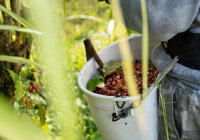
Hawaiian coffee has always commanded high prices, mainly because labor costs here are higher than in most of the coffee world. But once you see the quality of Rusty's beans, the cost seems justifiable. Lorie instructs her harvest crews to pick only fully colored cherries — the way you would choose the most beautiful strawberries at a farmers' market. She will not accept unripe, underdeveloped, or brown (overripe) beans in the harvest.
By her standards, a worker can pick about 12 pounds (5.5 kg) of mature red cherries per hour, enough to yield about 2 pounds (0.9 kg) of roasted coffee — and each batch then requires several hours of post-harvest processing.
"Hawaiian coffee is by no means expensive," Miguel insists. "Rather, coffee prices in other parts of the world have been suppressed too low." Rusty's grows about 6,000 coffee trees (thinned since planting), producing roughly 1 pound (0.45 kg) of green beans per tree each year. The estate is planted mostly with four main varieties: Guatemala Typica, Yellow Caturra, Red Caturra, and Red Bourbon. These are known locally in Ka`u as Cloud Rest.
The harvest season here typically runs from November through May. During the remaining months, Lorie can buy fresh red cherries from other Ka`u farmers, whose harvests ripen at different times depending on altitude. She handles all cherries — from her own trees or others' — with her own methods and exacting inspection.
Processing Methods
After picking, the cherries go straight to Lorie's home in Pahala for processing — about a ten-minute drive downhill from the estate. Processing usually must begin the same day, which means Lorie, often joined by Miguel, Pete, Joan, and Ralph, works late into the night for eight to ten months of the year.
Lorie adapts her processing to the variety, the climate, and customer demand. Whatever the method, her first step is always to float the cherries — immersing them all in water, a common industry practice. Any cherry that floats is removed entirely: it is a low-density, poorly developed bean that would later lack flavor and sweetness. The next step is what sets her apart from most competitors — Lorie and her team hand-sort the remaining cherries, discarding any that are overripe, underdeveloped, or not fully red (still yellow). Only then does processing continue.
Provided by Blue Bottle Coffee.
Washed Processing
Like most of the coffee trade, Lorie most often uses the washed process. First she feeds the cherries into a depulping machine, flushing them through with a garden hose. The machine strips the skins and ejects the beans, still coated in sticky mucilage. She then transfers the slippery beans into buckets, fills them with cold water, and lets them ferment overnight. After much trial and error, she settled on roughly 8-10 hours as the optimal fermentation time for her beans — which also buys her a little sleep.
The next morning, the beans sit in a thick layer of brown viscous liquid. Lorie pumps it out with a pool pump and rinses the beans clean. At this stage the skins have come away and the beans have a sandpaper-like texture. They are spread on waist-high metal mesh racks set up around her courtyard, each fitted with a corrugated vinyl sheet that can be pulled over to shield them from rain. The beans sun-dry for five to eight days.
Provided by Blue Bottle Coffee.
Natural Processing
For dry, or natural, processing, Lorie spreads the whole cherries on the drying racks immediately after sorting and dries them to a moisture content of 10-11%, which usually takes three weeks depending on the weather. Between the third and fifth days, once the skins turn leathery and no longer brittle, she rakes the cherries every hour.
Honey Processing
For honey processing, the depulped beans are spread on racks to dry. They must be raked every twenty minutes on the first day to ensure even drying and prevent mold — Joan often sets up her laptop in the backyard so she can work in short bursts between rakings. After that, two rakings a day suffice; the whole drying period takes about five to ten days depending on the climate.
Final Processing Steps
Whether washed, natural, or honey processed, the finished beans are packed in special bags and stacked in the warehouse. Washed and honey-processed greens rest for three months; naturals rest for four to five. As Lorie puts it: "My coffee beans need their beauty sleep." Miguel explains that this rest prevents the beans from developing a grassy sharpness.
In every case, the goal is to roast the greens within nine months of harvest. When the beans are ready to ship, they first pass through a huller to remove the parchment, then are sorted to remove undersized or defective beans. After sorting, the greens are inspected and certified by the Hawaii Department of Agriculture before being shipped to customers. Unlike coffee from other origins, Rusty's Estate coffee needs no customs clearance when shipped within the United States — a real advantage for American customers that also speeds up delivery considerably.
*This article is reprinted from "Blue Bottle Coffee"
FrontStreet Coffee Recommendation
Reading about Lorie's obsessive hand-sorting, you can appreciate how much labor stands behind great coffee — and why an entry-level specialty bean that is still delicious is such good news for beginners. If you want a smooth start, FrontStreet Coffee's Brazil Cerrado Red Bourbon is the classic first pick: from Brazil's famed Cerrado region, it is a "delicious and affordable" daily single origin, showing typical cream, peanut, and cocoa flavors in the cup.
For something brighter, FrontStreet Coffee's Ethiopia washed Yirgacheffe Guodingding (from the Guodingding cooperative) is a textbook Yirgacheffe, with jasmine florals, lemony acidity, and berry tones. If you lean toward fruit-forward naturals, the sun-dried Sidamo Huakui (Guoji) lot brings out berry, floral, jackfruit, melon, and honey notes — thanks to the traditional natural processing that made the Sidamo region famous.
And if you simply want to taste what a legendary variety is like without the luxury price, the entry-level FrontStreet Coffee Panama Boquete washed Geisha comes from Panama's most representative specialty region. Its genetics are pure, and the washed process lets you taste the orange-blossom sweetness characteristic of Geisha clearly — at a value that leaves plenty of room to experiment with different brewing methods.
Important Notice :
FrontStreet Coffee is a long-established specialty coffee roaster in Guangzhou China, selling freshly roasted beans from its own farm in Yunnan as well as dozens of carefully selected single-origin beans from around the world for both pour-over and espresso. The products deliver consistently excellent quality and great value, with shipping within 24 hours. Guangzhou's FrontStreet Coffee shop is recommended by many coffee lovers, and the beans are now available online at the Tmall 。
FrontStreet Coffee has moved to a new address:
FrontStreet Coffee Address: 315,Donghua East Road,GuangZhou
Tel:020 38364473
 Scan and follow the En Gafei WeChat official account. Please indicate that the reprint comes from "En Gafei".