Guatemala's Seven Major Coffee Regions: Processing Methods, Flavor Characteristics, Stories, and Grade Classification

Introduction to Guatemalan Coffee
When it comes to Central American coffee, FrontStreet Coffee believes experienced drinkers have surely tasted Guatemalan coffee. It is renowned for being rich and full-bodied with tobacco notes. The smooth mouthfeel carries a subtle smoky flavor amid the mellow richness, reminiscent of the meeting of chocolate's sweetness and smoke. Because of this unique smoky aroma, Antigua coffee is also known as "cigarette coffee."
Guatemalan coffee ranks among the world's finest, which FrontStreet Coffee attributes to its advantage of high-altitude volcanic terrain. The volcanic soil is extremely fertile, with elevations generally around 1,700 meters, allowing the cultivation of extremely hard beans. As a rule, the harder the bean, the richer the substances it contains.
According to FrontStreet Coffee's research, coffee was truly introduced to Guatemala in 1750 by Jesuit priests. By the late 19th century, German colonists had developed the region's coffee industry. Today most production takes place in the southern part of the country. Guatemala has eight major coffee-producing regions, each with a distinct flavor profile. Overall, however, Guatemalan coffee shows a gentle, full-bodied character with elegant aromas and a special, pleasant acidity similar to fruit acids, establishing it as the aristocrat of coffees. Among them, Antigua Classic coffee is highly recommended by drinkers worldwide. FrontStreet Coffee has also introduced the La Minita estate's Guatemalan Flora coffee beans, featuring citrus, light floral notes and a chocolate aftertaste.
Coffee Processing Methods
Guatemala's coffee is primarily washed, with a small amount naturally processed. FrontStreet Coffee often hears customers asking about the difference between the two. Even beans from the same region and estate can be either washed or natural, and regular buyers of FrontStreet Coffee's daily beans notice this.
Most of FrontStreet Coffee's daily beans use washed processing, because this method presents the basic flavor of a region and serves as the starting point for understanding regional flavors. Natural processing adds sweet aromas and fermentation notes on top of those basics. FrontStreet Coffee's Guatemalan Huehuetenango beans have become the representative of its Guatemalan daily beans thanks to their unique smoky character.
Washed Processing Procedure
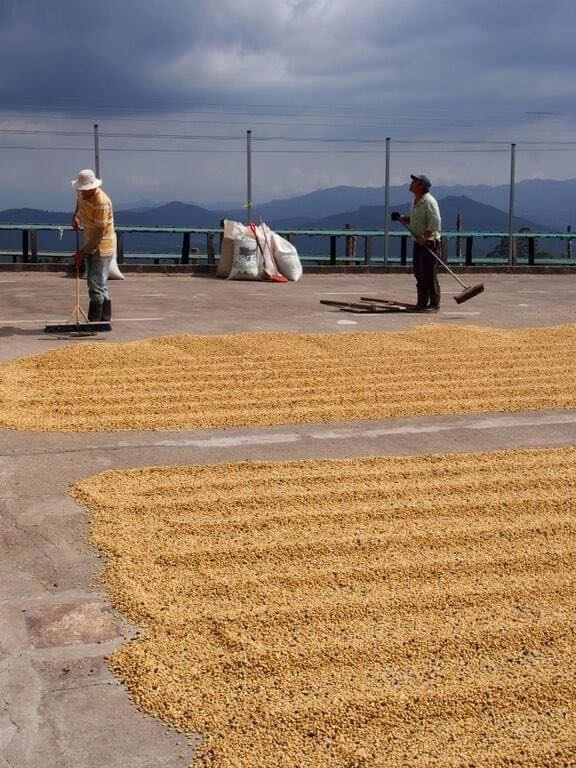
1. Harvesting. After picking ripe cherries, initial screening removes impurities, defective beans and floaters. This stage is identical to the natural method.

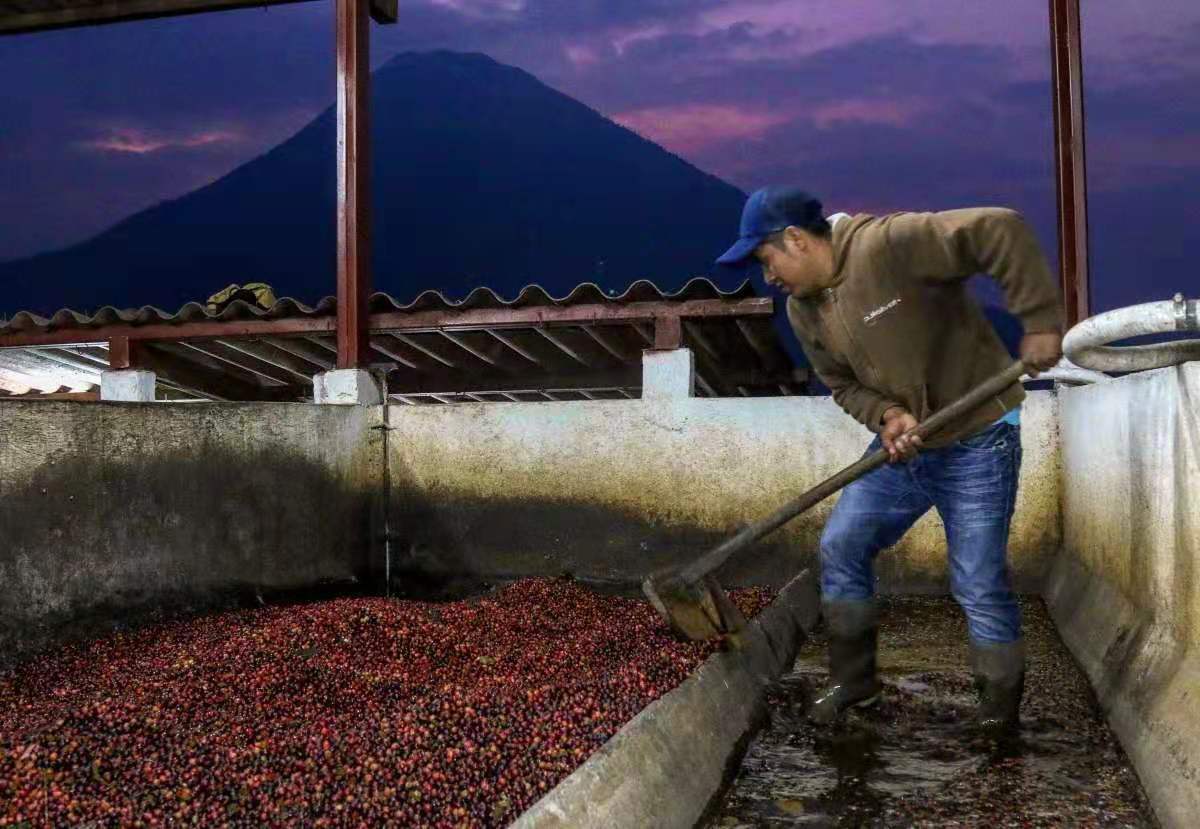
2. Depulping. Fresh cherries are fed into a depulping machine to remove the skin and pulp. Immature cherries, whose pulp does not separate easily, are screened out at this stage. What remains after the depulper is the mucilage, parchment and seed.
3. Fermentation to remove mucilage. The depulped seeds with mucilage are transferred to fermentation tanks. Although it is called the washed method, the mucilage is not actually washed away but removed through biological decomposition during fermentation. Fermentation takes about 16-36 hours, during which the beans must be stirred frequently to speed the separation of mucilage from the seed. Washed fermentation produces acidic substances such as citric acid, malic acid and acetic acid. These acids penetrate the green bean, making washed beans more acidic than natural ones. Once fermentation is complete, the beans are washed again.
4. Drying. After washing, the beans are sun-dried or machine-dried down to 12% moisture. Because the pulp has already been removed, there is no need to worry about mold during drying as there is with the natural method. The dried parchment beans are not as hard as natural-processed beans that still hold pulp and skin, and can be hulled in a hulling machine to obtain the green beans.
Guatemala's Eight Coffee Regions
Guatemala has eight coffee-producing regions, and each region's flavor is shaped by its geography. Below, FrontStreet Coffee introduces all eight.
Antigua
The former capital and ancient city, close to the current capital, is the most famous of all Guatemalan coffee regions. As a result it commands premium prices, and counterfeit Antigua beans are common. The highest-priced beans are undoubtedly the Bourbon cherries grown in Antigua's characteristic volcanic soil. FrontStreet Coffee certainly would not miss such distinctive cherries, and later in this article introduces a Guatemalan Flora coffee from Antigua.
Flavor: balanced sweet and sour.
Altitude: 1500-1700m
Acatenango Valley
Guatemala's eighth coffee region, which FrontStreet Coffee understands was originally a supply area for Antigua. It sits adjacent to Antigua, with majestic mountain valleys. The coffee-growing area extends along volcanic valleys that trap warm, humid air, and combined with the temperature difference between day and night this makes the area extremely suitable for growing coffee cherries.
Flavor: excellent sweetness, delicate fruit acidity, widely loved by coffee enthusiasts.
Altitude: 1300-2900m

Rainforest Coban
This region receives very high rainfall, is often shrouded in cloud and mist, and has a cool climate. The soil contains limestone and clay. Post-harvest processing often affects the quality of coffee from this region, but when it is handled well, the flavor becomes full and captivating.
Flavor: good mouthfeel with chocolate and tropical fruit notes.
Altitude: 1300-1500m
Volcanic San Marcos
The quality of coffee from this region varies greatly. With abundant rainfall, the cherries flower intensively when it rains, so sun-drying after harvest depends on luck, which makes quality here inconsistent.
Flavor: distinct acidity and sweetness, with well-processed cherries showing rich, unique aromas.
Altitude: 1400-1800m
Traditional Atitlan
The soil around Lake Atitlan is very fertile. The highest coffee grows at 1,950 meters, with most extending from the slopes down to the lakeshore, where the altitude remains 1,500 m. This is also Guatemala's largest and most famous high-altitude lake region.
Flavor: rich aroma and viscous body.
Altitude: 1500-1750m
Highland Huehuetenango
This region has the highest average altitude in Guatemala and lies within Guatemala's volcanic producing areas, though the routes to the capital are rugged and remote. Fortunately, hot, dry winds from Mexico blow here, allowing Highland Huehuetenango to grow coffee cherries at 2,000 m.
Flavor: bright, delicate acidity with floral notes and complex flavors.
Altitude: 1500-2000m
Fraijanes Plateau
This region belongs to the volcanic producing areas with high altitude. The soil contains abundant pumice that can even be ignited. Its coffee flavor is balanced but has more distinctive aromatic character than Antigua. FrontStreet Coffee believes this is likely due to the region's soil and its variable temperature and humidity, which make its coffee stand out.
Flavor: unique aroma, balanced flavor, gentle acidity and full body.
Altitude: 1400-1800m
New Oriente
This region lies near neighboring Honduras and has a climate similar to Coban, though some areas are hotter. New Oriente belongs to the volcanic regions, but its flavor differs significantly from other volcanic areas.
Flavor: distinct aroma with chocolate and spice notes.
Altitude: 1200-1700m
FrontStreet Coffee's Guatemalan Varieties
Next, FrontStreet Coffee introduces all of its current Guatemalan varieties and their flavor characteristics.
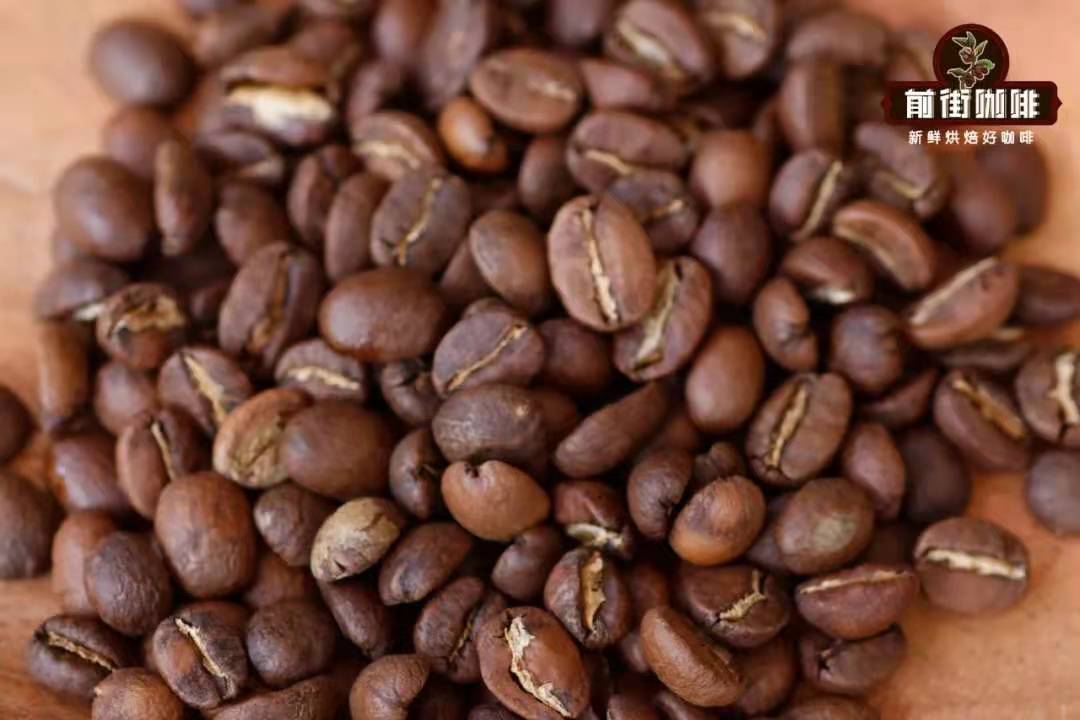
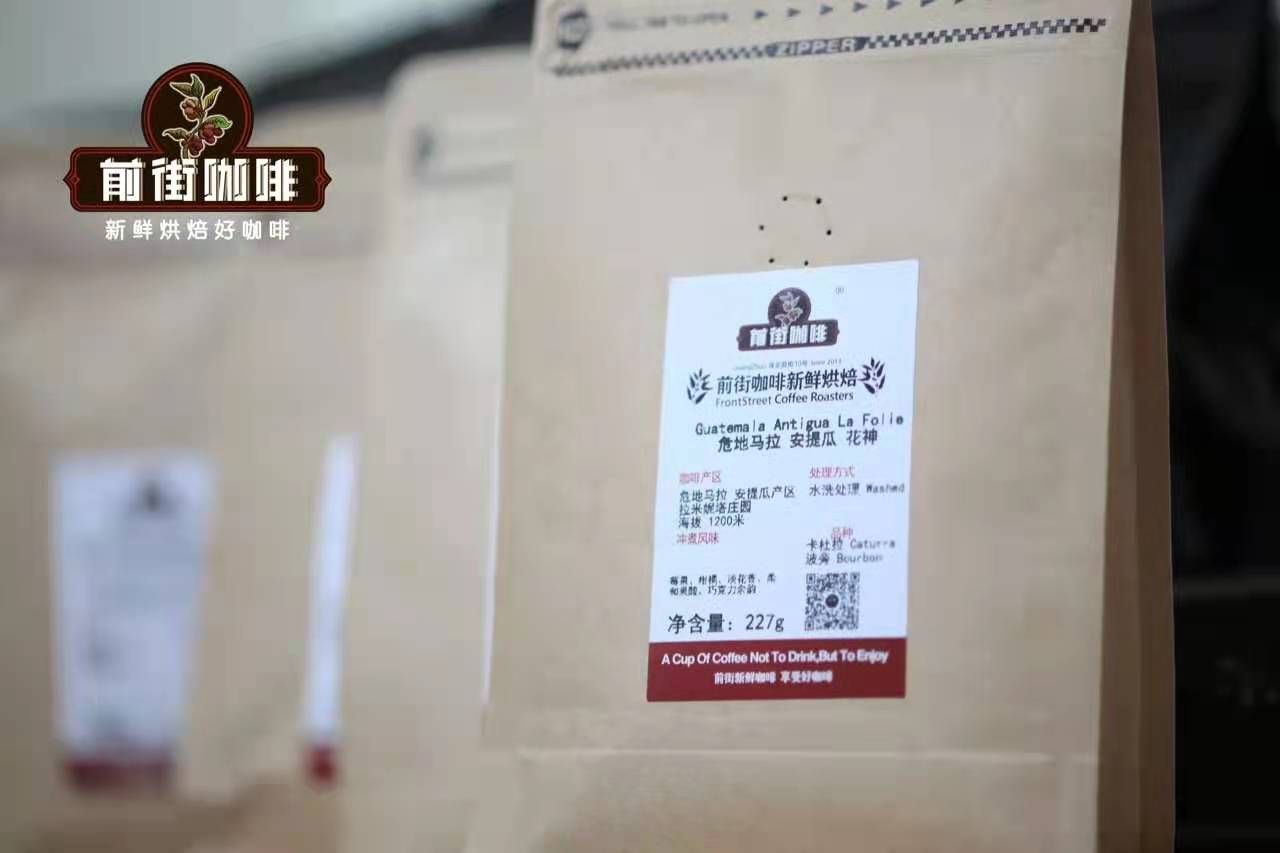
FrontStreet Coffee - Guatemala Antigua Flora Coffee Beans
Country: Guatemala
Region: Antigua
Altitude: 1200-1600m
Varieties: Bourbon, Caturra, Catuai
Processing: Washed
Flavor: floral, fruity, gentle acidity
Flora is a brand bean under La Minita, with the producing region in Antigua, Guatemala.
According to FrontStreet Coffee's understanding, La Minita is renowned for excellent cultivation, processing techniques and extremely strict quality control. They commission Antigua's largest wet mill, Las Pastores, to process the green beans to these standards and name the coffee Flora. This FrontStreet Coffee Flora coffee keeps the original regional flavor while carrying rich floral and tea notes, with lime acidity and berry notes on entry and a honey aftertaste. It is this excellent cleanliness and rich complexity that has become the hallmark of FrontStreet Coffee's Guatemalan Flora coffee.
La Minita never uses pesticides. Thanks to the estate's geographical advantages, the climate and altitude limit pest populations, and the few pests present do not significantly affect the trees. As the rainy season ends, the cherries begin to ripen. Green fruit starts turning red, but cherry maturation is very slow and uneven, unlike the rapid, consistent flowering. Harvesting must therefore be handled more carefully, selecting only fully ripe deep-red cherries.
The fruit from a single tree may require up to 5 separate harvests depending on ripeness. The estate tests its soil twice a year to determine its fertilization approach, and is very cautious with products that raise yield, fertilizing about 3 times per year.
Applying trace elements such as zinc, boron and copper also gives the trees more nutrients and helps prevent disease. Such scientific cultivation management produces the excellent performance of Flora's flavor and maintains consistent quality over the years. Following La Minita's famous gatekeeping procedures, the entire process from cultivation to packaging is strictly supervised, all to ensure that the Pastores mill delivers only the best quality and rigorously controls the estate's standard operating procedures.
FrontStreet Coffee believes it is precisely these strict standards that give FrontStreet Coffee's Guatemalan Flora coffee such excellent flavor.

FrontStreet Coffee - Guatemala Huehuetenango Coffee Beans
Country: Guatemala
Region: Huehuetenango
Altitude: 1500-2000m
Varieties: Bourbon, Typica, Catuai
Processing: Washed
Flavor: citrus, berries, nuts, fruit tea
Huehuetenango is one of Guatemala's more famous coffee-producing regions, and its name is the most intriguing of all. It comes from the Nahuatl language and means "land of ancient people." The region contains Central America's highest non-volcanic mountain range, quite suitable for coffee cultivation. It also relies heavily on coffee exports, and thus produces many impressive coffees.
In FrontStreet Coffee's view, this Guatemalan Huehuetenango coffee has lively, bright fruit acidity, grapefruit aroma, berries and a full body, placing it at the crown of Guatemalan coffees. It is a favorite among those who love fruit-acid coffees, with an excellent sweet-and-sour balance and sometimes lemon peel or citrus notes. FrontStreet Coffee strongly recommends it to all who love fruit-acid coffees.
FrontStreet Coffee Recommendation
Guatemalan coffee's balance of chocolate, nut and gentle fruit acidity makes it a natural match for espresso, and FrontStreet Coffee keeps five different espresso blends in this style. The Specialty Blend, built on washed Colombian and semi-washed Brazilian beans, shows nut, dark chocolate and caramel with a comfortable sweet-bitter balance; it pours smoothly with milk for latte art and holds a rich roast aroma. FrontStreet Coffee's Commercial Blend follows the typical Brazilian and Colombian pairing with a little Robusta added, which layers toast, almond and walnut onto the nutty base, gives a free-flowing crema and keeps the cup low-acid and full-bodied - a favorite for cafes.
FrontStreet Coffee's Black Cocoa Blend combines washed Yunnan small-lot coffee with semi-washed Brazilian beans, balancing the acidity of ripe plum with the aroma of cream chocolate and cocoa cookies; ground fresh, it releases a creamy chocolate scent, has a balanced flavor with a golden crema, and is popular with both cafes and home users. The Classic Blend, inspired by the old "Mamba" recipe of Mandheling and Brazil with a little Robusta, is designed for beginners learning latte art and for cafes aiming at a premium position, making it easy to pull a golden crema even at home. Finally, the Strawberry Candy espresso blend blends single-origins from three regions and carries a rose fragrance with grape, raisin, sweet orange and fruit-candy notes in both Americano and latte, for drinkers who want a bright, sweet espresso without the traditional dark-roast bitterness. FrontStreet Coffee ships every order within 5 days of roasting.
Important Notice :
FrontStreet Coffee is a long-established specialty coffee roaster in Guangzhou China, selling freshly roasted beans from its own farm in Yunnan as well as dozens of carefully selected single-origin beans from around the world for both pour-over and espresso. The products deliver consistently excellent quality and great value, with shipping within 24 hours. Guangzhou's FrontStreet Coffee shop is recommended by many coffee lovers, and the beans are now available online at the Tmall 。
FrontStreet Coffee has moved to a new address:
FrontStreet Coffee Address: 315,Donghua East Road,GuangZhou
Tel:020 38364473
 Scan and follow the En Gafei WeChat official account. Please indicate that the reprint comes from "En Gafei".