Honey Processed Coffee Beans What is Coffee Honey Processing? Honey Process Coffee Bean Drying Process
Why Is It Called Honey Process?

Honey Process, rendered in Spanish as "Miel Process," takes its "honey" quality from Miel, meaning "honey" or "syrup." The term originated in Costa Rica and across Central and South America, where locals call the sticky mucilage layer of the coffee fruit "Miel." Honey Processing means drying raw beans with all or part of the mucilage left on, and it evolved from Brazil's pulped natural method.

So Where's the Honey?
The name "Honey Process" leads many people to assume the coffee is treated with honey, or that coffee processed this way tastes as sweet as honey. Neither is correct. The term comes from the very sticky mucilage layer on the beans before drying: that tacky feeling resembles honey. When the pulp is separated from the beans, the surrounding mucilage absorbs moisture from the air and becomes sticky.
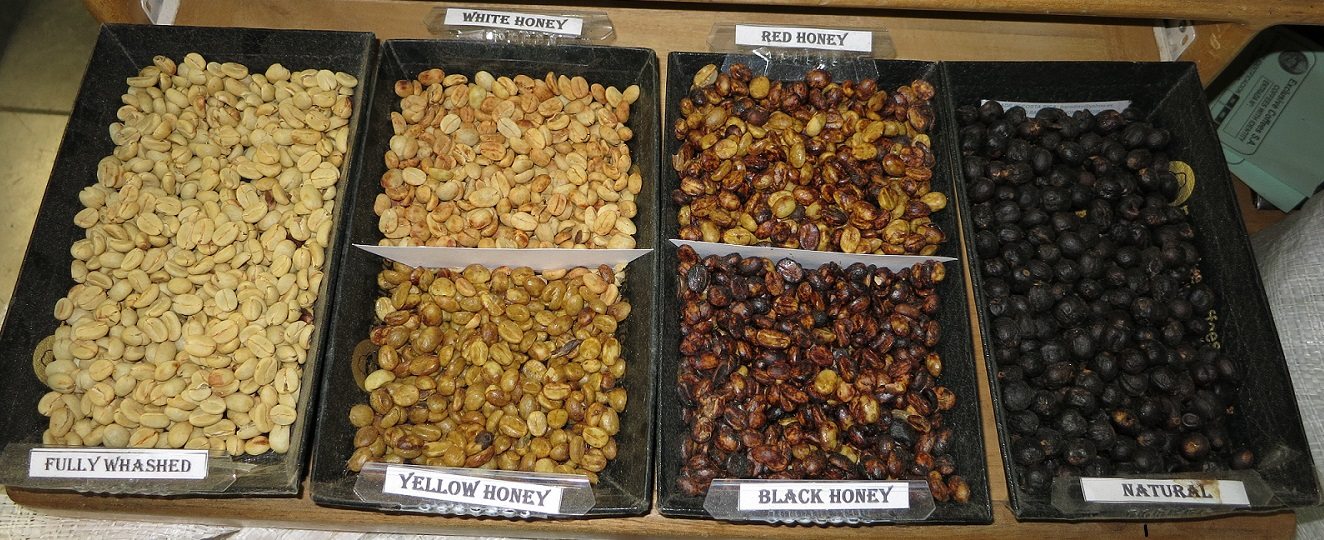
When coffee is pulped, a mucilage layer stays on the outside of the fruit. The image below identifies the various processing methods - washed, white honey, yellow honey, red honey, black honey and natural - by the appearance of the raw bean once the parchment is removed.
Why Is Honey Process Popular Among Coffee Farmers?
Honey Process first gained traction when producers noticed it could steadily improve the quality of their beans. It began in Costa Rica, and the method is now spreading.

Why did Costa Rican farmers first consider it? When growers want to improve their coffee's quality or raise the selling price, they have three options: change the tree variety, change the growing altitude, or change the processing method. Just as most home brewers would rather adjust grind size and coffee dose before touching the machine's water volume, pressure and temperature, most farmers prefer to change the processing method before planting new varieties or moving the estate - both of which demand time and money.
Honey Process is not simple. It requires long processing times and careful handling. So what steps does it involve?

First, farmers select ripe cherries from the trees, then screen off the outer pulp while retaining the mucilage layer around the bean, as described above. The mucilage holds high proportions of sugar and acidity, and these sweet and acidic compounds are the key to Honey Process.
The next steps are the most complex and meticulous part of the method: sun-drying. Timing must be tightly controlled. If the drying is too short, the compounds in the mucilage cannot transfer into the beans; too long, and you risk internal fermentation and mouldy beans, so the work must be quick.
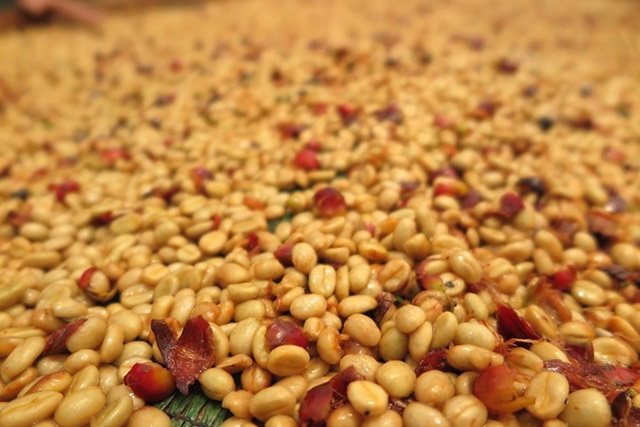
How do you find the balance? The beans are placed on drying racks or cement floors. For the first few days they must be turned several times an hour until the target moisture content is reached - usually 6-10 hours. Over the following 6-8 days they are turned at least once a day. Very time-consuming, yes. The reason honey sun-drying takes so long is that every night the beans reabsorb moisture from the air, so the next day requires more drying again. Once the sun-drying is complete, the coffee goes through drying and roasting like any other process.
Why Is the Honey Process Method So Wonderful?
Given how difficult and slow honey processing is, you might wonder whether it's worth the effort. Without a doubt, it is.

Coffee from the honey process generally balances sweetness and fruit acidity beautifully. The flavour is typically less intense than a natural but fresher and more aromatic - hard to resist. The key to that difference lies in the sugar and acidity from the mucilage layer. During sun-drying the sugars in the mucilage become increasingly concentrated, and those sugars permeate into the beans.
What Are the Differences Between Yellow, Red and Black Honey Processing?
When you shop for honey-processed coffee you'll usually see Yellow Honey, Red Honey and Black Honey. You may have heard they retain different percentages of mucilage, but what do those figures actually mean?

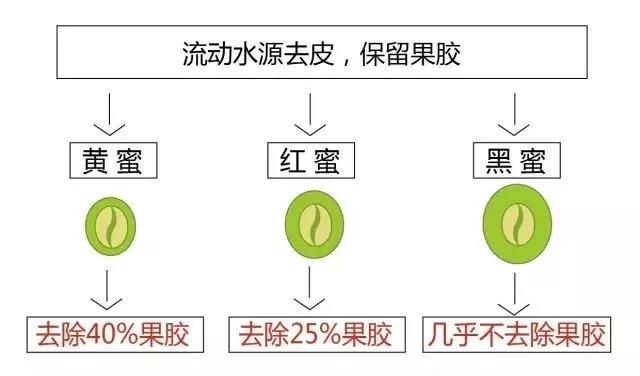
Farmers classify their coffee: some lots retain less mucilage and dry faster, others retain more and need longer drying. Yellow Honey (roughly 25% mucilage retained) must dry in an environment with minimal shade - few clouds or shade trees - so it finishes faster and takes on a yellow appearance. Red Honey (roughly 50% mucilage retained) takes longer and needs some shade. Black Honey (roughly 100% mucilage retained) is usually covered during drying to extend the time further.
Which Is Better: Yellow, Red or Black Honey?
Black Honey may be superior. The flavour of honey-processed coffee is influenced more subtly and deeply by the residual sugars from the mucilage - the more mucilage left, the richer the flavour. Coffee processed as Black Honey often shows rich fruity sweetness and a full body, sometimes with a mouthfeel reminiscent of red wine.

For producers, though, there is a second consideration. Black Honey can yield better quality and higher prices, but the risks and costs rise sharply, which may put farmers off. The longer the sun-drying, the more susceptible the coffee is to bacterial growth during fermentation and to defective mouldy beans. Such beans need more frequent turning, and they occupy up to twice the drying space of Yellow Honey. Producing high-quality coffee is only half the goal; farmers also need to produce the coffee that earns them the most.
FrontStreet Coffee Roasting Analysis
Yangjia 800N, 550g of raw beans charged. The specific operation:
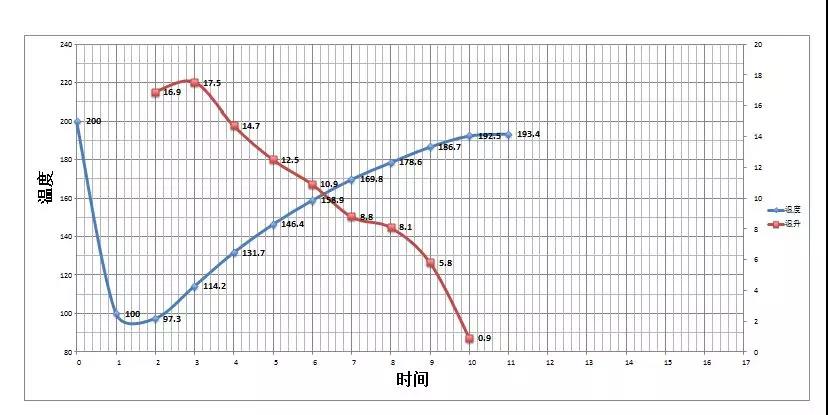
Heat the roaster to 200°C and set the damper to 3. After one minute of steaming, adjust the heat to 160°C and leave the damper unchanged. When the temperature reaches 160°C, adjust the heat once more, dropping to 135°C. At 5'40'' the temperature reaches 154.9°C, the bean surface turns yellow, the grassy smell disappears completely, dehydration is complete, and the damper stays unchanged.
At the ninth minute, ugly wrinkles and black spots appear on the bean surface and the toast aroma clearly shifts to coffee aroma, which can be defined as the prelude to first crack. At this point, listen carefully for the sound of first crack. At 9'21'' first crack begins: reduce the heat to 80°C, open the damper fully to 5 (heat adjustments must be very careful - not so low that cracking stops), then unload at 193.4°C at a setting of 50°C.

FrontStreet Coffee Cupping
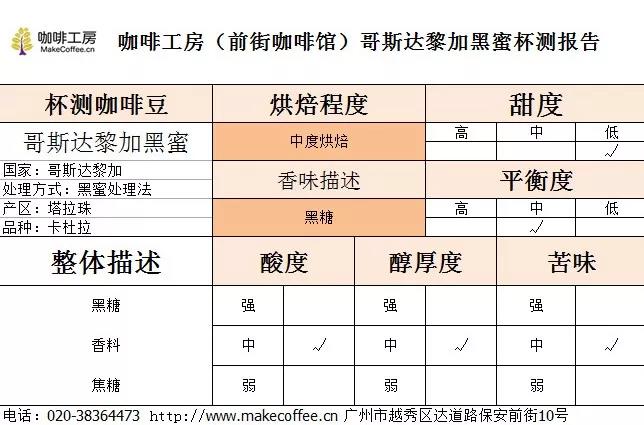
Flavor: Preserved plum, honey, brown sugar, orange blossom, white chocolate
Mouthfeel: Excellent sweetness, gentle fruit acidity, round and full-bodied, with a persistent aftertaste
FrontStreet Coffee Pour-Over Recommendation
Dripper: V60
Water Temperature: 90°C
Grind Size: 80% pass-through on a standard #20 sieve
Coffee-to-Water Ratio: 1:15
Coffee Amount: 15g

Multi-stage extraction:
First, use 30g of water to evenly moisten the coffee bed and let it bloom for 30 seconds. For the second stage, pour 95g of water evenly in circles from the inside out until the water level drops to two-thirds of the bed, then begin the third stage of 100g. Keep the flow small throughout. After roughly 2 minutes and 10 seconds of dripping, remove the filter.
FrontStreet Coffee Recommendation
To taste the honey family for yourself, start with a pulped natural classic: FrontStreet Brazil Cerrado Red Bourbon is a textbook Brazilian single origin, roasted medium to bring out creamy peanut, toasted bread, caramel and hazelnut, with a rounded, low-acid cup and only a light bitterness. For a full red-to-black honey experience, FrontStreet Costa Rica Blackberry uses a black honey process that keeps nearly all the mucilage and dries for at least two weeks under cover; roasted medium-light, it releases a rich floral aroma and drinks with grape, berry and ripe blackberry notes. If you want honey sweetness wrapped in an espresso-friendly blend, FrontStreet Strawberry Candy combines Panama Geisha with a raisin-honey Costa Rican coffee and works equally well as pour-over, cold brew or moka pot.
Important Notice :
FrontStreet Coffee is a long-established specialty coffee roaster in Guangzhou China, selling freshly roasted beans from its own farm in Yunnan as well as dozens of carefully selected single-origin beans from around the world for both pour-over and espresso. The products deliver consistently excellent quality and great value, with shipping within 24 hours. Guangzhou's FrontStreet Coffee shop is recommended by many coffee lovers, and the beans are now available online at the Tmall 。
FrontStreet Coffee has moved to a new address:
FrontStreet Coffee Address: 315,Donghua East Road,GuangZhou
Tel:020 38364473
 Scan and follow the En Gafei WeChat official account. Please indicate that the reprint comes from "En Gafei".