Kenya Coffee Bean Varieties SL28, SL34 Grading System AA, AB, PB Grade Flavor Differences

Coffee grows in a band between the Tropics of Cancer and Capricorn. Broadly speaking, the world's coffee falls into three flavor camps: African, Central American, and Asian. Asian coffees tend toward herbal and spicy notes, Central American coffees toward nuts and balance, while African coffees are famous for fruity acidity.
Africa has always been one of the world's finest coffee-growing regions, celebrated for its captivating acidity and aroma - and Kenya never disappoints. Located in East Africa on the equator, with the Indian Ocean to the southeast, Ethiopia to the north, and Tanzania to the south, Kenya is a major coffee power and one of the most important, irreplaceable producing countries. At FrontStreet Coffee we believe a bean's flavor is inseparable from its region, altitude, climate, processing, and variety - so today we take a detailed look at Kenyan coffee.
Introducing Kenyan Coffee
Kenya's full name is the Republic of Kenya, in eastern Africa, with the equator crossing its middle and the East African Rift Valley running north to south. It borders Somalia to the east, Tanzania to the south, Uganda to the west, and Ethiopia and Sudan to the north, with the Indian Ocean to the southeast. The country is mostly plateau, averaging 1,500 meters in altitude, and Mount Kenya - known locally as Kirinyaga - rises to 5,199 meters at its snow-capped summit, the second-highest peak in Africa.
Altitude, Latitude, and Geology
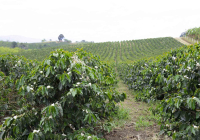
The equator runs straight through Kenya, placing it within about 10 degrees of latitude on either side - prime tropical coffee territory with two rainy seasons and therefore two harvests each year: roughly 60% of the crop from October to December and the remaining 40% from June to August. Coffee is grown mainly in volcanic soil at 1,600-2,100 meters, in the crescent of highland between Nairobi and the Mount Kenya region. These altitudes suit flavor development well: cooler mountain temperatures slow growth, letting the beans' aromatic compounds develop fully, which yields more pronounced fruit acidity and a denser bean. This fertile crescent is the heartland of Kenyan specialty coffee.


Coffee is Kenya's second-largest export after tea, and virtually all of it is Arabica, one of the highest-quality coffee varieties in the world.
A Brief History of Kenyan Coffee
The British brought coffee to Africa in 1878, establishing plantations in Kenya during the late 19th century. Coffee as a beverage had earlier reached the region from Ethiopia via South Yemen, but it was not until the early 20th century that Bourbon coffee trees were introduced by the St. Austin Mission. After independence in 1964, the industry continued to build on this foundation, and today Kenya is a world-renowned source of high-quality coffee. Notably, Kenya established a national auction system that successfully shielded smallholder farmers from the exploitation common in other producing countries - the seedbed of what became known as "fair trade coffee."
Kenyan Coffee Varieties
The common Kenyan varieties are SL28, SL34, French Mission Bourbon, and Ruiru 11.
Where SL28 Came From
According to the record, in 1931 officials from Scott Laboratories conducted field surveys in Tanganyika (now Tanzania). They noticed that a coffee variety in the Moduli region appeared resistant to drought, disease, and pests, so they collected seeds and brought them back to the laboratory. In 1935, the lab selected a single tree from the Tanganyika drought-resistant population and refined it through successive breeding, ultimately releasing SL28, a descendant of that Moduli stock. Recent genetic studies have confirmed that SL28 belongs to the Bourbon genetic group.

SL28 in the Field
SL28 is easy to grow without special care, with large beans and generous yields, and its flavor quality is outstanding. After its release by Kenyan authorities in the 1930s, it was planted first in Kenya and later spread to Uganda, and it has more recently drawn wide attention in Central America. The variety suits medium-to-high altitudes and tolerates drought well, though it remains susceptible to the major coffee diseases.
SL28 in the Cup
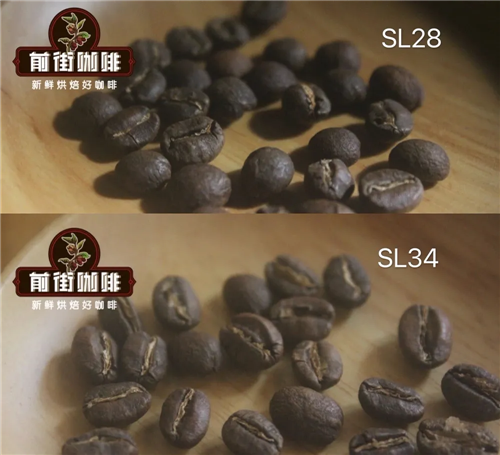
SL28 carries the bright character of its Bourbon heritage - even something of the rich acidity of the old Mocha types - with complex flavors and a luxurious texture. Although yields ultimately fell short of expectations, its copper-colored leaves and broad beans deliver wonderful sweetness, balance, and varied complexity, with distinct citrus and black-plum notes: strong, vivid fruit acidity, a rich mouthfeel, and beautiful poise. Most strikingly, only in Kenya does SL28 show this full character; grown elsewhere, the flavors are only an echo.
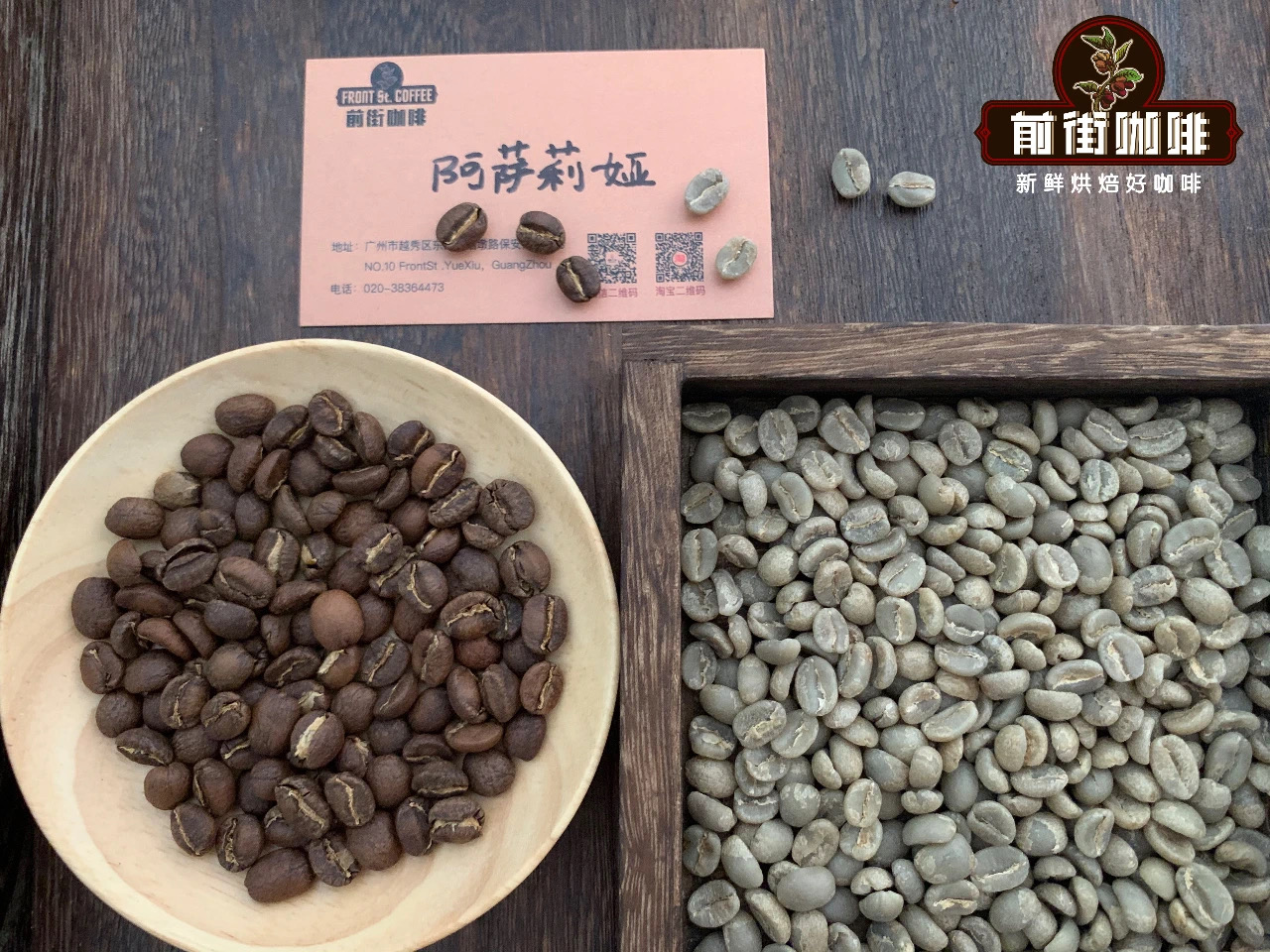
FrontStreet Coffee: Kenya Asali
Region: Thika, Kenya
Processing Station: Asali
Altitude: 1,550-1,750 meters
Grade: AA TOP
Variety: SL28, SL34
Processing Method: Kenyan 72-hour washed
Roasting Suggestions
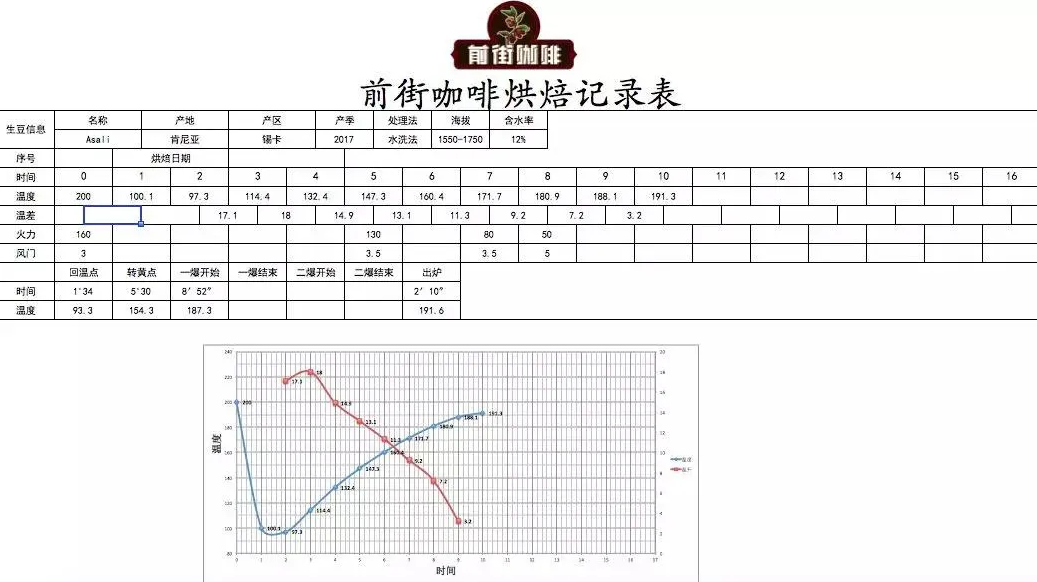
This bean is full and round. To express its bright, rich acidity to the fullest, we roast it light.
Machine: Yangjia 800N, 550 g green charge
Entry Temperature: 200°C
First Crack: 5'30" at 154.3°C
Development: 2'10" after first crack, dropped at 191.6°C
Brewing Suggestions
Dripper: Hario V60
Water Temperature: 90°C
Dose: 15 g
Ratio: 1:15
Grind Size: Medium-fine (EK43s setting 10)
Brewing Method
Segmented pouring: Bloom with 30 g of water for 30 seconds. Pour in slow circles up to 125 g to divide the extraction into stages; when the water level drops and the coffee bed is about to be exposed, continue pouring to 225 g and stop. Once the bed is again about to surface, remove the dripper. (Timing starts at the bloom.) Total extraction time: 2 minutes.

FrontStreet Coffee's Tasting Notes
The dry aroma offers ripe tomato and floral notes. On the palate: cherry tomato and black plum, with bright acidity that is clean and firm and a mouthfeel as weighty as an African elephant. The mid-palate is prominent, juicy sweetness, and the finish carries berry aromatics, brown-sugar sweetness, and a whisper of green tea.
SL34
FrontStreet Coffee's research shows that SL34 was also selected at Kenya's Scott Agricultural Laboratories in the 1930s. Between 1935 and 1939, Scott Labs singled out individual trees and named the resulting line the "SL" varieties. SL34 came from a single tree at Loresho Estate in Kenya's Kabete region - a tree that had been marked "French Mission."

French missionaries of the Spiritan order established missions in the Bura area of Kenya's Taita Hills, introducing Bourbon seed from Réunion Island for cultivation. In 1899, seedlings were carried from Bura to the other French mission stations at St. Austin, and coffee from these plantings spread through the area. That is the origin of "French Mission coffee."
Historically, coffee seed from Réunion was spread by French missionaries, and "French Mission" was long considered simply another name for Bourbon. Genetic testing, however, has since confirmed that SL34 belongs to the Typica genetic group, so the old story that it was selected from French Mission stock is likely wrong. SL34 is best understood as a Typica-Bourbon mutation, distinguishable from SL28 by its copper-colored young leaves - a sign of its Typica leanings. It resists heavy rain at high altitudes remarkably well and produces high-quality coffee with citrus acidity and a rich mouthfeel.
FrontStreet Coffee: Kenya Thathini Estate Washed AA
Origin: Kiambu Region
Estate: Thathini Estate
Altitude: 1,650 meters
Grade: AA
Variety: SL28, SL34
Processing Method: Washed
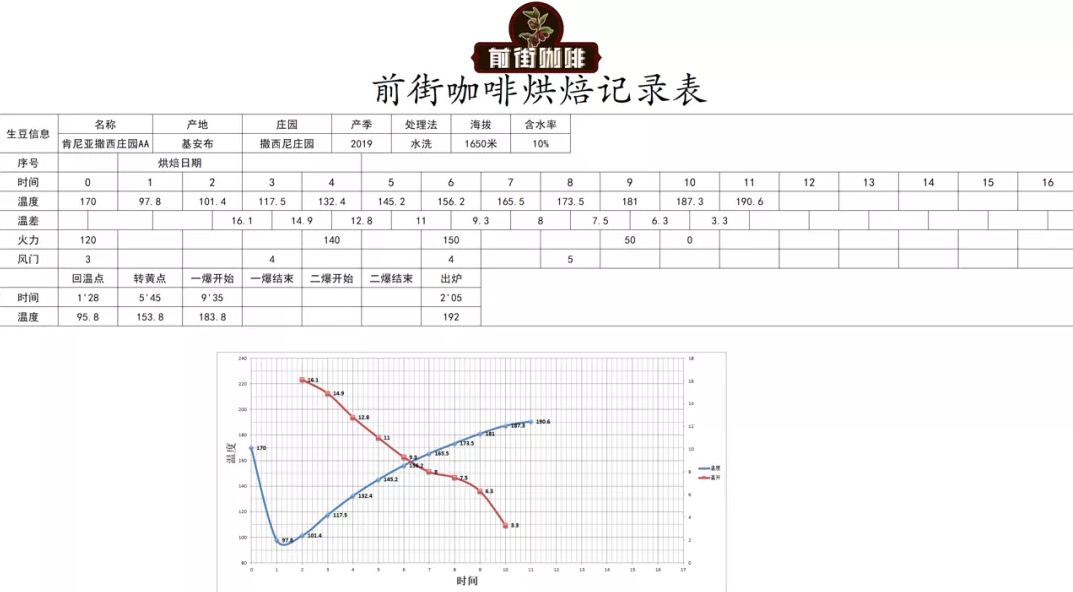
Roasting Curve
Brewing Suggestions
Dripper: Hario V60
Water Temperature: 90°C
Dose: 15 g
Ratio: 1:15
Grind Size: Medium-fine (EK43s setting 10)
Brewing Method - Segmented Pouring
Bloom with 30 g of water for 30 seconds. Pour in slow circles to 125 g; once the bed is about to be exposed, pour on to 225 g and stop; then remove the dripper when the bed surfaces again. (Timing starts at the bloom.) Extraction time: 2 minutes.

Tasting Notes
Clear black plum and cherry tomato, honeyed sweetness, and a slight nuttiness as the cup cools - a juice-like mouthfeel with vivid acidity.
Ruiru 11
In 1985, amid a global coffee leaf rust outbreak, Kenya bred this hybrid with an eye on yield rather than quality. Its cup quality falls well short of SL28 and SL34, so it never gained a foothold in specialty coffee. Even so, some suppliers - even those importing famous estates - mix Ruiru 11 into lots to cut costs.

Kenyan Coffee Grading
Kenya has used a strict grading system since the 1930s, based mainly on bean size, shape, and density. From highest to lowest, the grades are AA (or AA+), AB, PB, C, E, TT, and T. These are a useful reference when buying, though flavor always deserves consideration too. The grades most common on the mass market are AA, AB, and PB.
E (Elephant Bean)
Here "E" stands for "Elephant." These are not a separate botanical variety but a developmental anomaly: normally a cherry holds two seeds facing each other, flat on one side - the flat beans. In E-grade beans, two seeds fuse during growth into a single extra-large bean of roughly screen 18 (one screen = 1/64 inch) or larger. They are rare.
AA
AA runs about screen 17-18 (roughly 6.7-7.1 mm) and is the best-known Kenyan grade; in specialty circles it is often sold as "AA TOP," the grade most cafes promote. But AA does not automatically mean best - the letter describes size only and should not be confused with flavor.
AB
Most Kenyan coffee falls into this grade. It is called AB because A-grade sieves measure 6.80 mm and B-grade sieves 6.20 mm; the two sizes are sold together, hence "AB," at roughly screen 15-16 (about 6.0-6.4 mm).
C
Beans of about screen 14-15 (roughly 5.6-6.0 mm), smaller than B grade.
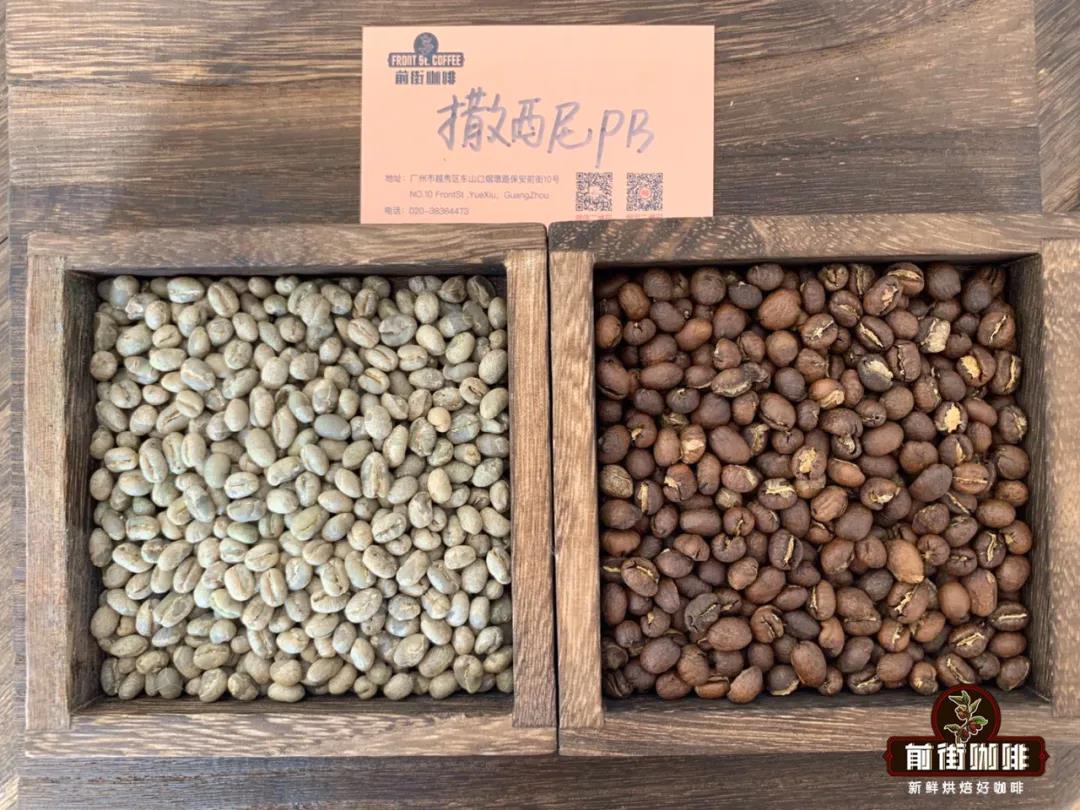
PB
PB stands for Peaberry - small round beans, also called male beans or single-lobe beans. When only one seed develops inside the cherry, the result is a small, rounded bean. Peaberries are relatively rare, around 10% of the crop, and some drinkers prize their flavor so much that PB lots are selected and sold separately.
TT
Lightweight beans separated from AA and AB lots by air sorting. They lack the required density and include broken and defective beans.
T
Light beans sorted out of the C grade, mixed with damaged beans and even fragments.
MH/ML
These lots are not exported. Usually overripe cherries picked up off the ground, they account for about 7% of the crop and are sold only on the Kenyan domestic market.

Where Do AA TOP and AB TOP Come From?
Besides the official grading, Kenyan exporters and traders have invented their own unofficial labels for AA and AB lots: AA TOP, AA+, AA++, AB+, AB TOP, and AA FAQ, among others.
FAQ
FAQ is short for "Fair Average Quality" - the baseline version of AA grade. Labels like AA TOP, AB TOP, and AA+ have no fixed standard, and more "+" signs do not necessarily mean better flavor. Why? Because these are not unified standards: different traders apply them differently. One company's AA+ may taste equivalent to another's AA++. In the end, everything comes back to cupping what you actually roast - that is the only reliable yardstick!
Kenyan Processing
Just as honey processing belongs to Costa Rica and wet-hulling to Indonesia, no discussion of Kenyan coffee is complete without the K72 method.

The Kenyan 72-Hour Fermented Washed Process
Originating in Kenya, this method alternates fermentation and washing in repeated cycles. Processing starts on harvest day, with the highest-quality cherries selected for pulping and fermentation. The cherries ferment for 24 hours, are washed in clean river water, then ferment for another 24 hours and are washed again. After three such cycles - 72 hours total - the coffee earns the name "Kenyan 72-hour fermented washed," or K72.
First Wash and Fermentation
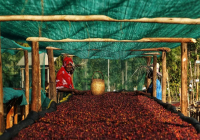
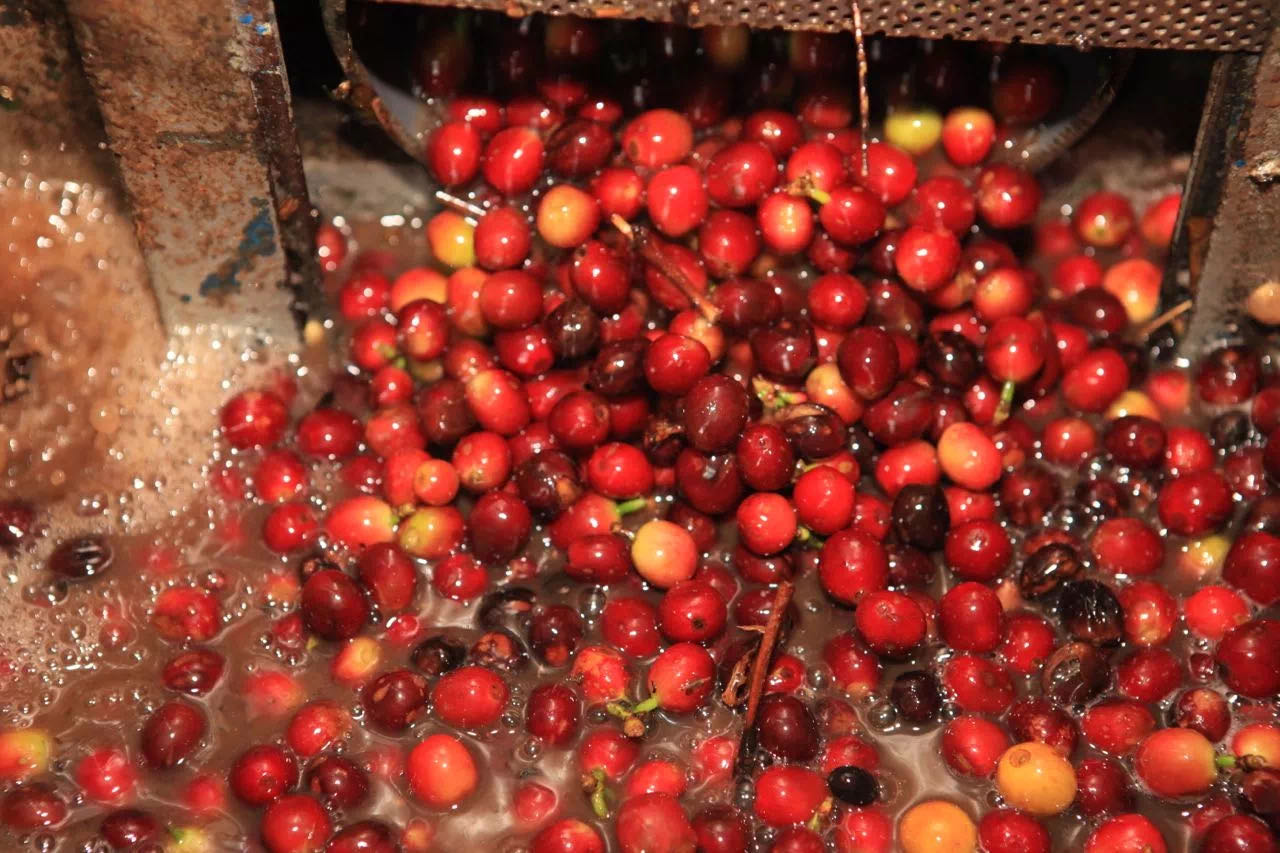
After harvest, cherries are first sorted by water density: high-density (heavy) beans sink, while low-density beans float. Fully ripe, high-quality fruit is dense and sinks, and it is this lot that moves on to processing.

After the best, fully ripe fruit is selected, the skin is removed and the beans are soaked so the mucilage clinging to them can ferment. The mucilage is rich in natural sugars and alcohols that play a crucial role in developing the coffee's sweetness, acidity, and overall flavor. Fermentation runs up to 24 hours, by which point 80-90% of the mucilage has broken down, leaving its imprint inside the beans.

Second Wash and Fermentation
Next comes the second round. After the beans are cleaned, they are soaked again for 24-48 hours. This stage builds up proteins and amino acids, creating the complex, delicate layers of acidity that K72 coffees are known for. Finally, all remaining mucilage is removed and the beans are moved to raised drying beds.


Drying time depends on the weather but generally takes about 5-10 days to complete.
Kenya's Coffee Regions
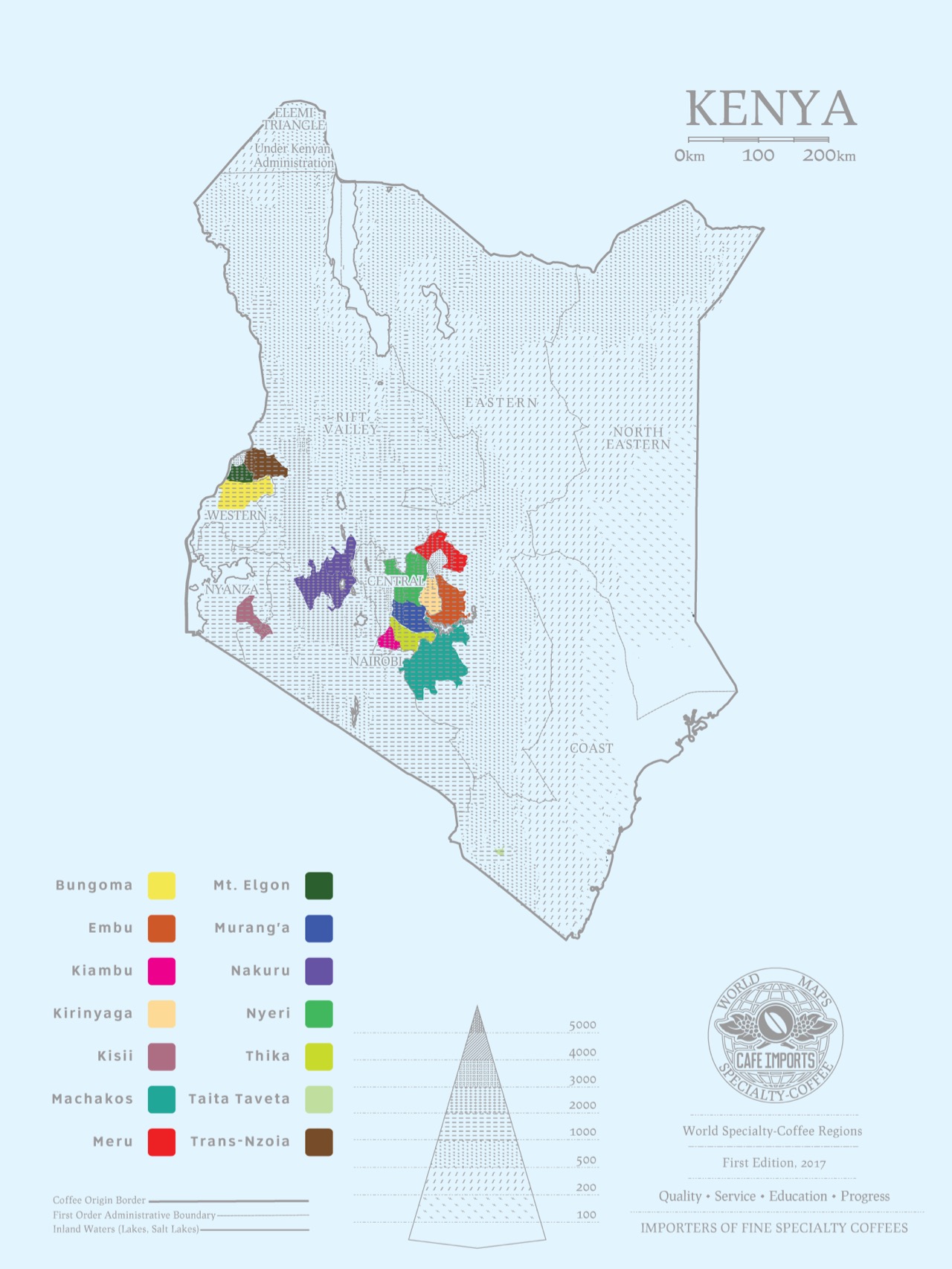
Kenya's famous coffee regions are Thika, Kirinyaga, Mt. Kenya West, Nyeri, Kiambu, Ruiru, and Murang'a, with the main growing areas on the foothills of Mount Kenya and the Aberdare range.

Flavors differ markedly from region to region. Kenya is divided into 47 counties, and each produces coffee with its own character. Trees are mostly grown at 1,400-2,000 meters with two harvests a year. Through cupping, FrontStreet Coffee has found, for example, that Embu coffees show a balanced mouthfeel with citrus fruit, chocolate, and apple; Nyeri coffees often present white grape, grapefruit, and cherry tomato in a juicy frame - brimming with fruit and sweet as caramel.
The Major Kenyan Coffee Regions
NYERI
In central Kenya, in the shadow of Mount Kenya, Nyeri's red soils grow some of the country's best coffee. Agriculture dominates here, coffee above all, and smallholder cooperatives are more common than large estates. The region has two harvests, with the main-season crop usually the finer. Nyeri is known for solid, blackberry-like acidity and floral, fruity aromatics.
Altitude: 1,200-2,300 meters
Harvest: October-December (main), June-August (fly crop)
Varieties: SL-28, SL-34, Ruiru 11, Batian

MURANG'A
This Central Province region counts about 100,000 coffee farmers. Not far from Nairobi, it was among the first settlement areas chosen by missionaries, whom the Portuguese barred from living on the coast. It benefits from the same volcanic soil, with more smallholders than estates, and its coffees show particularly bright acidity.
Altitude: 1,350-1,950 meters
Harvest: October-December (main), June-August (fly crop)
Varieties: SL-28, SL-34, Ruiru 11, Batian
EMBU
This region near Mount Kenya takes its name from the town of Embu. About 70% of the local population farms on a small scale, with tea and coffee the leading cash crops; nearly all coffee comes from smallholders, so production is modest. The acidity is softer than Nyeri's, but the flavor is well balanced.
MERU
Most coffee here is grown by smallholders on the foothills of Mount Kenya and the Nyambene Hills. The name refers both to the area and to the Meru people who live there. In the 1930s they were among the first Kenyans to produce coffee, encouraged by the 1923 Devonshire White Paper, which affirmed the rights of Kenyans of African descent.
Altitude: 1,300-1,950 meters
Harvest: October-December (main), June-August (fly crop)
Varieties: SL-28, SL-34, Ruiru 11, Batian, K7
KIAMBU
This central region contains some of the country's highest coffee land, and Thika falls within it. At the loftiest elevations some trees suffer from dieback, which halts their growth. The region is named after Nakuru town; both estates and smallholders farm coffee here, though production is relatively small. Kiambu is traditionally tea country, and its coffees carry vanilla and floral aromatics.
Altitude: 1,850-2,200 meters
Harvest: October-December (main), June-August (fly crop)
Varieties: SL-28, SL-34, Ruiru 11, Batian
KISII
In southwestern Kenya, not far from Lake Victoria, this is a small growing area where most coffee comes from cooperatives of small producers.
Altitude: 1,450-1,800 meters
Harvest: October-December (main), June-August (fly crop)
Varieties: SL-28, SL-34, Blue Mountain, K7

TRANS-NZOIA, KEIYO & MARAKWET
This small region in western Kenya has been developing in recent years. Mount Elgon provides ample altitude, and most coffee comes from estates - often planted to diversify farms that previously grew only corn or ran dairy operations.
Altitude: 1,500-1,900 meters
Harvest: October-December (main), June-August (fly crop)
Varieties: Ruiru 11, Batian, SL-28, SL-34
KIRINYAGA
On the slopes of Mount Kenya near Nyeri, Kirinyaga is world-famous for coffees of intense, layered flavor and solid body; together with Nyeri, it is recognized as Kenya's finest producing region. Most producers are smallholders organized into cooperatives, which run the washing stations where farmers deliver cherry for processing. The name originally referred to Mount Kenya itself - in the Kikuyu language it means "place of white mountains," the dwelling of the gods - until British colonists found it too hard to remember and renamed the mountain Mt. Kenya. The Kikuyu are Kenya's largest ethnic group, about one-fifth of the population.
Altitude: 1,300-1,900 meters
Harvest: October-December (main), June-August (fly crop)
Varieties: SL-28, SL-34, Ruiru 11, Batian
FrontStreet Coffee Recommendation
If Kenya's bright, fruit-driven acidity is what draws you in, FrontStreet Coffee's Yirgacheffe is the natural next stop. FrontStreet's washed Yirgacheffe offers crystal-clear jasmine florals and lively citrus acidity in a light, elegant, tea-like cup - like a refreshing lemon tea, and a gentle way to explore washed African coffees.
For something with more traceable pedigree, FrontStreet Coffee's Guodingding Cooperative lot comes from a independent washing station of some 300 member farmers in the Worka area, on the southeastern edge of Yirgacheffe. Because the fruit is removed before drying, its inherent character shines through with unusual clarity: citrus and lemon notes, graceful white florals, and a bright, delicate overall profile.
Important Notice :
FrontStreet Coffee is a long-established specialty coffee roaster in Guangzhou China, selling freshly roasted beans from its own farm in Yunnan as well as dozens of carefully selected single-origin beans from around the world for both pour-over and espresso. The products deliver consistently excellent quality and great value, with shipping within 24 hours. Guangzhou's FrontStreet Coffee shop is recommended by many coffee lovers, and the beans are now available online at the Tmall 。
FrontStreet Coffee has moved to a new address:
FrontStreet Coffee Address: 315,Donghua East Road,GuangZhou
Tel:020 38364473
 Scan and follow the En Gafei WeChat official account. Please indicate that the reprint comes from "En Gafei".