Yirgacheffe Washed vs Natural Process Coffee Beans: Flavor Profile Differences
For more specialty coffee knowledge, follow FrontStreet Coffee.
Yirgacheffe coffee beans have long been celebrated for their clean, bright cup and citrus-lemon acidity, and much of their worldwide fame among coffee lovers comes from the washed process. But as FrontStreet Coffee sees it, Yirgacheffe is not just about washed lots—its natural processed beans are every bit as impressive. In this article, FrontStreet Coffee breaks down how these two processing methods shape the flavor of Yirgacheffe.
The Yirgacheffe Coffee Region
FrontStreet Coffee always stresses that to truly understand a coffee, you need to look at three things: region, variety, and processing method. So let's walk through each of them.
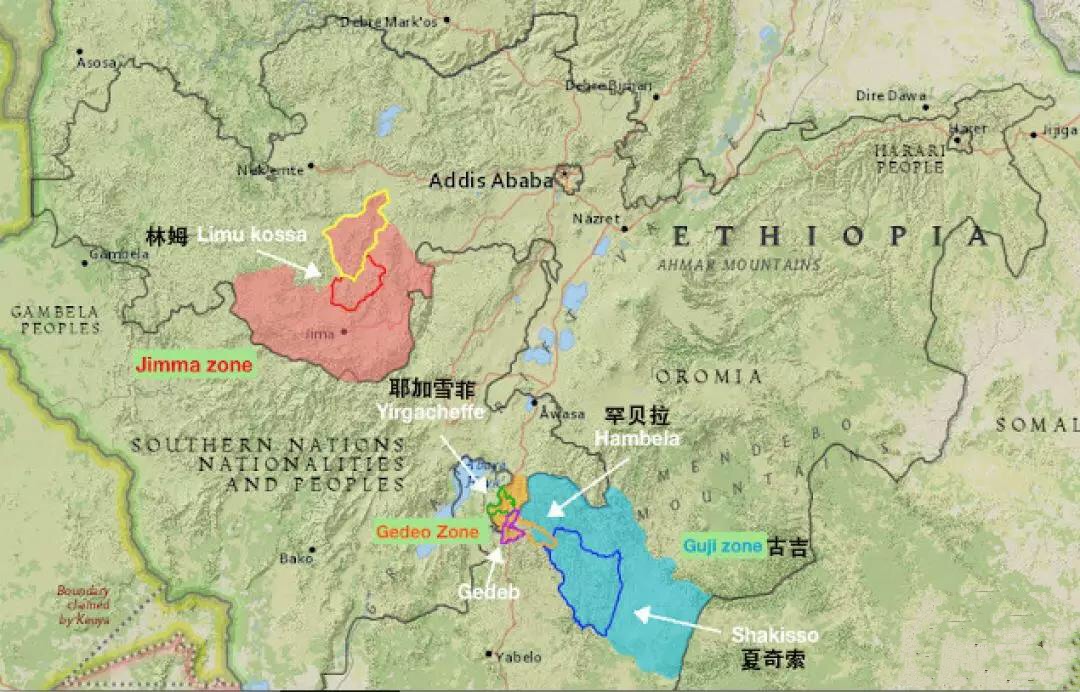
Yirgacheffe is a small town in Ethiopia sitting at 1,700-2,100 meters above sea level—one of the highest coffee-growing regions in the world and therefore ideal for growing Arabica. Strictly speaking, as noted above, Yirgacheffe is a sub-region of Ethiopia's Sidamo province, located to its northwest and surrounded by mountains and lakes. But because the beans grown around the town showed such outstanding cup quality, the ECX eventually granted it independent status.
According to FrontStreet Coffee's understanding, under Ethiopia's current ECX system the Yirgacheffe area is divided into four sub-regions: Yirgacheffe, Wenago, Kochere, and Genlena Abay. The soil is fertile and the average altitude exceeds 1,800 meters, creating a high-elevation environment with big day-night temperature swings. Each area's production methods, combined with local traditional garden-style coffee farms, give every batch its own distinct, highly individual flavor.
FrontStreet Coffee also finds the name itself fascinating: "Yirga" means "to settle down" and "cheffe" means "wetland," so the original sense of the name is something like "let us settle and make a living on this wetland."
Yirgacheffe Coffee Processing Methods
As mentioned above, Yirgacheffe built its reputation on washed coffee. In the early days, like elsewhere in Ethiopia, the region relied on the oldest method of all: natural processing. It wasn't until 1972 that Ethiopia introduced washed processing technology from Central and South America to raise bean quality. The change amplified the coffee's inherent citrus-lemon character and gave the cup a fresher, brighter profile.

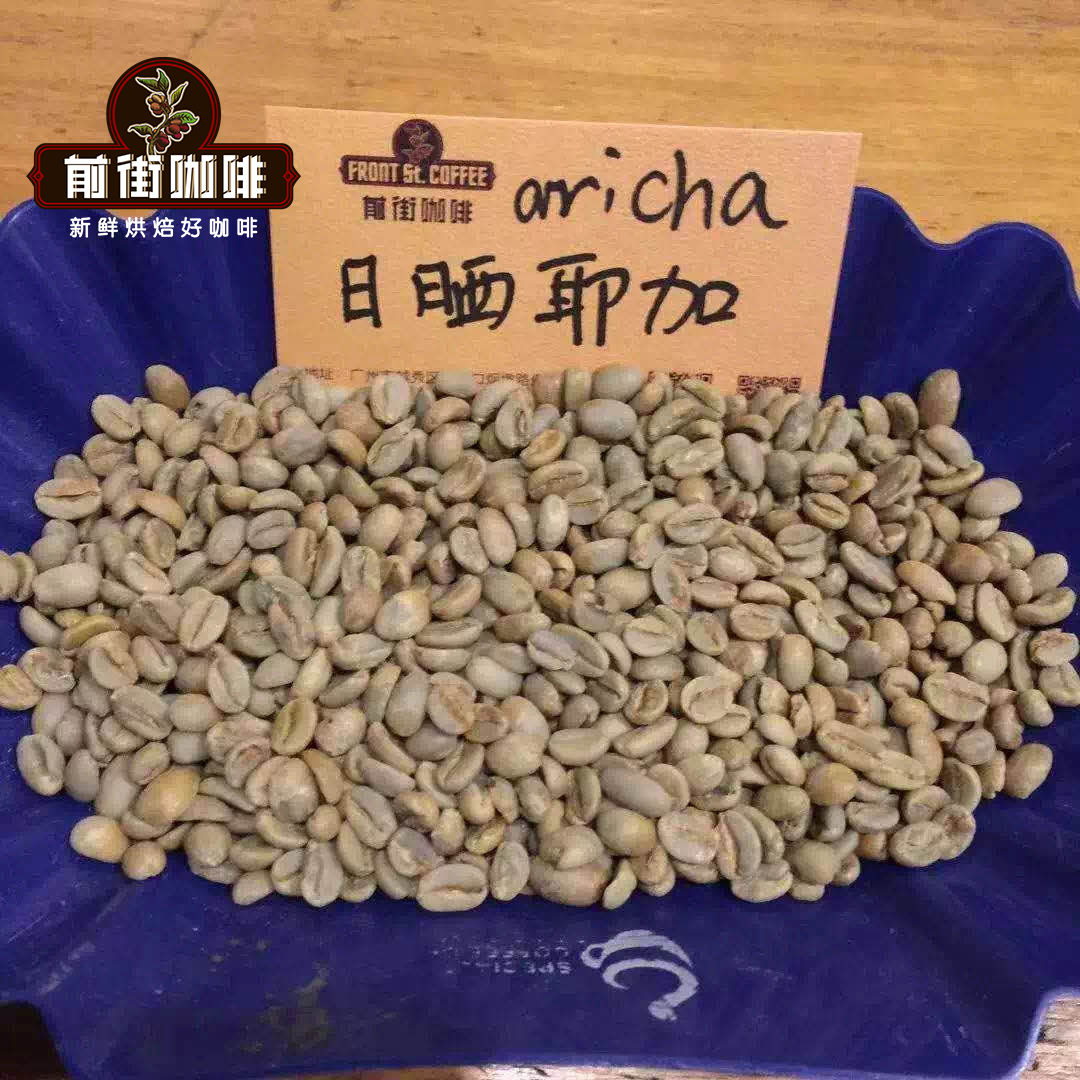
From then on, Yirgacheffe quickly became one of the world's benchmarks for specialty coffee, and washed lots dominated the region's output. In the 21st century, however, natural processing technology also began to improve, and those advances brought stunning natural processed beans back to the specialty market. Around that time, a Yirgacheffe coffee trader named Bagershi, nostalgic for the traditional natural flavor, started refining the natural process and released a series of outstanding natural lots, restoring the method's standing in the region. One example is FrontStreet Coffee's Yirgacheffe Natural Red Cherry, a big favorite among our customers.
In other words, today both washed and natural Yirgacheffe can be excellent. Next, FrontStreet Coffee explains how the two methods actually differ.

The Natural Process
As noted above, natural processing is the oldest way to prepare coffee, also known as "dry processing." It requires no sophisticated equipment—just a stretch of reliably sunny weather for drying, with exposure lasting 27-30 days. That makes it highly weather-dependent and best suited to arid regions. Ethiopia, as just mentioned, relies heavily on natural processing thanks to its high altitude, dry climate, and scarce water. The Yirgacheffe area, by contrast, embraced washed processing precisely because it is wetland—the wettest part of Ethiopia.
One caveat: precisely because natural processing is simple, the finished beans are not much to look at. They often show cracks and other blemishes, so they tend to be less visually appealing.

The Natural Process, Step by Step
- First, ripe coffee cherries are harvested and hand-sorted to remove defective, overripe, or pest-damaged fruit, leaving only sound cherries. This is also a major reason the beans FrontStreet Coffee sources look so uniform and clean.
- The sorted cherries go to the drying area. Different regions use different setups—waterproof tarps, raised drying beds, or concrete patios. Drying averages 27-30 days, until the moisture content drops to 11%.
- This step is just as critical. After drying, the cherries are sent to specialized mills for pulping, hulling, and even polishing, which strips away the dried pulp entirely and yields the coffee beans we all recognize.
- After hulling, the green beans are sorted once more to remove poor-quality beans. Over-dried beans are brittle and can break into fragments during hulling, while under-dried beans hold too much moisture and are prone to bacterial growth and mold. So they must be screened again before going into storage and export packaging.

Pros and Cons of Natural Processing
Pros: Natural processing is relatively simple and therefore inexpensive. And it produces something irreplaceable: those distinctive fermented fruit flavors. Farmers increasingly invest in the method too—drying cherries on raised beds and turning them often to prevent contamination. That's exactly why FrontStreet Coffee is able to offer so many high-quality natural processed beans today.
Cons: Natural processing depends heavily on the weather, and the drying degree of the cherries is hard to control. If the drying surface isn't clean, beans easily pick up impurities and the defect rate climbs. Because the cherries dry with their pulp and skin intact, they are also vulnerable to mold and rot. Thanks to better technology, however, farmers now pursue higher quality by closely monitoring fermentation and drying with instruments and extra labor, removing any lot that shows abnormalities. It costs more, but it's far more meticulous—hence the name "refined natural processing."

Flavor Profile of Natural Processed Coffee
Thanks to the long time spent drying in the fruit, natural processed beans deliver more intense, multi-layered flavors—winey fermented notes and noticeably higher sweetness.
The Washed Process
The other common method is washed processing. Most of the beans FrontStreet Coffee carries from different origins are washed, especially our daily-drinker beans, because washing produces a cleaner cup where the coffee's character comes through with total transparency—the truest expression of the coffee cherry itself. That's why FrontStreet Coffee often says washed coffee is your guiding light for learning what a region really tastes like.

The Washed Process, Step by Step
- First, farmers pour the freshly harvested cherries into water. Underripe and defective cherries float, while sound ones sink—a floatation sort that saves enormous amounts of time compared with picking through cherries one by one.
- The sorted cherries go into a pulper to remove the skin and pulp. Even after that, a layer of sticky mucilage clings to the bean, so large volumes of clean water are needed to wash it off.
- Next, fermentation breaks down whatever mucilage remains; this takes about 18 hours. Afterward, bacteria and yeast still cling to the beans, so they get another thorough rinse. Producing 1 kilogram of washed coffee takes 40-50 kilograms of clean water—an enormous figure, and exactly why water-scarce countries can't adopt the washed method.
- The washed beans are then dried. Some regions simply lay them out in the open air to dry, while better-equipped operations send them to mills for mechanical drying down to roughly 11% moisture.
- Finally, the dried beans are stored and packaged for sale and export.

Pros and Cons of Washed Processing
Pros: Beans washed in plentiful clean water carry fewer impurities and look more uniform. Because the skin and pulp are removed right at the start, there's no mold risk from drying fruit, and overall quality is very stable.
Cons: Washing is complicated and labor-intensive, and it demands huge volumes of water—so it costs more and is impractical in water-scarce regions.
Flavor Profile of Washed Coffee
As noted above, washed beans taste cleaner and more transparent, with distinct acidity and fruit notes, a bright cup, and comparatively lower sweetness and body.

Washed vs. Natural: The Key Differences
The most fundamental difference is this: natural processing preserves the flavor of the fruit, while washed processing strips it away to reveal the bean's essential character. The taste contrast is obvious—washed is cleaner and brighter; natural is richer and fruitier. And precisely because washed coffee shows you the purest expression of the bean, FrontStreet Coffee recommends washed lots first whenever a customer is trying a new region for the very first time—it's the clearest window into that region's flavor signature.
That's FrontStreet Coffee's rundown of washed and natural Yirgacheffe. Next, let's put two of our beans head to head: Yirgacheffe Natural Red Cherry and Yirgacheffe Washed Gedeb.

FrontStreet Coffee: Ethiopia Washed Gedeb
- Country: Ethiopia
- Region: Yirgacheffe
- Altitude: 1900-2300m
- Variety: Local Landraces
- Processing: Washed Process
- Flavor: Tropical fruits, cream, honey, berries, citrus
For a bit of background: the Gedeb cooperative was originally part of the Wenago cooperative under the Yirgacheffe Union (YCFCU), becoming independent as the Gedeb cooperative in 2012. It now counts roughly 300+ smallholder members. Because Gedeb village was among the first village areas to go independent, and many of its farmers came up through the Wenago cooperative, their processing skills are superb—and the beans show it.

FrontStreet Coffee: Ethiopia Yirgacheffe Natural Red Cherry
- Country: Ethiopia
- Region: Yirgacheffe
- Altitude: 2300m
- Variety: Local Landraces
- Processing: Natural Process
- Flavor: Berries, lemon, strawberry, fermented wine aroma
FrontStreet Coffee's Natural Red Cherry is made exclusively from fully mature cherries using the natural process, which gives it a full aroma, rich sweetness, and pleasant fermented notes.
The lot traces back to the "Red Cherry Project," a program launched jointly by Ethiopian coffee farmers and the Dutch trader Trabocca to raise quality on smallholder farms and boost farmer income. Qualifying requires not only picking fully red, high-ripeness cherries entirely by hand—though that's just the baseline—but also meeting strict standards for how the beans are processed.

FrontStreet Coffee Roasting Data
Natural Red Cherry:
FrontStreet Coffee hand-sorts defective beans twice before roasting, laying the groundwork for a high-quality roast. This Natural Red Cherry lot has an extremely low defect rate.

Yangjia 800N roaster, 600g batch: Charge at 200°C with the damper at 3.5; after 1 minute lower the heat to 160°C, damper unchanged. At 148°C, drop the heat again to 130°C. At 5'03" the probe reads 151°C, the bean surface turns yellow, the grassy aroma disappears completely, and dehydration is done. Reduce heat to 105°C and open the damper to 4. At 8 minutes the bean surface shows pronounced wrinkles and black spots, and the toast aroma clearly shifts into coffee aroma—the prelude to first crack. Listen carefully for the first crack. At 9'07" first crack begins; reduce heat to 70°C and open the damper fully (ease off the heat carefully—not so far that the crack stalls). Drop the beans at 194°C.
Washed Gedeb:
FrontStreet Coffee's roaster notes that Gedeb's signature is fruit-forward acidity, so a light roast suits it best, highlighting the clean cup, bright fruit acidity, and lingering finish.
Yangjia 800N roaster, 480g batch: Charge at 175°C with the damper at 3 and heat at 120°C. Turning point at 1'32"; when the drum reaches 140°C keep the heat unchanged and open the damper to 4. At this point the bean surface yellows, the grassy aroma vanishes, and the beans enter the drying stage. At 166°C reduce heat to 100°C. At 176°C reduce heat to 80°C, damper unchanged. At 8'28" the bean surface shows pronounced wrinkles and black spots, and the toast aroma clearly shifts into coffee aroma—the prelude to first crack. Listen carefully for the first crack. At 9'38" first crack begins; open the damper to 5 (ease off the heat carefully—not so far that the crack stalls). Develop for 1'30" after first crack and drop at 193.5°C.
FrontStreet Coffee Brewing Data

- Dripper: V60 #01
- Water Temperature: 90-91°C
- Dose: 15g
- Ratio: 1:15
- Grind Size: Medium-fine (80% pass through a #20 sieve)
Brewing Method: Three-Pour Extraction
First pour: 30g of water for a 30-second bloom. Then pour 95g (scale reads about 125g), finishing around the 1-minute mark. Once the water level drops to two-thirds of the coffee bed, pour the remaining 100g (scale reads about 225g), finishing around 1'35". Drawdown finishes between 2'00" and 2'10"; remove the dripper and the extraction is complete.

Natural Red Cherry in the Cup:
Lemon, licorice, citrus, berries, and sweet orange, with high overall sweetness; the aftertaste brings caramel and cream, finishing with black tea aroma.
Washed Gedeb in the Cup:
It opens with citrus and black tea, and as it cools reveals cream, caramel, and almond on the finish—a clean, sweet cup with a pronounced lingering sweetness.
FrontStreet Coffee Recommendation
If Ethiopia is where you want to start your specialty coffee journey, FrontStreet Coffee's Washed Yirgacheffe daily-drinker beans are the classic first pick. They're known for white jasmine florals, bright citrus and lemon acidity, and a delicate tea-like body—and at a friendly price, they've become the go-to first bag for countless people getting into specialty coffee.
For something a step up, look for FrontStreet Coffee's Washed Gedeb from the Gedeb cooperative. Yirgacheffe is dotted with small sub-regions and even individual villages, and the cooperatives there bring generations of processing experience; the Gedeb lots deliver tropical fruit, cream, honey, and berries with remarkable clarity.
And if you'd rather taste what natural processing can do, FrontStreet Coffee's Natural Red Cherry is the one to try. Only fully ripe, defect-free cherries are picked; after a first sort at the mill they're laid out on drying beds and turned every 2-3 hours during the first few days to prevent uneven heating and over-fermentation, then sun-dried for three to five weeks. The cup keeps Yirgacheffe's citrus acidity while adding juicy berry fruit, honeyed sweetness, and a creamy smoothness.
Important Notice :
FrontStreet Coffee is a long-established specialty coffee roaster in Guangzhou China, selling freshly roasted beans from its own farm in Yunnan as well as dozens of carefully selected single-origin beans from around the world for both pour-over and espresso. The products deliver consistently excellent quality and great value, with shipping within 24 hours. Guangzhou's FrontStreet Coffee shop is recommended by many coffee lovers, and the beans are now available online at the Tmall 。
FrontStreet Coffee has moved to a new address:
FrontStreet Coffee Address: 315,Donghua East Road,GuangZhou
Tel:020 38364473
 Scan and follow the En Gafei WeChat official account. Please indicate that the reprint comes from "En Gafei".