How to Make Pour-Over Coffee? How to Calculate the Pour-Over Coffee Water-to-Ground Ratio?
Professional coffee knowledge exchange and more coffee bean information. Follow Coffee Workshop (WeChat public account: cafe_style).
Pour-over coffee is a process in which flavor extraction and filtration happen at the same time, centered on where the water is poured. The key is controlling and balancing the extraction of the various components in roasted coffee so that you can brew a good cup.
Coffee Roast Preferences
If you prefer fruity acidity, you might choose lighter roasted coffees, such as FrontStreet Coffee's Kenya, Yirgacheffe, Sidamo, and Geisha. If you like strong, bold flavors with a sweet aftertaste, you can select dark roasted beans such as Mandheling, Brazil, and Honduras. Fruit aromas decrease as roast level deepens, but body, boldness, and sweet aftertaste are qualities that light roast coffee struggles to develop, and dark roast beans have the advantage there.
Grind Size Fundamentals
"Basically, light roasts can be ground finer, while dark roasts can be ground coarser."
Why does this happen? Large coffee particles dissolve slowly, so extraction has not finished -- the good flavors have not come out yet, which means under-extraction. Small particles dissolve quickly, so they finish extracting and then begin releasing bad flavors excessively, which means over-extraction. To achieve balance, coffee particles should be as uniform in size as possible. The simplest method is to use a sieve to remove overly fine particles.
How to Brew Light Roast Coffee Beans
Generally speaking, grind size can be divided into five levels: coarse, medium, medium-fine, fine, and very fine.
Light roasts use a medium-fine grind. Today we will use a Hario V60 transparent resin dripper at Fuji grinder ghost-teeth setting 3.5 -- white sugar size, slightly larger than typical supermarket white sugar -- and demonstrate with Kenya Asali:
FrontStreet Coffee's bean recommendations: light-medium roast beans suit water temperatures around 90-92°C, while dark roast beans suit 86-88°C.
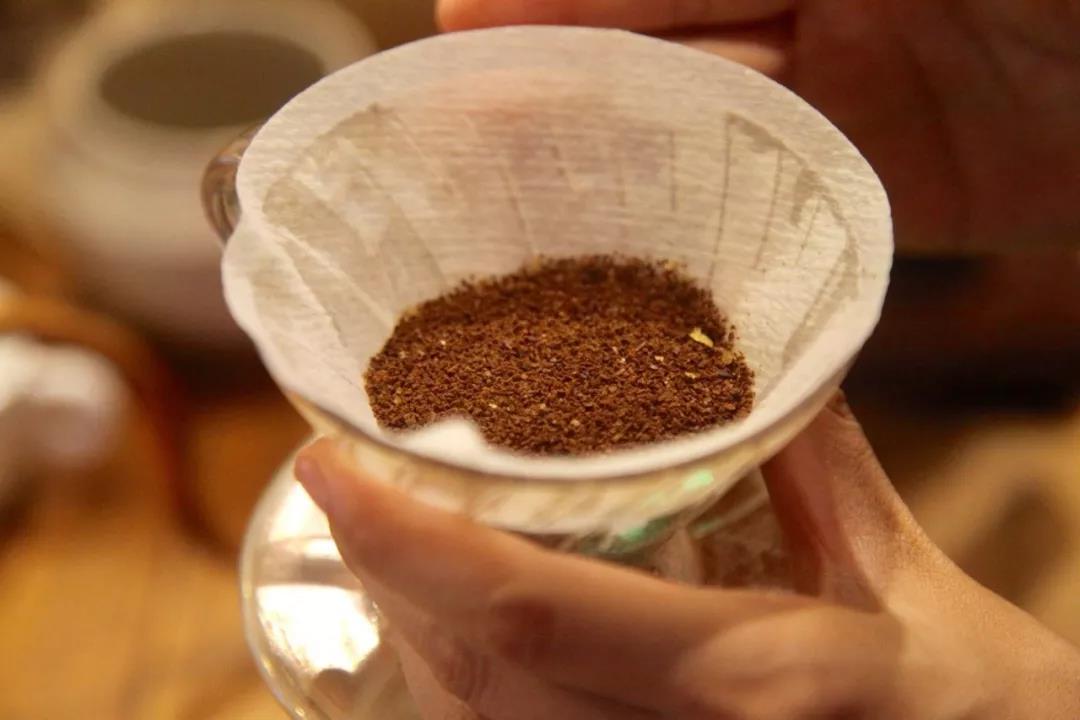
First Pour
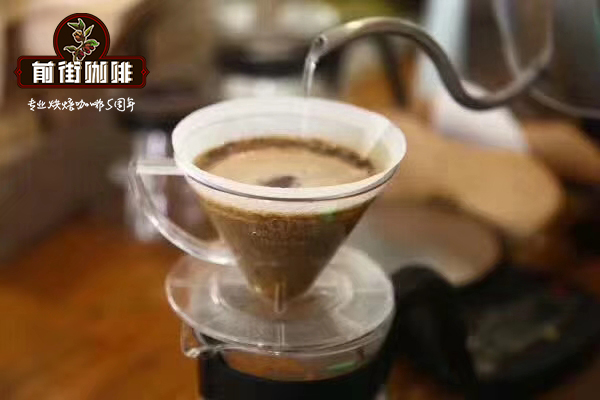
Pour from the center with a small stream, then spiral outward slowly, as if gently laying a layer of water on the coffee grounds. Even with a small stream, do not deliberately slow the pour too much, because a stream that is too slow will flow in a single direction and cause the grounds to absorb water unevenly.
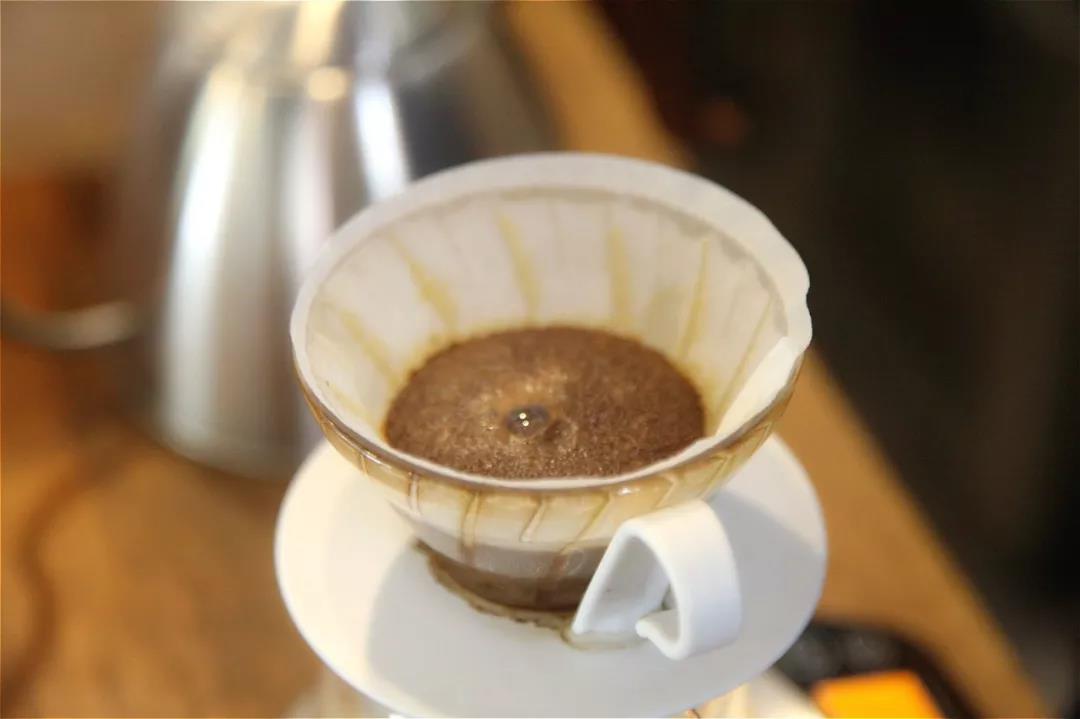
After the first pour, the coffee particles push against each other as they degas, creating the bloom. When the bloom reaches its highest point or nearly stops moving (the surface water will gradually dry), it is time for the second pour.
Second Pour
The second pour also starts from the center, injecting a small stream down to the bottom of the coffee bed. To concentrate the penetrating power of the stream, keep the circular motion small -- about the size of a coin -- then spiral outward. From the second pour onward, watch the water volume and try not to exceed the height of the coffee bed, meaning stop adding water as the stream approaches the filter paper.
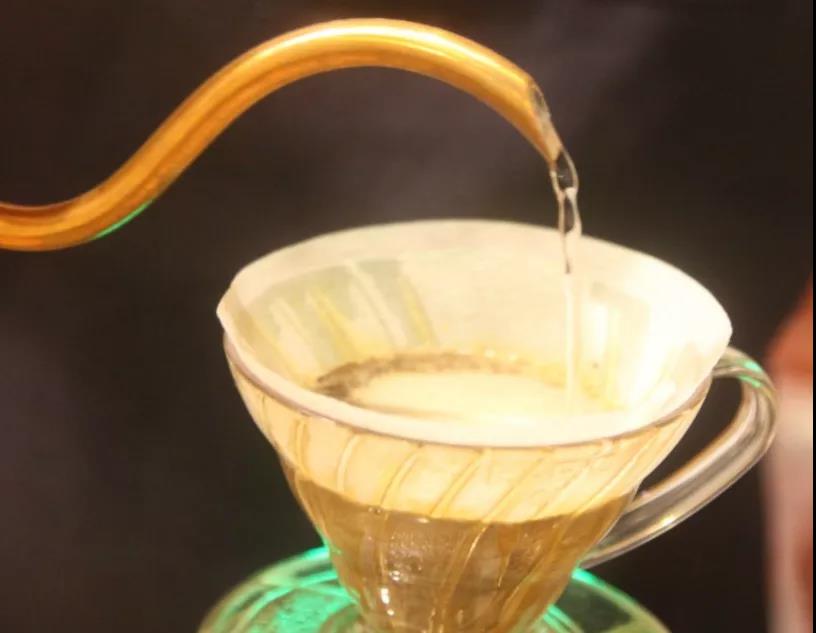
During the initial pours, most coffee particles are actively degassing, and the resulting airflow quickly reaches the filter paper edge. So if too much water is added at once, it pushes water toward the sides rather than down through the bottom layer. Use small streams with quicker circular movements to avoid this.
As the thicker coffee grounds near the filter edge become heavier from water absorption and slide down, and the bed thins as the water level drops, you can make the third pour when the water level reaches halfway.
Third Pour
From the third pour onward, watch how fast the water level drops. Again start from the center in circles, keeping the water volume below the height of the coffee bed. You will also notice that foam now covers most of the surface. The third pour should increase the agitation of the coffee particles to stir up settled grounds and dissolve the soluble substances.
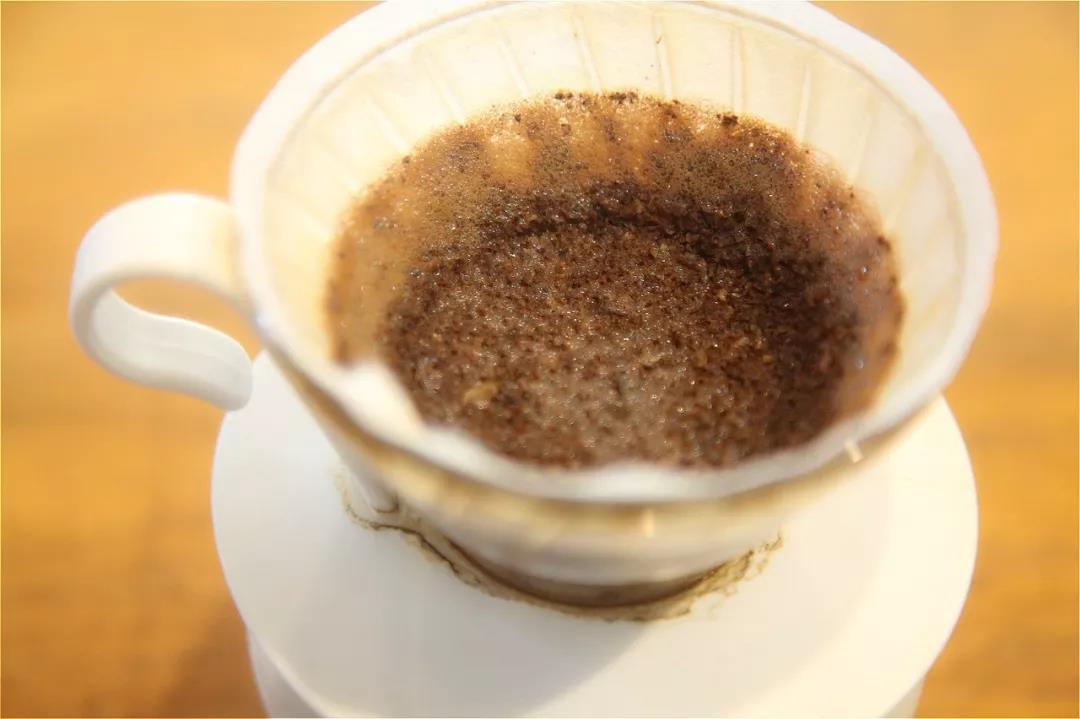
Agitated particles begin to settle when pouring stops. At that point, rely on the flow generated by the dropping water level to create friction between particles. Once pouring stops, coffee particles sink and cause clogging, so pay special attention to the rhythm of your pours.
Too many interruptions in the flow amount to letting the coffee grounds soak continuously in water, which leads to astringency and off-flavors in the final cup.
When you approach the target amount (15g coffee, 225g water), you can remove the dripper.
Conclusion and Analysis
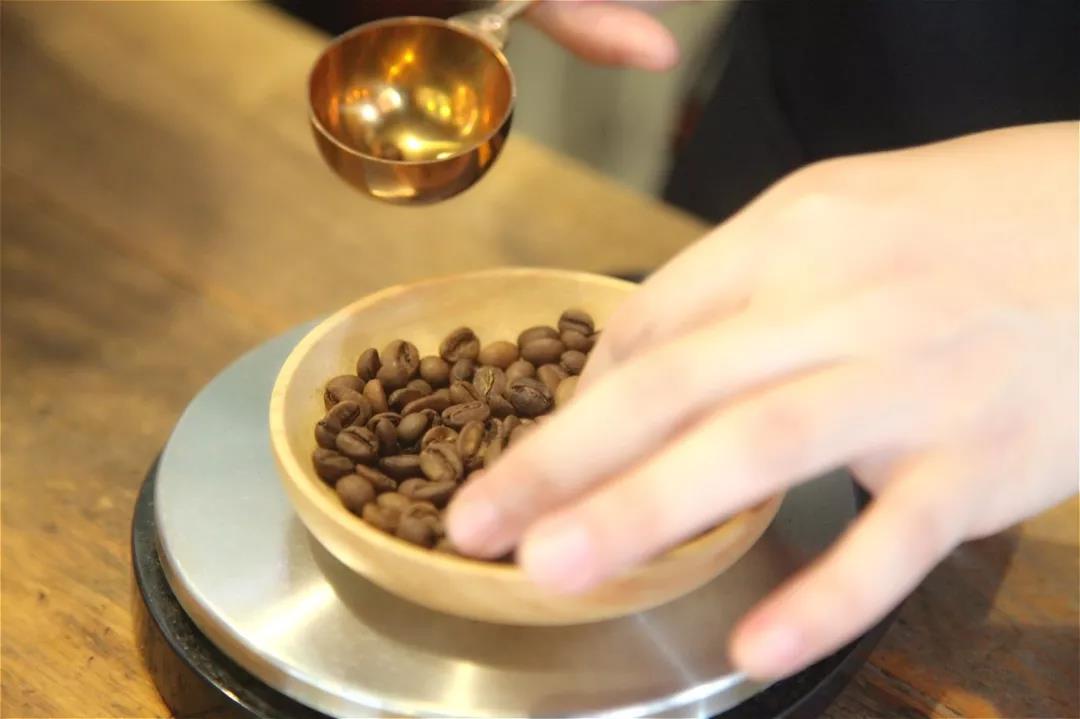
The V60 has a relatively fast flow rate. If the pour is too strong, it raises the liquid level, and more water flows down through the side ribs, reducing contact and extraction time with the grounds. The opposite is also true. So brewing quickly with a large flow gives a shorter brew time and a more prominent aroma, but insufficient flavor and a tendency to under-extract. Brewing slowly with a small flow extends extraction time, allowing full extraction of the coffee's flavors and expressing the V60's strengths in richness and complexity.
Kenya Asali is a relatively extraction-tolerant bean. Compared with a slightly larger flow, a slightly finer flow that increases its richness is clearly the better fit.
Coffee-to-Water Ratio
The literal definition of the coffee-to-water ratio is:
How much coffee to use with how much water to brew coffee.
For example: 20 grams of coffee brewed with 300 c.c. of water gives a coffee-to-water ratio of 20:300 = 1:15.
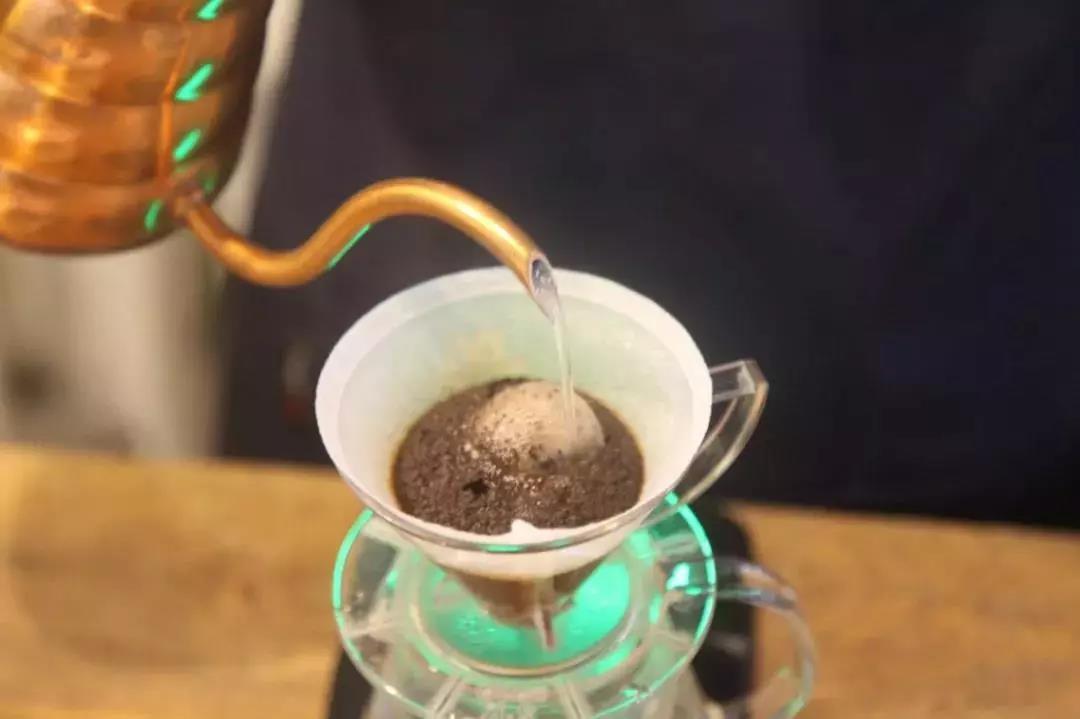
The premise of that definition is that the water in the dripper or device has essentially finished flowing through, leaving no large amount of water behind.
But why do some coffee shops define the coffee-to-water ratio as the ratio of coffee grounds to the final extracted coffee volume?
For example: 20 grams of coffee, regardless of how much water is poured, when the server reaches the 300 c.c. mark, remove the dripper -- that is a 1:15 coffee-to-water ratio.
Which standard should we follow? Should the water in the ratio be counted as total water added or final extracted volume?
If your idea of the coffee-to-water ratio comes from Golden Cup Theory, then its recommended 1:16.7, 1:17, and 1:18.18 all use the first definition -- total water added. So 1:17 means 20 grams of beans brewed with 340 c.c. of water, letting all the water flow through the device.
So why do some shops insist on using the final extracted volume as the standard?
We can imagine the following situations:
Possibility one: some people's brewing methods don't allow all the water in the dripper to flow through completely.
So if total water added is the standard, the moment to remove the dripper becomes inaccurate each time. Using final extracted volume as the benchmark makes each cup's strength and extraction more consistent.
Possibility two: some people aren't used to brewing with a digital scale, and instead rely on the measurement lines on the server.
Some schools, or more traditional brewing styles, emphasize feel and sensory experience -- observing with the eyes plus analyzing with experience. Without a scale for water addition, only the final extracted volume can serve as the ratio standard.
Possibility three: the habit of using a pour-over stand together with a digital scale.
When a pour-over stand is used, the scale cannot measure total water added, so final extracted volume becomes the standard.
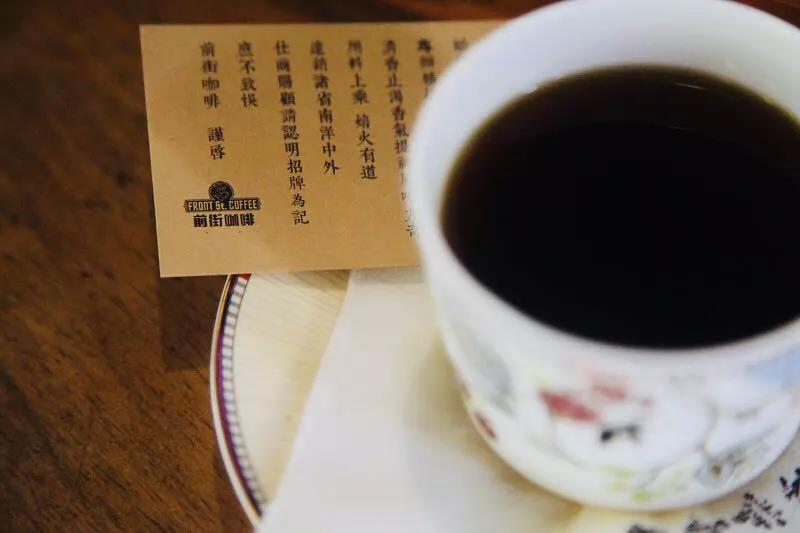
Of course, there are simpler explanations:
At some unknown point, learners of coffee began using final extracted volume as the ratio standard, and the habit continued. However many of the reasons above apply, this may not align perfectly with literal semantics, but once it becomes habitual practice, it should be respected. After all, brewing standards are not limited to Golden Cup Theory; they are a complex combination of many schools, each with its own convenient, practical, and habitual definition of the coffee-to-water ratio.
In principle, coffee grounds absorb roughly 1.5-2 grams of water per gram. So if you use final extracted volume as the ratio standard and want to convert back to the normal definition (total water added), add 1.5-2 to the water side of the ratio.
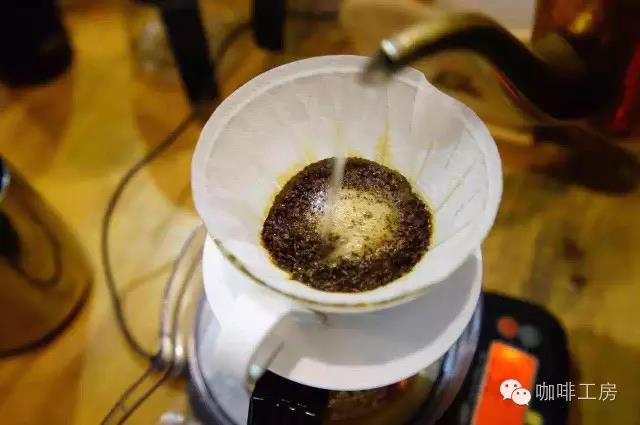
Back to the beginning: however odd the ratio or the definitional standard, as long as it brews stable, delicious coffee, then for shop owners and baristas it has already scored full marks. Definitions and ratios and terminology are only tools to assist our learning -- absolutely not the only standard, and certainly not absolutely tied to good taste. Understanding multiple perspectives and then digesting them is the fundamental principle for making coffee taste better.
FrontStreet Coffee Recommendation
Once you have a feel for the ratio, the next step is a bean that rewards careful pouring, and FrontStreet's washed Yirgacheffe is the classic starting point. It is known for white jasmine, bright citrus and lemon acidity, and a tea-like body, and its moderate price has made it the first specialty bean many drinkers buy when they want to understand the Ethiopian region.
For a more specific, traceable washed lot, FrontStreet's Yirgacheffe Gedeb cooperative coffee follows the traditional washed process. Gedeb lies in the Worka area at the southeastern edge of Yirgacheffe and was once part of the Worka cooperative under the YCFCU union before becoming independent in 2012; its washed processing gives fresh, bright citrus and lemon acidity, jasmine fragrance, and none of the classic bitter note.
FrontStreet brews these washed Ethiopians in a V60 with 15g of coffee, a 1:15 ratio, and 90-91°C water, using a grind like fine sugar (about EK43s setting 10, or 80% through a No. 20 sieve). Bloom with 30g for 30 seconds, pour to about 125g, then once the water level drops to two thirds of the bed, pour the remaining 100g to roughly 225g; the brew should finish in about 2:00-2:10.
Important Notice :
FrontStreet Coffee is a long-established specialty coffee roaster in Guangzhou China, selling freshly roasted beans from its own farm in Yunnan as well as dozens of carefully selected single-origin beans from around the world for both pour-over and espresso. The products deliver consistently excellent quality and great value, with shipping within 24 hours. Guangzhou's FrontStreet Coffee shop is recommended by many coffee lovers, and the beans are now available online at the Tmall 。
FrontStreet Coffee has moved to a new address:
FrontStreet Coffee Address: 315,Donghua East Road,GuangZhou
Tel:020 38364473
 Scan and follow the En Gafei WeChat official account. Please indicate that the reprint comes from "En Gafei".