Why is Bolivia's Coffee Production So Low? The Story and Flavor Characteristics of Bolivian Coffee Beans

Introducing Bolivian Coffee
South America overflows with coffee. Beyond the famous Brazilian and Colombian beans, there is another South American country producing outstanding coffee: Bolivia. Bolivian beans grow very differently from Brazil's low-altitude plantations — and altitude is crucial to flavor. Bolivian coffee has rich, unique aromatics: whether the fragrance of freshly ground beans or the aroma of the brewed cup, it is remarkably intense, a blend of floral and fruity notes that lingers long in memory.
Bolivian Coffee History
Bolivia is a landlocked South American country bordering Brazil and Colombia. Its seat of government, La Paz, sits above 3,600 meters — the world's highest capital. It is also among the poorest of the coffee-producing countries, poorer even than Ethiopia. Beyond having no seaports, entrenched government corruption has deepened the country's poverty.

Bolivian coffee traces its origins to 1880, when nearly all production belonged to the owners of large farms north of La Paz. In 1991, the government promoted a program to bring indigenous people into coffee cultivation, though quality was never the priority.
For Bolivian coffee farmers, the fundamental problem has always been income: coffee alone could not sustain a family. To make up the shortfall they grow other crops — above all coca leaves, the raw material of cocaine, whose cultivation is legal in Bolivia. With government encouragement, coca generates four times the profit of coffee and is far easier to grow, so many farmers have abandoned coffee — some abandoning their farms entirely.

Coca cultivation relies on heavy chemical pesticides and fertilizers, and the damage is severe: after several years, the soil is barren and can grow nothing. In the early 2000s, the United States strongly supported Bolivian agriculture, but as the Bolivian government later embraced coca growing, relations with Washington deteriorated — and coffee farmers suffered most. Subsequently, with Bolivia's limited resumption of anti-drug efforts, assistance programs restarted, including the Cup of Excellence (COE), held with USAID support.
As if those blows were not enough, in 2013 leaf rust arrived — a fungus that attacks coffee leaves and halts photosynthesis. In that year alone, Bolivia lost 50% of its production. The government's coca policy plus leaf rust cut Bolivian coffee output by 70% within a decade, reducing the country to a minor producer.
Bolivian Growing Regions
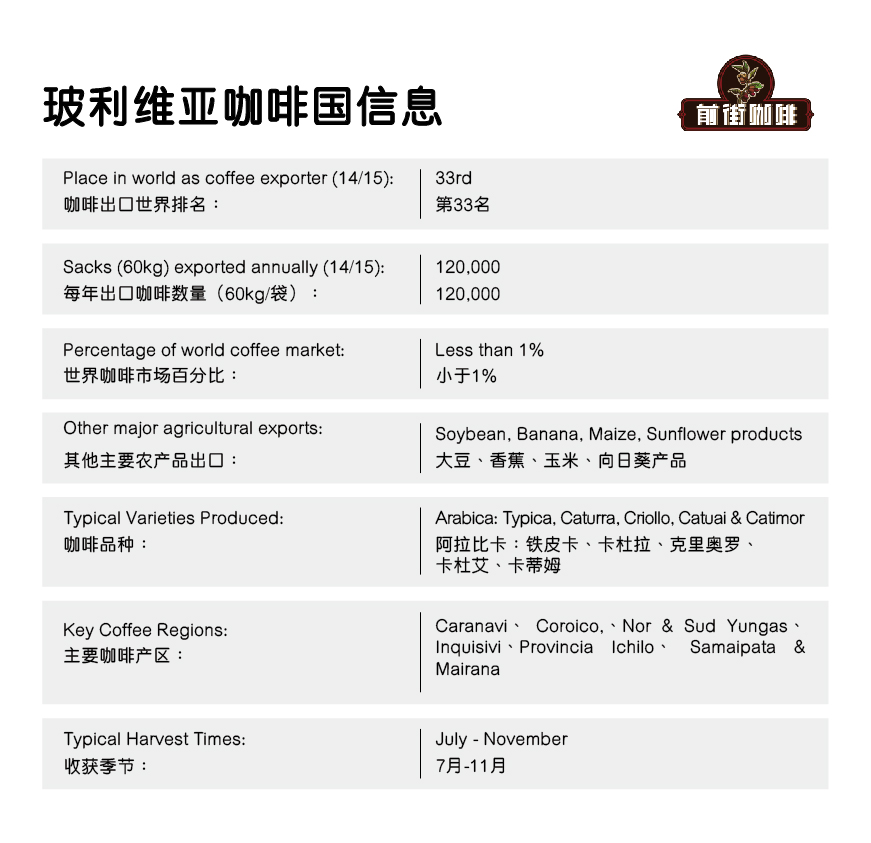
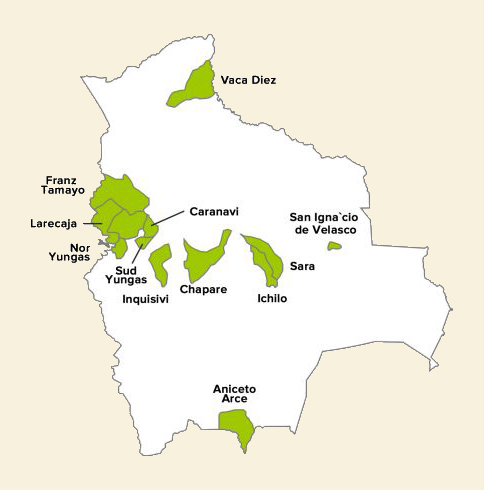
Bolivia's most famous growing region is La Paz, which includes Caranavi, Yungas and Inquisivi, among others.
Yungas lies in Caranavi Province, northeast of La Paz city, and produces 95% of Bolivia's coffee. Stretching along the eastern slopes of the Andes amid vast forests, it is fertile land with a rainy, humid, warm climate — well suited to coffee. Altitudes range from 800 to 1,800 meters. The region is infamous for one of the world's most dangerous roads, Yungas Road — "the world's most dangerous road."
Coffee Cultivation
Bolivian coffee rests on a smallholder system: 23,000 small farms of 2–9 hectares nationwide. Notably, roughly 40% of Bolivia's coffee is consumed domestically, and its cultivation is almost entirely organic.
Varieties
The main varieties are Arabica — primarily Typica, Caturra, Catuai and Catimor. The harvest runs from July to November.

Catimor
A hybrid of Timor and Caturra discovered in Portugal in 1959. Its flavor is distinct and easy to identify: bitter, sour, slightly astringent notes with a salty aftertaste. It tolerates dense planting, resists leaf rust strongly, and yields heavily — which is why Latin American growers once planted it extensively on the advice of agricultural experts.
Processing Methods
Bolivian farmers primarily wash their beans, though some occasionally use natural or honey processes. Worth noting: because Bolivia's climate is colder than most coffee countries, many farmers dry mechanically rather than in the sun.

The Sol de Mañana ("Tomorrow's Sun") Project
The Tomorrow's Sun Project is a comprehensive plan to elevate Bolivian coffee, demanding serious money and effort to guide smallholders: technical support, breeding, pruning, harvesting and other essential techniques, plus purchasing farmers' coffee at premium prices — a virtuous cycle in which farmer income and coffee quality sustain each other.
COE (Cup of Excellence)
From the 1990s into the 2000s, foreign-aided development projects built washing stations and trained farmers to harvest and dry properly — selecting only good beans, preventing fermentation, maintaining quality. That training allowed Bolivian farmers to compete in COE events, but only between 2004 and 2009.
After 2009, Bolivia's COE was canceled: the national government, strongly anti-American, no longer wanted USAID funding development programs in the country, and no other funding source existed for the competition.
Bolivia Waliki Estate Cocoa Natural Java
Region: La Paz
Altitude: 1,600 meters
Variety: Java
Process: cocoa natural
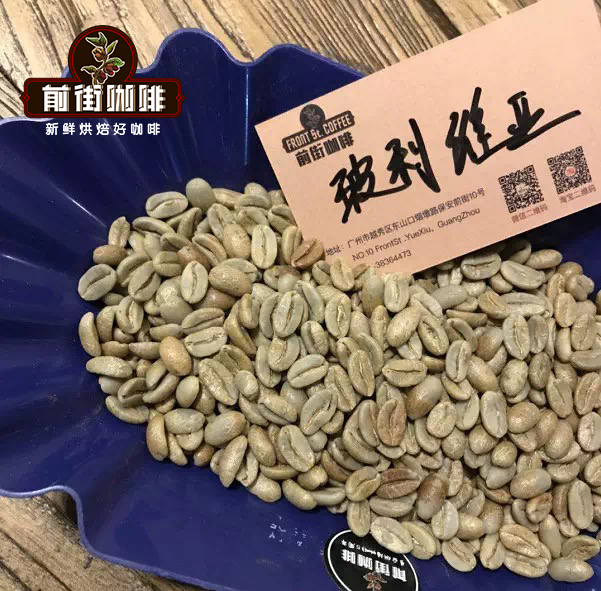
This coffee comes from a small estate named Waliki, inspired by a local greeting meaning "How is everything?" — the answer being "All good," or, as it were, "Hakuna Matata." Waliki sits in the Bolinda colony, about 10 kilometers outside the town of Caranavi in La Paz, tucked into steep, densely wooded valleys.
The Bolinda colony was established 52 years ago and was once called "Bolivia Linda" — Beautiful Bolivia. Over the years the name was shortened to Bolinda, now one of the larger settlements in the area.
Waliki is owned by the Rodriguez family, whose family business, Agricafe, produces coffee from its own estates and sources quality small-lot crops from producers across the Yungas region.
The estate covers 3.62 hectares at 1,600 meters. The high altitude ensures slow cherry maturation, which concentrates sugars in the fruit and makes the coffee sweeter.

Waliki Estate
It is worth repeating: Bolivia historically neglected coffee cultivation, which is why production is so low. FrontStreet Coffee chose this Java from Waliki partly for the variety's rarity, and partly out of respect for the estate's professionalism and dedication.
During harvest, the estate hires pickers from the Bolinda community who are trained to select only ripe cherries, with multiple picking passes each season to guarantee optimal maturity. Cherries are transported in crates that prevent damage and allow air to circulate, avoiding premature fermentation. After sorting and weighing, the cherries are carefully washed and placed on raised African drying beds, turned every hour. After about a week, the cherries move into cocoa dryers.
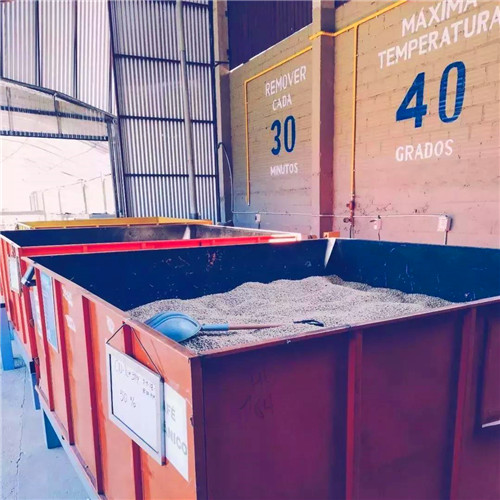
FrontStreet Coffee was fascinated by the cocoa dryers. The Rodriguez family keeps innovating with processing techniques, and found that cocoa dryers dry beans slowly and evenly at low temperature, insulating them from the weather. Beans rest in large steel drums at temperatures not exceeding 40°C for about 35 hours, turned every 30 minutes. After drying they travel to La Paz to rest, then go to Agricafe's La Luna mill for careful mechanical dehulling and sorting — plus hand sorting under both UV and natural light.
The Java Variety
In Bolivia, Java is known locally as the "long bean" variety, for its elongated look. The name reveals its Indonesian connection, but Java actually originated in Ethiopia's pristine forests, was gathered by local peoples, traveled through Yemen to Indonesia, and took its name there. Long assumed to be a Typica variant, genetic comparison later showed it is in fact the Ethiopian variety Abyssinia.

From Indonesia, Java spread to the nearby Timor islands and then to Cameroon in East Africa, where it was first released to farmers in 1980. Its introduction to Central and South America came through CIRAD (the French Agricultural Research Centre for International Development) under breeding expert Benoit Bertrand, arriving in Costa Rica in 1991. Panama was the first Central American country to officially recognize the variety.
Java's fruits and seeds are very long, its young shoots bronze, and the plant tall but low-yielding. It resists leaf rust and coffee berry disease strongly, making it well suited to smallholders. Through cupping, FrontStreet Coffee found this Java's flavor outstanding — comparable to Geisha.
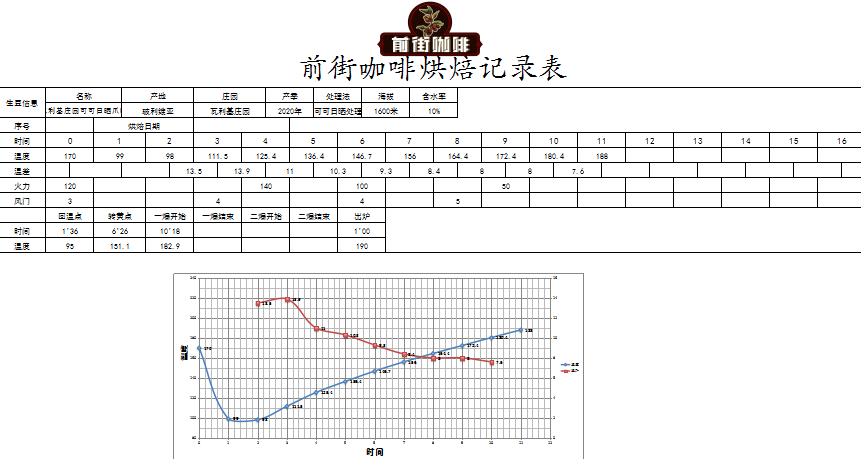
Roasting Profile
Brewing Parameters
Coffee: 15 grams
Ratio: 1:15
Water temperature: 90°C
Grind: 80% pass-through on a 0.85mm sieve
Dripper: Hario V60 #01
Brewing Process
First pour: 30g of water for a 30-second bloom
Second pour: add 95g (scale shows 125g), completed in about 1 minute 5 seconds
Third pour: add 100g (scale shows 225g), completed in about 1 minute 45 seconds
Extraction time: 2 minutes, then remove the dripper to finish.

Flavor Notes
Light fermentation, grape, gentle nuttiness, floral aroma, medium acidity, juicy mouthfeel.
FrontStreet Coffee Recommendation
If Bolivia's story moves you but availability is a challenge, FrontStreet Coffee's Brazil lineup offers that same South American warmth with far easier sourcing. Brazil's beans carry moderate acidity and an excellent balance of sweetness, bitterness and body, suited to medium roasts where nutty aromas bloom and the cup stays mellow with a light tart edge.
FrontStreet's half-natural (pulped natural) Cerrado is the classic Brazilian single origin: a Red Bourbon from the famed Cerrado region that, medium-roasted, offers cream-and-peanut, toasted bread, caramel and hazelnut aromas — round, non-acidic, with only a gentle bitter trace, and just as good in a moka pot, espresso machine, siphon or French press as in a pour-over. The Queen Estate Yellow Bourbon from Mogiana adds a sugarcane sweetness and clean fruit character found nowhere else.
And because Brazil's low acidity and stable extraction make it the backbone of so many espresso recipes, FrontStreet's Classic Blend, Premium Blend and Black Cocoa Blend — all built partly on Brazilian beans — deliver chocolate, cream and dependable crema for home or café use.
Important Notice :
FrontStreet Coffee is a long-established specialty coffee roaster in Guangzhou China, selling freshly roasted beans from its own farm in Yunnan as well as dozens of carefully selected single-origin beans from around the world for both pour-over and espresso. The products deliver consistently excellent quality and great value, with shipping within 24 hours. Guangzhou's FrontStreet Coffee shop is recommended by many coffee lovers, and the beans are now available online at the Tmall 。
FrontStreet Coffee has moved to a new address:
FrontStreet Coffee Address: 315,Donghua East Road,GuangZhou
Tel:020 38364473
 Scan and follow the En Gafei WeChat official account. Please indicate that the reprint comes from "En Gafei".