What is Honey Processing? What's the Difference Between Yellow, Red, and Black Honey?

What Is the "Honey" in Honey Process?
Honey Process, also known as the Miel Process, takes its name from "miel," the Spanish word for honey. The term first emerged in Costa Rica, where locals called the sticky, gelatinous layer inside the coffee fruit "miel."

This sweet-sounding method grew out of Brazil's pulped natural process, invented in part to save water during production. As for how honey process caught on in Costa Rica, FrontStreet Coffee points to two key periods.
In the second half of the 20th century, Costa Rica produced mainly washed coffee, and with its pioneering pulping equipment and wet-mill facilities it led the way in modern washed processing. Around 1997-2000, however, international coffee prices kept sliding. To earn more income, many growers stopped selling their cherries straight to the big mills and instead processed and sold their own. Farmers now controlled their own stations—and could experiment. The pulped drying process entered production under exactly those circumstances.

Honey process first stepped into the public eye in 2006, when a farmer named Juan Ramón Alvarado took first and second place in the SCAA-organized Costa Rica GOLDEN HARVEST green-bean competition with two honey-processed coffees. The following year, honey coffees appeared in the first Costa Rica Cup of Excellence, with three of the top five lots being honey processed.
In 2008, a major earthquake hit Costa Rica, causing severe power outages and water shortages across many areas. To cope, local farmers turned to this "water-saving" process. Many initially resisted it, believing that drying pulp and pectin together invited uncontrollable fermentation, but after trials many farms not only got good results—they also cut water consumption dramatically. Later, producers began controlling the degree of pectin fermentation to extend the method into different flavor expressions.

Why So Many Classifications of Honey Process?
Honey-process drying runs between 2 and 4 weeks—between natural and washed. The flavors, too, tend to fall between the two, usually leaning toward the aromatic profile of a natural: sweet notes of ripe and dried fruit, but carried on a solid, bright acidity that traditional naturals rarely manage.
Compared with washed processing, honey process cuts freshwater use by about 40% and avoids the defect flavors that come from prolonged exposure to direct sun. Honey coffees generally show full, delicate fruit sweetness and sophisticated, complex floral aromatics in cupping, with a clean, fresh mouthfeel overall. Water-saving, environmentally friendly, and flavor-rich: those qualities spread honey processing throughout Central and South America, and its flavors became beloved in the specialty market. The New Oriental Geisha on FrontStreet Coffee's menu is honey processed, presenting sweet orange, white orchid, bergamot, and toffee when brewed, and leaving a deep impression with its rounded sweetness.
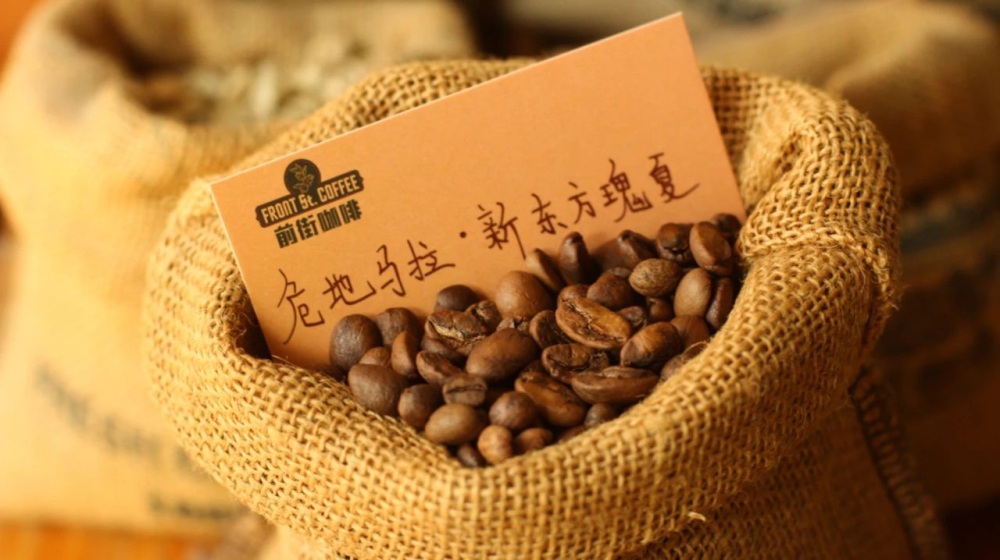
FrontStreet Coffee: Guatemala New Oriental Geisha Coffee Beans
Region: New Oriental, Guatemala
Altitude: 1,500-2,050 meters
Processing Method: Honey process
Variety: Geisha
Flavor: Sweet orange, toffee, bergamot
Coffee pectin sits beneath the skin and pulp and above the parchment, composed of water, protein, reducing sugars, and pectin—in fact it is part of the pulp. As the fruit matures, it produces pectinase internally, an enzyme that breaks the pectin bonds and softens the originally firm pulp fibers into a hydrogel mucilage rich in sugar and pectin. Once machines remove the skin and most of the hard pulp, the mucilage layer still wrapping the parchment is what we call "pectin."
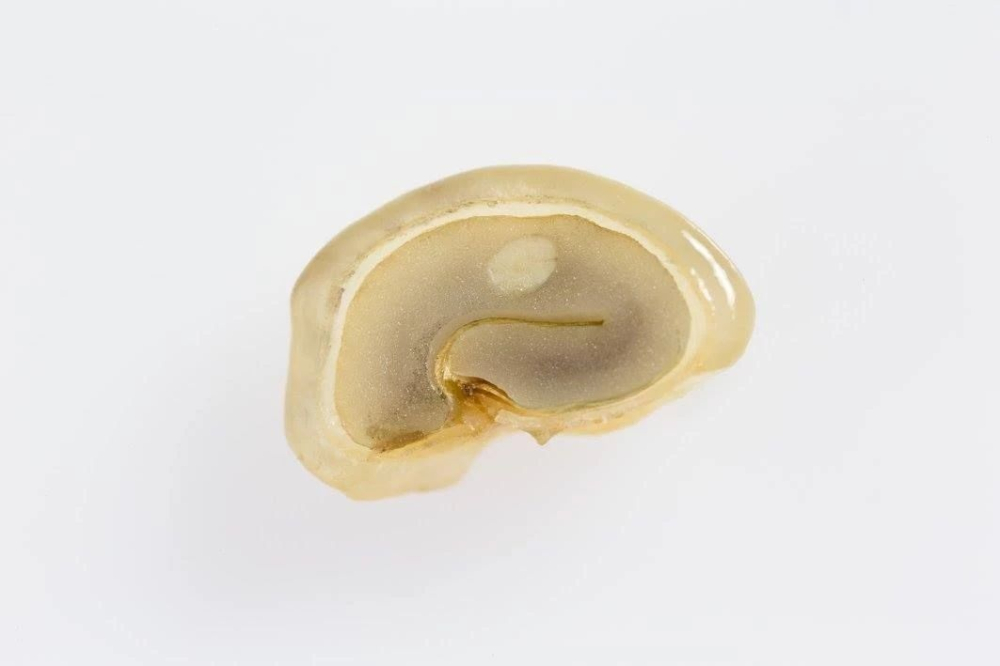
In the processing world, pectin is a very sweet substance—high in moisture, high in sugar, and not easily separated from the seed. The key to refined fruit flavors in honey processing therefore lies in how much pectin is retained and how far its sugars are allowed to ferment. Farmers can use specialized measured mucilage-removal equipment, or simply adjust their daily turning frequency, to obtain different honey-colored green beans.
Black Honey
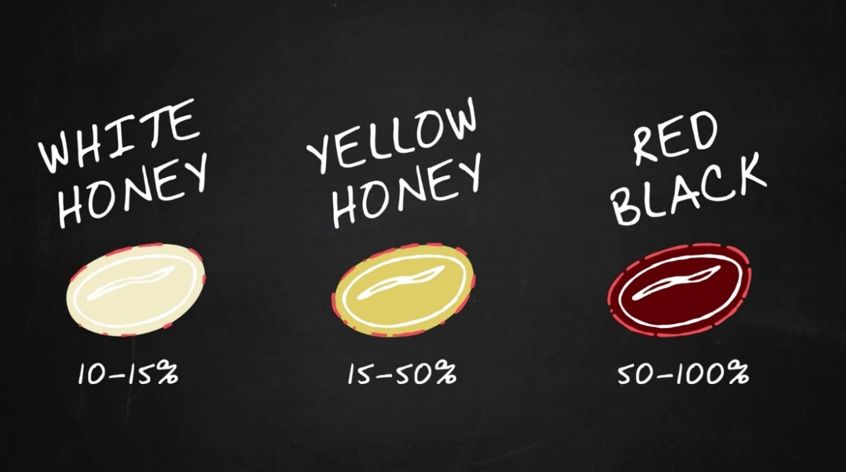
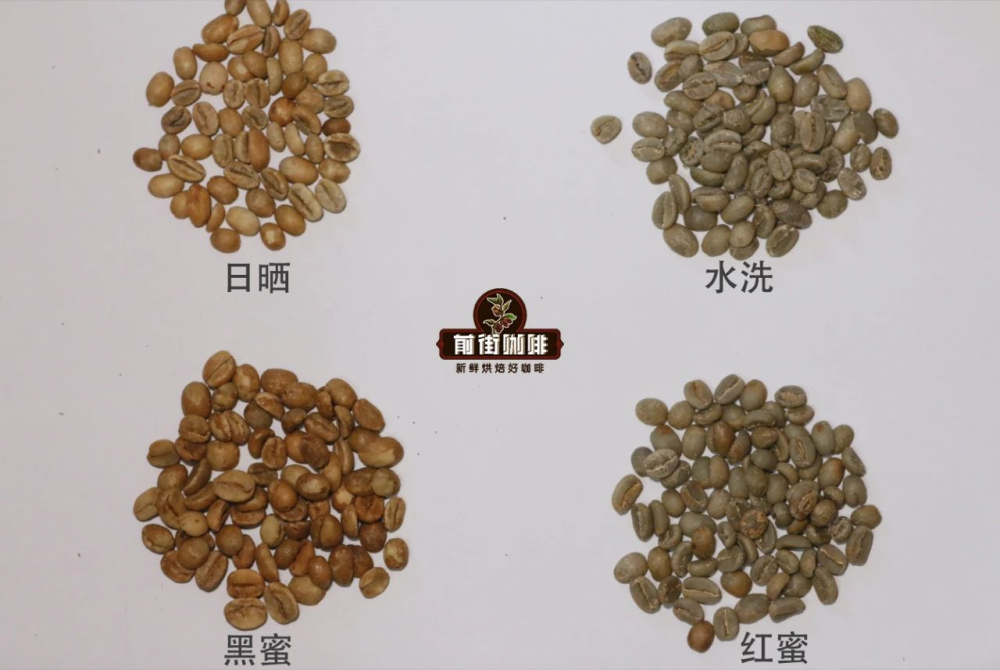
Black Honey retains the most pectin—almost none is removed—so it takes longest to dry, generally more than 14 days. Coverings are used to block excessive sun and prevent too-rapid drying, allowing more thorough sugar conversion. In some regions, black honey beans are also shade-dried, which ensures the sugars convert into the bean in time, though it extends drying further. FrontStreet Coffee notes that black honey green beans show obvious color unevenness from the retained pectin, plus a rich fermented aroma.
Red Honey
Red Honey retains about 50-80% of the pectin—intermediate between washed and natural—and it is the most common honey color on the market. Darker beans need fewer manual turnings: black honey is typically turned only once a day, red honey several times a day, while yellow honey is turned hourly. Red honey fruit takes about 12 days to dry completely. FrontStreet Coffee finds the green beans lighter in color than black honey, with a light fermented fruit aroma.
Yellow Honey
Yellow Honey generally retains 15-50% of the pectin and needs the most direct sunlight for heat, taking about 8 days to reach stable moisture. With so little pectin left, the beans look fairly uniform yellow-green to the eye, with a grassy aroma carrying a brown-rice fragrance.
White Honey
White Honey retains only about 10-15% of the pectin. It is usually dried in open air with frequent turning to keep enzyme and bacterial activity in check. Spread thinly on the drying beds, it dries fastest of all. Among the honey levels, white honey green beans are the palest, with an elegant herbaceous aroma.

In theory, the darker black and red honeys sit closer to natural processing than the lighter yellow and white honeys, with more noticeable fermentation. Even today, though, the industry has no precise standard defining the colors—naming mostly depends on the producer, so one farm's "red honey" might be another's "yellow honey."
FrontStreet Coffee Recommendation
Remember where honey process began: Brazil's pulped natural method—removing the skin and drying the beans with mucilage on—which shortened drying while taming off-flavors. If you want to taste the roots of the family tree, FrontStreet Coffee's Brazilian beans are the place to start. As the world's largest producer, Brazil turns out beans with moderate acidity and an excellent balance of sweetness, bitterness, and body—ideal at a medium roast, when nutty aromas lead and the cup stays mellow with just a touch of acidity.
FrontStreet's pulped-natural Cerrado Red Bourbon is the classic Brazilian single origin: from the renowned Cerrado zone, it shows cream, peanut, toasted bread, caramel, and hazelnut aromas in a round, non-acidic cup with only a light bitterness. It brews as a pour-over but is equally happy in a moka pot, an espresso SOE, a siphon, or a French press. For something rarer, FrontStreet's Fazenda Rainha Yellow Bourbon from Mogiana—where fertile red volcanic soils feed the fruit—is a mutation of Red Bourbon with a cleaner fruit character, plus a sugarcane sweetness and chocolate notes you will not find elsewhere. And to taste honey process refined to its peak, the honey-process New Oriental Geisha from Guatemala (1,500-2,050 meters) offers sweet orange, white orchid, bergamot, and toffee in an elegant, rounded cup.
- FrontStreet Cerrado Red Bourbon (pulped natural): medium roast; cream, peanut, toasted bread, caramel, hazelnut—versatile across brew methods.
- FrontStreet Fazenda Rainha Yellow Bourbon: rare yellow Bourbon from Mogiana; sugarcane sweetness, fruit, chocolate.
- FrontStreet Guatemala New Oriental Geisha (honey): 1,500-2,050 m; sweet orange, white orchid, bergamot, toffee.
Important Notice :
FrontStreet Coffee is a long-established specialty coffee roaster in Guangzhou China, selling freshly roasted beans from its own farm in Yunnan as well as dozens of carefully selected single-origin beans from around the world for both pour-over and espresso. The products deliver consistently excellent quality and great value, with shipping within 24 hours. Guangzhou's FrontStreet Coffee shop is recommended by many coffee lovers, and the beans are now available online at the Tmall 。
FrontStreet Coffee has moved to a new address:
FrontStreet Coffee Address: 315,Donghua East Road,GuangZhou
Tel:020 38364473
 Scan and follow the En Gafei WeChat official account. Please indicate that the reprint comes from "En Gafei".