Is Yunnan Small Bean Coffee Good to Drink? Flavor Profile and Brewing Tips for Yunnan Arabica Coffee Beans
In the past two days, the news that "99% of China's coffee is produced in Yunnan" has become a hot topic on Weibo. With support from the state over the past decade, Yunnan's coffee industry has risen, also bringing new hope for poverty alleviation to many impoverished local areas. Today, 99% of China's Arabica coffee beans are grown in Yunnan.
What Is Small-Grained Coffee?
"Small-grained coffee" refers to Arabica. The coffee genus of the Rubiaceae family has three major species: Arabica (small fruit), Robusta (medium fruit), and Liberica (large fruit) — and Arabica bears the smallest fruit of the three, which is where the nickname comes from.
According to the information FrontStreet Coffee has reviewed, Yunnan's first coffee tree was planted in 1904 by the French missionary Father Tian Deneng in Zhukula Village, Pingchuan Town, Binchuan County, Dali. Little thought was given to variety at the time: the missionary told everyone that this tree bore a small-fruit variety, without specifying which one it was.
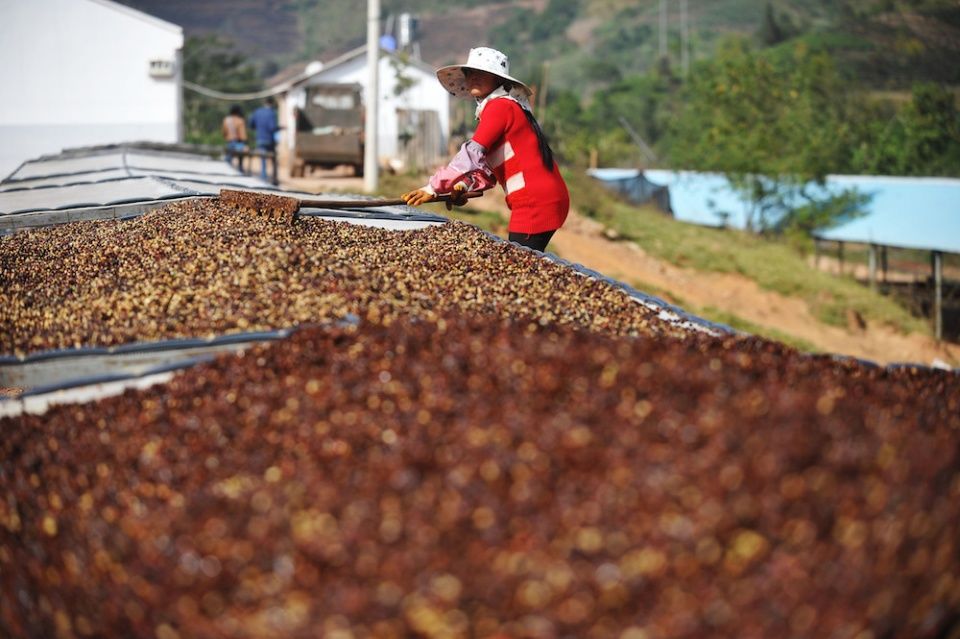
After harvesting and drying, the kernel inside the fruit — the coffee bean — turned out relatively small, so people began recording coffee grown in Yunnan as small-grained coffee. Hence, regardless of the specific variety, as long as a coffee belongs to the Arabica lineage, it gets called small-grained coffee in China.
Why Is Yunnan Suitable for Growing Coffee?
The world's best coffee-growing regions lie in the "coffee belt" between the Tropics of Cancer and Capricorn (between 28° north latitude and 38° south latitude), at altitudes of 1000-2000m. Within China, parts of Yunnan, Guangxi, Guangdong, Taiwan, and Hainan offer suitable conditions, but only Yunnan and Taiwan meet the high-altitude requirements.

Coffee planted at higher altitude experiences significant day-night temperature differences, so the trees grow slowly, store more nutrients, and develop more sugars and aromatics — yielding beans with better flavor.
History of Yunnan Coffee Cultivation
The variety now widely grown in Yunnan is Catimor, with small areas also planted with Typica, Bourbon, and Geisha.
In the early days, Typica was the variety widely grown in Yunnan — genetic identification confirmed those trees were the Typica small-grained coffee brought by missionaries, already adapted to Yunnan's terroir. In the mid-1950s, the state encouraged people in Yunnan to grow coffee to repay Soviet loans: after harvest and drying, the beans would be uniformly purchased by one department and exported.
After the repayment period ended, domestic demand for coffee was tiny, so many farmers cut down their coffee trees and switched to more profitable crops. In 1952, scientific personnel from the Yunnan Academy of Agricultural Sciences distributed 80kg of coffee seeds to farmers in Baoshan's Lujiangba for trial planting; the good adaptability and excellent quality they found led to renewed development of Yunnan coffee cultivation.
But that distribution was not what truly re-established Yunnan's coffee industry. It wasn't until 1988, when Nestlé took notice of Yunnan's treasured land and distributed Catimor trees that could better combat leaf rust, that people replanted coffee and kept supplying Nestlé. That is why Catimor remains the variety grown across Yunnan today.
Yunnan Small-Grained Coffee Varieties
In the 1970s and 1980s, coffee leaf rust broke out across many Central and South American countries, seriously damaging production. In response, the Portuguese coffee research center CIFC hybridized Timor (which carries Robusta genes) with Caturra (a Bourbon variety) in 1959, creating the disease-resistant, high-yielding Catimor. To fight the rust epidemic — and encouraged and promoted by coffee organizations — Central and South America began wide-scale introduction in the 1980s.
In 1988, Nestlé took notice of Yunnan and distributed Catimor trees better able to fight leaf rust, so people replanted coffee and continued to supply Nestlé.
Because Catimor carries Robusta genes, its flavor fell short of expectations and didn't taste good drunk straight, so for years everyone's impression of Yunnan coffee stayed stuck at instant coffee. But with the spread of specialty coffee culture, Yunnan's Catimor today receives far more scientific cultivation, and the rise of modern post-harvest processing has greatly improved its flavor and quality.
FrontStreet Coffee believes, however, that making Yunnan coffee truly delicious starts with changing the variety. So in 2013, FrontStreet Coffee went to Lincang in Yunnan to begin planting Typica, along with small amounts of Bourbon.
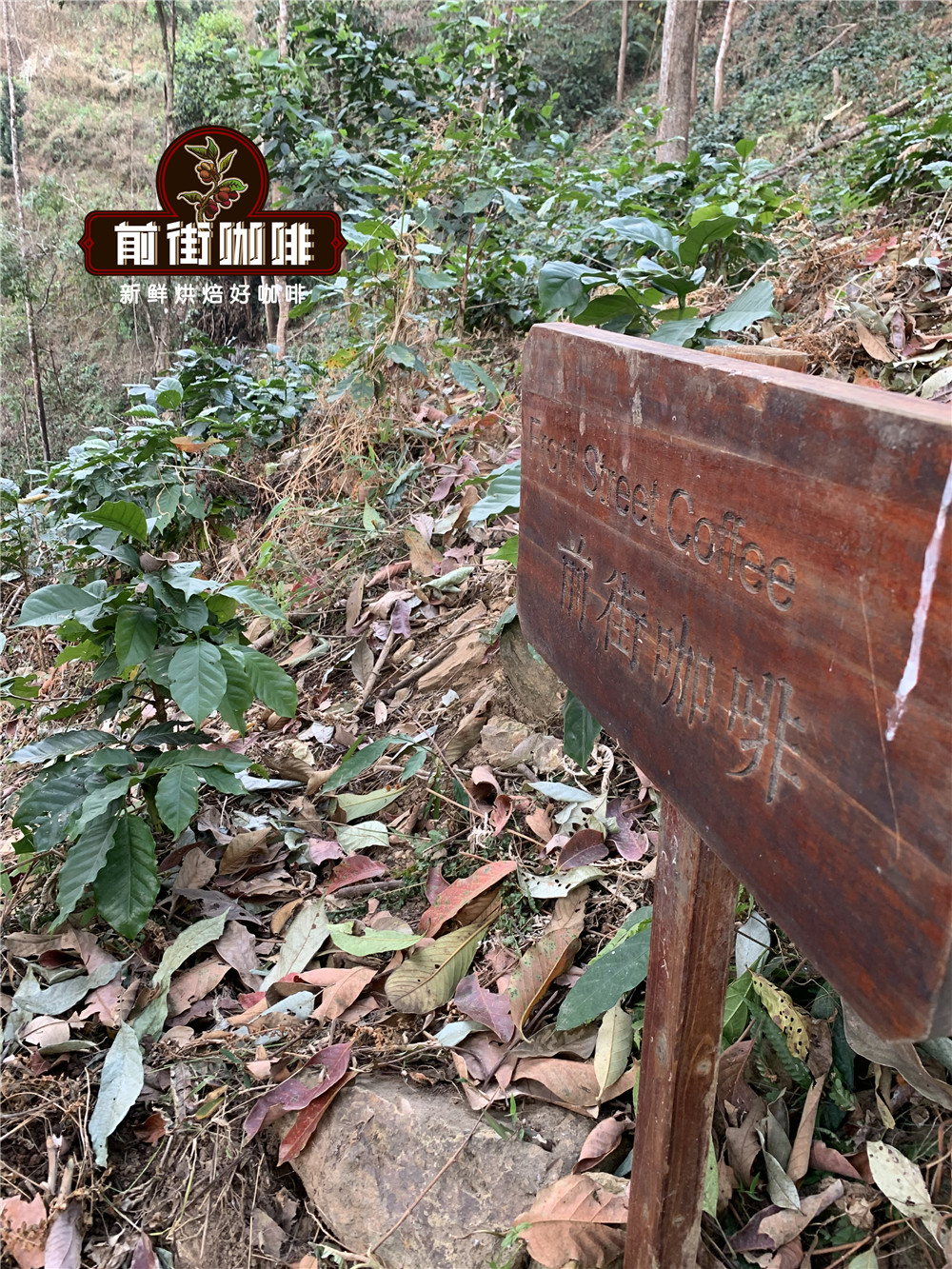
Typica was chosen partly because, as one of the oldest coffee varieties, it carries pure Arabica genes and, with its elegant, clean flavor, has always been recognized as a specialty variety; and partly because the earliest coffee trees in Yunnan were also Typica, brought by French missionaries.
Does Yunnan Small-Grained Coffee Taste Good?
Compared with Typica, Catimor does carry Robusta genes — but today's Yunnan Catimor is no longer the hard-to-swallow coffee of the past. Under reasonable cultivation and traditional processing, Yunnan Catimor shows nutty, caramel, and plum-like flavors.
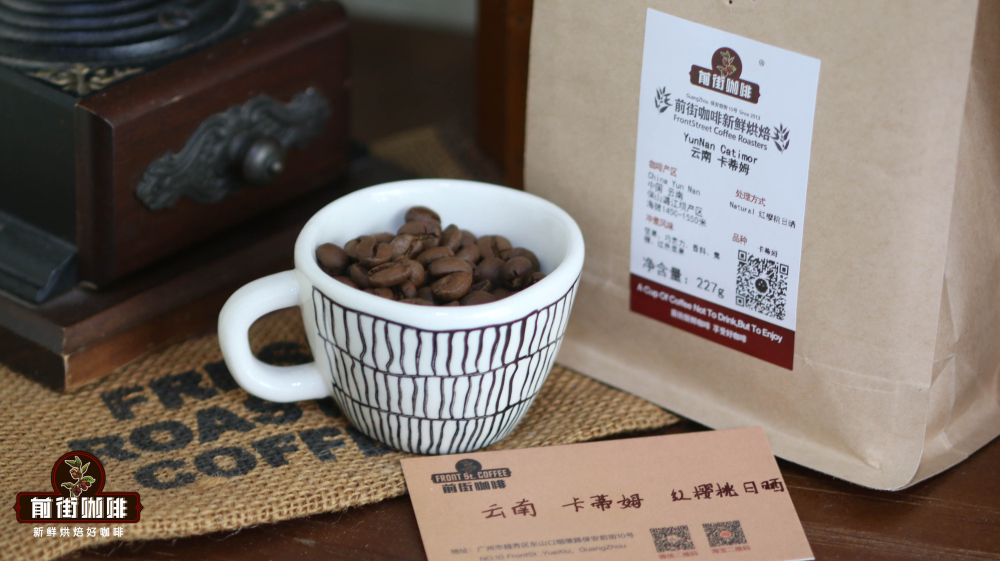
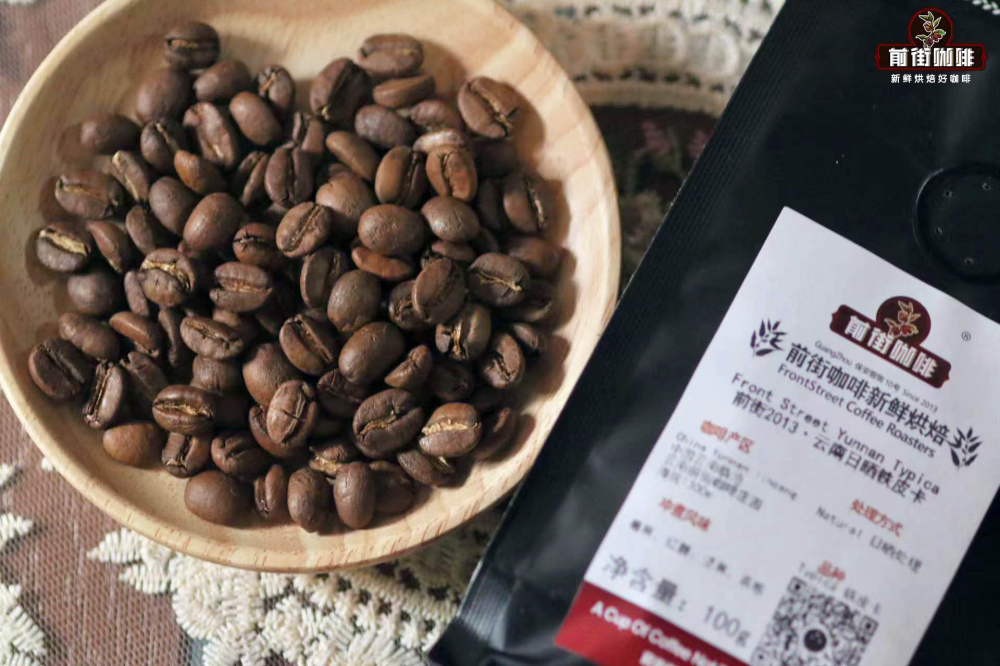
Typica, processed by FrontStreet Coffee's careful natural sun-drying, shows berry, brown sugar, and nutty notes with a black-tea-like sensation.
How to Brew Yunnan Small-Grained Coffee?
All coffee sold by FrontStreet Coffee ships within five days of the roast date — only freshly roasted beans can show coffee's most beautiful flavors! To preserve Yunnan coffee's sweet-sour balance and tea-like character, FrontStreet Coffee roasts it medium. For brewing, use a V60 dripper, a 1:15 coffee-to-water ratio, a medium grind (about coarse-sugar size / 75% pass-through on the China #20 standard sieve), and water at 88-89°C.
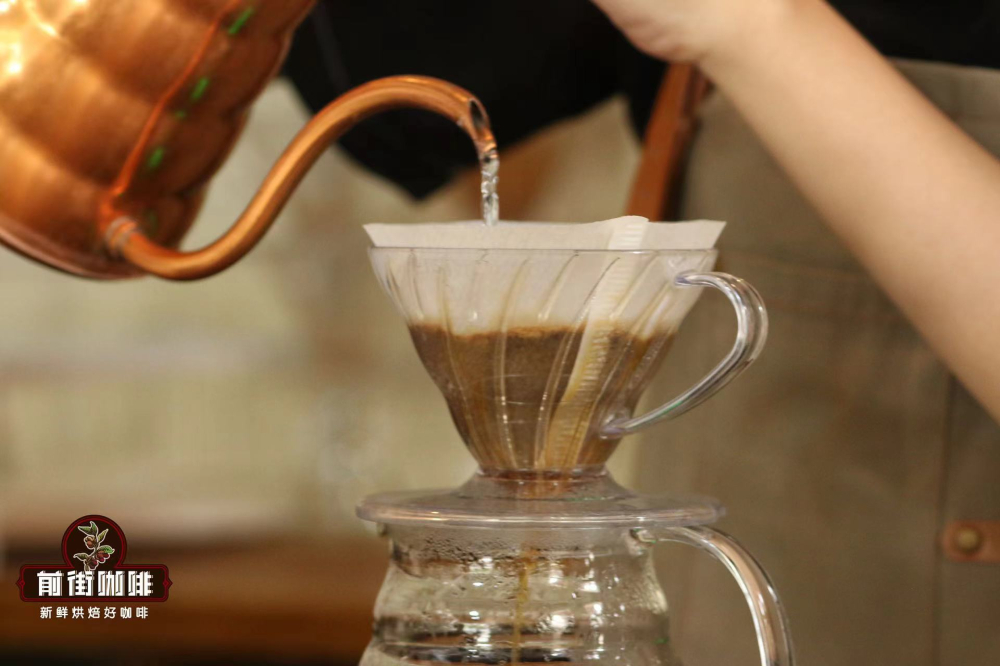
Specific technique: first pour 30g of water for a 30-second bloom; second, pour in small circles to 125g and wait for the water level in the coffee bed to drop to half; then continue pouring in small circles to 225g, and wait for all the dripping to finish — total extraction time about 2 minutes 10 seconds.
FrontStreet Coffee Recommendation
Yunnan coffee — known as Yunnan small-grain — has evenly sized, plump beans and a mellow, moderate body, with cultivation centered in the province's southwest across four regions: Baoshan, Dehong, Pu'er, and Lincang. For a first taste of Chinese Arabica, FrontStreet Coffee's Yunnan Small-Grain (Baoshan) is the ideal entry: washed processed and medium roasted, it shows soft nut and chocolate sweetness with a light plum acidity at a friendly price. Baoshan's coffee history began in the mid-1950s, introduced by the patriotic overseas Chinese Mr. Liang Jinshan; the frost-free warm climate and the unique dry-hot valley around Lujiangba — small year-round temperature swing but large day-night difference — give Baoshan coffee its distinctive sweet finish, and the reasonably low rainfall is a further advantage for the cherry crop.
If you want a clearer expression of Yunnan's terroir, choose FrontStreet Coffee's 2013 Natural Typica — the mark of advancing from beginner to connoisseur of Yunnan coffee. FrontStreet built its own estate in Lincang in 2013 and planted Typica, the oldest and purest of Arabica varieties and the very variety the French missionaries first brought to Yunnan, hoping to recover that original regional flavor. Only fully ripe, all-red cherries are picked, natural-processed by the most traditional method, then roasted medium for a more balanced cup with pronounced sweet-sour structure: dark berry tones, caramel sweetness, chocolate, a hint of dried apricot, and a black-tea finish. And for espresso drinkers, the Dark Cocoa Blend — Yunnan small-grain paired with Brazilian Cerrado — balances sweet, sour, and bitter with nut and brown-sugar aromas in the americano and a smooth almond-and-cream texture in the latte, recommended by baristas and perfect for beginners.
Important Notice :
FrontStreet Coffee is a long-established specialty coffee roaster in Guangzhou China, selling freshly roasted beans from its own farm in Yunnan as well as dozens of carefully selected single-origin beans from around the world for both pour-over and espresso. The products deliver consistently excellent quality and great value, with shipping within 24 hours. Guangzhou's FrontStreet Coffee shop is recommended by many coffee lovers, and the beans are now available online at the Tmall 。
FrontStreet Coffee has moved to a new address:
FrontStreet Coffee Address: 315,Donghua East Road,GuangZhou
Tel:020 38364473
 Scan and follow the En Gafei WeChat official account. Please indicate that the reprint comes from "En Gafei".