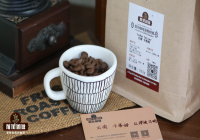
Why Has Yunnan Arabica Coffee Been Reduced to Instant Coffee Raw Material? Because It's "Fake" Yunnan Arabica!
Why Did Yunnan Coffee Become Instant Coffee Raw Material?
Yunnan coffee was originally cultivated with Typica. Later, when China needed to repay debts to the Soviet Union, Yunnan planted Typica on a large scale, with the harvests uniformly purchased and shipped north. When domestic coffee demand later slumped, farmers cut down their coffee trees one after another and switched to more profitable crops.
Yet Yunnan is prime coffee country. It lies within the tropical coffee belt between the Tropic of Cancer and the Tropic of Capricorn, and its altitude meets the growth requirements of coffee trees. Nestlé took notice of this and established a coffee agriculture department there in 1992, dedicated to guiding research into improving Yunnan coffee cultivation. The company introduced the high-yield, disease-resistant Catimor variety and purchased coffee at US spot-market prices.
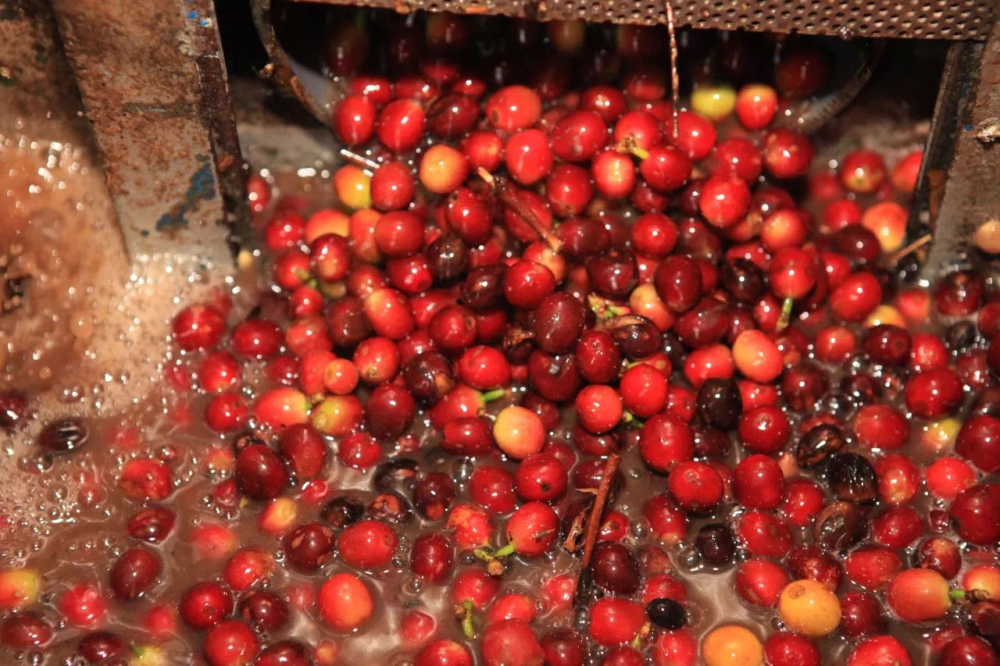
In 1959, the Portuguese moved the Bourbon mutant Caturra from Brazil to East Timor, where it was crossed with the Timor Hybrid (which carries Robusta heritage). The result was Catimor, a variety with exceptional disease resistance and productivity. As leaf rust swept coffee-producing countries worldwide, international organizations helped producer countries promote Catimor aggressively to resist rust and raise yields.
Catimor is not pure Arabica. It is a cross between the Timor Hybrid (itself an Arabica–Robusta cross) and Caturra (a Bourbon mutation), giving Catimor roughly 25% Robusta heritage. That Robusta lineage explains its flavor shortcomings: less aromatic complexity, a generally bitter profile, and a tendency toward astringency and somewhat harsh, musty notes.
Today the varieties most commonly cultivated in Yunnan are Catimor and its improved descendants, what the market usually calls "Yunnan arabica" or Yunnan small-bean coffee. Most of Yunnan's current plantings are Catimor. The variety's Robusta genes make it more disease-resistant than the delicate old types, and it yields well; compared with old varieties that are fragile and low-yielding, farmers naturally prefer Catimor, and it has swept the province.
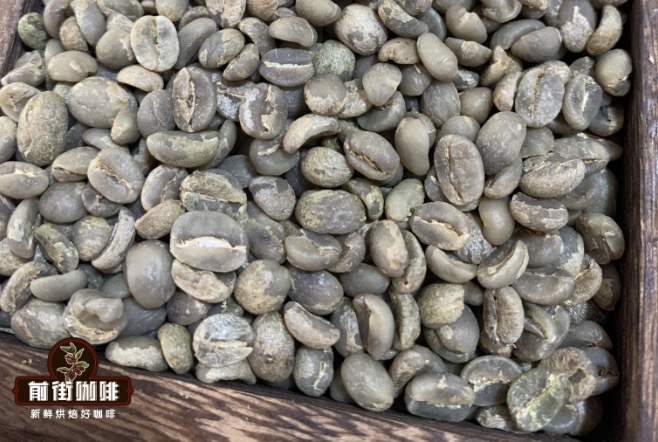
That history is why "Yunnan coffee" so often conjures instant-coffee raw material. But with specialty coffee culture now widespread and domestic demand climbing, Yunnan coffee has attracted government attention in recent years, and growers have adopted far more scientific approaches to cultivation and post-harvest processing.
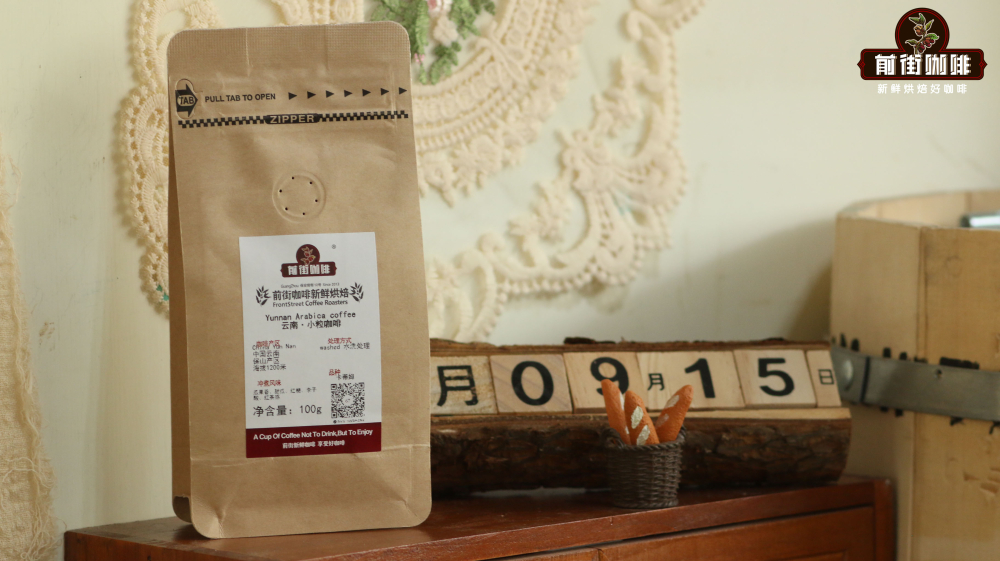
In FrontStreet Coffee's daily-bean series, the bean representing Yunnan is a washed Catimor from the Baoshan growing area. After depulping, the beans ferment in water tanks for 18–36 hours, a washed process that heightens the coffee's bright acidity and makes the overall cup cleaner, so you can experience the bean's quality and Yunnan's regional character more directly.
FrontStreet Coffee's Yunnan Coffee Brewing Parameters:
To preserve the coffee's sweet-sour sensation and tea-like character, FrontStreet Coffee roasts it medium. Brew it in a V60 at a 1:15 coffee-to-water ratio, medium grind (roughly coarse sugar, passing about 75% through a No. 20 standard sieve), with 88°C water.
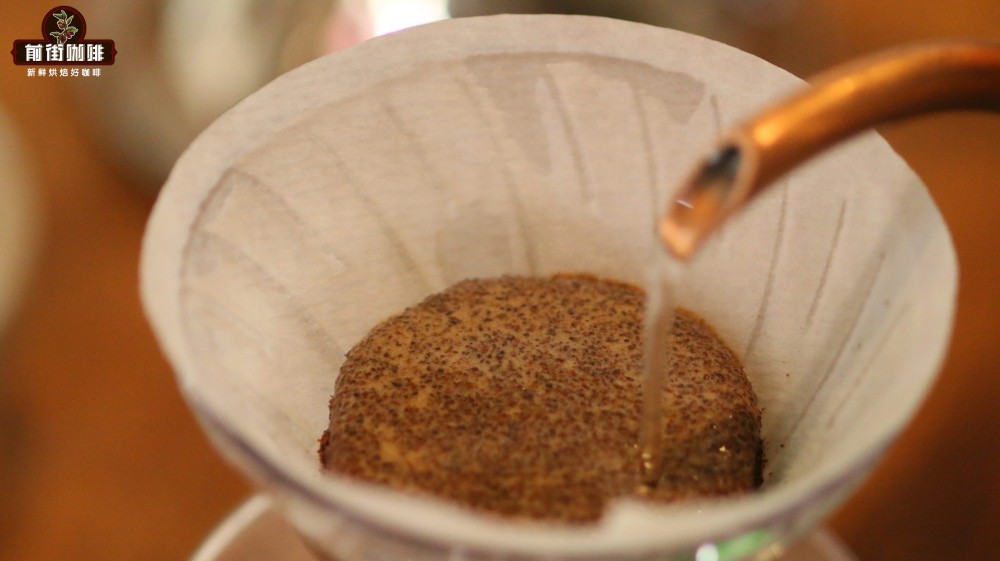
Brew in stages: start with water equal to twice the coffee dose for blooming, 30 g of water for 30 seconds. Blooming lets the grounds vent their trapped carbon dioxide so the rest of the extraction runs more evenly. Then pour in slow circles up to 125 g, pause, and continue in segments to 225 g before stopping. Once the dripper finishes dripping, lift it off. Total extraction time from the first pour: 2'00". Give the finished brew a gentle swirl and pour into cups to taste.
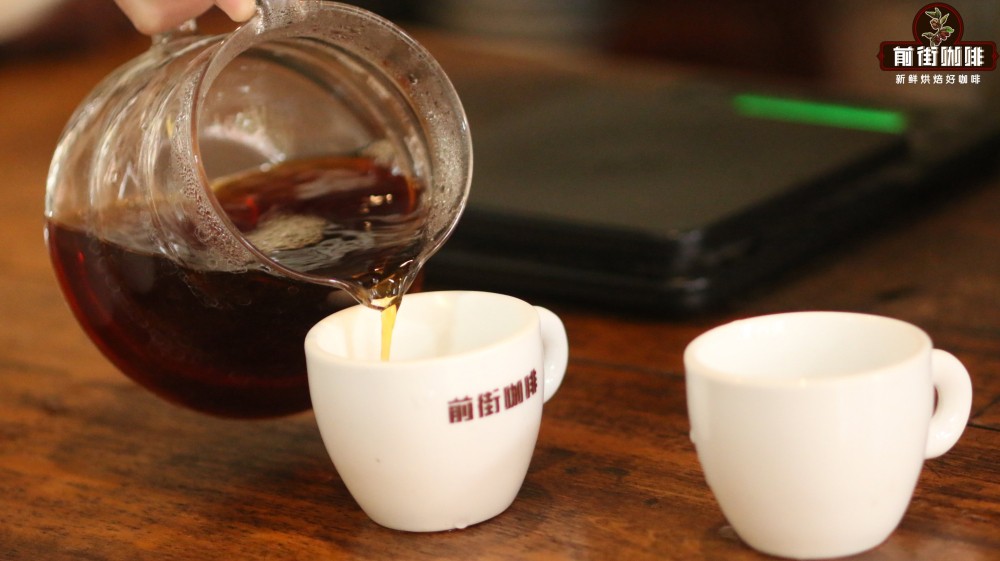
FrontStreet Coffee's Washed Yunnan Small-Bean Coffee Flavor:
Herbal and nutty aromatics, chocolate, caramel, with a light fruit acidity in the finish.
FrontStreet Coffee Recommendation
Yunnan coffee, often called "Yunnan arabica" (xiaoli kafei, "small-bean coffee"), produces uniform, plump beans with a mellow, balanced cup. The Typica story traces back to 1904, when the French missionary Father Tien Tchou-Neng carried coffee seeds (Typica) from Vietnam into Yunnan and successfully planted the province's first coffee tree in Zhugula village, Binchuan County, the beginning of Yunnan coffee. Coffee loves warmth: heat-tolerant but not frost-tolerant, it thrives with plenty of light at an ideal 16–21°C. Yunnan sits squarely in the golden coffee-growing belt that stretches 25° north and south of the equator, with most of the province above 1,000 m, fertile slopes, ample sun, abundant rain, and big day-night temperature swings, ideal conditions for coffee trees. Plantings are concentrated in the province's southwest, across four major areas: Baoshan, Dehong, Pu'er, and Lincang. FrontStreet's two daily-bean Yunnan coffees come from Baoshan and Lincang.
FrontStreet Yunnan Baoshan Small-Bean: Coffee planting in Baoshan began in the mid-1950s, introduced by the patriotic overseas-Chinese businessman Liang Jinshan. The frost-free, warm climate suits small-bean coffee beautifully, especially the unique dry-hot valley climate around Lujiangba, where the seasons barely differ but day and night temperatures swing wide, giving Baoshan coffee its signature lingering sweetness, aided by sensibly low rainfall. As an entry-level Chinese arabica, FrontStreet's washed, medium-roast Yunnan Small-Bean is the first choice: it highlights a caramel sweetness while keeping some acidity, expressing the region's terroir clearly. Washing, fermenting and rinsing off the mucilage layer before drying, is what lets the coffee show that region-specific character.
FrontStreet 2013 Yunnan Natural Typica: For a more flavor-explicit Yunnan coffee, try FrontStreet's 2013 Typica, grown on FrontStreet's own estate and processed with the most traditional post-harvest method: full natural (sun-dried) processing. Typica is among the oldest and purest arabica varieties. After natural drying and a medium roast, the cup is fuller-bodied with more pronounced sweet-sour structure, citrus and berry tones, a whisper of fermented wine aromatics, caramel sweetness, and a creamy finish.
FrontStreet Black Cocoa Blend: To taste Yunnan as espresso, pick the FrontStreet Black Cocoa Blend, a barista-favorite built from Yunnan Small-Bean and Brazilian Cerrado. Brazil supplies mixed-nut aromatics and a balanced body; Yunnan contributes chocolate and citrus notes. As an Americano it balances sweet, sour, and bitter with nutty, brown-sugar sweetness; as a latte it offers the silky smoothness of almond and cream, very beginner-friendly.
Important Notice :
FrontStreet Coffee is a long-established specialty coffee roaster in Guangzhou China, selling freshly roasted beans from its own farm in Yunnan as well as dozens of carefully selected single-origin beans from around the world for both pour-over and espresso. The products deliver consistently excellent quality and great value, with shipping within 24 hours. Guangzhou's FrontStreet Coffee shop is recommended by many coffee lovers, and the beans are now available online at the Tmall 。
FrontStreet Coffee has moved to a new address:
FrontStreet Coffee Address: 315,Donghua East Road,GuangZhou
Tel:020 38364473
 Scan and follow the En Gafei WeChat official account. Please indicate that the reprint comes from "En Gafei".