Five Methods for Making Iced Coffee: Recipes and Tutorials for Iced Americano, Cold Drip, Cold Brew, and Iced Pour-Over Coffee Flavors
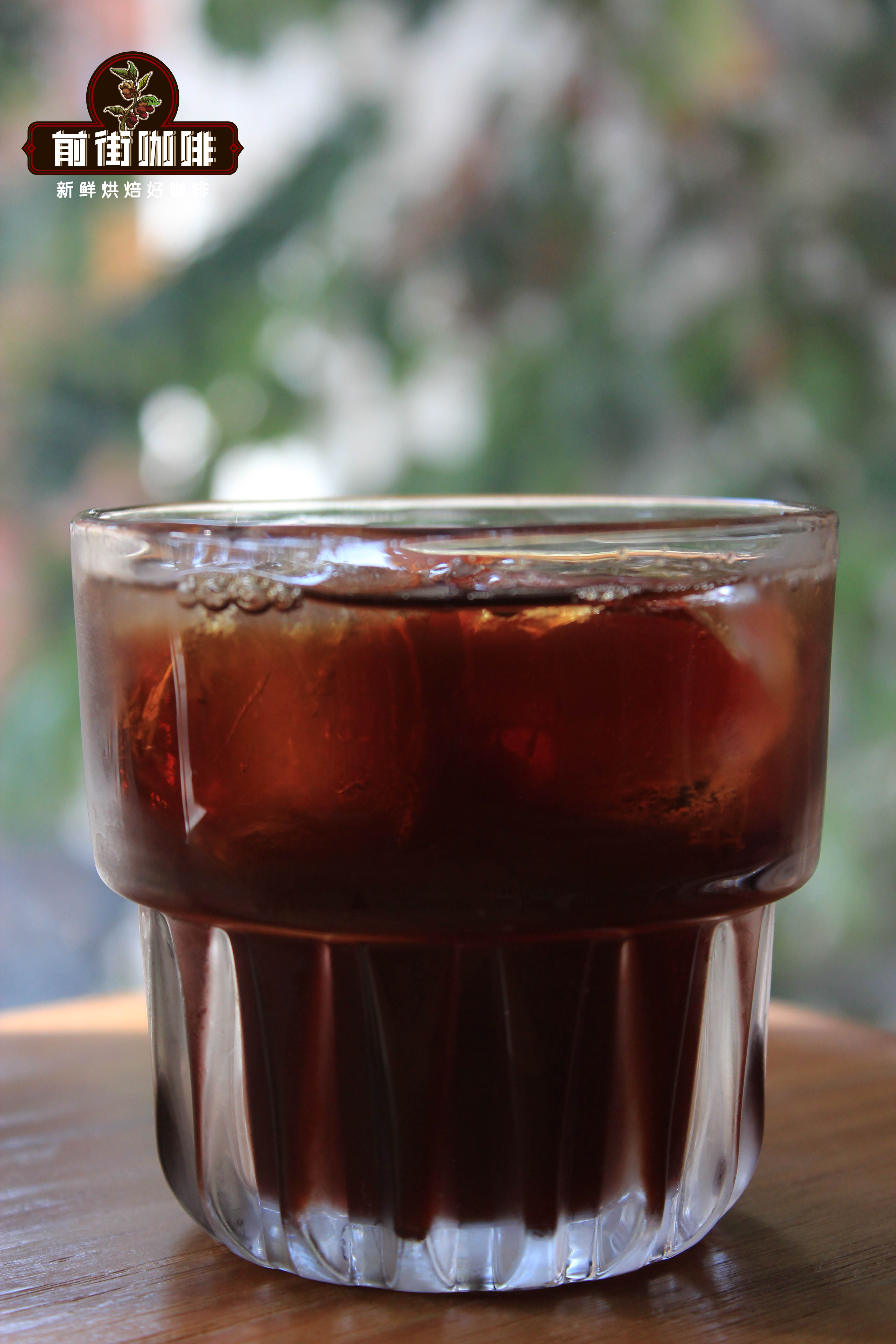
When the summer heat hits, nothing beats a glass of iced coffee. But walk into any specialty cafe and you'll find a whole family of chilled drinks—iced pour-over, ice drip, cold brew, iced Americano—and the differences between them can be genuinely confusing. Each one is built on a different extraction logic, and that logic shapes the final cup. In this guide, FrontStreet Coffee breaks down what sets these iced coffees apart and how to make each of them at home.
Iced Pour-Over Coffee
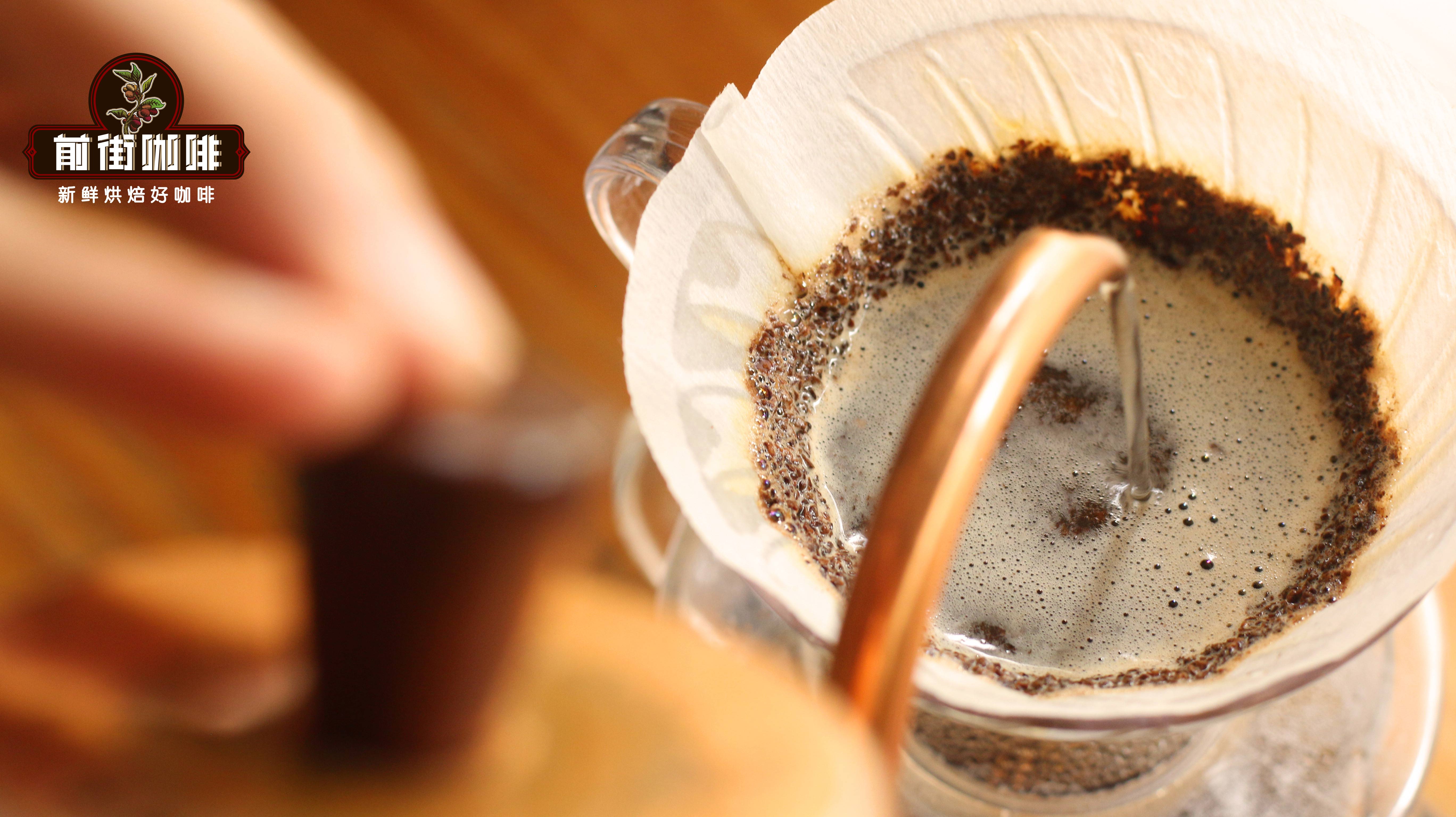
Iced pour-over is often called Japanese-style iced coffee, and the simplest way to understand it is: brew hot coffee as usual, but with less water, then cool and dilute it with ice. Because the ice will melt into the finished brew, you deliberately brew a concentrated base so the melting ice brings the drink back to a balanced strength instead of watering it down.
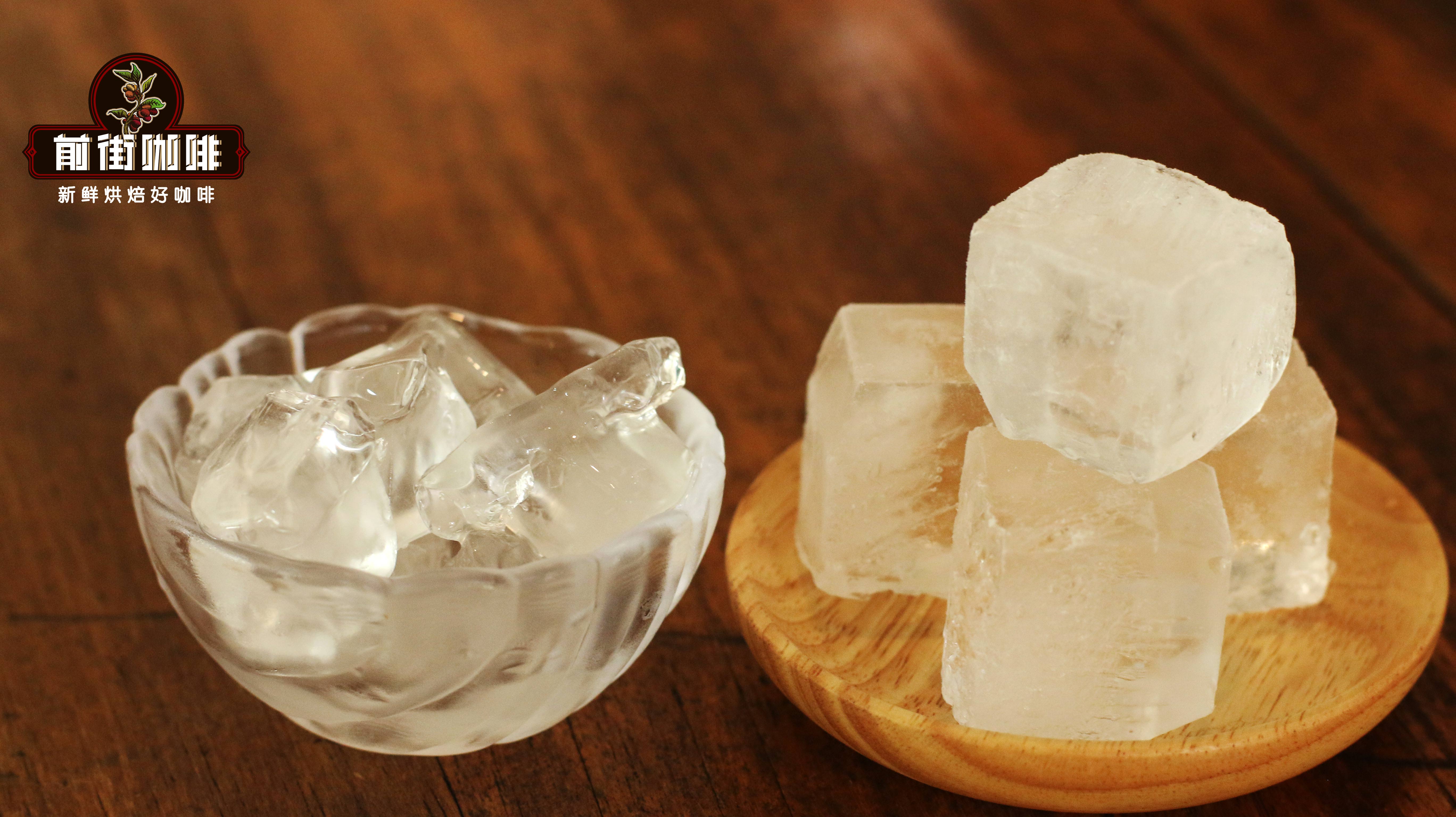
FrontStreet Coffee's recipe uses a 15-gram dose as an example. Grind slightly finer than you would for a hot pour-over—for reference, where a hot brew with a light roast might target an 80% pass rate on a #20 sieve, the iced version calls for about 85%. The dose-to-water-to-ice ratio is 1:10:5. Water temperature stays the same as hot brewing: 90–93°C for light roasts, 87–89°C for medium-dark roasts. Once the brew finishes, swirl or stir the server so the ice melts evenly and the concentration stays consistent throughout.
In effect, iced pour-over captures the early and middle stages of extraction—the brightest, most aromatic compounds—then chills and dilutes them with an equal proportion of ice. The result is a clean, crisp cup that puts the coffee's primary flavors front and center.
Ice Drip Coffee
Ice drip coffee is made by letting ice water drip slowly, drop by drop, through a bed of coffee grounds. It is a patient process: a full extraction typically takes 6 to 8 hours. Think of it as a low-temperature, slow-drip version of filter coffee.
FrontStreet Coffee's ice drip setup uses 60 grams of coffee to produce 600 ml of coffee liquid—a coffee-to-liquid ratio of 1:10. Grind a touch finer than for pour-over; on a #20 sieve, aim for a pass rate of around 85%. The ice-to-water mix is 1:1, and the throttle valve is set to release 7 drops every 10 seconds. The whole extraction runs roughly 6 to 8 hours, after which the coffee is bottled and refrigerated for 12 hours before serving.
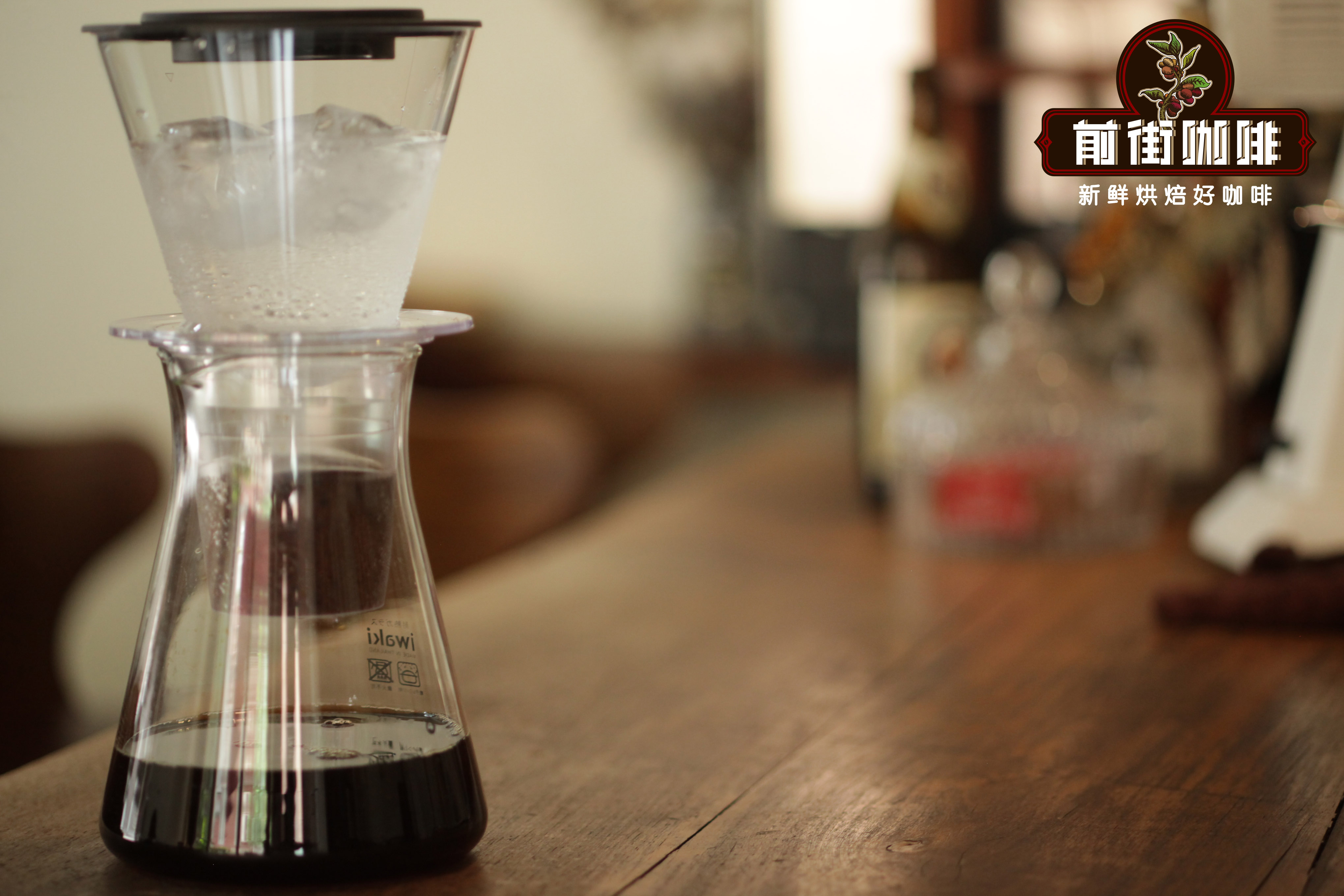
Because the extraction happens entirely with ice water over many hours, small-molecule compounds—florals and bright acidity—come through easily, while large-molecule compounds like the harsh bitterness of tannins barely extract at all. The long rest in the bottle adds a gentle low-temperature fermentation note, layering a subtle fermented tang over the beans' natural sweetness. The finished cup is icy, aromatic, and remarkably smooth.
Cold Brew Coffee
Cold brew is the most forgiving of the bunch: steep coffee grounds in water at a low temperature for a long time, then filter, and you're done.
FrontStreet Coffee's cold brew recipe starts with 50 grams of coffee, ground to about an 85% pass rate on a #20 sieve. Add the grounds to a glass bottle along with 400 ml of room-temperature water and 200 grams of hard ice cubes—a total of 600 grams of ice-water mix, for a 1:12 coffee-to-water ratio. Stir thoroughly to wet all the grounds, seal the bottle, and refrigerate it.
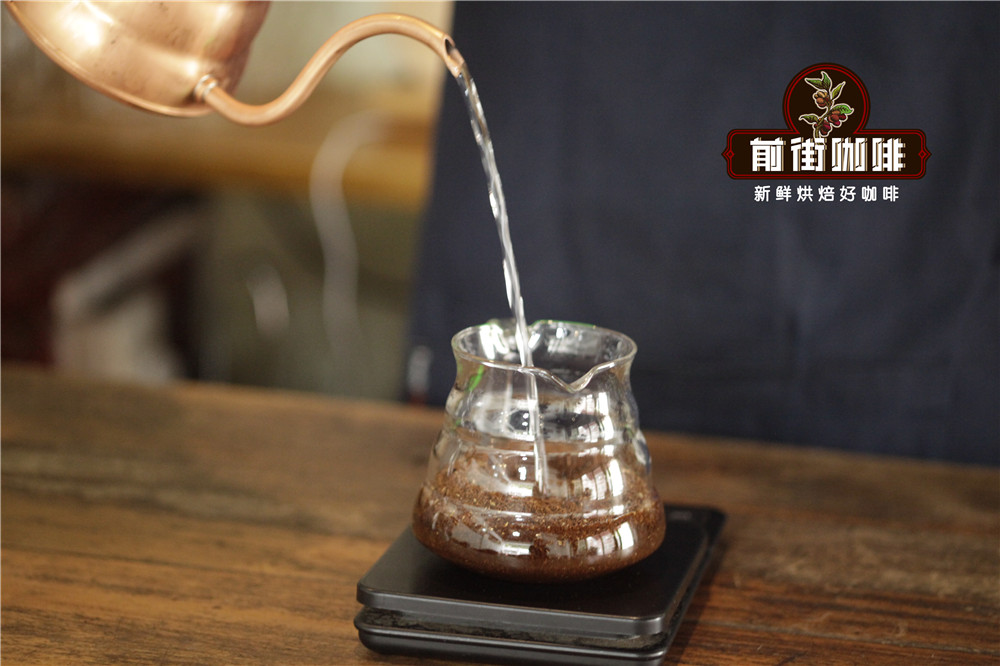
After 12 to 24 hours in the fridge, filter the liquid through filter paper to remove the grounds, transfer it to a clean sealed bottle, and chill it for another 4 hours or so before drinking.
Cold brew won't be as crystal-clear as ice drip—a thin layer of oils tends to float on the surface. Flavor-wise it sits slightly heavier and more rounded than ice drip, with a fuller, more balanced texture.
Iced Americano
At FrontStreet Coffee's shops, the iced Americano is built on the house-roasted FrontStreet Sunflower Warm Sunshine espresso blend: 60% FrontStreet Honduras Sherry Cask beans blended with 40% FrontStreet Natural Red Cherry Project Yirgacheffe beans. The Sherry Cask component contributes dark chocolate and whiskey notes, while the natural Yirgacheffe supplies the acidity and adds complexity to the cup.
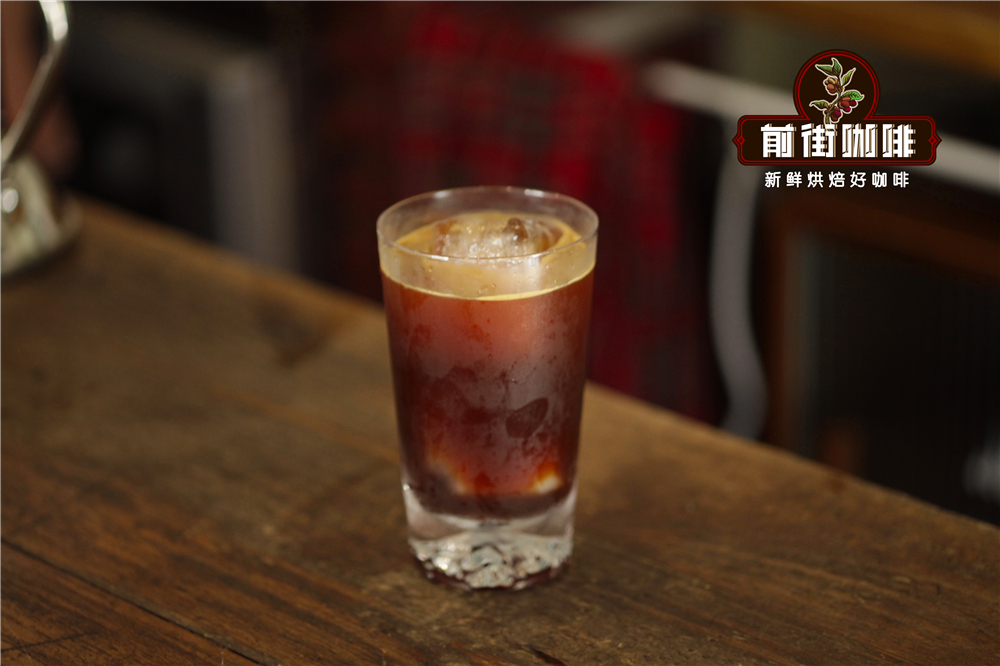
The espresso is then mixed with ice water at a ratio of 1 part espresso to 6 parts ice-water mix. The resulting iced Americano drinks refreshingly light, leaning toward dark cocoa with a bright acidic edge—balanced, layered, and easy to finish on a hot day.
FrontStreet Coffee Recommendation
Cold extraction amplifies florals and fruit notes while muting woody and roasty tones, so lightly to medium-roasted beans are the natural starting point. If you want a floral-forward iced coffee, FrontStreet Coffee's Natural Blossom (Huakui) from Ethiopia is the one to reach for: thanks to the natural process, the beans absorb a wealth of sweetness from the fruit pulp and skin, yielding notes of magnolia, creamy strawberry, dried mango, guava, and black tea when brewed cold.
For a cold brew with serious juice-like body, FrontStreet Coffee's Kenya Cherry Tomato is hard to beat. Grown at 1,550–1,750 meters in Thika on SL28 and SL34 varieties and processed with the local signature K72 double-washed fermentation, it delivers cherry tomato, snow pear, black plum, and dried dark plum flavors with bright, full acidity and very low bitterness over ice. Alternatively, the washed Yirgacheffe Guodingding from Ethiopia's Didding cooperative is an economical all-rounder suited to pour-over, siphon, French press, and cold brew alike, showing sweet berries, layered fruit, and honey in the cold brew cup.
If you'd rather experiment with blends, try cutting the pricier FrontStreet Colombia Sidra with FrontStreet Costa Rica Tarrazu at a 1:2 ratio—you keep the passion fruit, grape, and apricot aromatics of the former alongside the crisp citrus acidity of the latter, at a friendlier price. For something more indulgent, the FrontStreet Strawberry Candy Geisha blend combines Panama Geisha's rose and orange character with honey-processed Costa Rican notes of grape, dried blueberry, and strawberry candy—let it ferment briefly after brewing and it takes on a wine-like finish.
Important Notice :
FrontStreet Coffee is a long-established specialty coffee roaster in Guangzhou China, selling freshly roasted beans from its own farm in Yunnan as well as dozens of carefully selected single-origin beans from around the world for both pour-over and espresso. The products deliver consistently excellent quality and great value, with shipping within 24 hours. Guangzhou's FrontStreet Coffee shop is recommended by many coffee lovers, and the beans are now available online at the Tmall 。
FrontStreet Coffee has moved to a new address:
FrontStreet Coffee Address: 315,Donghua East Road,GuangZhou
Tel:020 38364473
 Scan and follow the En Gafei WeChat official account. Please indicate that the reprint comes from "En Gafei".