Coffee Tasting Article | How to Taste Typica and Bourbon Coffee - The Flavor Differences Between the Two
Professional Coffee Knowledge Exchange
A guided tasting of Typica and Bourbon - the flavor differences between the two great Arabica branches.
Understanding Black Coffee
Some people believe black coffee simply means bitter coffee. Coffee's bitterness has long been debated. Some say: "How can it be called coffee if it's not bitter?" Others say: "Good coffee has a pleasant bitterness."
Black coffee (also called pure coffee) is coffee served plain, without additives like sugar or creamer - Americano, espresso, and single-origin coffee all qualify.
Single-Origin Coffee
Today, let's explore single-origin coffee. As the name suggests, it comes from a specific place - typically as specific as a farm, cooperative, or estate. The terroir of a coffee - the geography, climate, soil, and other conditions of a particular place - gives each single origin its unique flavor profile.
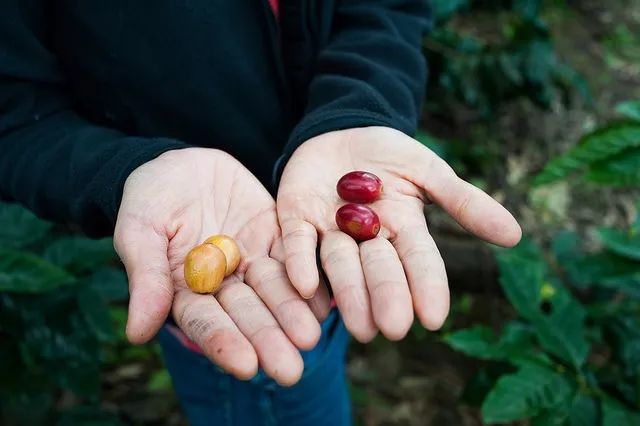
Typica and Bourbon Varieties
Like wine, coffee has many varieties. But only two have true commercial value and are widely cultivated, producing beans of higher quality than other coffee trees.
Biologically, coffee divides into Arabica, Robusta, and Liberica. The varieties consumed worldwide are mainly Arabica and Robusta: Arabica is generally used for single-origin or specialty coffee, while Robusta typically goes into instant coffee. From both a cultural and a genetic standpoint, Bourbon and Typica are the two most important branches of Arabica.

The Spread of the Bourbon Variety

Red Bourbon Coffee
Brazil Washed Red Bourbon Coffee
Because the Typica variety introduced to Brazil in 1727 yielded poorly and fell to disease easily, the Bourbon variety was brought to Brazil around 1860 through Campinas in the south and rapidly spread northward to other parts of South and Central America. Today in Latin America, although Bourbon has largely been replaced by its variants (particularly Caturra, Catuai, and Mundo Novo), it is still grown in countries such as El Salvador, Guatemala, Costa Rica, and Peru.
Generally, after flowering and fruit set, Bourbon cherries change color from green to pale yellow to light orange to mature red and finally a darker red when fully ripe - which is why some call it "Red Bourbon." In fact, Red Bourbon is simply Bourbon as we usually know it. Bourbon grown at high altitude typically shows better aroma, brighter acidity, and sometimes even wine-like flavors.
Simply put, Bourbon is an Arabica-family variety that typically bears red fruit - hence Red Bourbon. There are also Yellow Bourbon and Orange Bourbon; Yellow Bourbon yields less but tastes better.
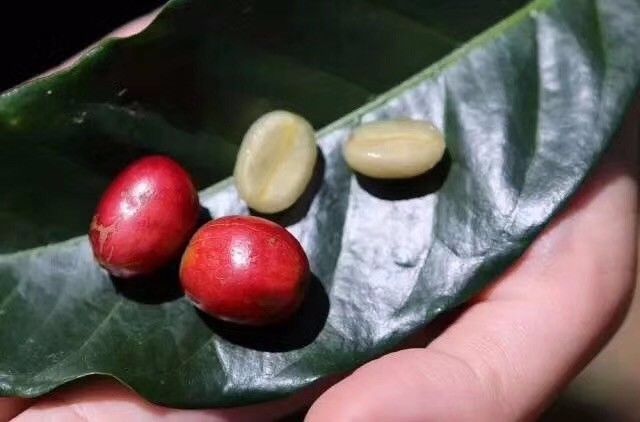
Red Bourbon Coffee
Tanzania Missionary Washed Bourbon
In Africa, French missionaries of the Holy Ghost congregation - the Spiritans - played a major role in spreading Bourbon. The first mission was established on Réunion in 1841, with a branch in Zanzibar in 1859. From Zanzibar, further branches followed in 1862 in Bagamoyo (on the Tanganyikan coast, now Tanzania) and St. Augustine's (Kikuyu, Kenya), and in 1893 in Bura (Taita Hills, Kenya). Each new mission brought coffee seeds from Réunion.
In 1899, seedlings raised in Bura were taken to another French mission at St. Austin's (near Nairobi) and introduced to the Kilimanjaro region of Tanzania. Seeds were distributed to local residents willing to grow coffee - the origin of what is called "Missionary Bourbon." The Kent variety arrived later, in 1920, so Tanzanian coffee remains predominantly Bourbon and Kent to this day.
Variety: Bourbon, grown at altitudes between 1,000-2,500 meters. Its refreshing acidity and medium body complement sweet citrus and floral aromas.
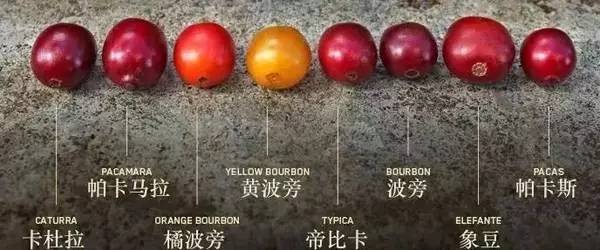
Bourbon Varieties
Costa Rica Caturra
Caturra: a single-gene mutation of Bourbon with better yield and disease resistance than its parent. The plants are shorter, which makes harvesting easier, and they adapt well - they can be planted at high density without shade trees and thrive even in direct sunlight, earning the nickname "Sun Coffee."
Caturra suits altitudes from 700 meters up to 1,700 meters, and the higher it grows, the better the flavor. Top Costa Rican coffee is graded "Strictly Hard Bean" (SHB), grown above 1,500 meters.
Costa Rica was the first Central American country to cultivate coffee, with a long history and a complete system from production to sales. Situated on the Central American isthmus with numerous volcanoes, it enjoys natural advantages of sunlight and soil. Its coffees carry the character of local microclimate terroirs, and in both quality and quantity Costa Rican coffee is recognized worldwide as among the finest, producing beans of complete, rich flavor.
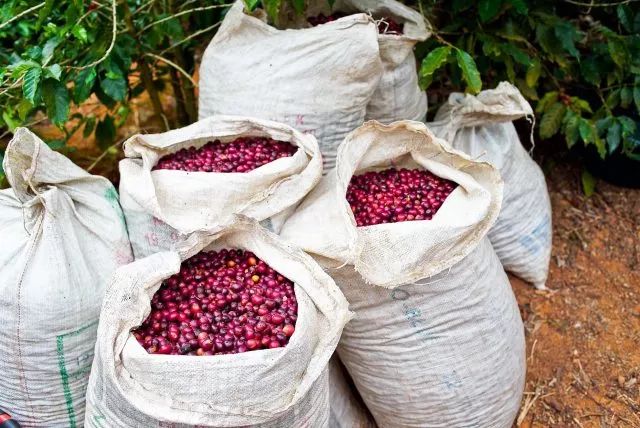
The Spread of the Typica Variety

Typica Coffee
Yunnan Baoshan Typica Coffee
Typica: the classic high-quality Arabica variety from which many commercial cultivars descend. It delivers excellent flavor and is recognized as a specialty variety, but it yields extremely poorly, is susceptible to leaf rust, and demands more intensive management. Typica originates from Ethiopia and southeastern Sudan and is the most widely planted variety in the Western Hemisphere. The plants are fairly vigorous but intolerant of direct sunlight, and they yield especially well in Hawaii. Typica's bronze top leaves earned it the name "red-topped coffee."
Baoshan City introduced Typica and Bourbon as early as the 1950s; locals call them the "old varieties." Because these old varieties have relatively low disease resistance and yields and need more labor, they are rarely planted at scale - yet botanically, Yunnan small-bean coffee shares its genetics with the celebrated Jamaica Blue Mountain and Hawaii Kona coffees.
Unlike other varieties, Typica's fruits are cone-shaped. Properly cultivated, Typica shows high sweetness, pure flavor, and pleasant acidity. Yunnan Typica offers Asian herbal aromas, lively bright acidity, and a mouth-watering character, with balanced soft acidity and body, rich layers, and clear dark chocolate, honey, and brown sugar notes in the aftertaste; once fully cooled, the brown sugar sweetness stands out even more.
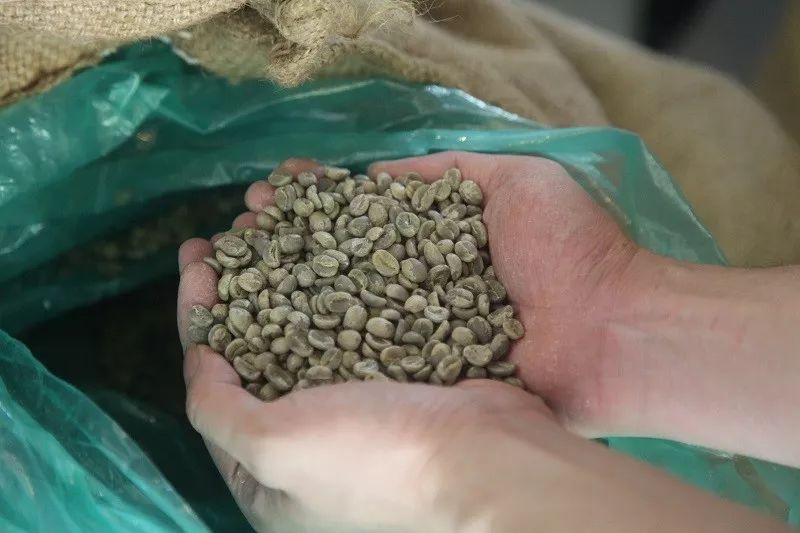
Typica Varieties
Sumatra Mandheling
Mandheling, also known as "Sumatra coffee," is mostly produced in northern Sumatra as Gayo, primarily of the Ateng variety. Coffee from around Lake Tawar in the north may be called Aceh coffee or Lake Tawar coffee, while the Lintong and Lake Toba areas further south produce what is properly called Mandheling - Lintong is the true Mandheling region. The best Mandheling lots come from four areas: Sidikalang, Bergendar, Siborong-borong, and Telok Sanggul.
Lake Toba lies in central North Sumatra Province. Dutch colonists moved "Java Mandheling" north to the Lake Toba region in 1888, creating the modern Mandheling legend.
Lake Tawar sits in central Aceh Special Autonomous Region, at the northern tip of Sumatra, with an area less than one-tenth of Lake Toba's. In recent years, however, its coffee quality and production have surpassed Lake Toba's.
Mandheling has a strong flavor with rich body and vibrant, lively intensity - neither astringent nor acidic, expressing itself fully through body and bitterness. Mandheling beans may be the ugliest-looking of all, but coffee lovers say the less attractive the Sumatra bean looks, the better, richer, and smoother it tastes.
Theme Drip Bag Series - Five Single-Origin Varieties
Five single origins covering Africa, Asia, the Americas, and beyond:
Brazil | Washed Red Bourbon
Tanzania | Missionary Bourbon
Yunnan | Baoshan Typica
Costa Rica | Washed Caturra
Indonesia | Sumatra Mandheling
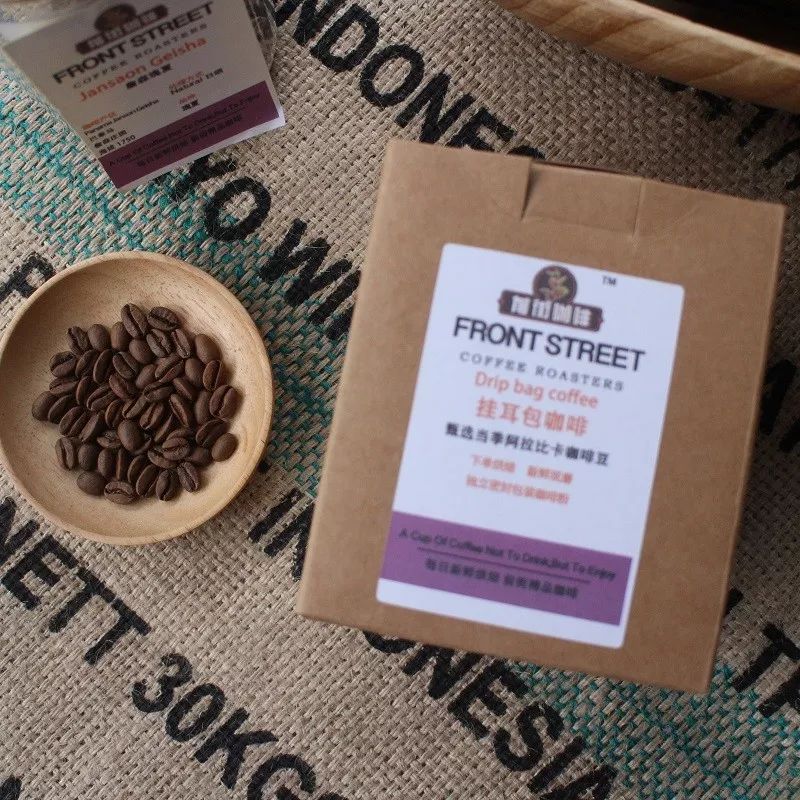
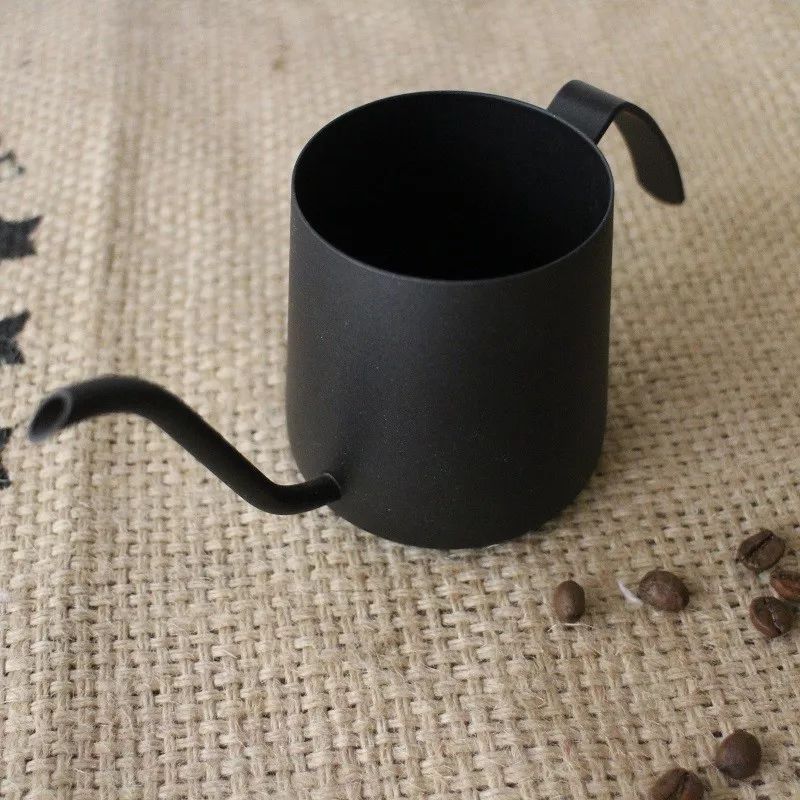
Tear, Hang, Brew, Drink
You can enjoy black coffee with nothing but hot water - very convenient.

FrontStreet Coffee Recommendation
If this tasting of Typica and Bourbon inspires you to brew black coffee at home, FrontStreet Coffee's Classic Blend is a natural starting point: a traditional Italian-style recipe built on Indonesian Mandheling, Brazilian Red Bourbon, and washed Vietnam beans. It combines the low acidity, herbal-woodsy depth of Asian coffee with the balance, smoothness, and creamy texture of the Americas, extracting aromas of butter, nuts, spice, and dark chocolate - as good in an Americano as in a latte, with wild character and abundant crema.
For a budget-friendly everyday Americano, the FrontStreet Black Cocoa blend - Yunnan small-bean coffee (a close genetic cousin of Typica) combined with Brazil Cerrado - offers nut, chocolate, and cream aromas with a soft, mature plum-like acidity. And if you want something sweeter and brighter, the medium-roast Strawberry Candy espresso blend gathers washed, natural, and honey-processed Arabica from Colombia, Costa Rica, and Ethiopia: low bitterness with rose, grape, dried blueberry, sweet orange, and candy-like flavors, finishing on a distinctive almond note.
Important Notice :
FrontStreet Coffee is a long-established specialty coffee roaster in Guangzhou China, selling freshly roasted beans from its own farm in Yunnan as well as dozens of carefully selected single-origin beans from around the world for both pour-over and espresso. The products deliver consistently excellent quality and great value, with shipping within 24 hours. Guangzhou's FrontStreet Coffee shop is recommended by many coffee lovers, and the beans are now available online at the Tmall 。
FrontStreet Coffee has moved to a new address:
FrontStreet Coffee Address: 315,Donghua East Road,GuangZhou
Tel:020 38364473
 Scan and follow the En Gafei WeChat official account. Please indicate that the reprint comes from "En Gafei".