How Much Does Panama Geisha Coffee Cost? Is the Most Expensive Emerald Red Label Geisha Coffee Worth the Price?

We know Blue Mountain coffee is a premium among coffees, with dense aroma and a rich, mellow taste — but a price to match. Now there is a coffee that has drawn even more attention than Blue Mountain, hailed as one of the most expensive in the world: Panama Geisha, the coffee that can feel simply unaffordable. But you get what you pay for — so what exactly makes Panama Geisha so expensive?

Many friends — FrontStreet Coffee included — were astonished the first time they tasted Red Label Geisha: sweet rose florals, thick juice-like notes of berries, apricot and citrus, and richly layered flavors that left an unforgettable impression. When baristas speak of Geisha coffee, they usually mean Panamanian Geisha, and the most famous estate of all is Hacienda La Esmeralda.
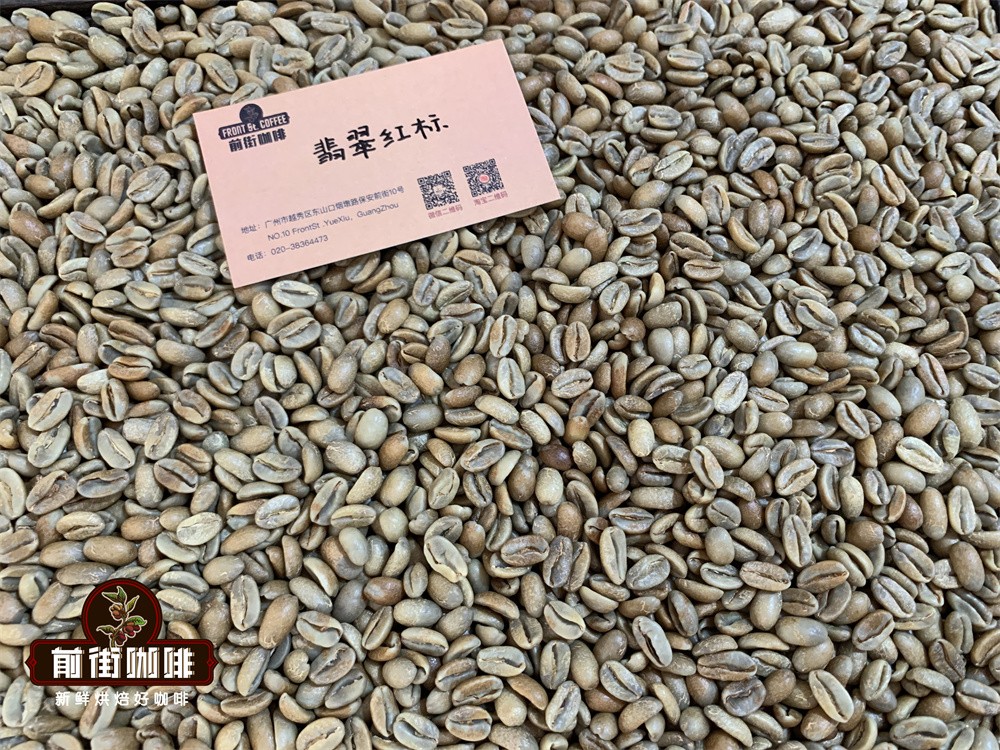
Panama Geisha Coffee Beans
Coffee is an agricultural crop, and its flavor is inseparable from its environment and climate. The Geisha variety is famously particular: it yields beans with rich, captivating floral aromas and delicate, elegant fruit acidity only where altitude is high, cloud or shade trees abound, and soil is fertile. Panama — that narrow ribbon of Central America connecting North and South America, bordered by Costa Rica and Colombia — was born with a silver spoon.

Panama Geisha owes its world fame largely to its terroir. All Panamanian coffee cultivation centers on the Chiriquí volcanic highlands, the jewel of which is the Boquete region. Unique volcanic soil, abundant water, regular rainfall, dense vegetation and cloud cover nourish the trees, which in turn produce beans of remarkable flavor richness. A patchwork of microclimates yields beans of many different flavor signatures — and Hacienda La Esmeralda sits right in the middle of it.
Geisha is, in fact, an Ethiopian variety, discovered in the Gori Geisha forest of Ethiopia in 1931 and sent to a top coffee research institute in Kenya.

In 1936 the variety was introduced to Uganda and Tanzania; Costa Rica took it in 1953; and finally, in the 1970s, Mr. Francisco Serracin of Panama's Tumba Estate received seeds from CATIE in Costa Rica and began planting Geisha. With extremely low yields and sales tied to auctions, it remained an obscure tree — low production, tall, hard to harvest. Nearly half a century after its discovery, Hacienda La Esmeralda separated the variety from the rest of its crop in 2003, and in 2004 it won the Best of Panama competition, thrusting Geisha into the spotlight at last.
The Rise of Geisha's Fame
Since conquering Panama's green bean competition, Geisha's reputation has spread like wildfire. Supply and demand did the rest: with production limited and everyone eager to try it, auction prices climbed from $350.25 per pound in 2013, to $803 per pound in 2018, to $1,029 per pound today. Each year sets a new record, and although more farmers now grow Geisha, the annual price increases show no sign of stopping.
After Geisha's breakthrough, Hacienda La Esmeralda beans became the favorite of competitors in coffee contests worldwide. Other Panamanian estates later cultivated Geisha of equally refined flavor and entered competitions and auctions themselves. At the 2019 Best of Panama, Panamanian Geisha kept its throne as the world's most expensive coffee at $1,029 per pound — one more weight on the price.

Getting Your Hands on Panama Geisha
Not all Panama Geisha is prohibitively expensive; it depends on the estate's reputation and whose Geisha is most refined. Some Panamanian Geisha without an estate name can still be excellent. FrontStreet Coffee's Boquete Geisha, for example, carries that unique, captivating orange-honey sweetness of Panama Geisha. For newcomers to specialty coffee hesitant to spend on premium Geisha, it is the perfect trial run at a friendly 98 yuan per 100g.

FrontStreet Coffee's roasted Esmeralda Red Label and Green Label Geisha are dependable in both brand and quality — and the value is remarkable. A 100-gram bag of Red Label costs only 350 yuan, and a bag of Green Label only 158 yuan. At 15 grams of beans per cup, one bag of Red Label brews 6 cups at about 60 yuan each. Against cafés charging hundreds of yuan per cup, that is an honest bargain.
Since Geisha's fame, coffee countries worldwide — other Panamanian estates included — have begun researching and growing the variety. Beyond Esmeralda's beans, FrontStreet Coffee also sources Costa Rica Geisha, Ethiopia Geisha and Colombia Geisha. All are worth trying, far cheaper than Esmeralda's, and still reveal the essential flavor character of the variety.

Hacienda La Esmeralda Geisha Red Label
Early Esmeralda Geisha was divided into Red Label, Green Label and Blue Label by planting altitude. But in the 2021 season, the estate announced the Blue Label series would be discontinued; it has vanished from the official site, leaving only Red Label and Green Label.
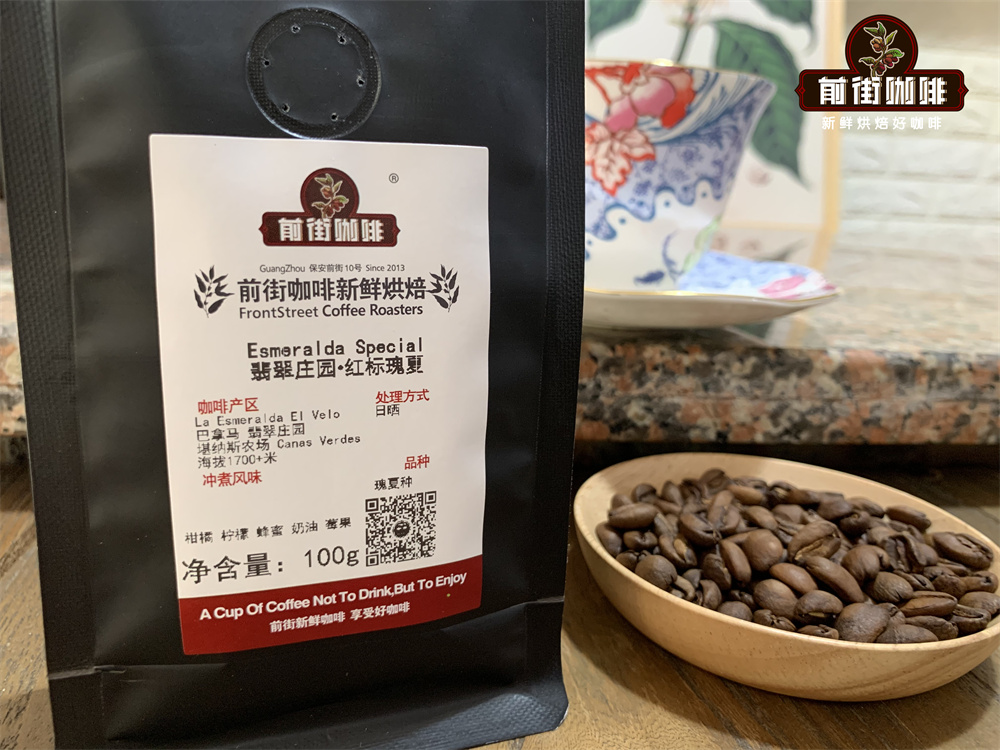
Red Label Geisha: the highest of Esmeralda's current Geisha grades. Those familiar with the brand know Red Label was originally rendered "Esmeralda Special" — the label's icon is red, hence the nickname. To qualify, beans must be grown between 1,600 and 1,800 meters and cup above 90 points. Red Label beans come mainly from the Jaramillo and Cañas Verdes farms, carry extremely rich Geisha character, and can be traced to specific plots — detailed information for anyone who wants to know their coffee deeply.
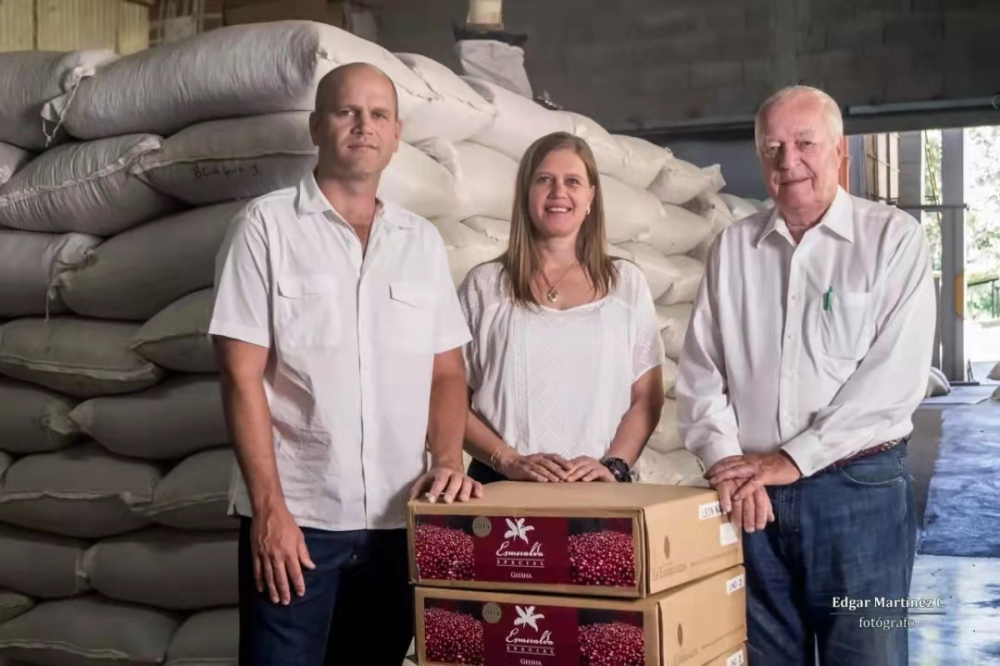
FrontStreet Coffee's bean shelf could hardly miss this classic. The Red Label we source comes from the Mario plot of the Jaramillo farm — the very plot where the legendary Geisha flavor was first discovered, and part of the same farm that won Best of Panama in 2004.

FrontStreet Coffee's Esmeralda Estate Red Label Geisha is naturally processed, which intensifies the typical Geisha character, deepens the flavor layers, and boosts sweetness and aroma. We chose the natural Red Label because it is the estate's most iconic Geisha, and natural processing lets that iconic flavor express itself fully.
FrontStreet Coffee Geisha Brewing Suggestions
FrontStreet Coffee's baristas note that Geisha is lightly roasted, and light roasts dissolve their soluble compounds more slowly than dark ones. To extract Geisha's flavors fully, they brew with hotter water and a finer grind.

FrontStreet Coffee Brewing Parameters
Recommended parameters: Hario V60 dripper, 90°C water, 15g of coffee, a 1:15 coffee-to-water ratio, and a medium-fine grind (80% pass rate on a Chinese standard #20 sieve).
FrontStreet Coffee Brewing Technique
FrontStreet Coffee uses segmented, three-stage pouring. Bloom with 30g of water for 30 seconds. Pour in small circles to 125g, then pause. When the water level drops and the bed is about to be exposed, pour again to 225g and stop. Remove the dripper once dripping finishes. Timed from the start of pouring, the total extraction is 2'00". Then swirl the full cup and pour for tasting.

Flavor Description
Red Label Geisha: bright rose and citrus aromas, brown rice, berries, apricots, complex fruits and honey, with a thick juice-like mouthfeel, richly layered flavors and noticeable sweetness.
For brewing, FrontStreet Coffee always insists that freshly roasted beans best express a coffee's richness — every bean we sell is roasted within 5 days. Our philosophy is "Freshly Roasted, Good Coffee," so every order arrives at peak freshness. Beans degas for about 4–7 days, meaning your coffee lands exactly when flavor is at its height.

If you'd rather have the beans pre-ground, that's fine — but a reminder: pre-ground coffee should be brewed promptly. Ground coffee needs no degassing (during shipping, the pressure of carbon dioxide in the package actually mellows the flavor), so you can brew the moment it arrives. However, ground coffee oxidizes fast in open air, and its flavor dissipates quickly. FrontStreet Coffee therefore suggests buying whole beans and grinding just before brewing to taste the fullest flavor.
Of course, FrontStreet Coffee carries more than 50 single origins, expensive and inexpensive alike. The best starting point is our seven "daily drinking" beans — the most representative flavors from seven producing countries, at exceptional value. For newcomers they are the perfect introduction, and the fastest way to discover which flavors you love. If you can, try them all: you may never tour every producing country, but you can experience them all right here.
FrontStreet Coffee Recommendation
While you explore the world of Geisha, don't overlook the classic that once defined premium coffee: Jamaica Blue Mountain. Genuine Blue Mountain grows only in Jamaica's certified Blue Mountain region, where peaks reach 2,256 meters under near-perpetual cloud, and the annual output of the entire area is under 2,500 tons — over 70% of which Japan has historically bought. The cup is balance incarnate: cream, caramel, chocolate, nuts, honey and a whisper of fruit, with no harsh acidity and no heavy bitterness — the specialty coffee most professionals call the easiest for anyone to love.
FrontStreet's Jamaica Blue Mountain No.1, from the historic Clifton Estate (farming coffee since roughly 1750 at about 4,300 feet / 1,310.64 meters), is medium-dark roasted to show that harmony in full: nuts, dark chocolate, cream caramel and gentle sweetness unfolding layer by layer. Authenticity is verifiable through complete Jamaican certification documents and the traditional wooden shipping barrels — the same barrels in which genuine Blue Mountain has always traveled.
Brewed by hand at a 1:15–1:16 ratio with 85–88°C water and a medium-coarse grind, or through a moka pot for a denser chocolate-and-caramel cup, it proves that a legend's price can still deliver a legend's pleasure.
Important Notice :
FrontStreet Coffee is a long-established specialty coffee roaster in Guangzhou China, selling freshly roasted beans from its own farm in Yunnan as well as dozens of carefully selected single-origin beans from around the world for both pour-over and espresso. The products deliver consistently excellent quality and great value, with shipping within 24 hours. Guangzhou's FrontStreet Coffee shop is recommended by many coffee lovers, and the beans are now available online at the Tmall 。
FrontStreet Coffee has moved to a new address:
FrontStreet Coffee Address: 315,Donghua East Road,GuangZhou
Tel:020 38364473
 Scan and follow the En Gafei WeChat official account. Please indicate that the reprint comes from "En Gafei".