
Flavor Profile and Characteristics of Costa Rican Coffee Beans - Introduction to Origin, Varieties, and Planting History
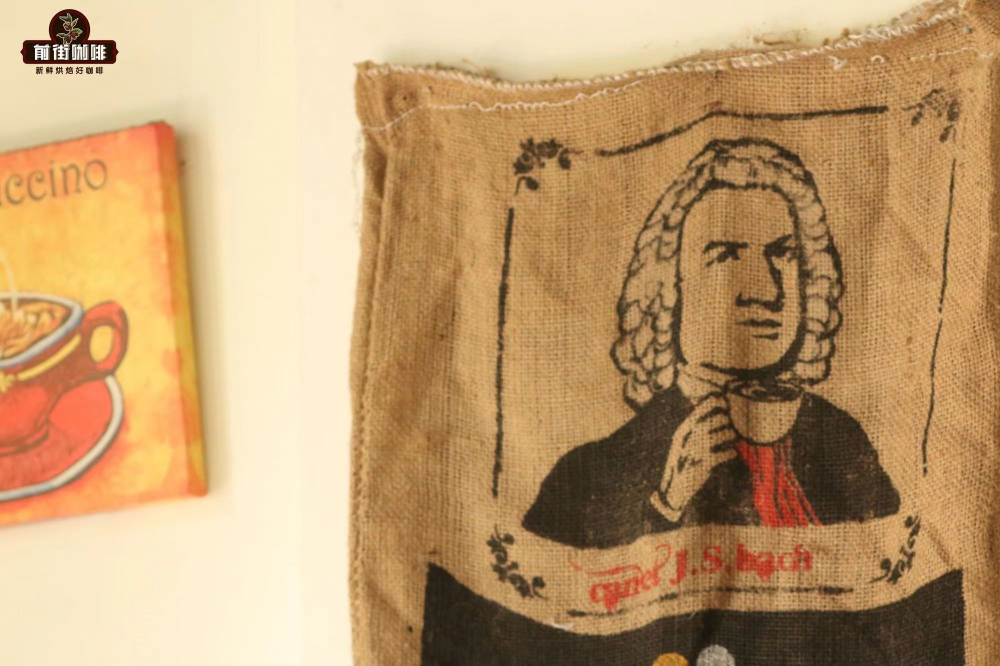
Costa Rican coffee is prized for its sweet fruit and floral aromatics, a rich and bold fragrance, and a refreshing, pleasant acidity. The bean list at FrontStreet Coffee includes several Costa Rican coffees, and with flavors this captivating, FrontStreet Coffee believes the credit belongs to the country's meticulous cultivation and its uniquely diverse honey processing methods.
Costa Rica
As the map shows, Costa Rica sits on the Central American isthmus, bordered by Nicaragua to the north and Panama to the southeast.

The whole country is knitted together by high mountains, with volcanic terrain across the Central Plateau. Fertile volcanic ash soil with low acidity, mild temperatures year-round, and stable, abundant rainfall have all helped make coffee the country's leading agricultural product.
Coffee Cultivation History
One of the first Central American countries to grow coffee, Costa Rica has a long cultivation history and remarkably mature production techniques. Coffee arrived from Cuba in 1729, giving the country nearly 300 years of growing experience. After independence from Spanish colonial rule in 1821, the government encouraged cultivation by granting land concessions and distributing coffee seeds to farmers free of charge. According to the Costa Rican Coffee Institute (ICAFE), there are now 29,918 coffee-growing households — proof of just how deeply coffee is woven into the country.
The government also maintains strict regulation and comprehensive laws for the coffee industry. In 1989, a law was enacted prohibiting the cultivation of the lower-quality Robusta variety. In 2001, the Costa Rican Coffee Institute began regulating the industry and launched the National Coffee Plan, requiring each producing region to sign quality improvement agreements under which processors commit to accepting and processing only ripe coffee cherries, thereby guaranteeing bean quality.
Coffee Growing Regions
Costa Rica has eight main coffee-growing regions: Brunca, Turrialba, Tres Ríos, Orosi, Tarrazú, Valle Central, Valle Occidental, and Guanacaste.
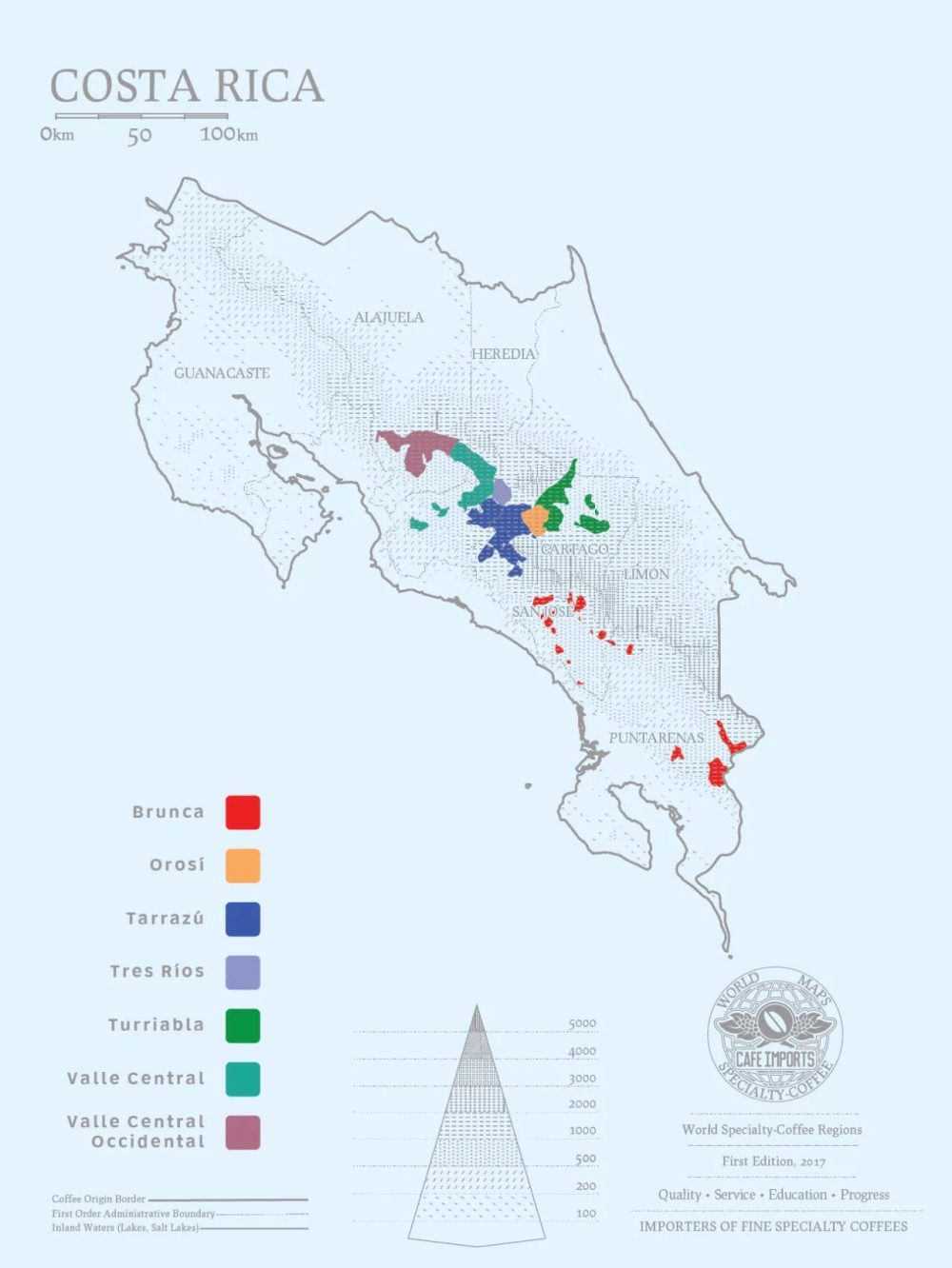
Each region differs in altitude, climate, and soil, producing coffees with distinct personalities. The highest and most famous of them is Tarrazú. FrontStreet Coffee believes that washed Tarrazú coffee best represents the character of Costa Rican coffee, which is why the washed Tarrazú was chosen as FrontStreet Coffee's Costa Rican daily bean.
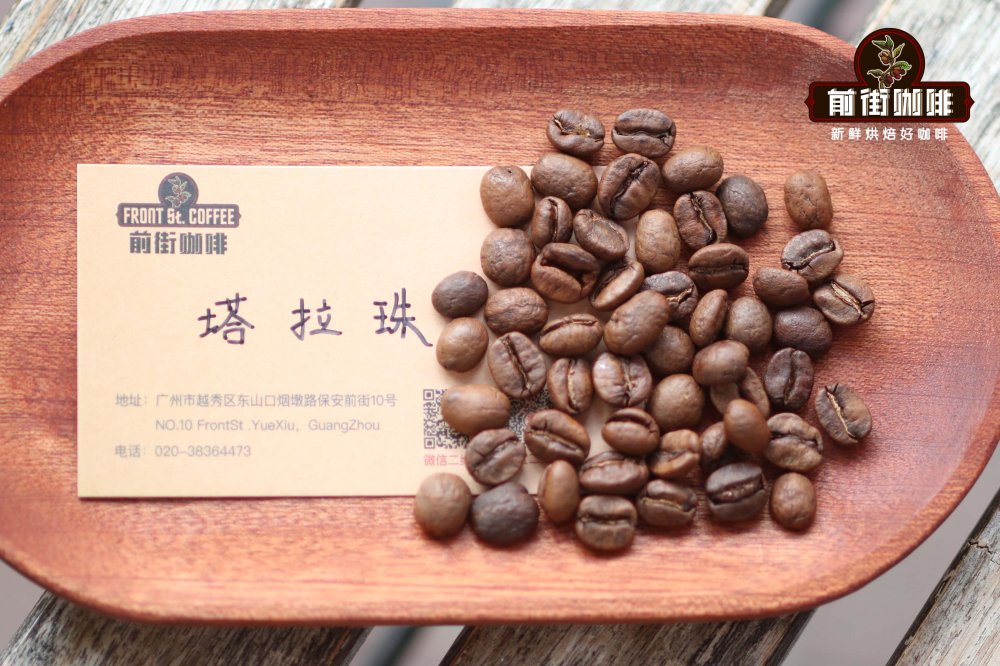
FrontStreet Coffee: Costa Rica Tarrazú Coffee Beans
Region: Tarrazú, Costa Rica
Altitude: 1500 meters
Varieties: Caturra, Catuai
Process: Washed
Flavors: Sweet orange, honey, toffee, nuts
The Tarrazú Region
What sets Tarrazú apart from other regions is altitude — roughly 1200-1700 meters — which widens the gap between day and night temperatures. Coffee cherries take longer to mature and absorb more nutrients, and the harvest runs from December through March of the following year. Beans grown at these heights are hard and full, with lively acidity and prominent fruit character.
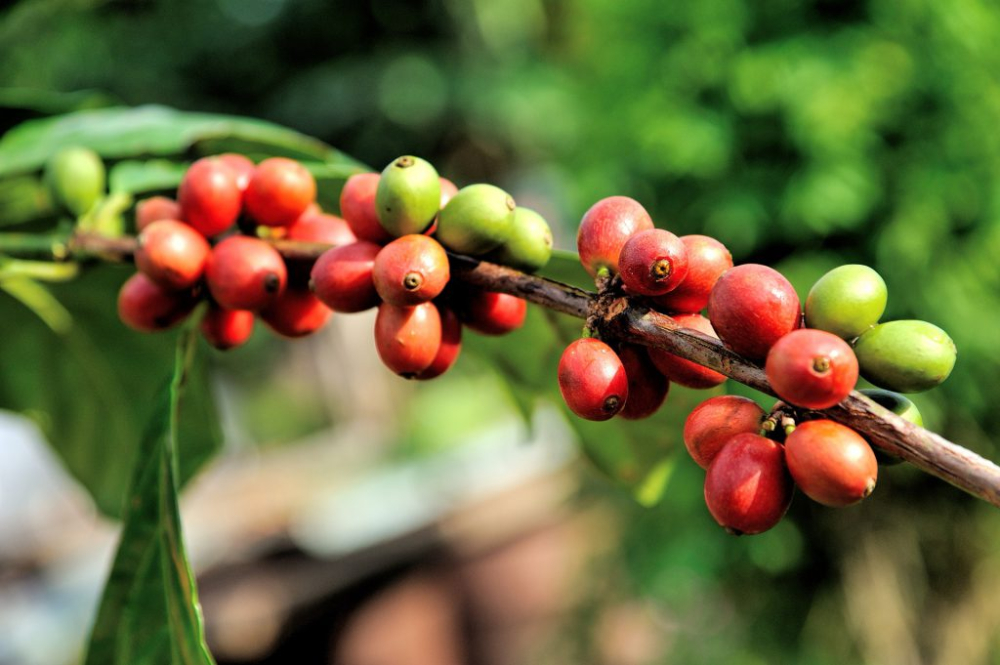
Tarrazú lies just south of the capital, San José, and local coffee cultivation and estate management receive exceptional care. Tarrazú coffee is grown mainly in the La Minita area, where the naturally superb terroir means little fertilizer is needed, and hand harvesting and sorting raise cherry quality even further.
Honey Process
Four processing methods are common for Costa Rican green coffee: natural, washed, honey, and red-wine (anaerobic) fermentation. Beyond the classic natural drying method and the washed process common across Central America, there is the locally invented honey process.
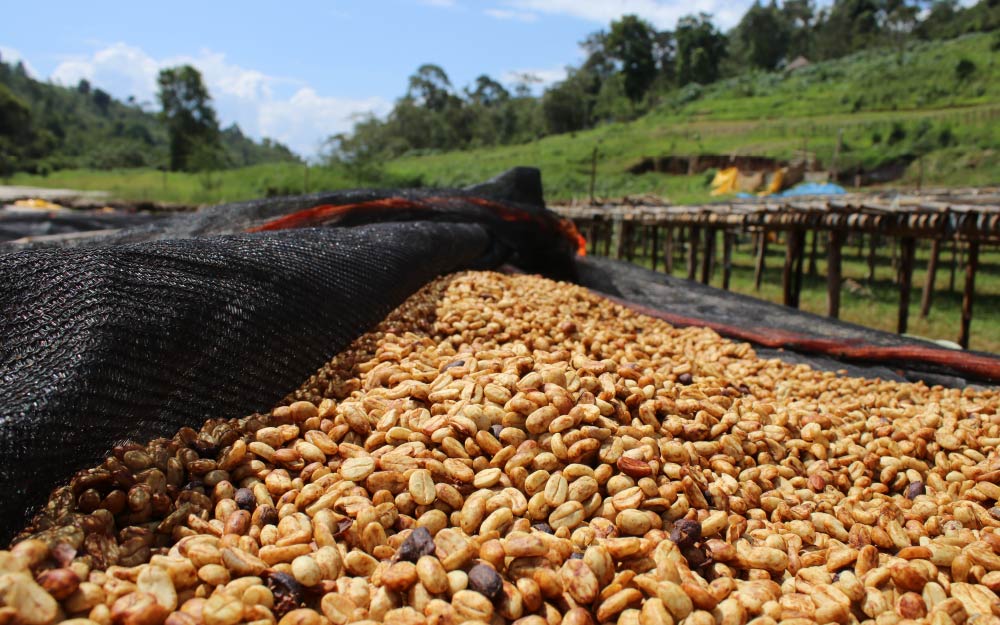
Farmers use machines to remove the skin and pulp of harvested cherries, then lay the beans — still coated in their sticky mucilage — out to dry in the sun. The mucilage is rich in sugar, and as the beans dry, those sugars and aromatic compounds ferment with the parchment, giving the coffee a juicier body and more complex aromatics. Hence the name of this semi-natural method: "honey process."

Depending on how much mucilage is retained, the process divides into yellow, red, and black honey. Yellow honey keeps about 60% of the mucilage, red honey about 75%, while black honey is dried with the mucilage layer essentially intact. The thicker the mucilage, the longer the drying takes. High temperatures accelerate fermentation of the pulp and mucilage and can easily lead to mold or over-fermentation and negative flavors. The great advantage of honey processing is that it needs far less water — no large tanks or drying patios — which makes it ideal for Costa Rica's many micro-mills.
As specialty coffee has grown popular and micro-lots have multiplied, honey processing has diversified too. Alongside the three classic styles, raisin honey process coffee — represented by the Musician Series — has become a favorite. Before the honey process begins, the cherries are soaked in tanks and any defective floaters removed, then sun-dried for more than three days until the cherries reach a "raisin" state. Only then are the skin and pulp removed and the usual honey-process steps followed. This method demands much tighter control of drying time, and the resulting sweetness shows more layers. FrontStreet Coffee's Musician Series, including Mozart and Bach, uses this process.
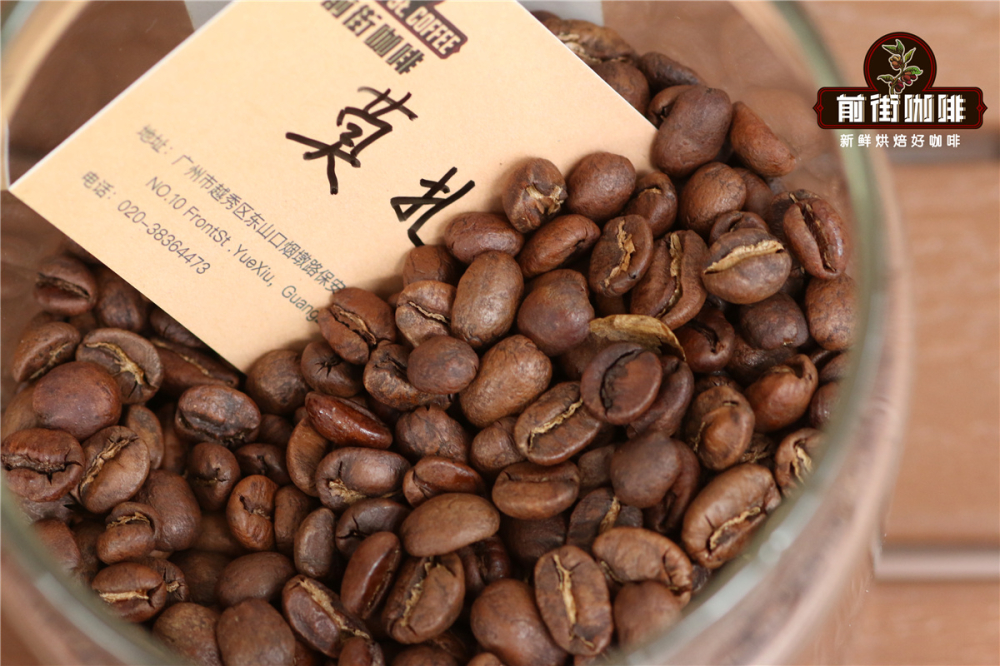
FrontStreet Coffee: Mozart Coffee Beans
Region: Tarrazú, Costa Rica
Estate: Canet Estate
Altitude: 1900 meters
Varieties: Caturra, Catuai
Process: Raisin anaerobic honey
Flavors: Raisin, osmanthus, sweet orange, berries, pineapple
Varieties and Green Bean Grades
The main varieties in Costa Rica are Caturra and Catuai.
Caturra, a natural mutation of Bourbon, was discovered by Brazilians in 1927. It out-yields Bourbon with better disease resistance, and its compact tree makes harvesting easier while growing well even without shade trees. The bean shape closely resembles Bourbon, with a bright overall flavor and comfortable sweetness. Catuai is a cross of Caturra and Mundo Novo, inheriting Caturra's short stature; its fruit clings more firmly than Caturra's and resists dropping in strong winds. Its flavor highlights fresh fruit aromatics.
Costa Rican coffee is graded into three classes by altitude: beans grown above 1500 meters are Strictly Hard Bean (SHB), those from 1100-1500 meters are Good Hard Bean (GHB), and those below 1000 meters are Hard Bean (HB). Strictly Hard Beans from the highest zones show markedly brighter acidity and richer flavor. FrontStreet Coffee's washed Costa Rica Tarrazú daily bean is a full-grained Strictly Hard Bean (SHB) lot.
Brewing Suggestions
To explore the flavors of Costa Rica's different processing methods, FrontStreet Coffee has tasted both the washed Tarrazú and the raisin anaerobic honey Mozart. For coffee beginners, one small suggestion: to grasp the representative flavor of a producing region, start with the washed version. It is no accident that most of FrontStreet Coffee's daily beans are washed — this is the clearest way to taste a region's fundamental character, and once you know it, you can follow your own palate toward more experimental processes.
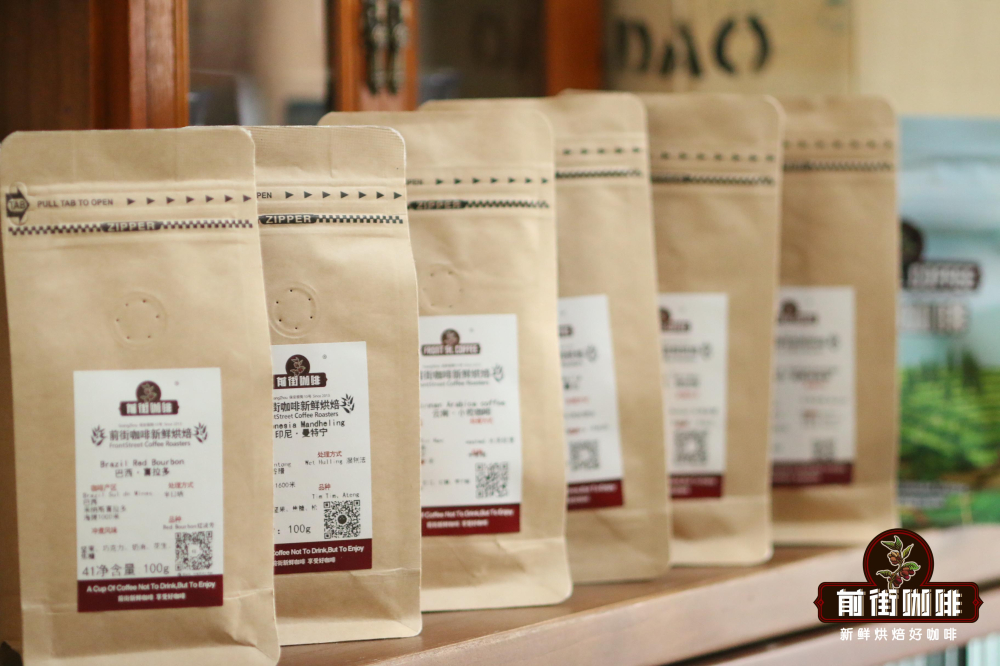
To bring out the best aromatics of Costa Rican beans, FrontStreet Coffee recommends brewing freshly roasted coffee. Every bean FrontStreet Coffee sells is roasted within 5 days, so by the time your order arrives it is right at its optimal drinking window — freshness, FrontStreet Coffee knows, is everything for flavor.
For customers without a grinder at home, FrontStreet Coffee offers a grinding service. Since coffee loses aroma faster once ground, FrontStreet Coffee also suggests investing in your own grinder where possible, to capture the fullest flavor in the cup.
For roasting, FrontStreet Coffee chooses a medium-light profile to highlight the floral and fruity character. Because dense, high-altitude beans need higher water temperatures to release their aromatics, a grind size close to granulated sugar — fine enough — makes the fruit flavors even richer.
Filter: V60
Water Temperature: 91°C
Dose: 15 grams
Ratio: 1:15
Grind Size: 80% passes through a No. 20 standard sieve
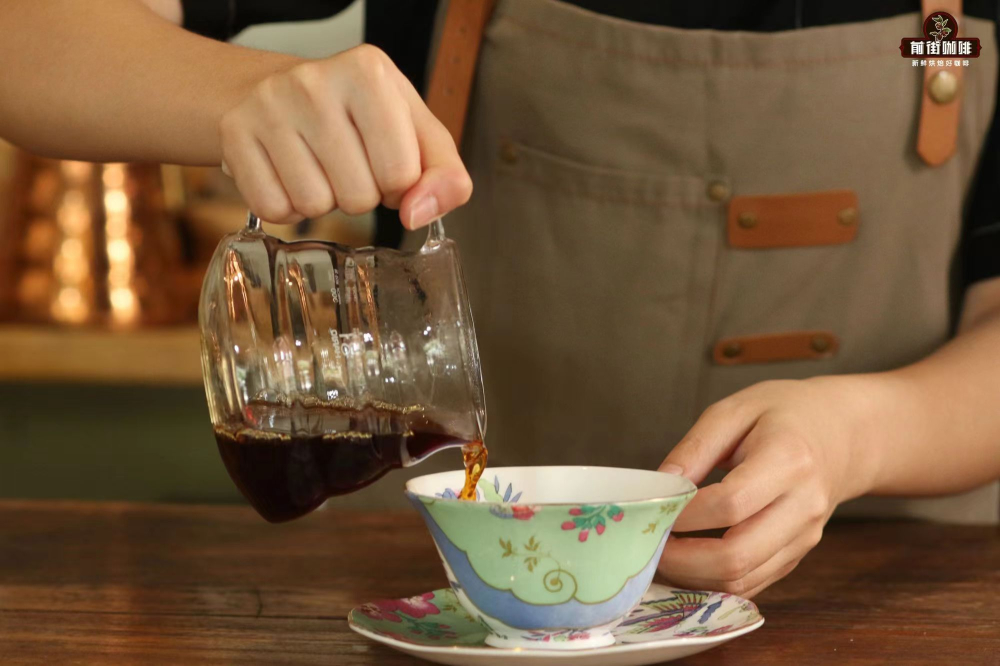
Once ground, the washed Tarrazú daily bean gives off nut and chocolate aromas, delivering a clear, clean berry-like sweetness and acidity in the cup. The raisin anaerobic honey Mozart, meanwhile, releases rich raisin and osmanthus aromas after grinding; on the palate it shows an intense tropical-fruit fermentation character reminiscent of cantaloupe, with acidity that softens as the cup cools, finishing like a delicate flower tea.
For professional coffee knowledge exchange and more coffee bean information, please follow Coffee Workshop (WeChat public account: cafe_style).
For more specialty coffee beans, please add the private WeChat of FrontStreet Coffee, WeChat ID: qjcoffeex
FrontStreet Coffee Recommendation: Cross the Border into Panama's Floral Geisha
If Costa Rica's bright acidity and honeyed sweetness have won you over, FrontStreet Coffee suggests crossing the border into Panama. The FrontStreet Boquete Washed Geisha grows at 1600 meters on the slopes of Baru Volcano, where cloud cover, cool nights, and fertile volcanic soil build an exceptionally rich aroma. In the cup you'll find the signature jasmine florals of Geisha alongside green tea, honey, citrus, and orange. Prefer something more approachable? FrontStreet's Flower Butterfly blends Geisha with Caturra and Catuai on the same volcanic terroir — full-bodied, citrusy, jasmine-scented, and excellent both as a pour-over and as cold brew.
Important Notice :
FrontStreet Coffee is a long-established specialty coffee roaster in Guangzhou China, selling freshly roasted beans from its own farm in Yunnan as well as dozens of carefully selected single-origin beans from around the world for both pour-over and espresso. The products deliver consistently excellent quality and great value, with shipping within 24 hours. Guangzhou's FrontStreet Coffee shop is recommended by many coffee lovers, and the beans are now available online at the Tmall 。
FrontStreet Coffee has moved to a new address:
FrontStreet Coffee Address: 315,Donghua East Road,GuangZhou
Tel:020 38364473
 Scan and follow the En Gafei WeChat official account. Please indicate that the reprint comes from "En Gafei".

