Introduction to Guatemalan Huehuetenango Coffee Bean Growing Region - Flavor Characteristics of Huehuetenango Coffee
Have You Ever Tried Coffee with a Smoky Note?
You may wonder how coffee can taste smoky at all, and the answer is that it can occur naturally. FrontStreet Coffee offers two Guatemalan beans with this distinctive smoky character: Huehuetenango and Guatemala Flor.
On a first taste, Guatemala Huehuetenango can be confused with Ethiopian washed Yirgacheffe, and Guatemala Flor with Ethiopian Red Cherry, since both pairs carry some fruit acidity. Taste more carefully, though, and the Ethiopian coffees show brighter florals and sharper acidity, while the Guatemalan coffees offer softer acidity, a more substantial mouthfeel and a hint of regional smokiness.
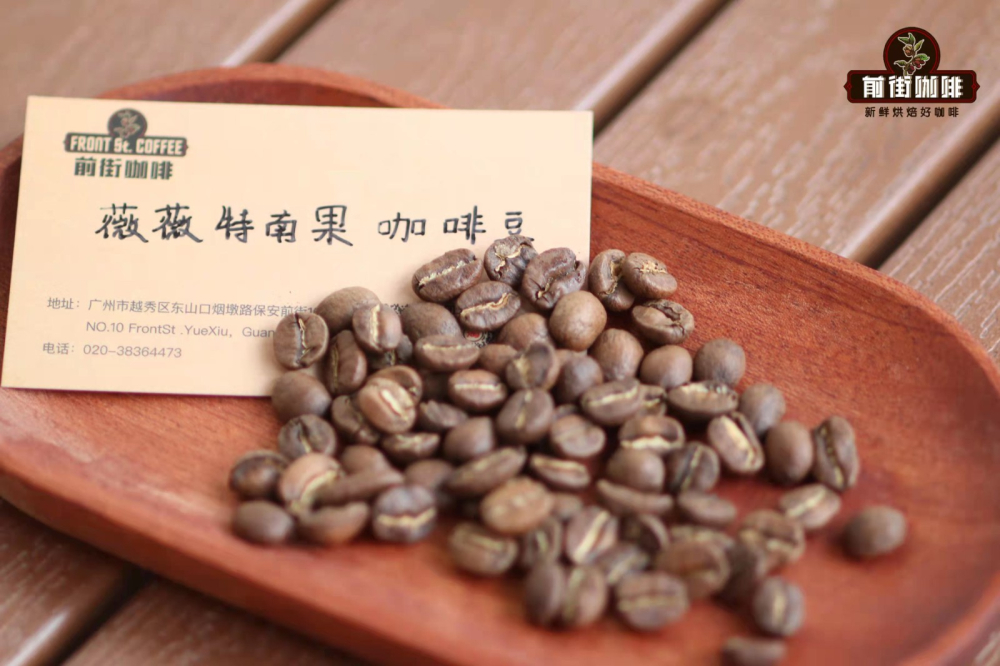
Guatemala produces some of the world's finest coffees, thanks to its high-altitude volcanic terrain, which gives the ideal conditions for cultivation. Compared with other coffees, cuppers particularly prize this spiced, layered flavor. The region's Strictly Hard Bean (SHB) coffee is especially rare, with full, flavorful beans and balanced acidity, and its large bean size has also brought Guatemala considerable attention.
Guatemala Antigua beans not only have a smooth surface, high hardness and excellent quality, but also a perfect balance of richness, acidity and sweetness, with a subtle smokiness that adds depth and mystery.
Guatemala Geography
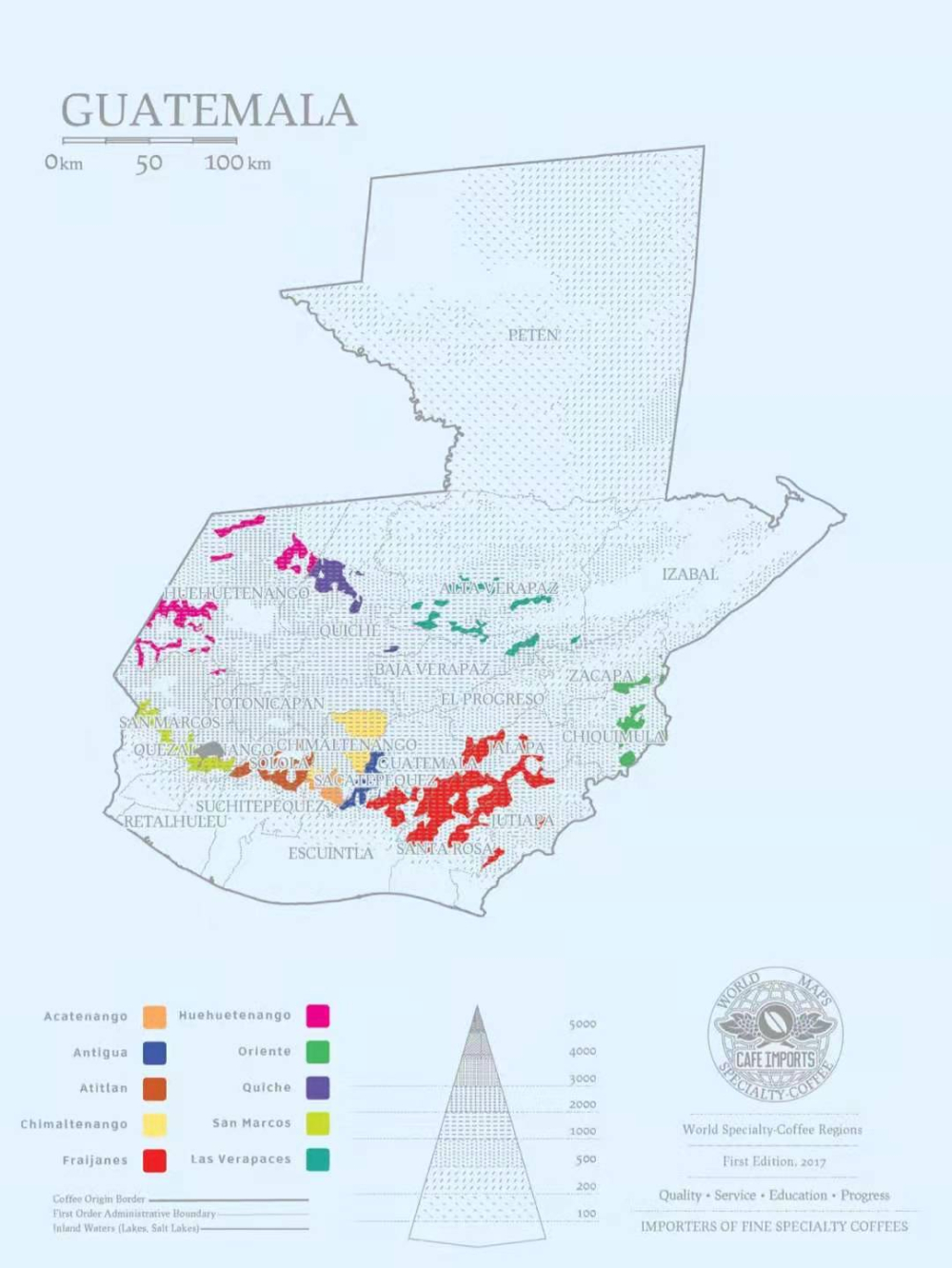
Located in the heart of the Americas, Guatemala occupies an important geographical position in Central America. The country covers approximately 108,899 square kilometers. Its landscape includes highland volcanoes, lowland tropical forests, Pacific coastal volcanic sandy plains and Caribbean coastal virgin land. The Central American Sierra Madre range runs across Guatemala from east to west, covering about two-thirds of the country, with 34 volcanoes within its borders. Rivers and lakes dot the landscape, while equatorial forest and jungle cover much of the land, and the Pacific and Caribbean coasts feature undeveloped volcanic beaches.
Guatemala Climate
Guatemala lies in the tropics. The northern and eastern coastal plains have a tropical rainforest climate, while the southern highlands have a subtropical one. The year divides into wet and dry seasons: May to October is the wet season, and November to April is the dry season. The narrow, fertile plains along the Pacific coast have a tropical climate. The central highlands, also Guatemala's cultural heartland, sit at 1,300 to 1,800 meters, where temperatures stay mild year-round, between 18-28°C by day. At higher elevations, January and February tend to be colder.
Annual rainfall in the northeast ranges from 2,000-3,000 millimeters, while the south receives 500-1,000 millimeters. Guatemala's average altitude is high, with coffee growing zones distributed above 1,500 meters between 14-16 degrees north latitude, ideal for producing Strictly Hard Beans. All of it is washed processed, and 45% is classified as specialty grade, a remarkably high proportion, with a small amount of Robusta as well.
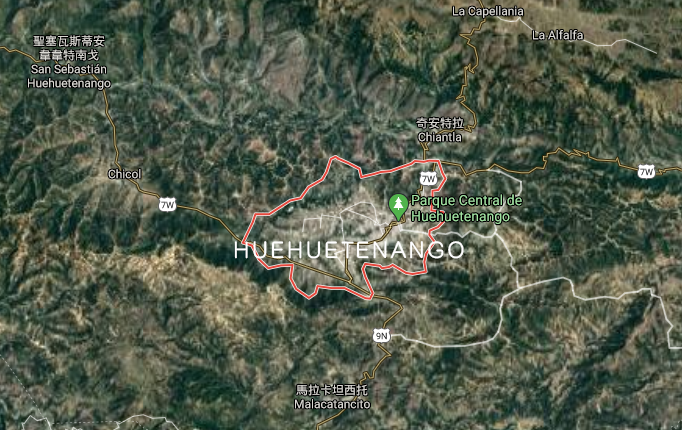
Among Guatemala's three non-volcanic coffee-producing regions, the Huehuetenango Highlands is the driest and highest. Dry, hot winds from Mexico's Tehuantepec Plateau protect the region's coffee from frost, allowing cultivation up to 2,000 meters (6,500 feet). Because the area is remote, every farmer must process their own coffee, and fortunately the region has countless streams, so small processing facilities can be set up almost anywhere.
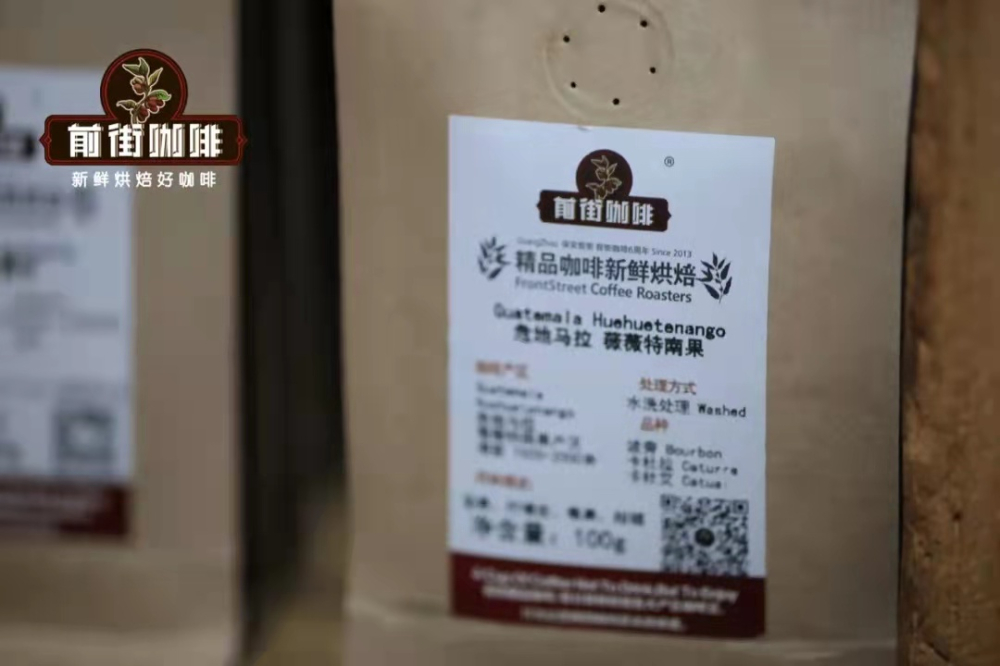
Nearly all (98%) of Guatemala's coffee is grown under shade, and most of it is Arabica. The high average altitude, with growing zones above 1,500 meters between 14-16 degrees north latitude, is what makes Strictly Hard Beans possible.
Guatemala's coffee-growing regions include Antigua, Huehuetenango, Cobán, San Marcos, Atitlán, Acatenango, Fraijanes and New Oriente.
Antigua
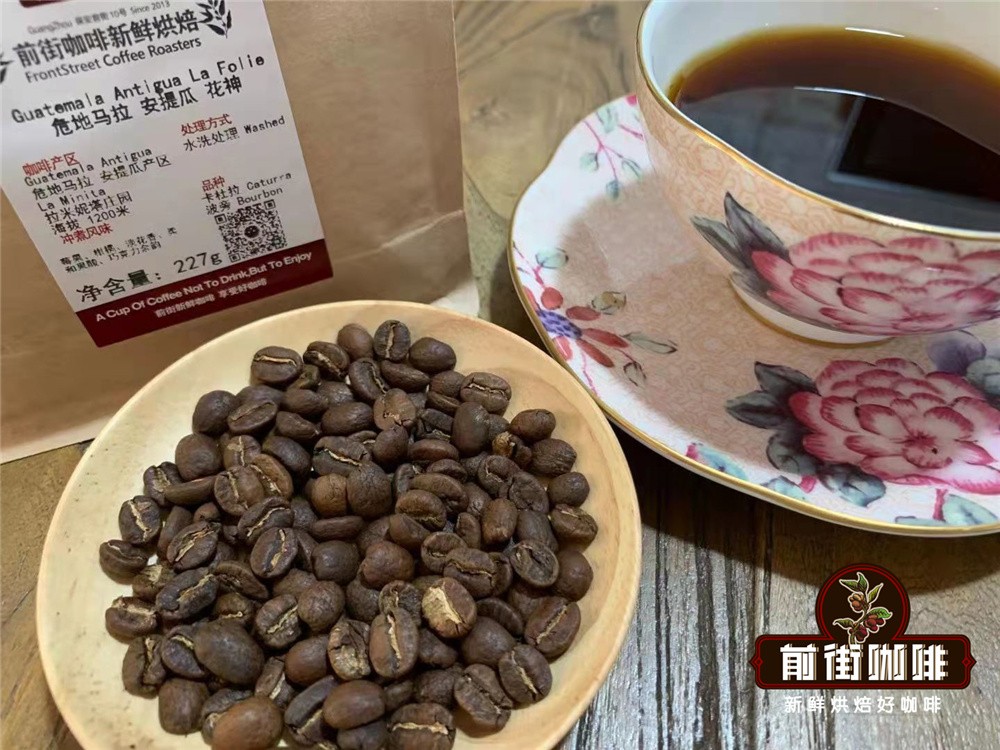
Antigua is recognized worldwide as Guatemala's most popular coffee-producing area. Its soil is rich in nutrients deposited by nearby volcanic eruptions, and the still-active Fuego volcano keeps adding new minerals, keeping the soil fertile. Fertile soil, abundant rainfall and stable temperatures have made Antigua's coffee famous worldwide, as in FrontStreet Coffee's Guatemala Flor.
Huehuetenango
Huehuetenango is an important coffee-producing region in Guatemala, and its name is interesting: it comes from the Nahuatl language and means "land of ancestors." Among Guatemala's three non-volcanic regions, Huehuetenango is the highest and driest. Despite elevations over 2,000 meters with steep, jagged peaks and narrow valleys, the region still receives warm winds from the Tehuantepec plains in Mexico, so coffee can be grown at high altitude without frost damage.
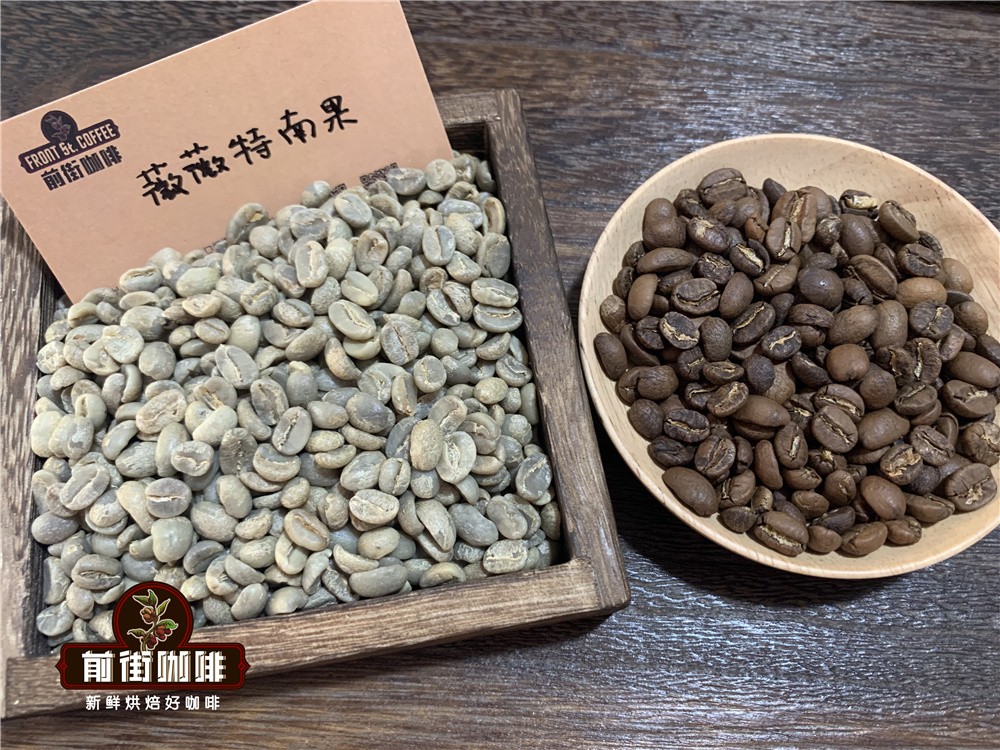
Huehuetenango's extremely remote high-mountain terrain means that producers here must process their coffee independently. Fortunately, the area has countless rivers and streams, so local growers can set up processing facilities almost anywhere.
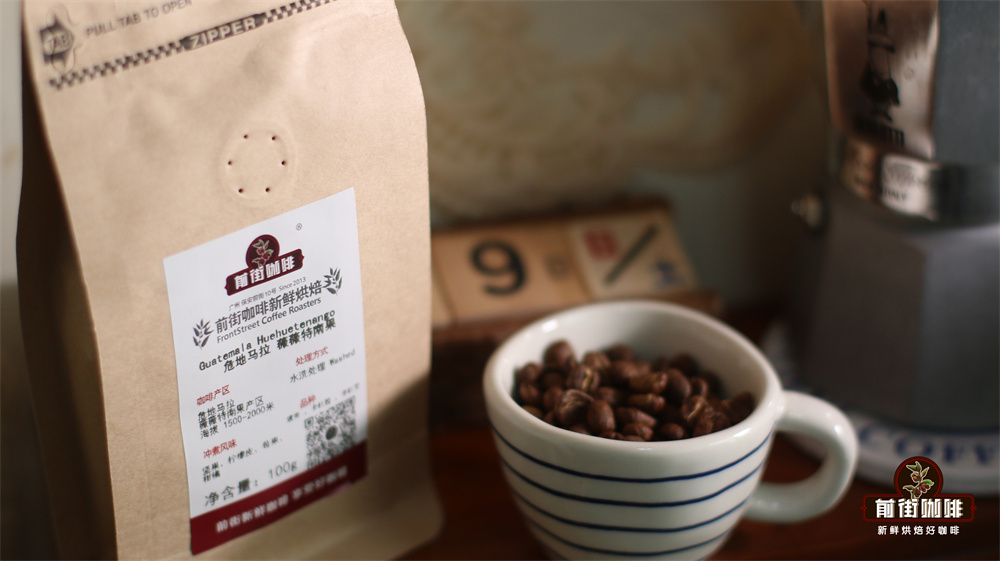
Beyond rich chocolate flavors, Huehuetenango coffee also carries notes of pear, apple and cinnamon. Together these create a delicate, smooth, syrup-like mouthfeel that gradually reveals mild burned cedar and caramel. Most coffees from the region have a strong body and intense aroma, though they can also be gentle with a long, complex aftertaste. Some estates sit between mountains, where unique microclimates help the coffee develop more diverse flavors.
Guatemala Huehuetenango Coffee Bean Processing Method
Because Guatemala has numerous rivers and lakes, the Huehuetenango region is rich in mountain water. The climate is dry but water is plentiful, and the region has complete water infrastructure, so the coffee mostly uses washed processing.
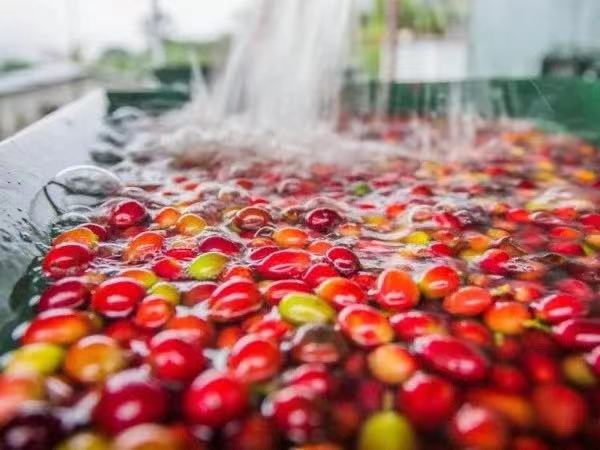
Washed Processing Procedure
1. Harvesting. After picking ripe cherries, impurities, defective beans and floaters are sorted out, the same as in the natural process up to this point.
2. Depulping. Fresh cherries pass through a depulping machine to remove the skin and pulp. Immature cherries, whose pulp does not separate easily, are screened out at this stage. What remains after depulping is the mucilage, parchment and seeds.
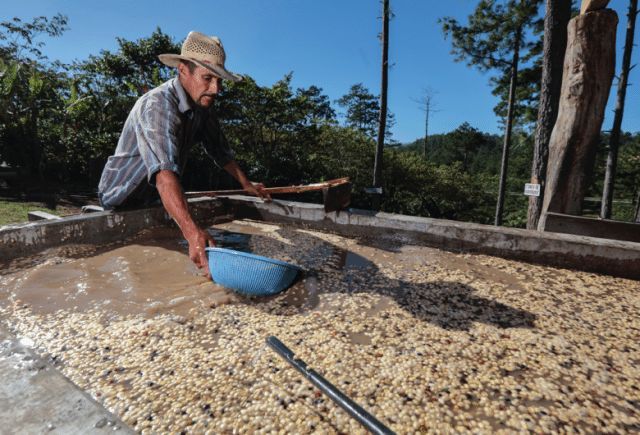
3. Fermentation to remove mucilage. The depulped seeds with their mucilage are moved to fermentation tanks. Although it is called the "washed" method, it does not literally wash the mucilage away; fermentation breaks it down biologically. The process takes about 16-36 hours, during which the mixture must be stirred frequently to speed the separation of mucilage from the seeds. Washed fermentation produces acids such as citric, malic and acetic acid. These penetrate the raw beans, giving washed coffee a more acidic taste than natural coffee. Once fermentation is complete, the beans are washed again.
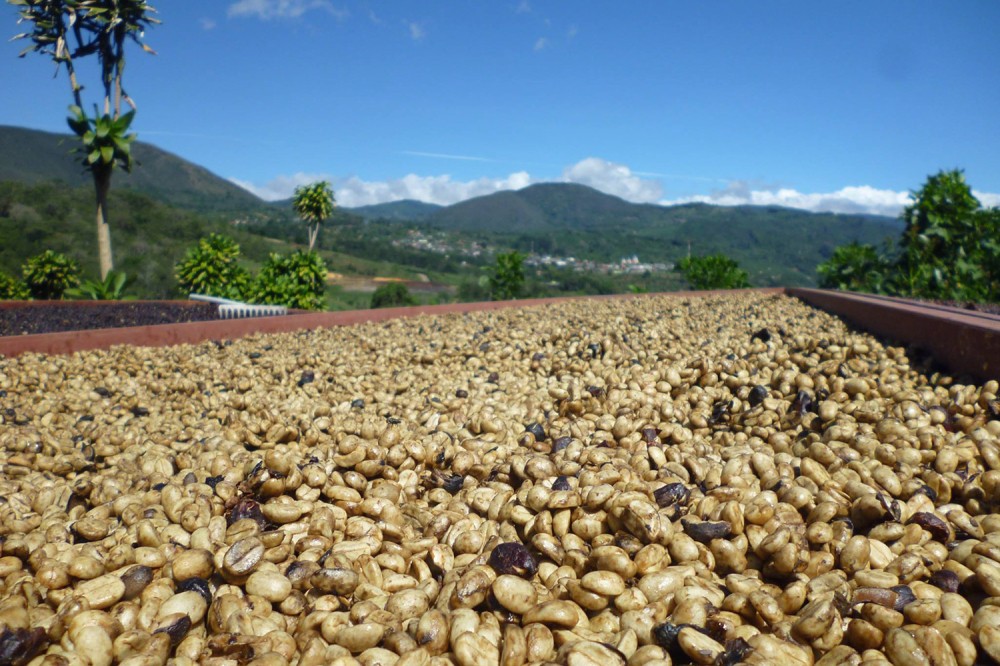
4. Drying. After washing, the beans still need to be sun-dried or machine-dried down to 12% moisture. Because the pulp has already been removed, there is no need to worry about mold during drying as there is in the natural process. The dried parchment beans are not as hard as natural-processed beans that still hold pulp and skin, and can be hulled to obtain the green beans.
FrontStreet Coffee's Guatemala Huehuetenango Brewing Parameters:
To highlight Huehuetenango's moderate fruit acidity, berry notes and the regional characteristics of lemon peel and smokiness, FrontStreet Coffee's roasters applied a medium-light roast. For brewing, we chose the Hario V60, whose relatively fast flow gives a cup with distinct layers and noticeable aroma.
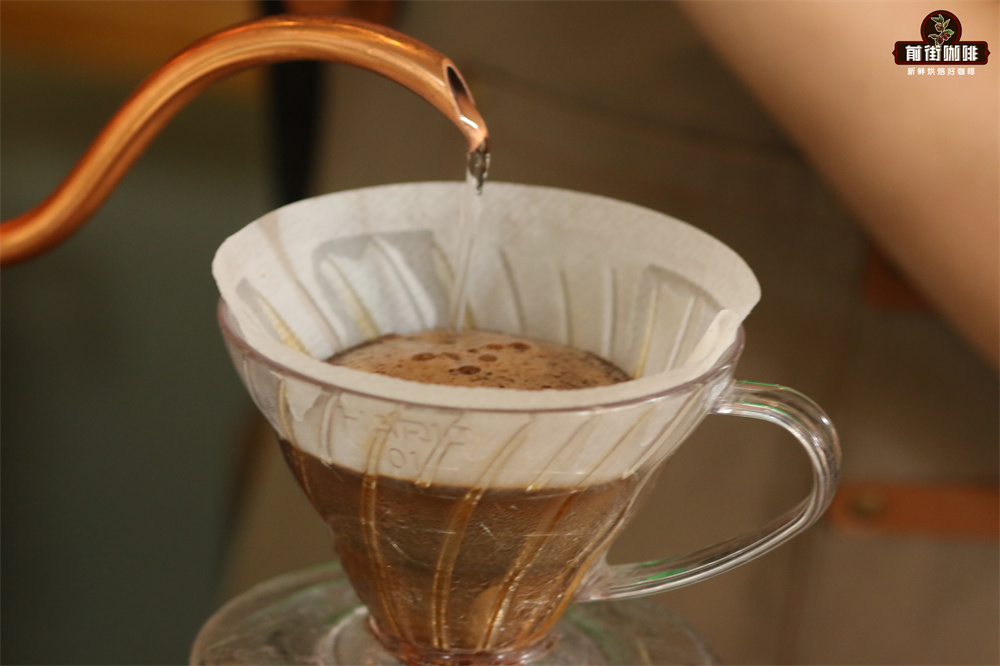
FrontStreet Coffee uses a V60 dripper with a 1:15 coffee-to-water ratio, a medium grind (approximately raw sugar size, about 80% retention on a China #20 standard sieve) and 91°C water.
We use a staged extraction, blooming with twice the weight of the coffee in water, that is, 30 g of water for 30 seconds. Blooming lets the grounds release trapped carbon dioxide so the rest of the extraction is more stable. With a small stream, pour in a circular motion to 125 g, then continue to 225 g and stop. Remove the dripper once the water has finished dripping; the time from the start of pouring is 2'00". Then pick up the whole server, swirl it well, and pour into a cup for tasting.
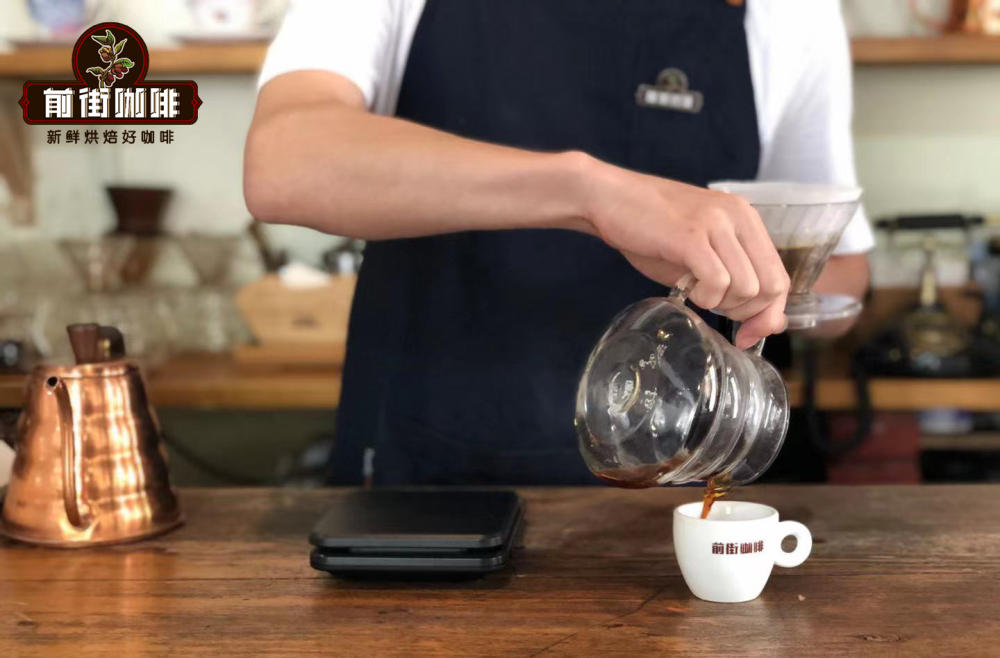
FrontStreet Coffee's Guatemala Huehuetenango flavor profile: citrus and berry acidity, dark chocolate in the middle, and a slightly smoky aftertaste.
FrontStreet Coffee's Guatemala Flor flavor profile: more prominent citrus acidity, juicy fruit acidity, rich florals and pleasant sweetness, a medium body, and slight caramel and smoky notes in the finish. Overall it is clean and mild, with a smooth texture and balanced, lively, varied layers.
FrontStreet Coffee's Brewing Suggestions:
On brewing, FrontStreet Coffee has always believed that the freshness of coffee beans greatly affects flavor. All beans shipped by FrontStreet Coffee are therefore roasted within 5 days. FrontStreet Coffee's roasting philosophy is "freshly roasted quality coffee," ensuring that every customer who orders receives the freshest possible coffee. The resting period is about 4-7 days, so the coffee arrives at its best.
For friends who need ground coffee, FrontStreet Coffee reminds you that once beans are ground in advance they no longer need a resting period, because during transport the pressure from carbon dioxide buildup in the packaging also helps round out the flavor. You can therefore brew a cup as soon as the ground coffee arrives. Ground coffee should be used promptly, however, since it oxidizes quickly in air, so its flavor fades relatively fast and the cup will not taste as good. FrontStreet Coffee therefore suggests buying whole beans and grinding fresh for each brew.
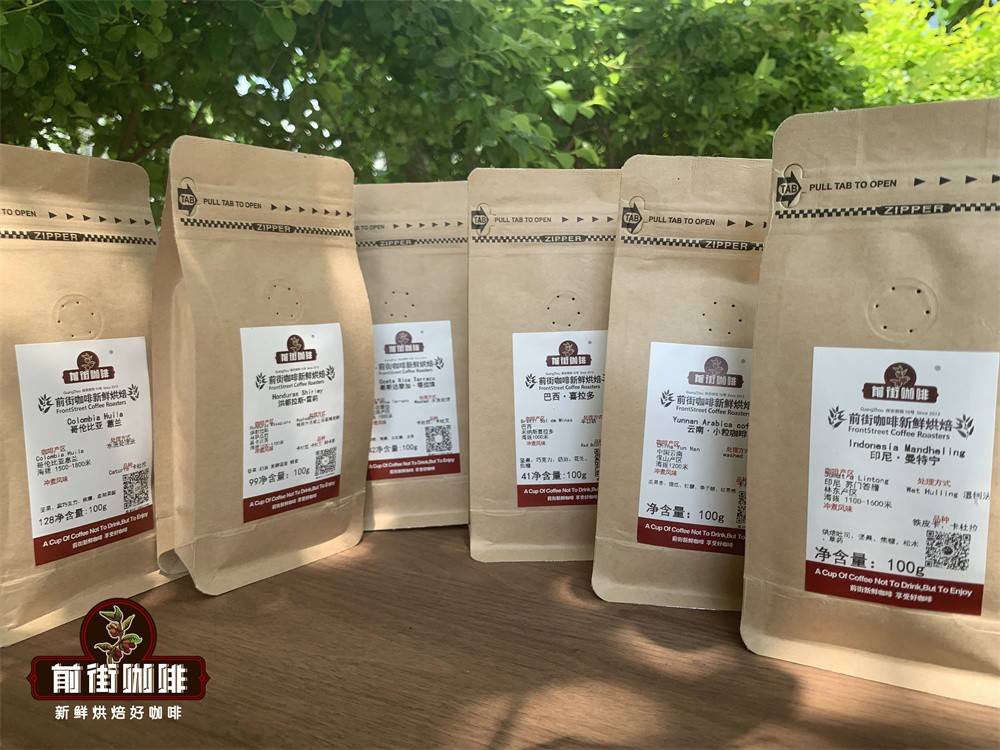
Coffee from each region has its own character. To let more enthusiasts taste coffees from around the world, FrontStreet Coffee offers more than fifty single-origin coffees from various producing countries. If you are not sure what flavor you like, that is fine too: FrontStreet Coffee also has 9 everyday coffee beans representing different origins, such as Ethiopian washed Yirgacheffe, Panama Boquete Geisha, China Yunnan small-bean coffee and Colombian Huila. They offer excellent value and are very suitable for coffee beginners.
FrontStreet Coffee Recommendation
If Huehuetenango's softer acidity and layered fruit appeal to you, a natural bridge is a classic washed Ethiopian coffee such as FrontStreet Coffee's washed Yirgacheffe, which is known for white jasmine, bright citrus and lemon acidity, and a tea-like body, all at a friendly price. Yirgacheffe is a town in southern Ethiopia's Sidamo region at roughly 1,700-2,100 m, with the trees planted above 1,800 m, and its white florals and citrus acidity have become a byword for Ethiopian specialty coffee.
For a more precise version, FrontStreet Coffee's Gedingding Cooperative comes from the Gedingding village in the Woka area at the southeast edge of Yirgacheffe. The co-op follows the most traditional washed method, so the cup keeps the fresh, bright citrus and lemon acidity and jasmine fragrance without the bitter notes of lesser lots. FrontStreet Coffee's naturally processed Yirgacheffe Red Cherry, made only from fully ripe fruit and dried whole, adds tropical fruit aroma and a berry juiciness with honeyed sweetness and a creamy smoothness.
For pour-over, FrontStreet Coffee suggests a V60 with 15 g of coffee, a 1:15 ratio and 90-91°C water, at a grind of EK43s setting 10 or fine-sugar size (about 80% passing a #20 sieve). Pour 30 g for a 30-second bloom, then 95 g (about 125 g on the scale) over roughly a minute, and once the bed drops to two-thirds add the remaining 100 g (about 225 g on the scale) over about 1 minute 35 seconds; the drawdown finishes at 2:00-2:10.
Important Notice :
FrontStreet Coffee is a long-established specialty coffee roaster in Guangzhou China, selling freshly roasted beans from its own farm in Yunnan as well as dozens of carefully selected single-origin beans from around the world for both pour-over and espresso. The products deliver consistently excellent quality and great value, with shipping within 24 hours. Guangzhou's FrontStreet Coffee shop is recommended by many coffee lovers, and the beans are now available online at the Tmall 。
FrontStreet Coffee has moved to a new address:
FrontStreet Coffee Address: 315,Donghua East Road,GuangZhou
Tel:020 38364473
 Scan and follow the En Gafei WeChat official account. Please indicate that the reprint comes from "En Gafei".