Ethiopian Coffee Bean Regions: Characteristics and Differences Between Sidamo and Yirgacheffe Coffee Beans

Exploring Ethiopia's Renowned Coffee Regions: Sidamo and Yirgacheffe
Ethiopia's best-known coffee regions are Sidamo and Yirgacheffe. Yirgacheffe began as a small town inside the Sidamo region, but its distinctive citrus and lemon acidity earned it a separation from Sidamo to stand as a region of its own. So what actually sets the two apart in the cup? In this article, FrontStreet Coffee walks coffee lovers through it.
Sidamo Coffee Region
FrontStreet Coffee often says that to understand any coffee bean you have to start with three things: region, variety, and processing method. So let's take those three in turn.

The Sidamo region lies in southern Ethiopia, with altitudes running from 1400-2000m. Agriculture dominates the local economy, and coffee is grown mainly around the East African Rift Valley. The varied soils and microclimates of Sidamo, combined with Ethiopia's countless indigenous varieties, make its flavors extremely diverse. Coffee from one town to the next shows clear differences and character.
Among the most famous areas within Sidamo are Guji and Arsi. FrontStreet Coffee's store, for instance, carries beans from both for customers to choose between.
Sidamo Coffee Bean Processing Methods
By FrontStreet Coffee's understanding, 70% of Ethiopia's growing regions use the natural method, and Sidamo is no exception: most cherries there are processed naturally. Naturally processed beans show more aroma than washed beans, along with fermented notes. That is why FrontStreet Coffee finds Sidamo beans so rich in fruit flavor with such a smooth mouthfeel.

Natural Processing Method Steps:
- First, ripe cherries are harvested, then hand-sorted to remove defective, overripe, or insect-damaged fruit, leaving only the good beans. This is also the main reason the beans at FrontStreet Coffee's store look so uniform and inviting.
- The selected cherries go to the drying area. Different regions use different drying surfaces — waterproof tarps, raised beds, or concrete floors. Drying averages 27-30 days, until moisture drops to 11%, which completes the process.
- This step matters just as much. After drying, the cherries go to a dedicated plant for hulling, and sometimes polishing, to strip away the fruit pulp and the rest, leaving what we recognize as coffee beans.
- The hulled green beans are screened once more to remove poor-quality beans. Over-dried beans are brittle and can shatter during hulling, while under-dried beans hold too much moisture and are prone to bacteria and mold. After that second screening, they go to the warehouse for storage, packing, and export.

Yirgacheffe Coffee Region
As noted above, Sidamo's flavors are extremely diverse. Yirgacheffe was separated out because the beans grown there taste unique, and on flavor alone it has become Africa's most famous coffee region. Mention African coffee and most drinkers think first of FrontStreet Coffee's Yirgacheffe beans.

Yirgacheffe sits at 1800-2000m, one of the highest average altitudes in Ethiopia. The area itself is a wetland with abundant water. Traditionally, though, Yirgacheffe used the oldest natural method. It was only in 1972 that Ethiopia brought in Central and South American washing technology to improve bean quality. That shift amplified the natural citrus and lemon aromas of FrontStreet Coffee's Yirgacheffe beans, making the cup fresher and brighter.
Yirgacheffe Coffee Bean Processing Methods
Yirgacheffe quickly became one of the world's flagship specialty coffees. From then on the region produced mainly washed beans, until natural processing itself improved in the twenty-first century. That advance brought striking natural beans to the specialty market. A Yirgacheffe trader named Bagshi, missing the flavors of traditional natural coffee, set about improving the natural method and launched several outstanding natural lots, restoring natural coffee's standing in the region. FrontStreet Coffee's Yirgacheffe Natural Red Cherry beans are a good example, and coffee lovers adore them.

Washed Processing Method Steps:
- Farmers pour all the harvested cherries into water. Defective and flawed beans float to the surface while good cherries sink, which saves an enormous amount of time compared with sorting bean by bean.
- The selected cherries go into a depulper that removes the skin and pulp. A layer of mucilage stays on the surface afterward, so plenty of clean water is needed to wash away the sticky residue.
- Next, fermentation removes the mucilage completely, and this takes roughly 18 hours. After fermentation, bacteria cling to the cherry surface, so another thorough wash with clean water follows. Producing 1 kilogram of coffee beans at this stage consumes 40-50 kilograms of clean water. FrontStreet Coffee considers that a very large number, and it is exactly why drought-prone countries cannot adopt washed processing.
- The cleaned beans are then dried. Some regions dry them outdoors, while more developed ones send them to a plant for machine drying, bringing moisture down to about 11%.
- Finally, the dried beans are stored and packaged for sale and export.


As FrontStreet Coffee noted above, washed versus natural processing shapes flavor. So in the next section FrontStreet Coffee compares Yirgacheffe and Sidamo beans processed the same way, to make the regional differences easier to see.
The comparison here uses naturally processed beans. FrontStreet Coffee now shares the flavors and brewing data for both.
FrontStreet Coffee Ethiopia Yirgacheffe Aricha Coffee Beans
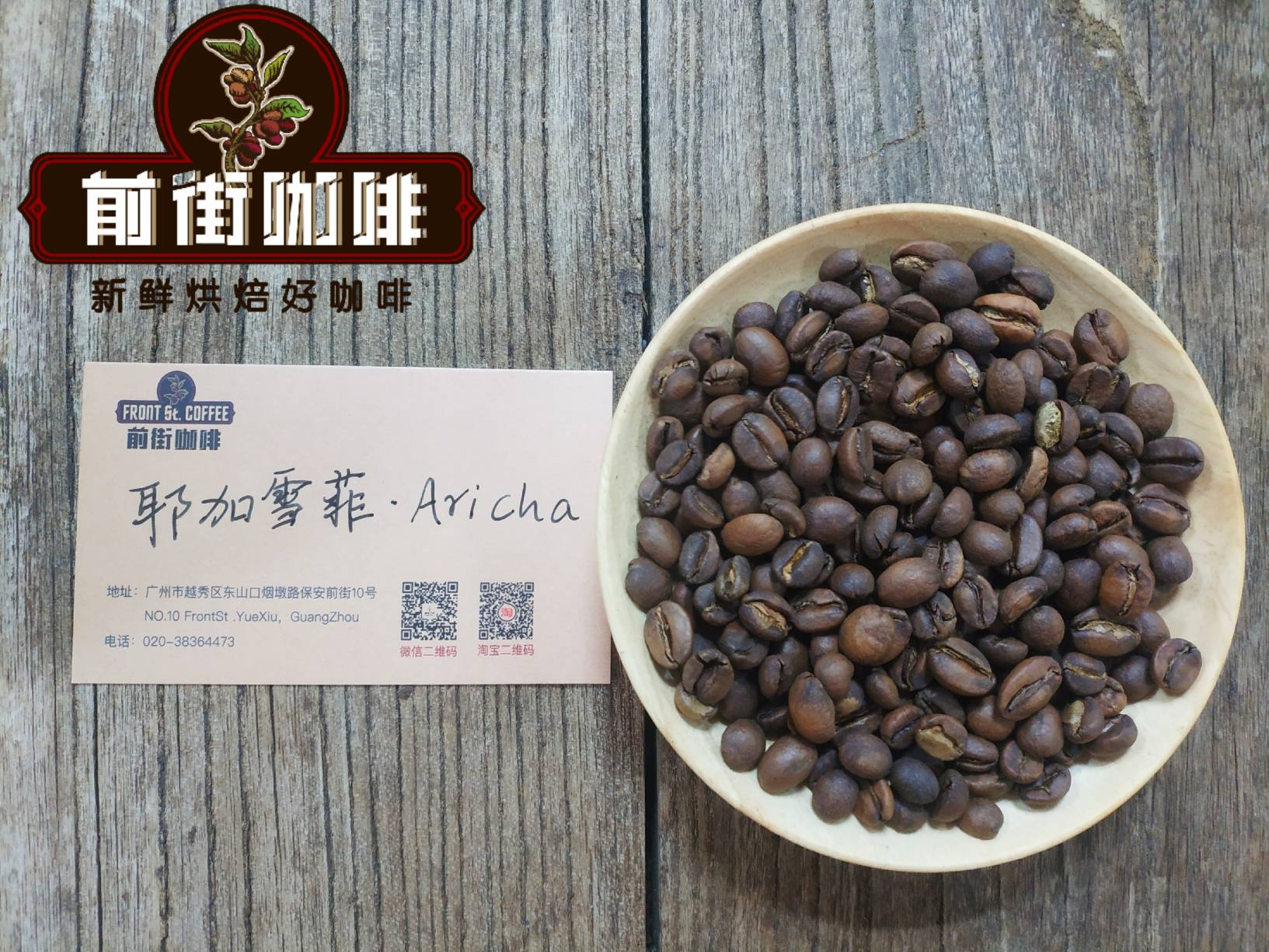
- Country: Ethiopia
- Region: Yirgacheffe
- Altitude: 1900-2100m
- Variety: Local Indigenous
- Processing: Natural
- Flavor: Light fermented wine aroma, sweet orange, spices, honey sweetness
FrontStreet Coffee Ethiopia Buku Abel Coffee Beans

- Country: Ethiopia
- Region: Guji Hambella (formerly Sidamo)
- Altitude: 2250-2350m
- Variety: Local Indigenous
- Processing: Natural
- Flavor: Rose, cream strawberry, citrus, passion fruit, oolong tea
FrontStreet Coffee Roasting Suggestions

FrontStreet Coffee Buku Abel Roasting Profile:
Yangjia 800N, 480g batch size: heat the drum to 175°C with the air damper at 3 and flame power at 120. Raise to 140°C with the air damper at 4. At 6'00" the temperature reaches 151.7°C, the bean surface turns yellow, the grassy aroma disappears completely, and dehydration is done. When ugly wrinkles and black spots appear on the surface and the toast aroma clearly turns into coffee aroma, that marks the prelude to first crack. Listen carefully for the first crack sound. First crack begins at 9'50"; open the air damper fully and cut flame power to 80 at 188°C, develop for 1'40", and drop at 196°C.
FrontStreet Coffee Aricha Coffee Bean Roasting Profile:
Yangjia 600g semi-direct flame, fast-roast mode. Heat the drum to 200°C with the air damper at 3. After 30 seconds, adjust flame power to 160, air damper unchanged. Adjust flame power once at 150°C, when the bean surface turns yellow, the grassy aroma disappears completely, and dehydration is done. Adjust flame power to 120 and the air damper to 4. At 8 minutes, ugly wrinkles and black spots appear on the surface and the toast aroma clearly turns into coffee aroma, which marks the prelude to first crack. Listen closely for the first crack sound. First crack begins at 8'49"; reduce flame power to 70 (be careful when adjusting flame power — not so low that cracking stops) and open the air damper fully to 5. Drop at 195°C, 1'48" after first crack.
FrontStreet Coffee Brewing Suggestions & Comparison
- Dripper: V60 #01
- Water Temperature: 90-91°C
- Dose: 15g
- Ratio: 1:15
- Grind Size: Fine sugar size (80% retention on a #20 sieve)
FrontStreet Coffee Brewing Technique:

First pour 30g of water for a 30-second bloom, then pour another 95g (the scale should read about 125g), completing in about 1 minute. When the water level drops to two-thirds of the coffee bed, pour the remaining 100g (the scale should read about 225g), completing in about 1'40"-1'45". Drawdown finishes between 2'00" and 2'10"; remove the dripper and extraction is complete.

FrontStreet Coffee Natural Buku Abel Brewing Flavor:
At high temperature, almond aroma appears. As it cools, berry sweetness and acidity emerge, with blackcurrant juice notes, a honey aftertaste, and persistent sweetness.
FrontStreet Coffee Natural Yirgacheffe Aricha Brewing Flavor:
An extremely smooth entry, with ripe fruit sweetness and acidity emerging, persistent sweetness, and fermented fruit aroma.
FrontStreet Coffee Recommendation
If the natural Yirgacheffe Aricha is the style you gravitate toward, FrontStreet Coffee's Yirgacheffe Natural Red Cherry is the closest everyday match. Only fully ripe, sound cherries are picked, dried on raised beds for three to five weeks, and turned every few hours during the first days so they dry evenly. You get the region's classic citrus acidity alongside tropical fruit, a berry-juice texture, honeyed sweetness, and a creamy body.
For a cleaner, more floral contrast, FrontStreet Coffee's washed Yirgacheffe is the standard introduction to the region, with white jasmine, bright citrus and lemon acidity, and a tea-like finish. Once you want to go a step further, FrontStreet Coffee's Gediding cooperative coffee — grown in the Woka area at Yirgacheffe's southeastern edge, once part of the Woka cooperative under the YCFCU — follows traditional washed processing and shows no bitter edge at all, just clean citrus and lemon acidity and jasmine fragrance.
Brew any of them in a V60 at 90-91°C with 15g of coffee and a 1:15 ratio, ground to fine-sugar size (about 80% pass-through on a #20 sieve). Bloom with 30g of water for 30 seconds, pour to 125g over about a minute, then finish to 225g once the bed drops to two-thirds, targeting a total drawdown of 2:00-2:10.
Important Notice :
FrontStreet Coffee is a long-established specialty coffee roaster in Guangzhou China, selling freshly roasted beans from its own farm in Yunnan as well as dozens of carefully selected single-origin beans from around the world for both pour-over and espresso. The products deliver consistently excellent quality and great value, with shipping within 24 hours. Guangzhou's FrontStreet Coffee shop is recommended by many coffee lovers, and the beans are now available online at the Tmall 。
FrontStreet Coffee has moved to a new address:
FrontStreet Coffee Address: 315,Donghua East Road,GuangZhou
Tel:020 38364473
 Scan and follow the En Gafei WeChat official account. Please indicate that the reprint comes from "En Gafei".