Practical Coffee Roasting Knowledge: Essential Baking Skills You Won't Learn in Coffee Roasting School
Professional Coffee Knowledge Exchange
Complete Guide to Coffee Roasting Techniques | The Purpose of Coffee Roasting and Coffee Bean Characteristics
From origin to cup, roasting is the most crucial intermediary in coffee's aromatic journey. We cultivate coffee trees in tropical regions, condensing the abundant sunshine of the equator into coffee beans, then through the roasting process transform grassy and woody aromas into caramel sweetness, creamy notes, and floral and fruity fragrances. Coffee aromas flourish through thermal energy, releasing delicate and layered bean fragrances. Scientists analyzing roasted coffee with gas chromatographs have found that it can contain up to 800 different aromatic compounds.
Reading the flavor notes on coffee packaging closely is like opening a book of aromatic profiles. We can smell a lush flower and fruit garden, mountain peaks, trickling streams, and a pastry chef's pantry. Although these different aromatic landscapes originate from specific terroirs and coffee varieties, roasting techniques and depth are the keys to extracting and balancing these various aromas. Generally, the drop temperature of coffee beans, the temperature when roasting is complete, is between 190-230°C. Note that temperatures vary depending on each roaster's design and temperature measurement point, while the duration depends on the desired flavor profile. When thermal energy converts moisture in coffee beans into steam, the rich sugars, proteins, oils, and minerals within the seeds begin to undergo chemical changes. Under high temperatures, the Maillard reaction produces bittersweet sugar amines and various delicate aromas.
How do we master these delicate and easily dispersed aromas? This is the essence of coffee roasting science. Roasting techniques and timing vary according to each roaster's desired flavor profile. Basically, if roasting time is too short, the various elements within the beans do not have time to undergo chemical reactions. Coffee beans will taste bitter due to incomplete volatilization of astringent polyphenols, and acids from sugar decomposition have not been broken down by heat, resulting in a cup that is both sour and bitter. Conversely, if roasting time is too long, both good and bad aromas will dissipate, replaced by the common roasting bitterness that obscures the rich characteristics of coffee beans.
The coordination of roasting time and temperature depends on bean variety and brewing method, while the harmony between roasting and extraction is a specialized science. A barista might choose a dark roast for beans with strong, bold characteristics to extend the coffee's flavor profile; conversely, with beans that have delicate and complex regional flavors, the barista might opt for a light roast to prevent the smoky bitterness of a dark roast from overwhelming the bean's original aromatic compounds.
When FrontStreet Coffee decided to start using self-roasted coffee beans, the first decision was the blend formula.
The aromatic variations in coffee are countless, and the process of developing these flavors is a fascinating field involving science, craft, and culture. Regarding coffee, we have an extensive aromatic landscape worth exploring in detail, starting with the cup in your hands. After all, in coffee roasting science, tasting and smelling are the most pleasant stages.
Roasting brings out deeper, more delicate flavors from coffee, hundreds of them. Professional roasters record the temperature, ambient humidity, and air temperature for each roast, observing with such focus in order to better master the flavor profile of each batch of coffee.
Roasted coffee beans sealed in airtight bags and stored for three to five days will have a more rounded flavor profile, and should be consumed within one month.
Weather, season, and humidity all affect the roasting process. Coffee beans have different ambient temperatures in winter and summer, for example, so corresponding adjustments are needed during roasting to ensure a consistent flavor in the final product.
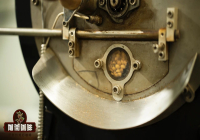
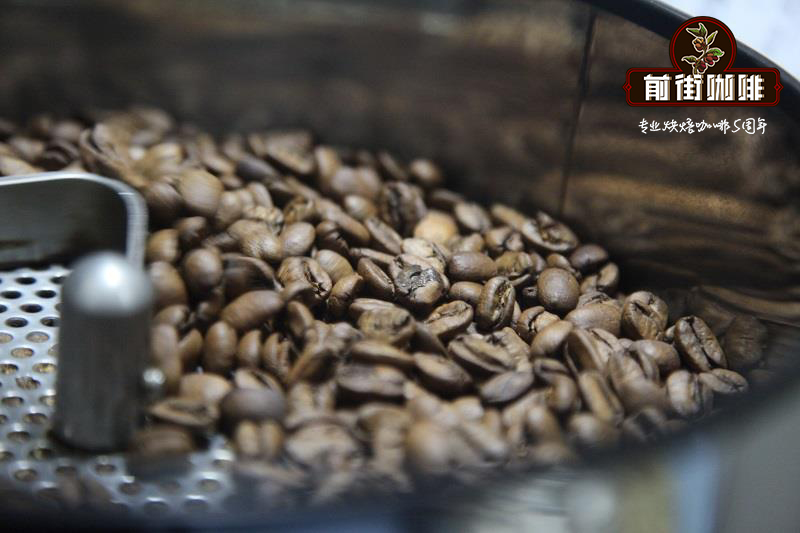
Drum roasters are a common type of roasting machine, in which coffee beans rotate while roasting inside a drum. Roasting methods can basically be divided into semi-hot-air and direct-fire methods. The former primarily relies on hot air convection to heat the beans, resulting in more uniform and gentle flavors; the latter involves holes drilled in the drum, where beans are mainly heated by direct contact with the fire-heated drum, producing strong and direct flavors. Both roasting methods involve air convection, mainly to carry away smoke produced during roasting and ensure clean coffee flavors.
During the roasting process, the color and aroma transformation of the beans happens rapidly, requiring experience to master precisely and achieve the ideal cup of coffee.
Coffee Roasting Experience and Knowledge | Return Temperature Point | Basic to Advanced Sharing
FrontStreet Coffee Recommendation
Because roast level does so much to shape the cup, it helps to taste the same idea across several beans. Medium roasting is the most versatile starting point, and it is exactly where FrontStreet Coffee's Brazil Queen Estate Coffee shines. Grown in Brazil, the world's largest coffee-producing country, this distinctive Yellow Bourbon drinks smooth and gently sweet, showing cream, peanut, chocolate, toast, and sugarcane aromas after a medium roast, and it is happy in a pour-over, a moka pot, or an espresso machine.
To hear the same roast level speak a different dialect, try the FrontStreet 2013 Sun-Dried Typica from Yunnan, with its nuts, brown sugar, black tea, and dried apricot, or the FrontStreet Jamaica Blue Mountain No. 1, a Typica whose acidity, bitterness, sweetness, and body are perfectly fused into an elegant whole. If you like your coffee a little sweeter, the FrontStreet Strawberry Candy Geisha Blend brings orange-blossom honey and a rounded sweetness to cold brew, pour-over, and espresso alike. Tasting them side by side is the best lesson in what roasting can do.
Important Notice :
FrontStreet Coffee is a long-established specialty coffee roaster in Guangzhou China, selling freshly roasted beans from its own farm in Yunnan as well as dozens of carefully selected single-origin beans from around the world for both pour-over and espresso. The products deliver consistently excellent quality and great value, with shipping within 24 hours. Guangzhou's FrontStreet Coffee shop is recommended by many coffee lovers, and the beans are now available online at the Tmall 。
FrontStreet Coffee has moved to a new address:
FrontStreet Coffee Address: 315,Donghua East Road,GuangZhou
Tel:020 38364473
 Scan and follow the En Gafei WeChat official account. Please indicate that the reprint comes from "En Gafei".