How to Create Perfect Coffee Latte Art with Milk Beginner's Guide to Heart Latte Art Techniques What Milk is Best for Latte Art

Is Latte Art Really That Important?
A latte with beautiful latte art genuinely lifts a coffee shop's image, raises customer satisfaction, and shows off the barista's craft.
And although it looks complex, with the right milk — able to form thick, fine, flowable microfoam — and an espresso with proper crema, making latte art at home really isn't hard! Follow FrontStreet Coffee to learn the simplest pattern of all: the heart.
What Perfect Latte Art Requires
Latte art at its best needs three things: stable, fine microfoam; even integration of milk and espresso; and properly extracted espresso.
What Milk is Best for Latte Art?
First, choose milk rich in milk fat, protein, and lactose, so the latte has full flavor and a rich, smooth texture. FrontStreet Coffee recommends fresh milk — the kind that requires refrigeration.
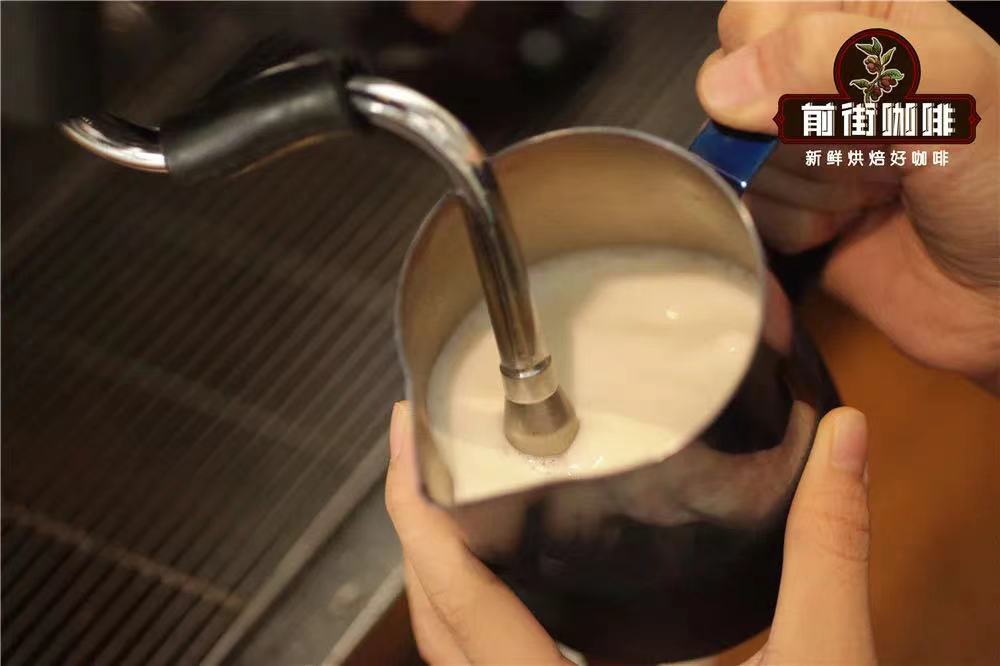
Microfoam stability depends on casein micelles and whey protein. Casein micelles create surface tension at the milk's surface; when steam hits it, bubbles of many sizes form. Adjusting the steam wand position then spins a vortex that "breaks up" the larger bubbles, leaving microfoam as fine as silk.
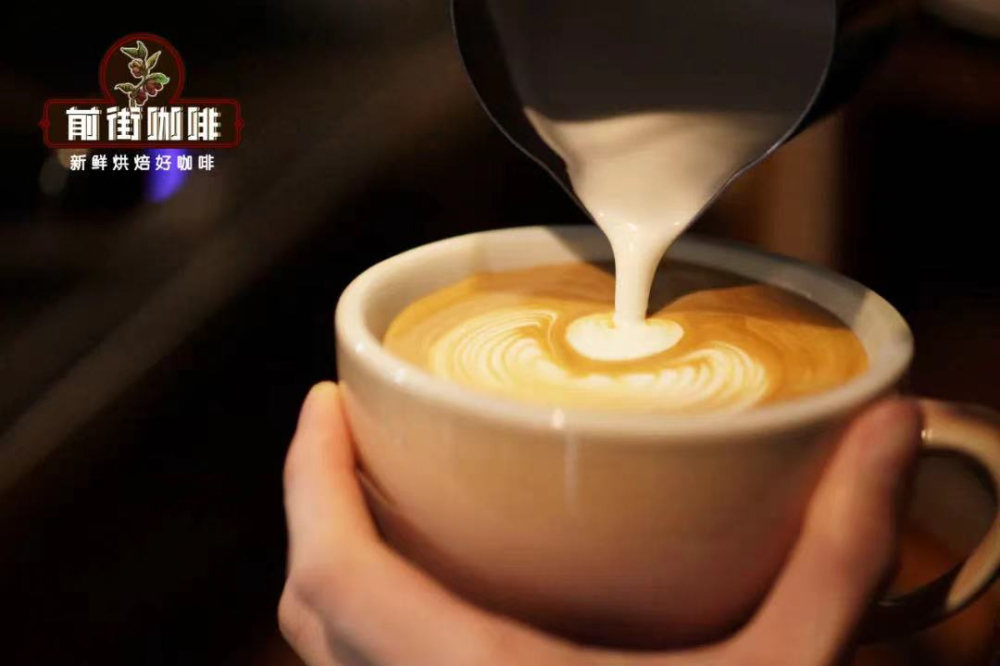
Lactose content determines the milk's sweetness. The ideal frothing temperature is 55-65°C — never exceeding 70°C — the range in which lactose and other sugars are most "active." Frothed to that range and combined with coffee, the milk makes the drink taste sweet in both aroma and flavor, no sugar required.
How to Extract Espresso for a Latte
With the milk sorted, extract espresso on a dedicated espresso machine. For beautiful latte art the crema matters enormously, and for a delicious latte the espresso's own flavor matters even more.

For espresso with rich but appropriate crema, balanced flavor, and sufficient intensity, FrontStreet Coffee recommends fresh medium-dark roast espresso blends — your latte art foundation. FrontStreet Coffee currently sells 4 espresso blends, including the "Premium Blend Coffee Beans" made of 70% Brazilian beans + 30% Colombian beans, ideal for home or commercial use. Beyond its nut, caramel, roasted peanut, and cream aromas, it pulls dense golden crema and offers excellent value.

Crema forms when carbon dioxide in the beans saturates under vacuum pressure and mixes with water and coffee solubles as they extract together, creating fine golden foam. The fresher the beans, the more carbon dioxide — and the thicker the crema, which affects the drink's flowability.
Every bag FrontStreet Coffee ships leaves the roastery within 5 days of roasting. In FrontStreet Coffee's experience, espresso pulled from beans 7-30 days after roasting is ideal for latte making, in both crema and flavor — so check the roasting date on the back label when your beans arrive and plan accordingly.
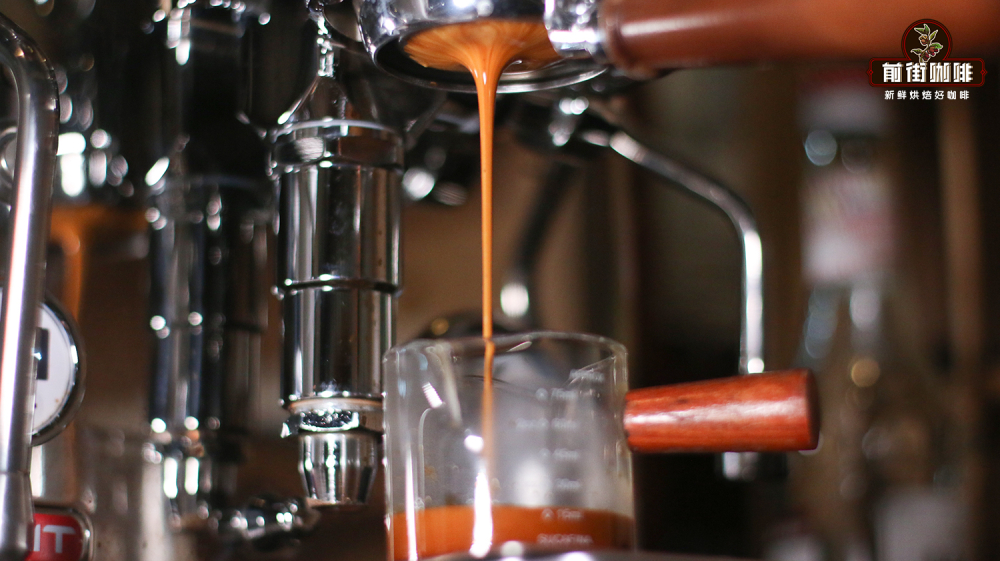
Espresso extracts fast — typically finishing in 25-30 seconds. But since every machine and grinder performs differently, there is no universal parameter.
So FrontStreet Coffee can only offer a starting point, to be tuned by taste: 20g of grounds at a 1:2 ratio + 9 bar pressure + 94°C water to yield 40g of espresso in 25-30 seconds. Taste, then judge whether it meets your standard.

How to Froth Milk for Latte Art?
Espresso machines have steam wands for heating milk and building microfoam. Before each frothing session, purge the steam until no water sprays from the wand — watery steam creates large bubbles.
Then tilt the pitcher 45 degrees (toward 2-3 o'clock or 9-10 o'clock) and place the steam tip 0.8-1cm below the liquid surface. At this angle the milk quickly forms a small vortex, which "rolls" coarser foam under the surface. Too deep, and the steam holes can't reach air to create a vortex; too shallow, and the steam batters the surface into rough bubbles while splashing milk everywhere.

Microfoam thickness depends on the foam made while steam properly meets the surface — the aeration phase. The longer you aerate, the more foam and the thicker the microfoam. Set the steam tip to 0.3cm depth, switch on the steam, and you'll hear a "hiss—hiss" sound.
That is the aeration stage. Latte art needs microfoam about 1cm thick, so don't over-aerate: after 4-5 hisses, lower the wand back to 0.8-1cm, keep the 45-degree angle to spin the vortex, eliminate the large bubbles, and heat to the target temperature.
How to Pour a Heart?
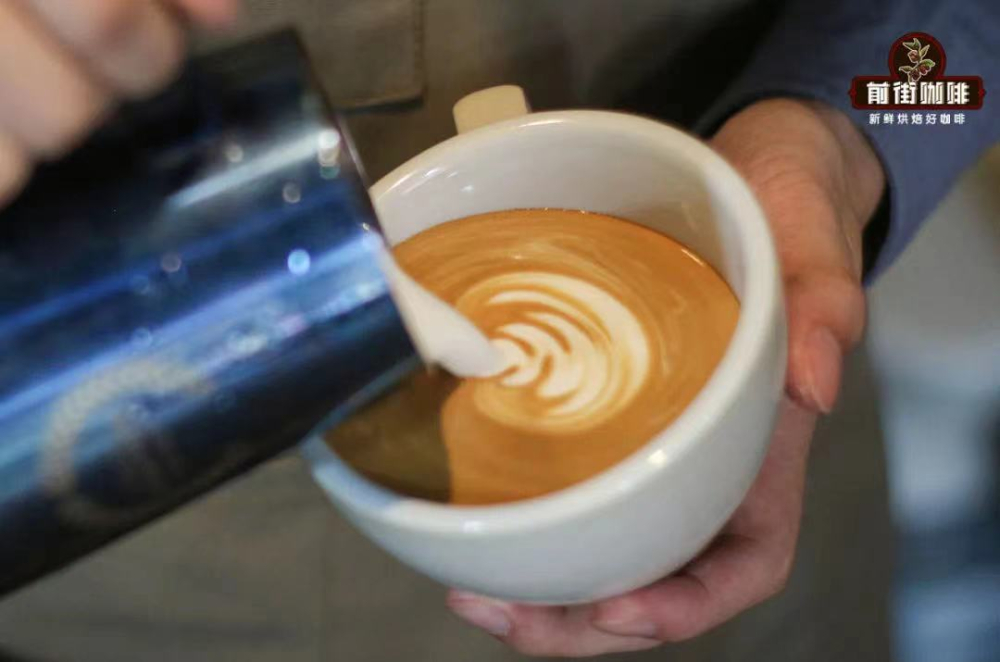
Pull the espresso into the latte cup. Prepare hot milk with fine microfoam, shake the pitcher at a fixed point until the foam surface is smooth and layered, then tilt the cup and pour in circles to integrate milk and coffee until the cup is 70% full.
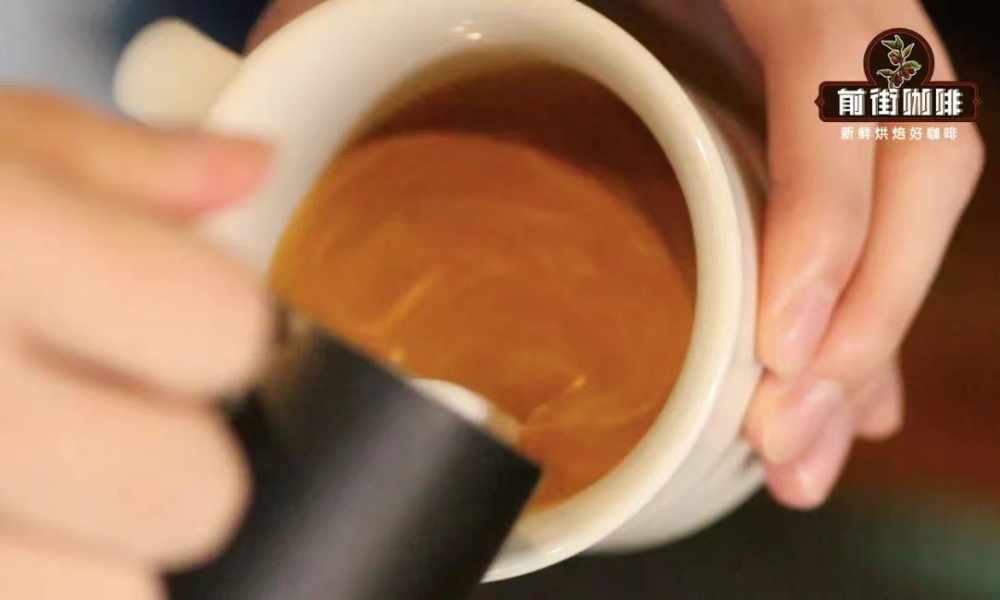
Begin pouring from a point about one-quarter of the way in from the side of the pitcher — this keeps the finished heart centered.
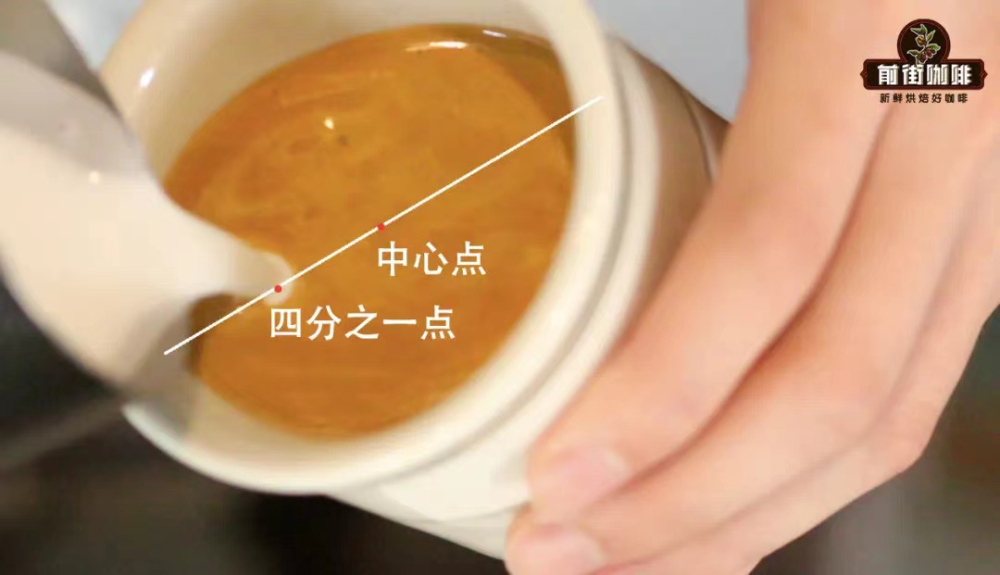
To float the microfoam above the coffee surface, once convection is established simply straighten the cup slowly. The pouring point drifts from the one-quarter mark toward the center as the left hand returns the cup upright and the right hand raises the pitcher spout in preparation for the finish.
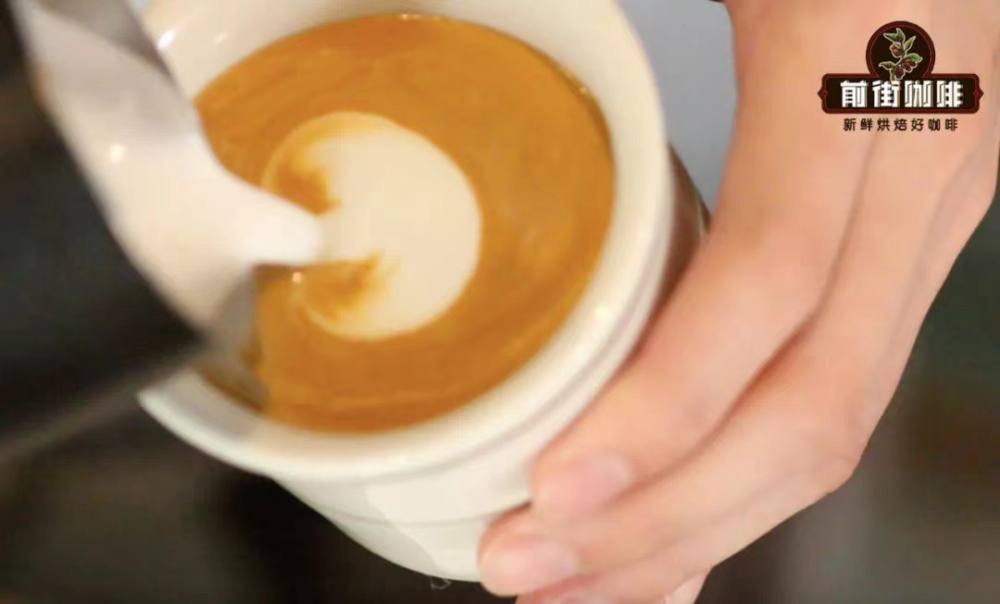
The finishing motion matters enormously — many a pattern dies here. When the cup is 90% full, prepare to finish: reduce the flow, raise the spout, move along the heart's axis to its base, and cut the flow decisively. That draws the little tail.

FrontStreet Coffee Recommendation: Beans That Make Milk Taste Better
Latte art lives or dies on the espresso underneath, so pick a bean built for milk. The FrontStreet Classic Blend is the beginner's choice — a medium-dark, three-origin recipe inspired by the old "Mamba" pairing of Mandheling and Brazil, plus a touch of Robusta for crema. It extracts stably with unmistakable butter, toasted bread, and caramel biscuit aromas over a solid body and fine crema. The FrontStreet Premium Blend — washed Colombia with pulped-natural Brazil — shows nut, dark chocolate, and caramel, with cream and almond smoothness that shines in lattes and flat whites alike. And if a café of your own is the goal, FrontStreet Coffee's Commercial Blend adds Robusta for extra-thick dark-brown crema and easy, forgiving pouring. Practice hearts, tulips, and rosettas on any of them.
Important Notice :
FrontStreet Coffee is a long-established specialty coffee roaster in Guangzhou China, selling freshly roasted beans from its own farm in Yunnan as well as dozens of carefully selected single-origin beans from around the world for both pour-over and espresso. The products deliver consistently excellent quality and great value, with shipping within 24 hours. Guangzhou's FrontStreet Coffee shop is recommended by many coffee lovers, and the beans are now available online at the Tmall 。
FrontStreet Coffee has moved to a new address:
FrontStreet Coffee Address: 315,Donghua East Road,GuangZhou
Tel:020 38364473
 Scan and follow the En Gafei WeChat official account. Please indicate that the reprint comes from "En Gafei".